April #20.1: Pacemaker

April is one of those months when I have this constant urge to do something productive. I am constantly bombarded by gardening deals and mature seedlings in hobby markets, and intimidated by the amount of work I need to do in the garden. Even though I am fully aware that cool nights are far from over, I can't get rid of this feeling, and I have to do something.
And so I did something. Something I was afraid of doing sooner. I checked my bananas. They are dead.
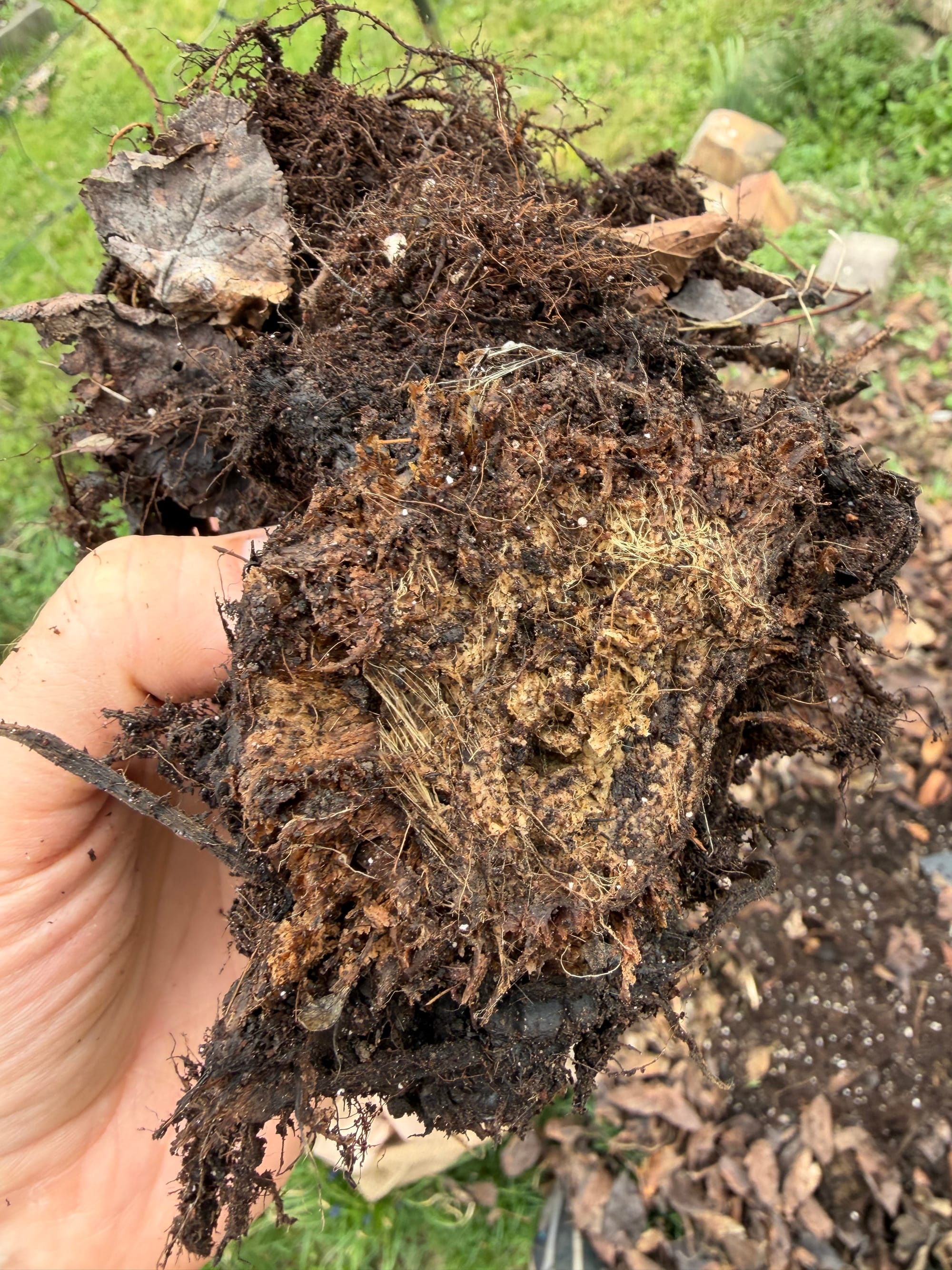
Well, that's settled then. I can't keep bananas over winter outside. Never mind, I have already ordered replacements! Because I like those plants simply too much. But now that the band-aid is off, we can focus on some success.
the successive success
In the last post, I planted some spuds and left them in the greenhouse, for good measure. Well, they like the greenhouse simply too much, and almost every bag is already growing.
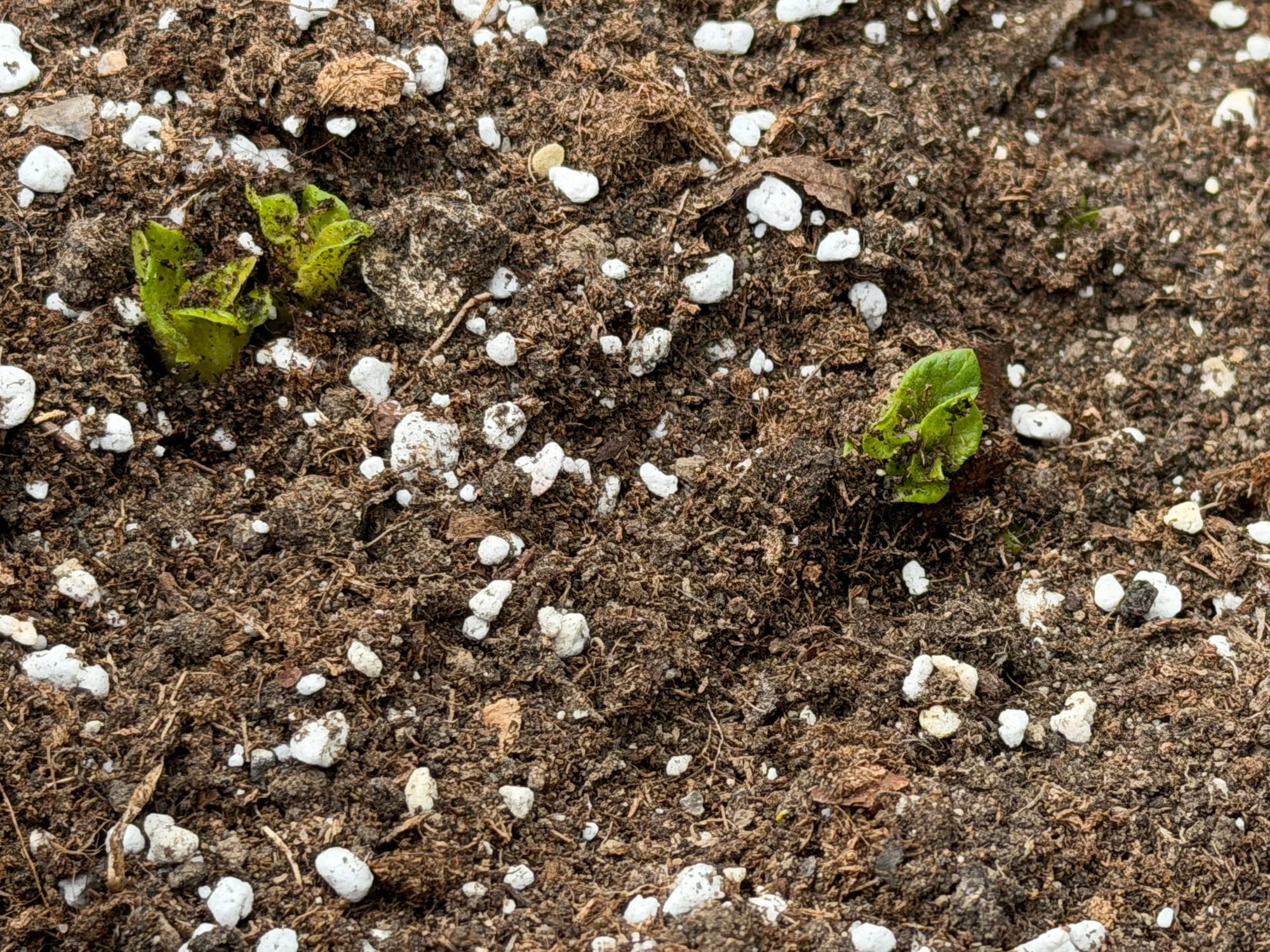
This is good, because it means I am like a week or two ahead of schedule. It is also bad because I am like a week or two ahead of schedule, and now I have to pray for no cold snaps so I can move those bags outside. I will pile some grass clippings and more soil on top of those shoots and hope for the best.
For the best, I don't have to hope anymore for my greenhouse greens. The lettuce will be ready in less than two weeks, at least the first batch.
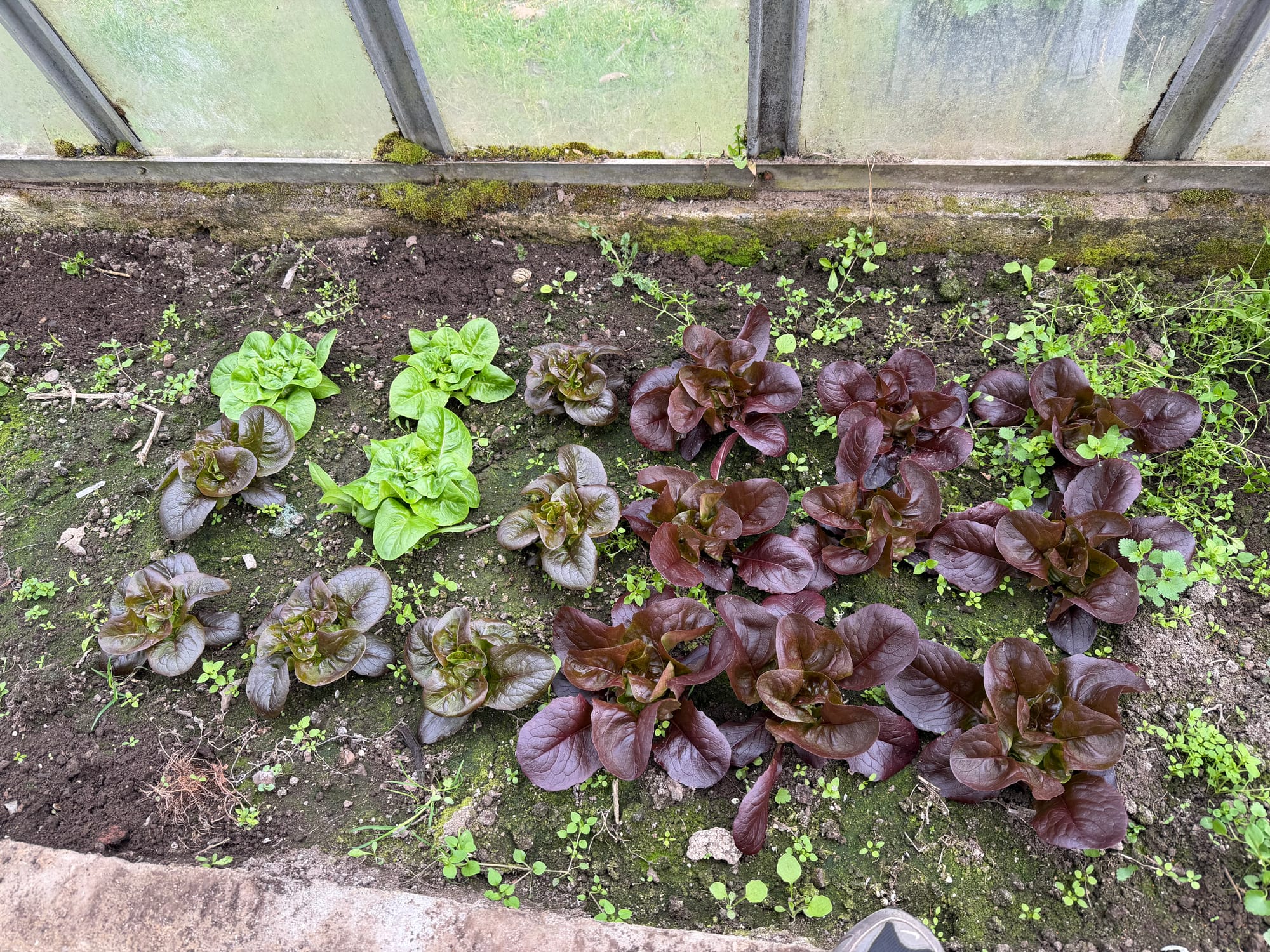
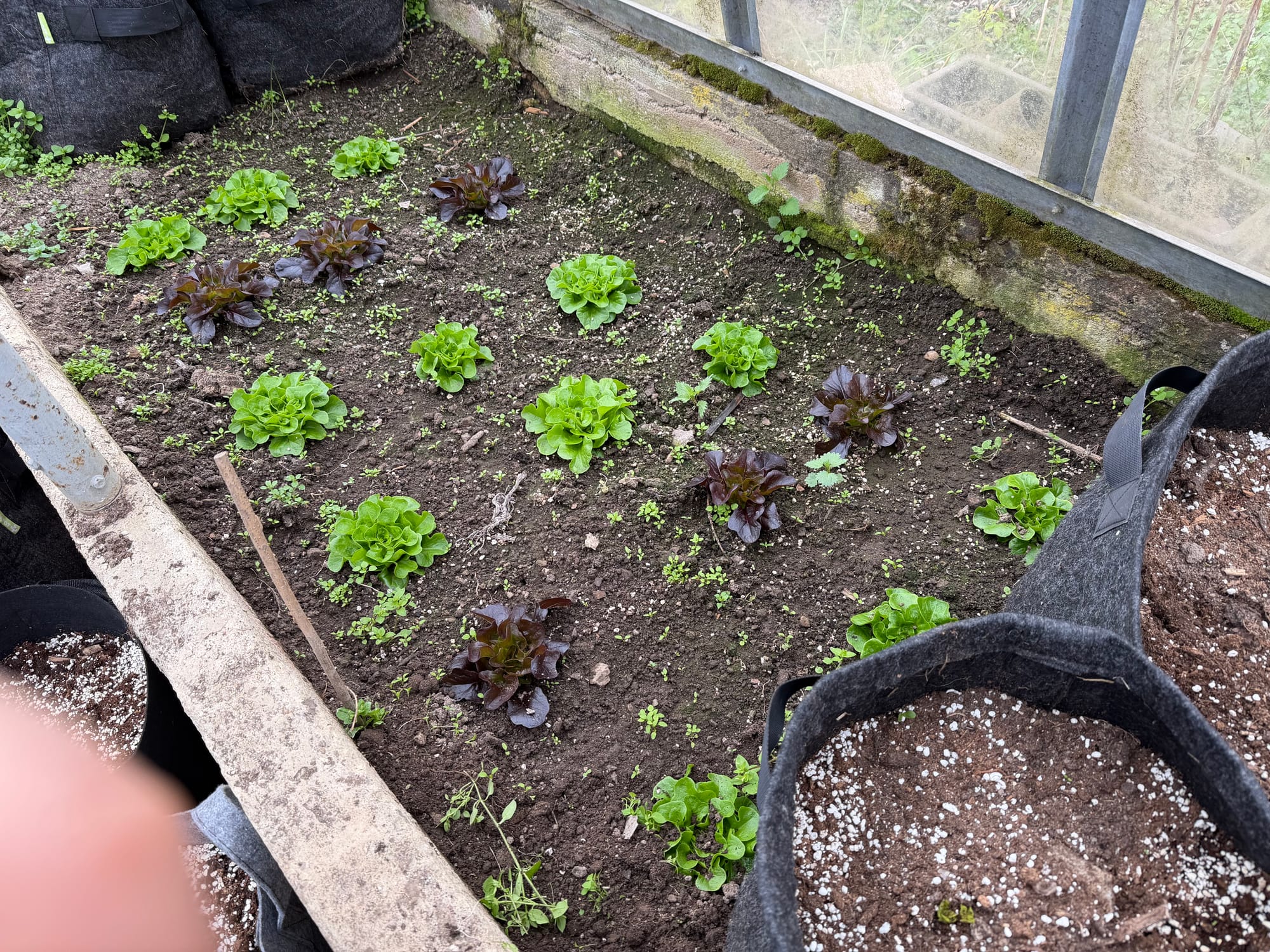
The initial spinach/radish/pak choi patch looks a bit overgrown at this point. Still, I was able to harvest some deep purple radishes already.
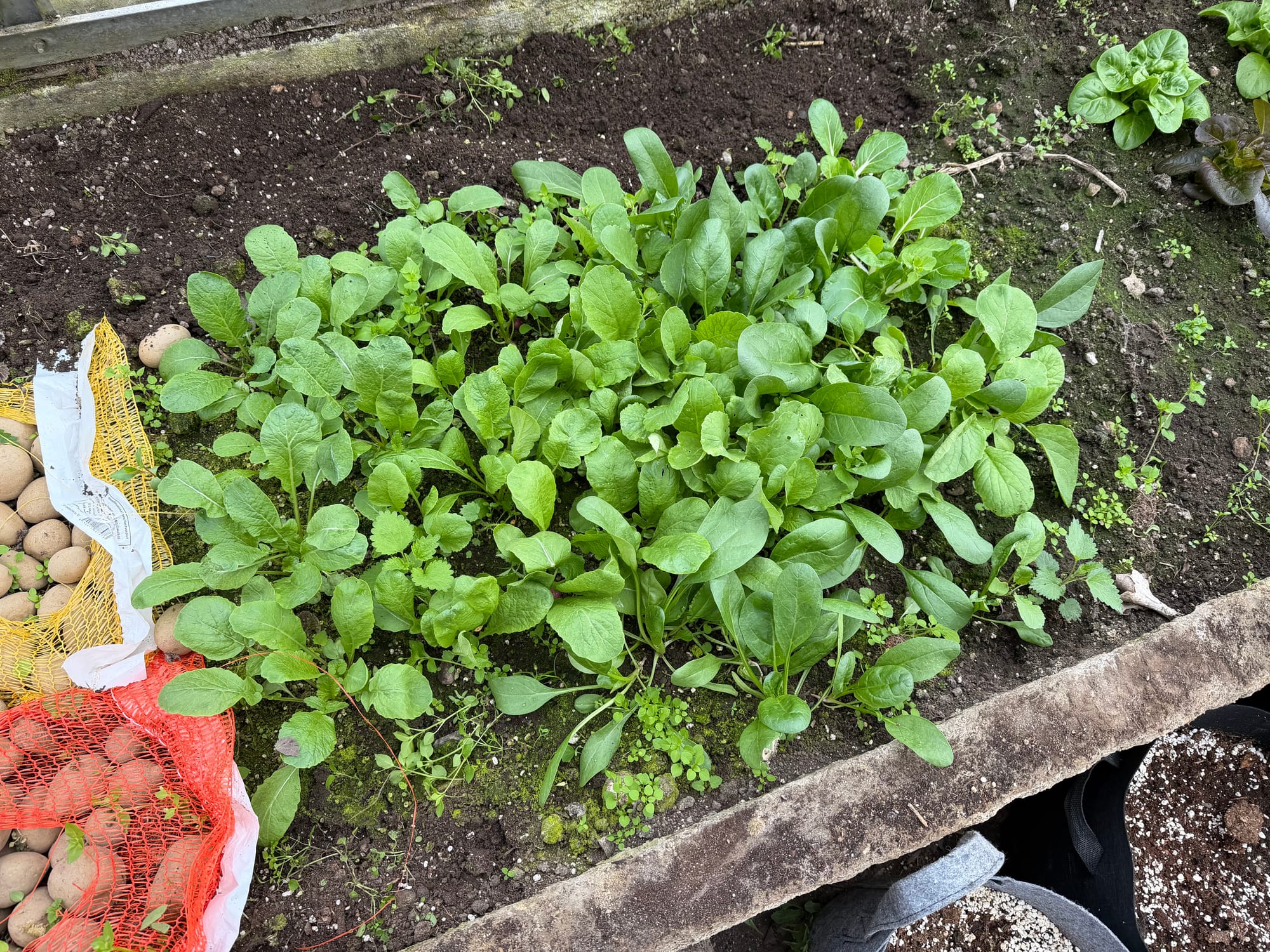
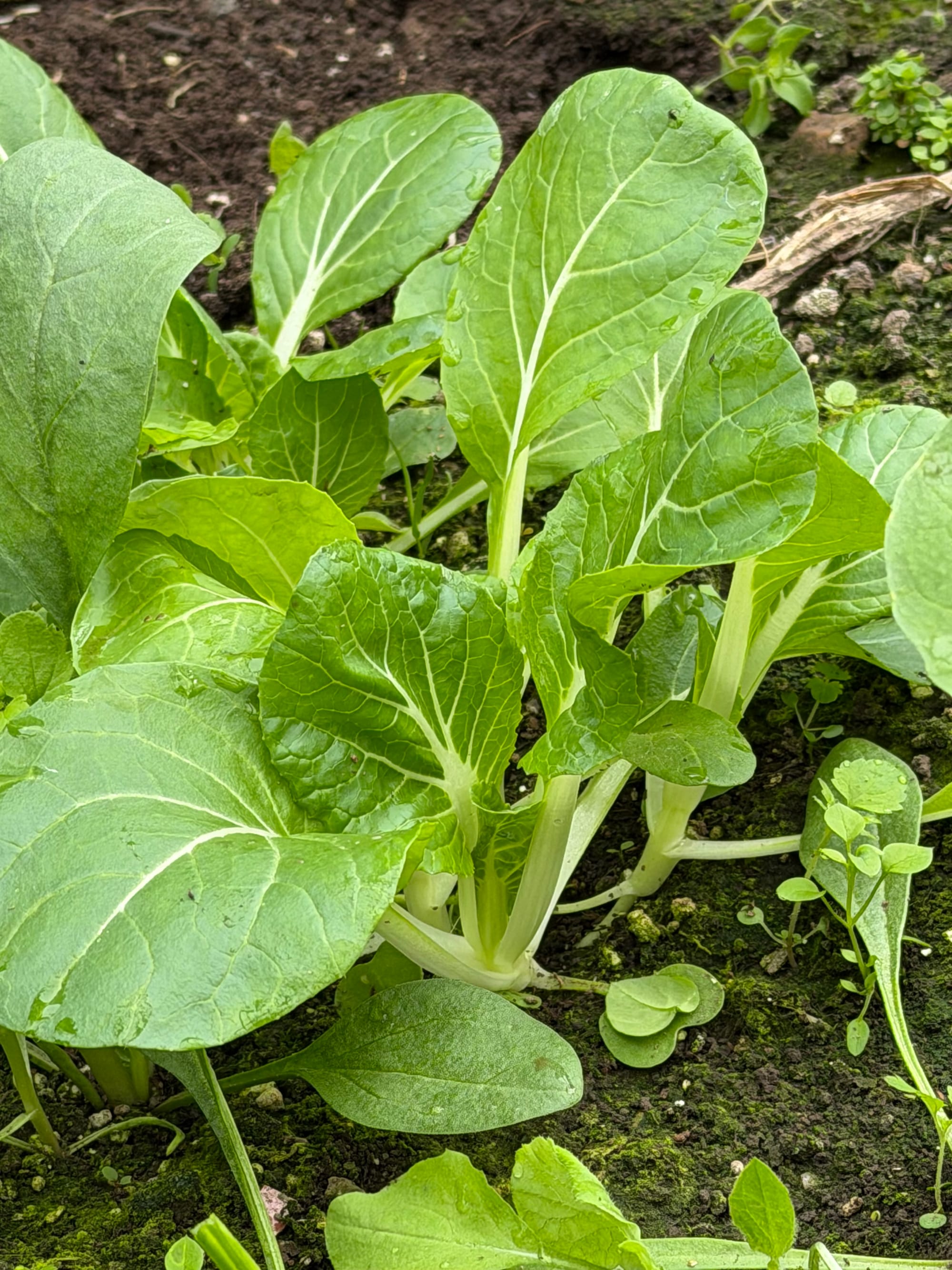
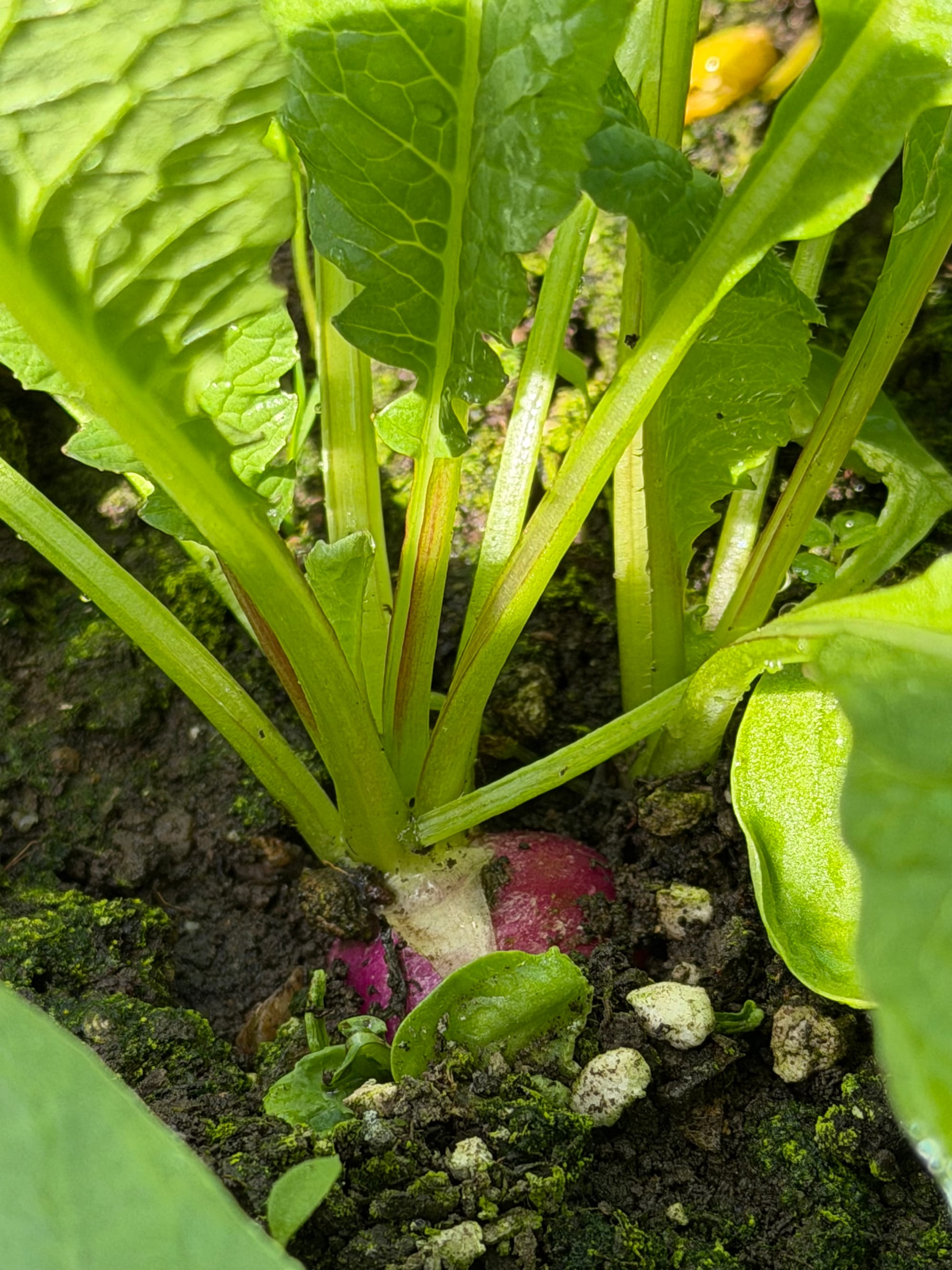
The timing is just right for the second batch of lettuce to finish by mid-May. Hopefully, the soil pH is stable already for my peppers!
the root zone
To build the tension, let me finish the outdoors before we check what happened inside. We have some action in the onion-and-carrot bed. Both of which are breaking the soil nicely and look good so far. I could have crammed more onions in there, but in the end, they will be succeeded by carrot in July.
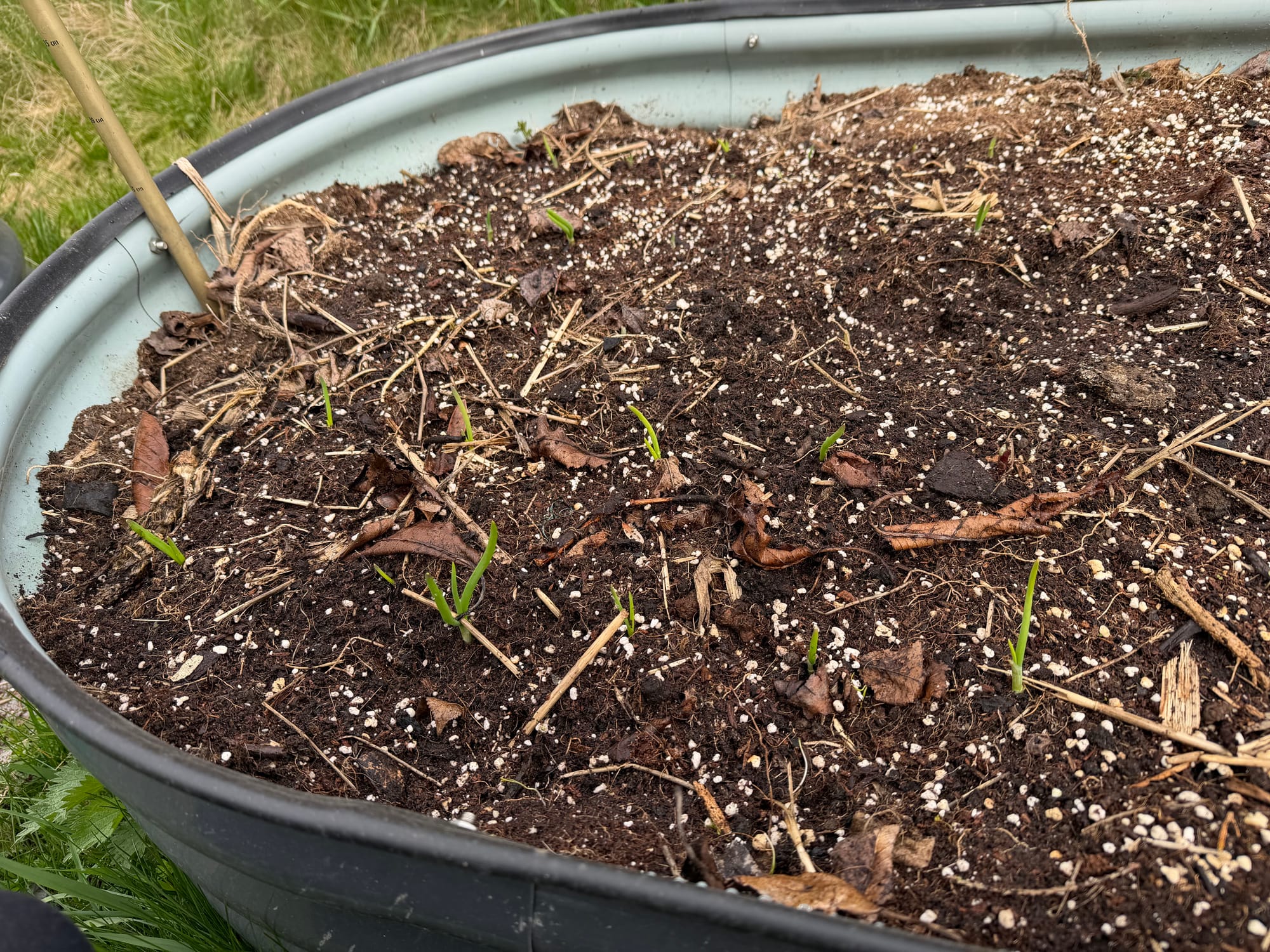
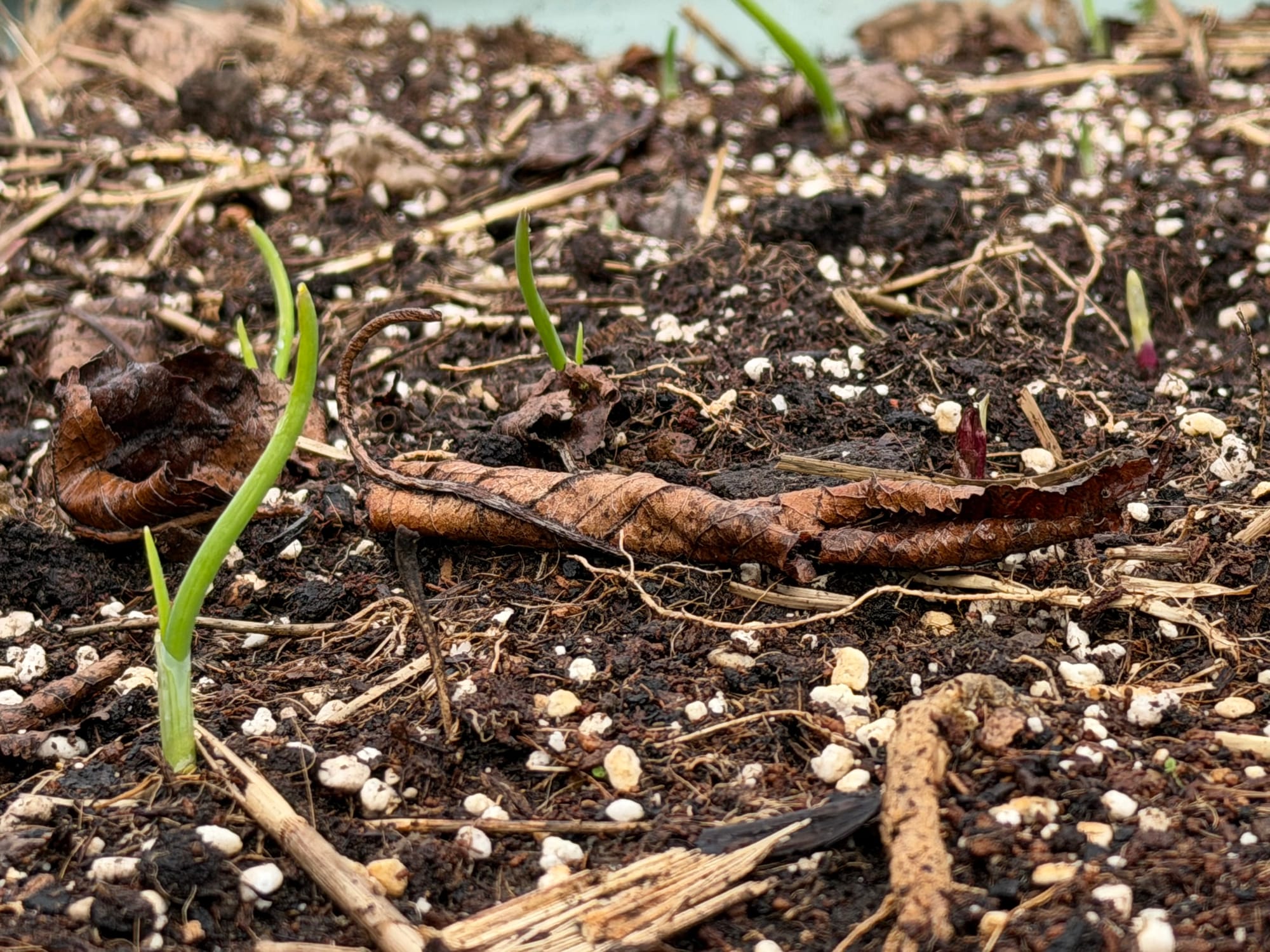
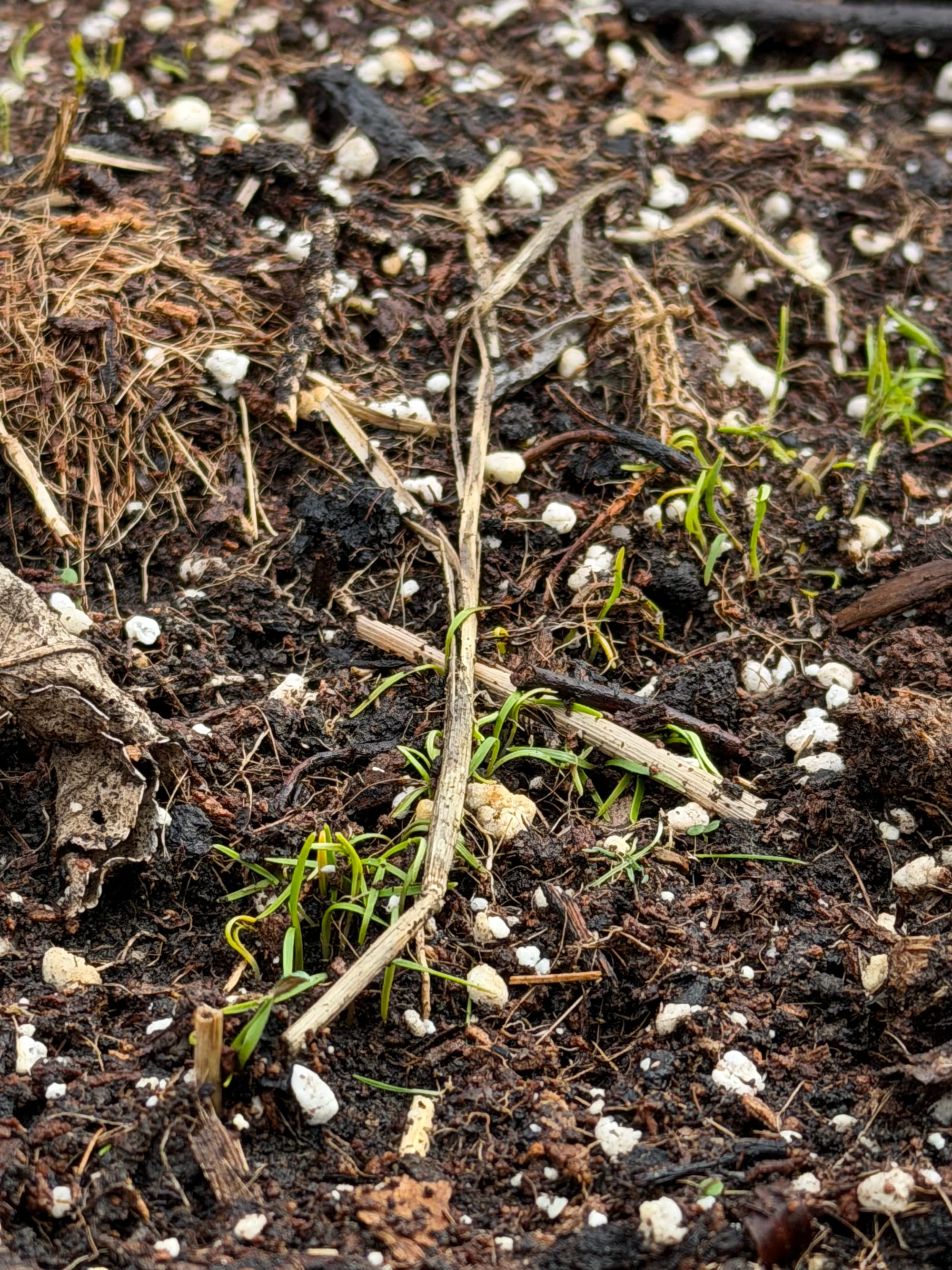
And look at this garlic bed. I have a small bird problem: for some reason, birds love digging in my beds this year, but they haven't damaged anything yet. Just making a mess.
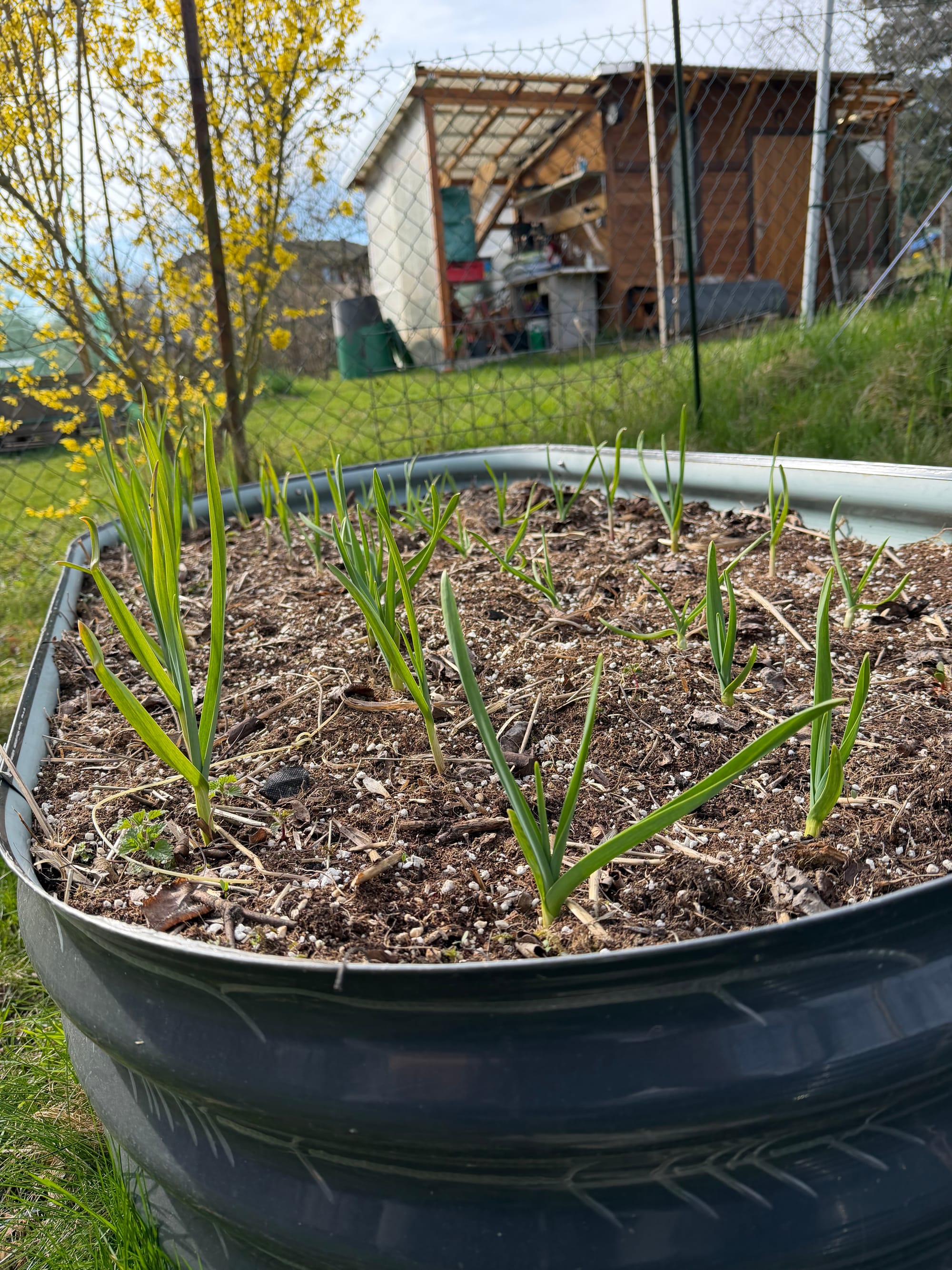
I did a small oopsie and forgot to label the garlic. I have three varieties in, and I don't know which is which. It's almost time to sow some tomatoes for this spot, I know, really original. But there are only about 70 days left before those bulbs reach maturity, and I don't want the bed to go unused for half the season.
the A* tree
The phenophase dates of cherries and other fruit trees are constantly shifting earlier into spring. As usual for this time of year, my large cherry tree is in full bloom.
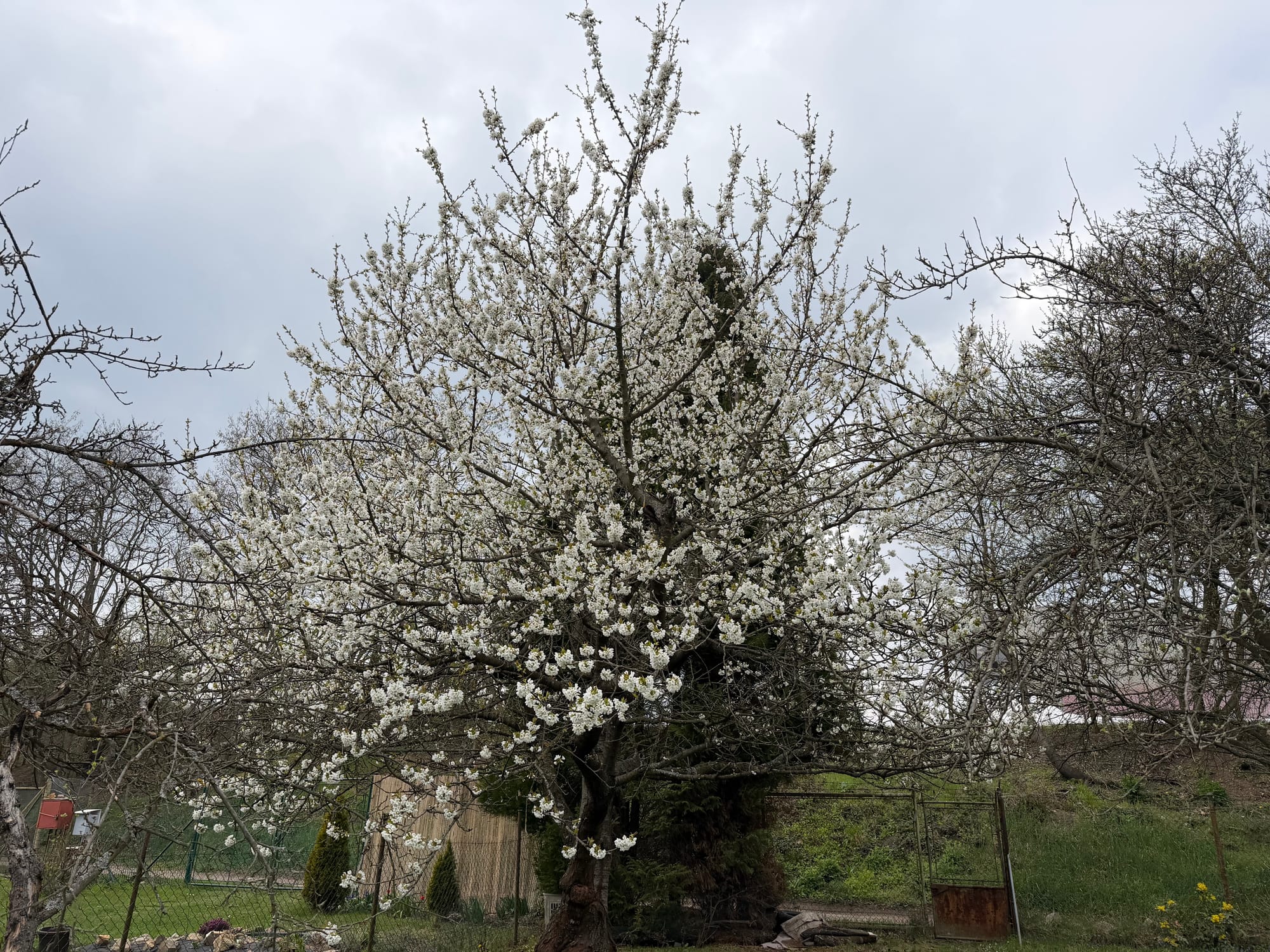
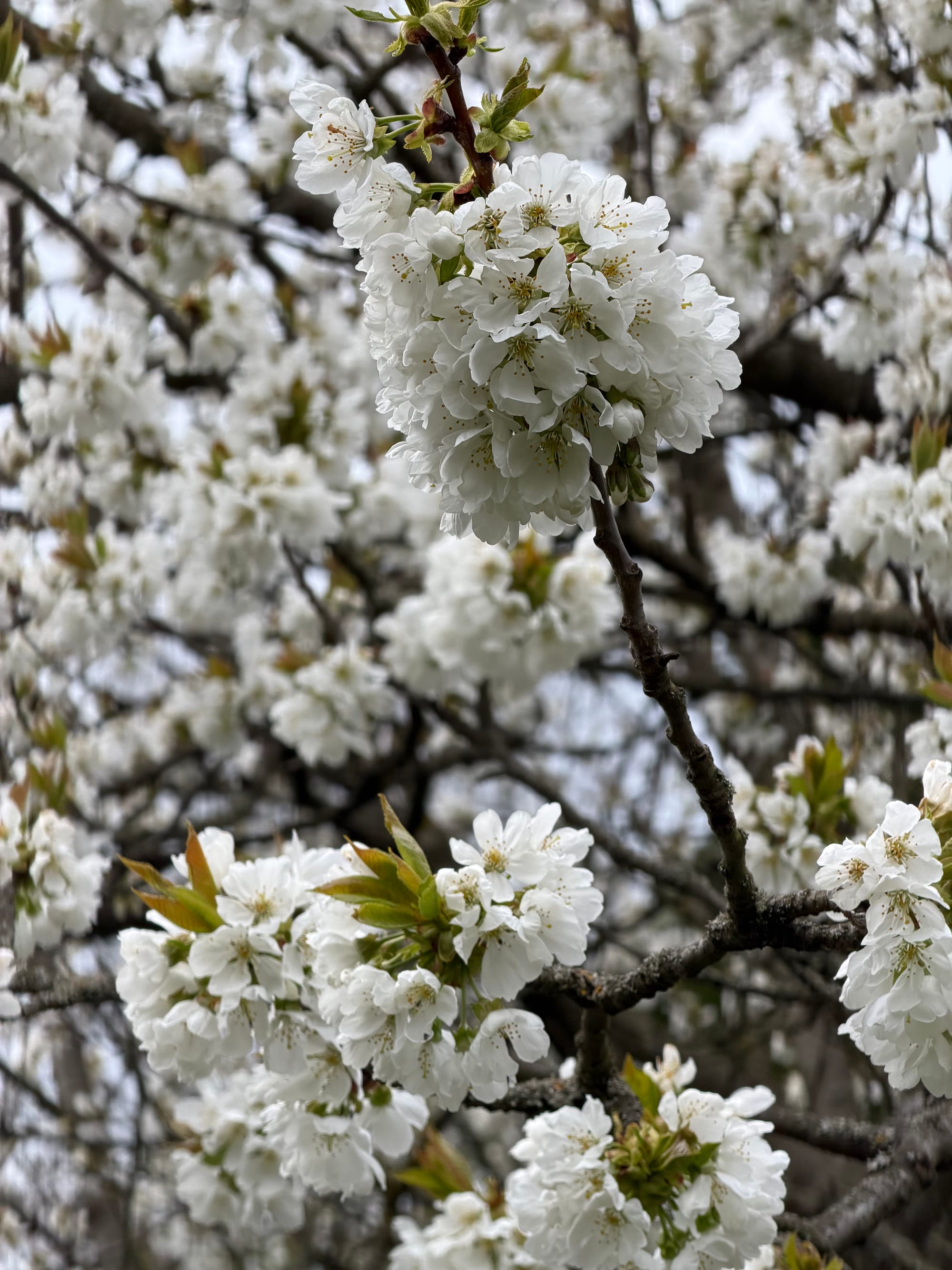
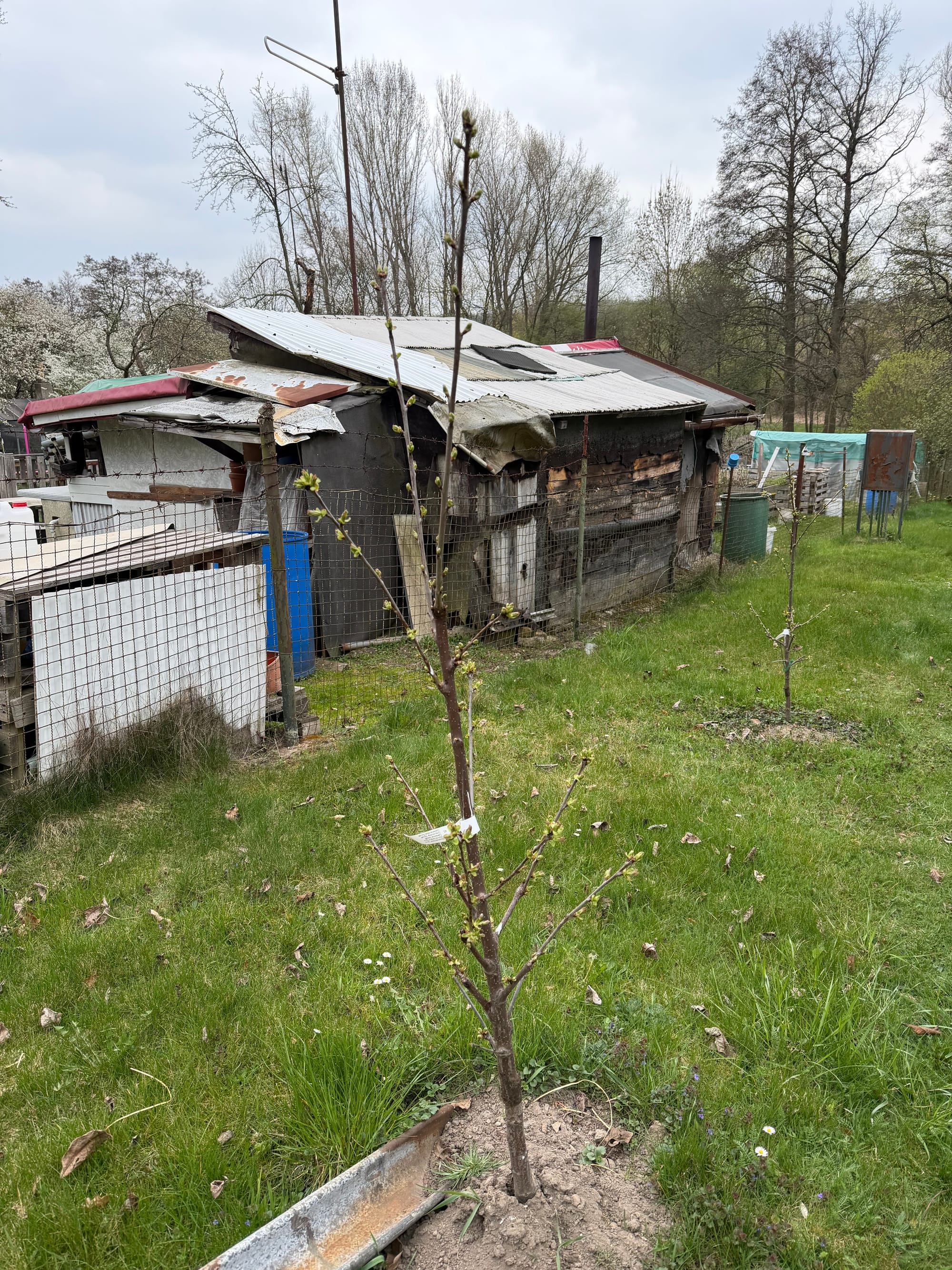
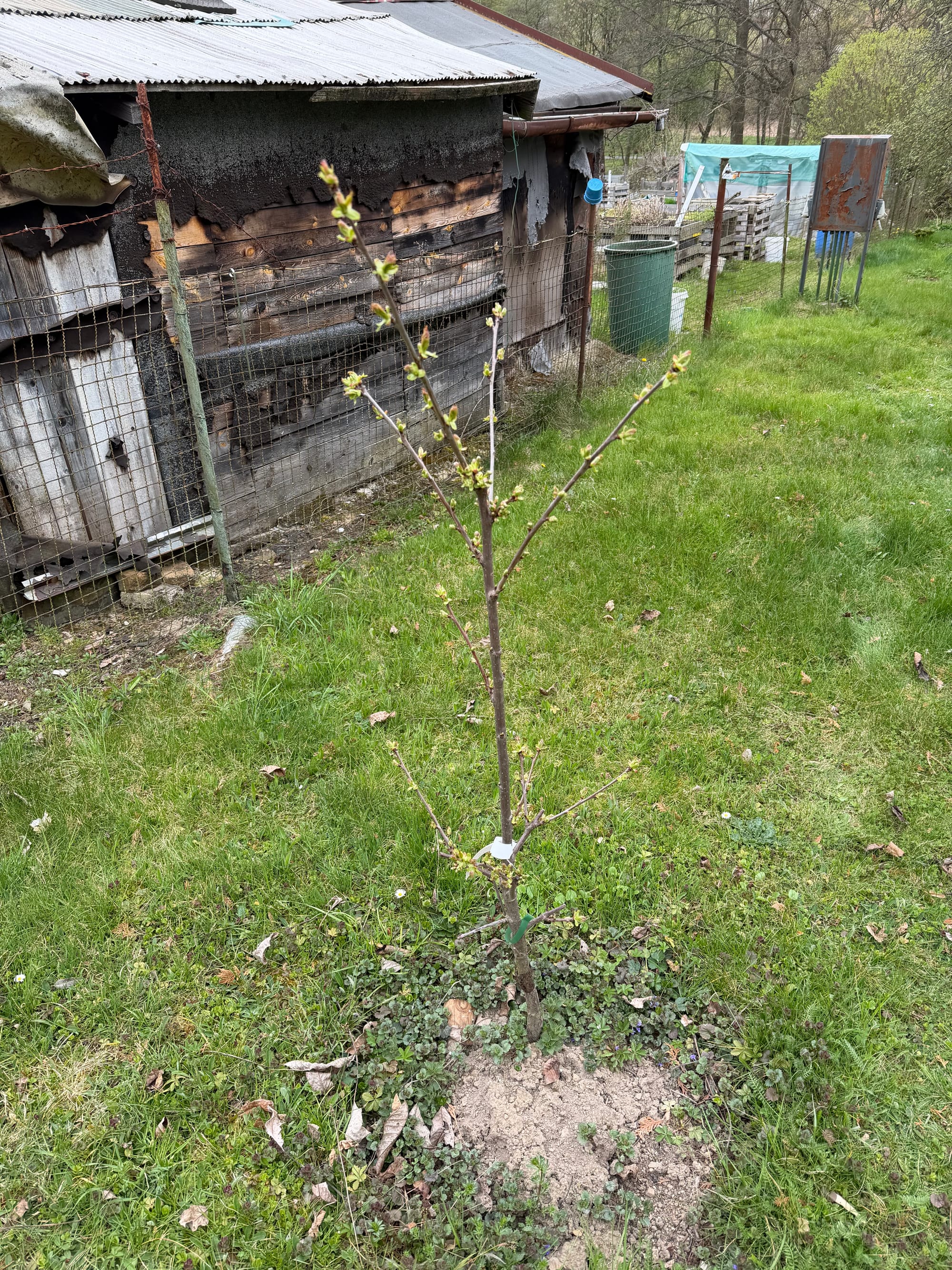
Very lovely, but also worrying, because the risk of cold snaps is much greater in early April. And this one is huge, I can't cover it with a cloth like I do my smaller trees. Speaking of the other trees, last year I bought two cherry trees for future-proofing my supply, and this year? I can already see some bloomers! These I will definitely cover for frost protection.
the salt'n'pepper
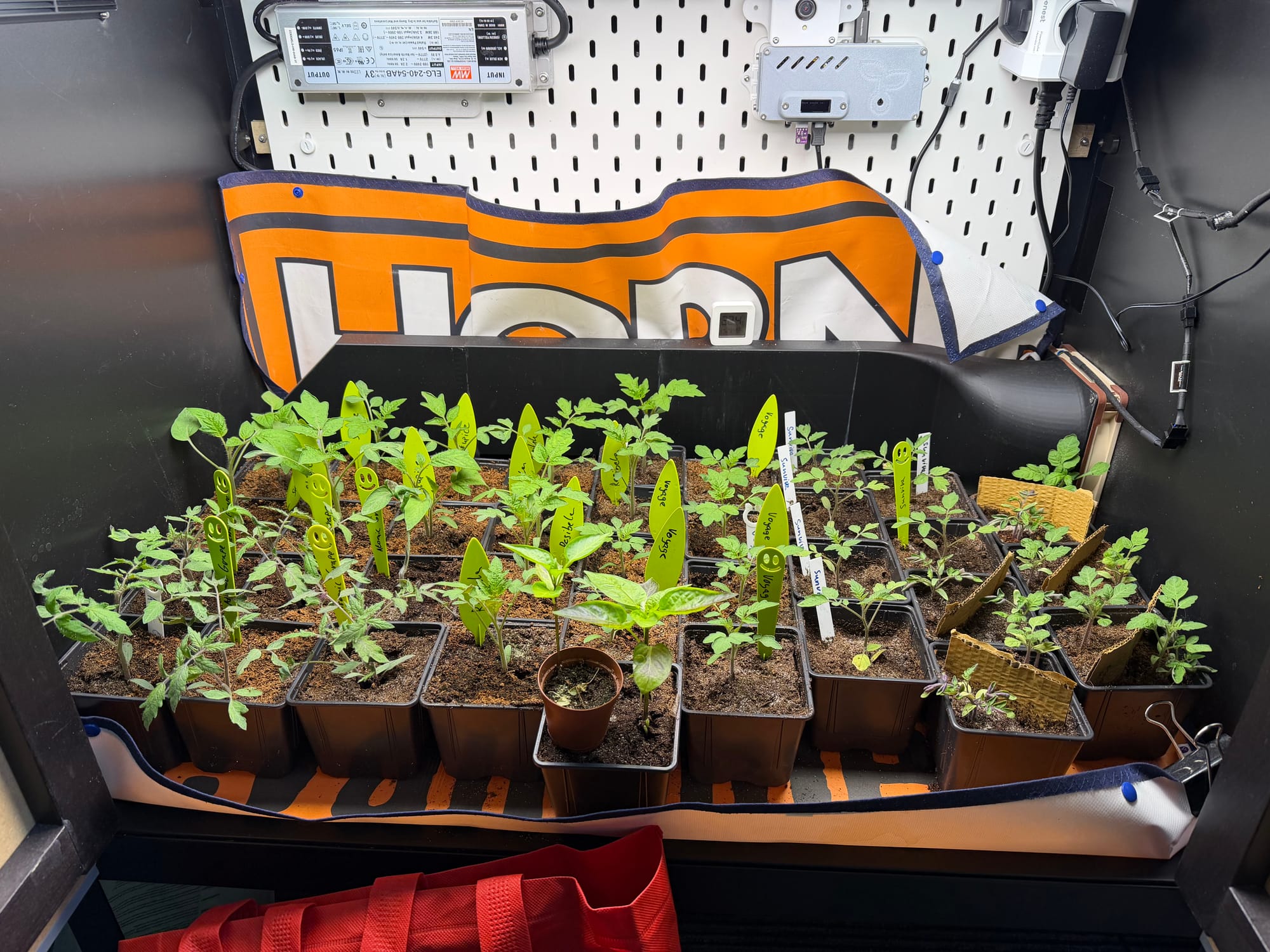
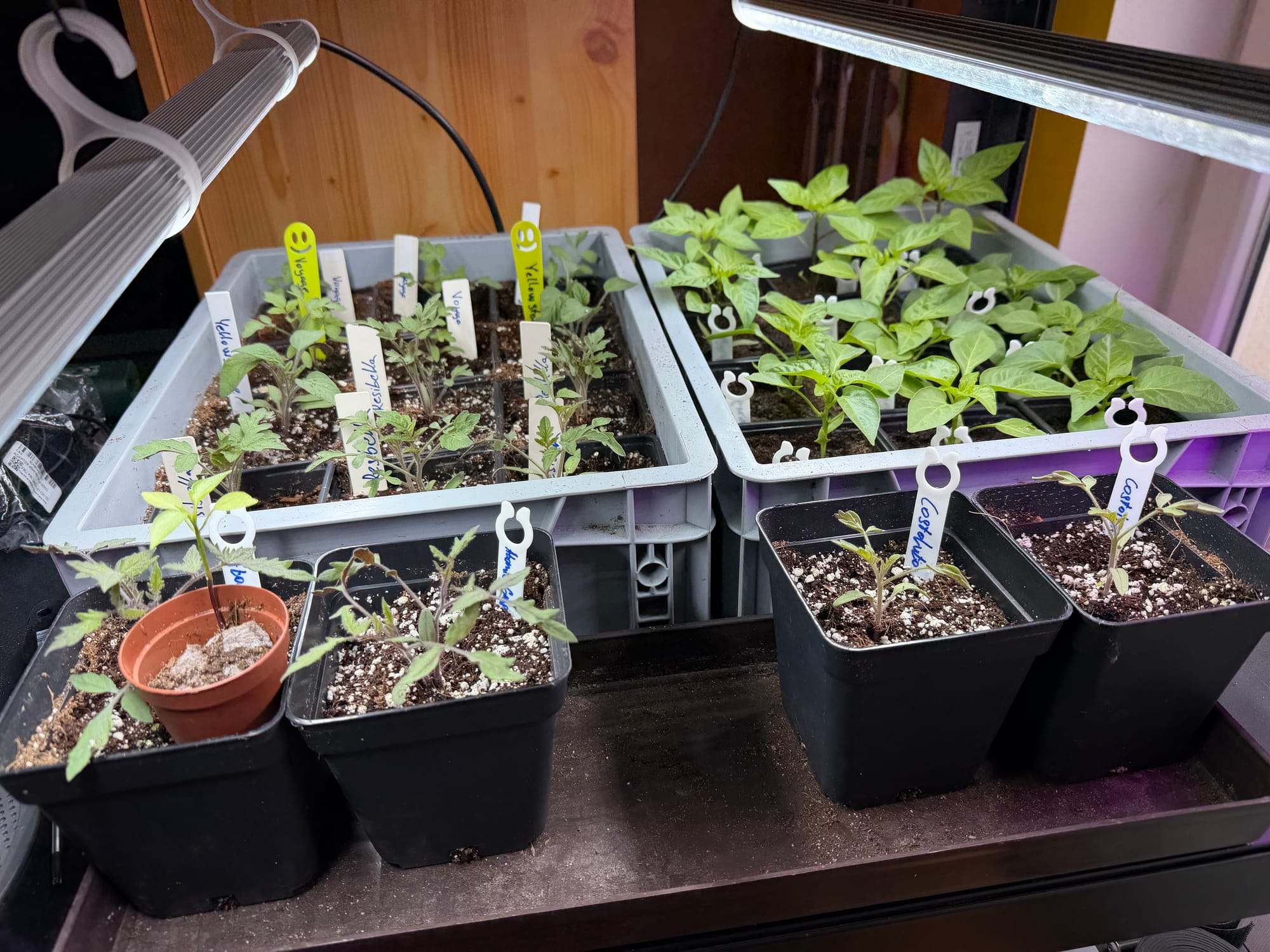
And now for the grand finale. I have transplanted all my tomatoes into 10x10cm pots, filling the BROR all the way.
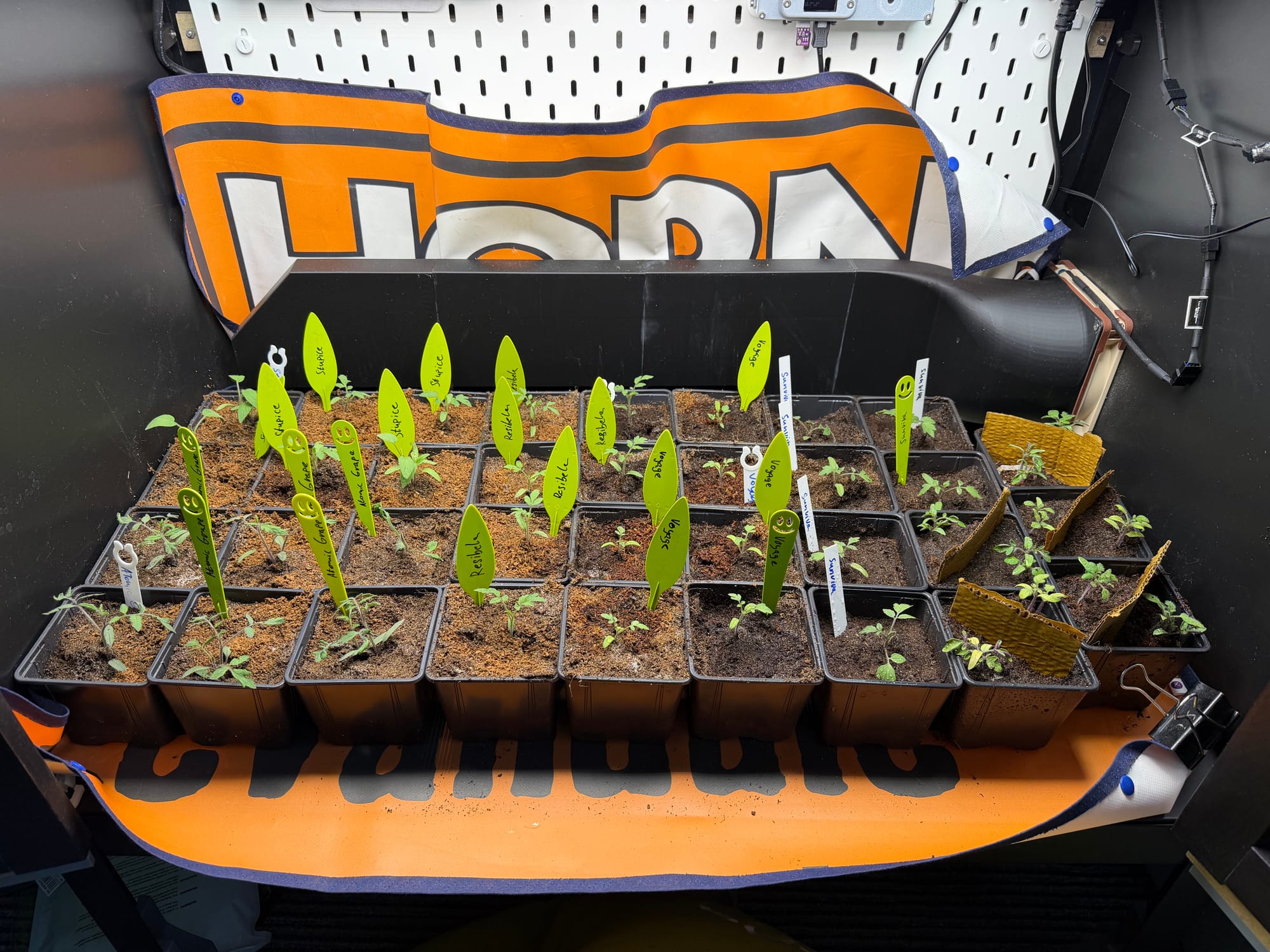
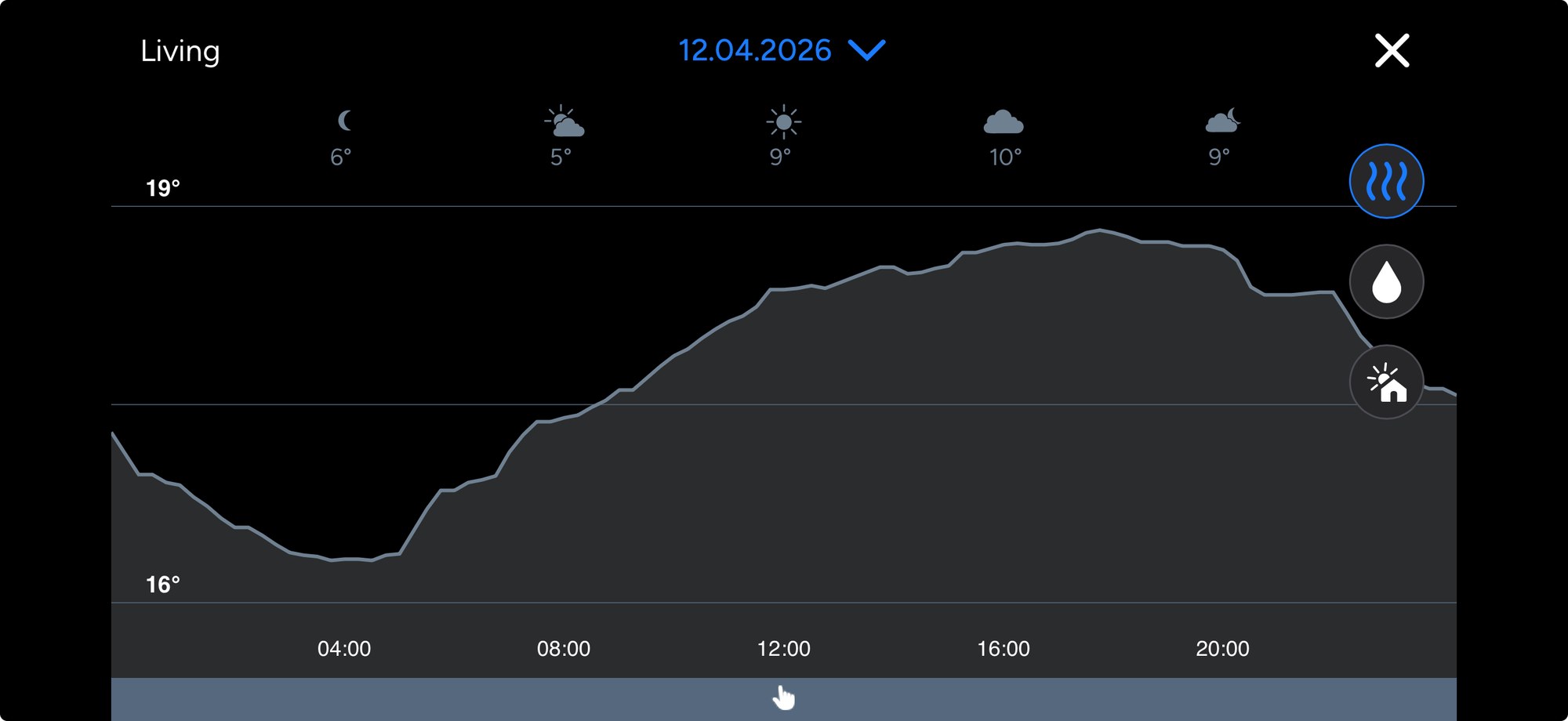
I keep them in my old place for now. Since I don't live there anymore, I can keep the temperature uncomfortably low. Every year so far, I have always had to deal with leggy tomatoes. Legginess is usually caused by poor lighting or high temperatures. Well, actually, there is a causal relationship. The more heat the plant is exposed to, the more light it expects from the environment. And while I had a lot of light, the temperature was still too high. But not this year. And it shows.
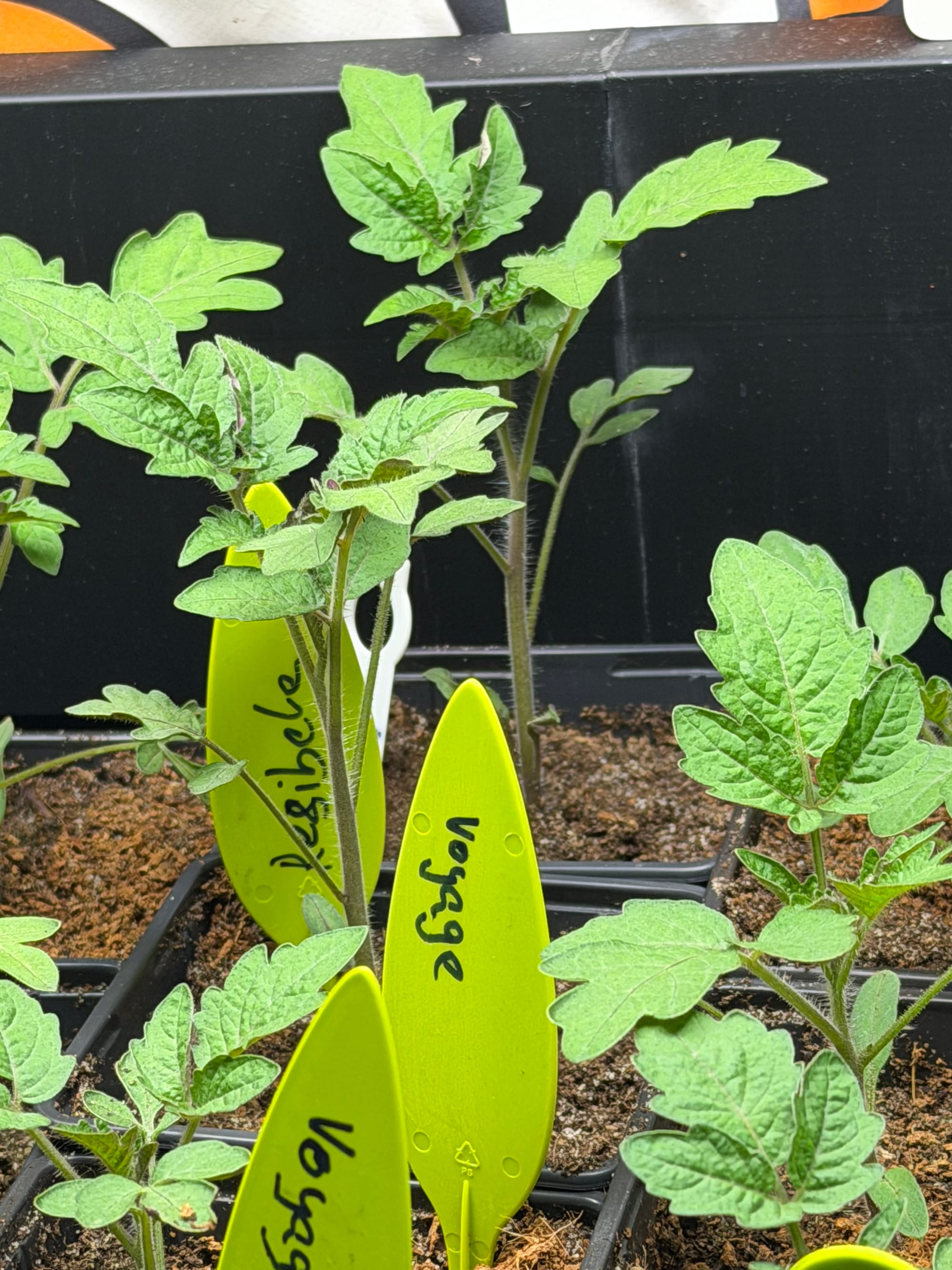
The seedlings are way more compact than I am used to; their leaves are a darker shade of green, and overall, they look healthier.
Looking at the temperature during the day, they are living between 16 and 20 degrees, which is actually a good temperature cycle for plants overall.
I have split my tomatoes into two groups. Approximately half are growing in Plagron seed mix, and the other half are growing in Plagron coco mix. Those growing in coco mix are mainly those I plan to grow hydroponically, including those two Costoluto Fiorentinos, but not exclusively. From my previous experience, soil-grown seedlings can be transplanted into coco without issue, as long as there is no compost in the mix. In the end, those plants are used to growing in disintegrated shit.



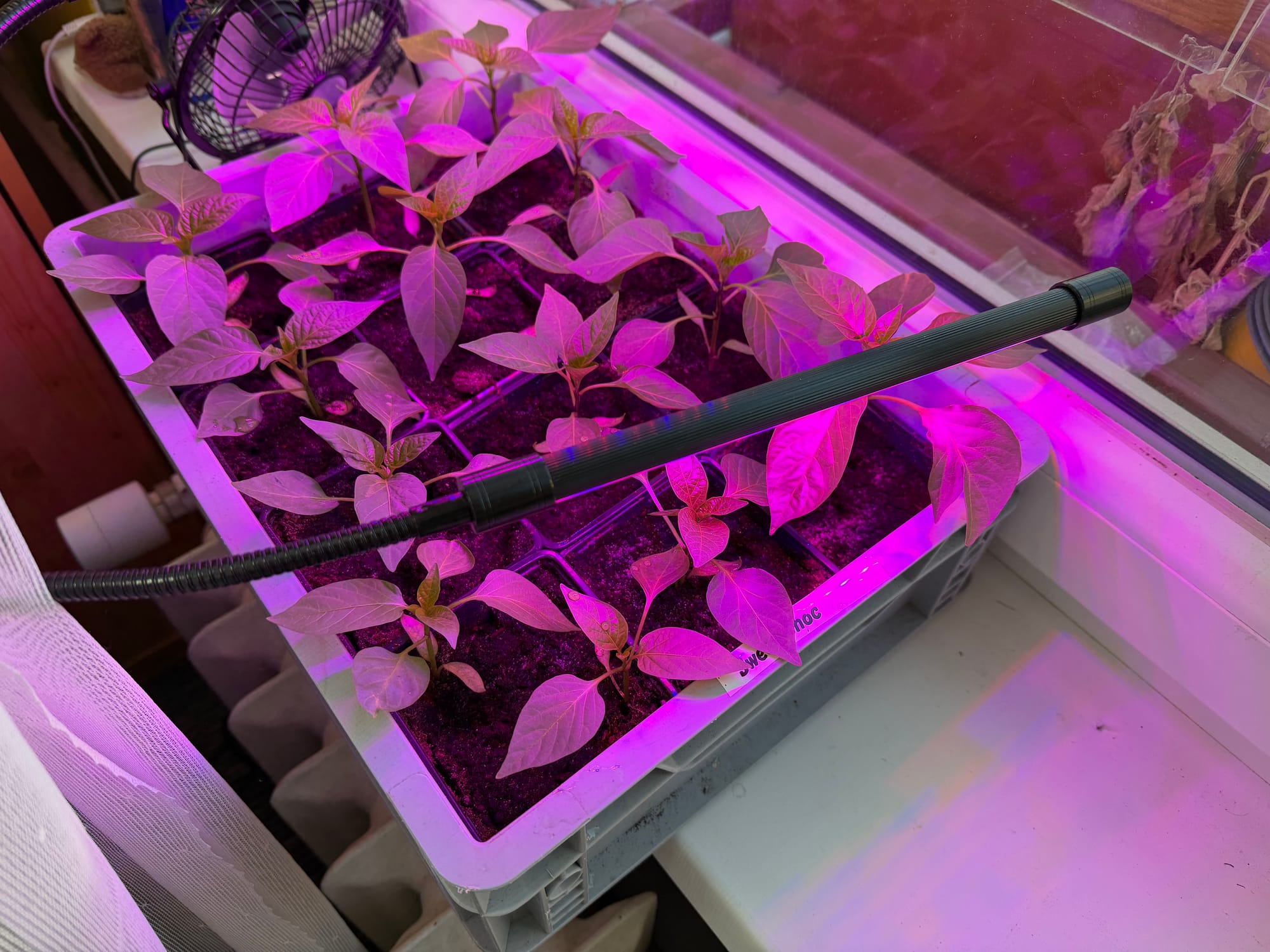
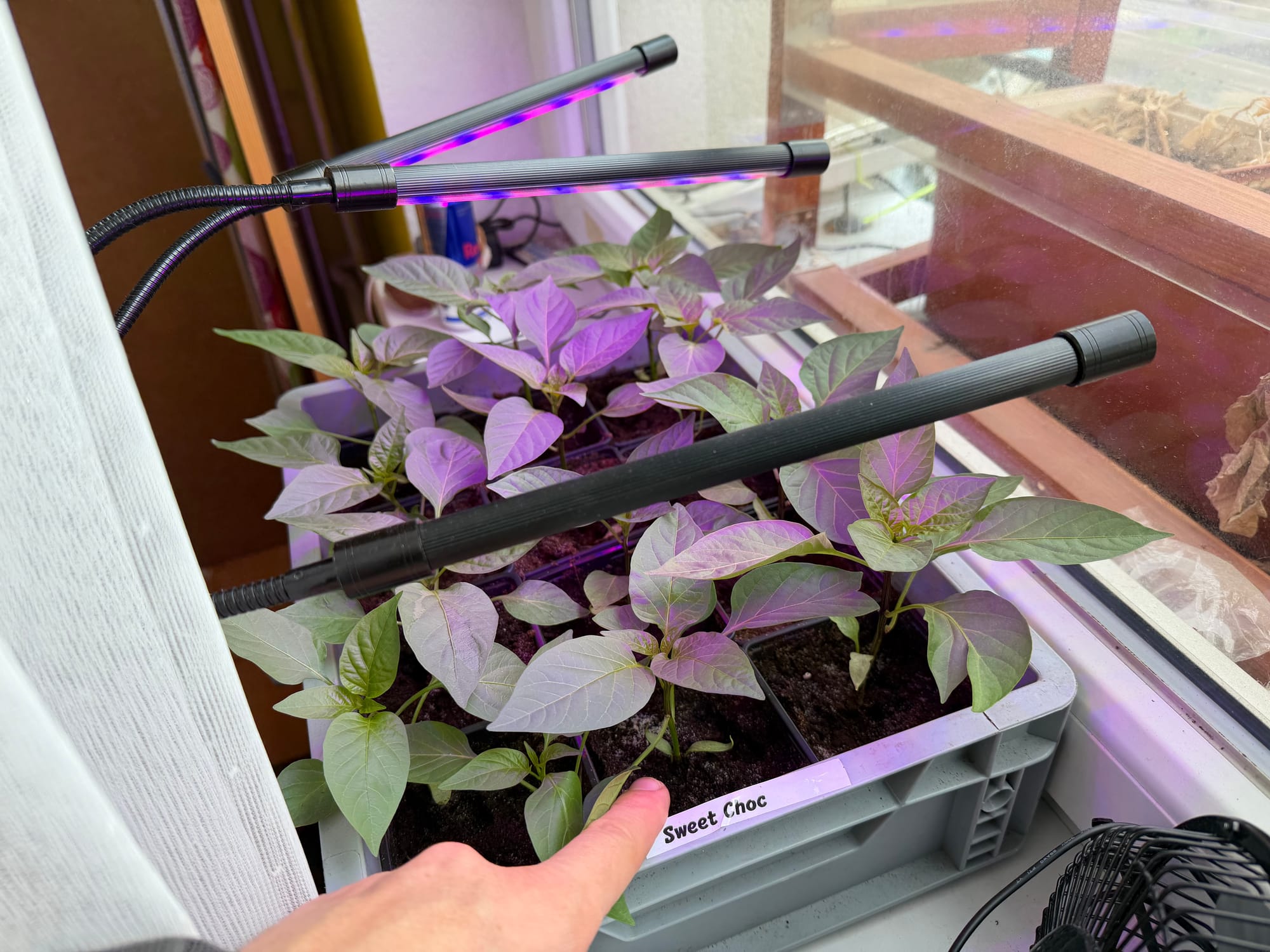
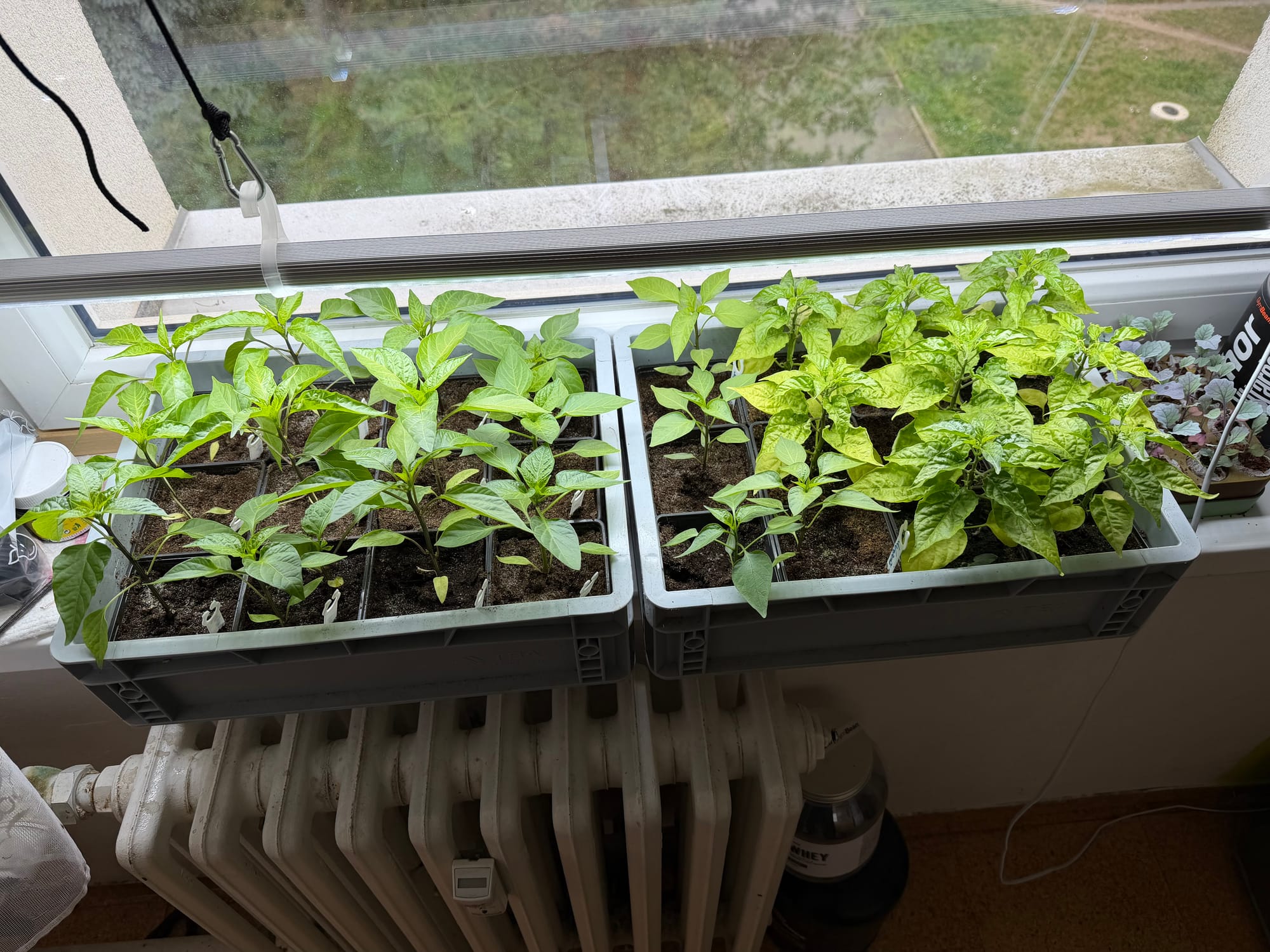
I have finally managed to force some sense into my Habaneros. They are finally getting some shades of darker green, and because of the water stress, some flower buds as well. But I am pinching those off.
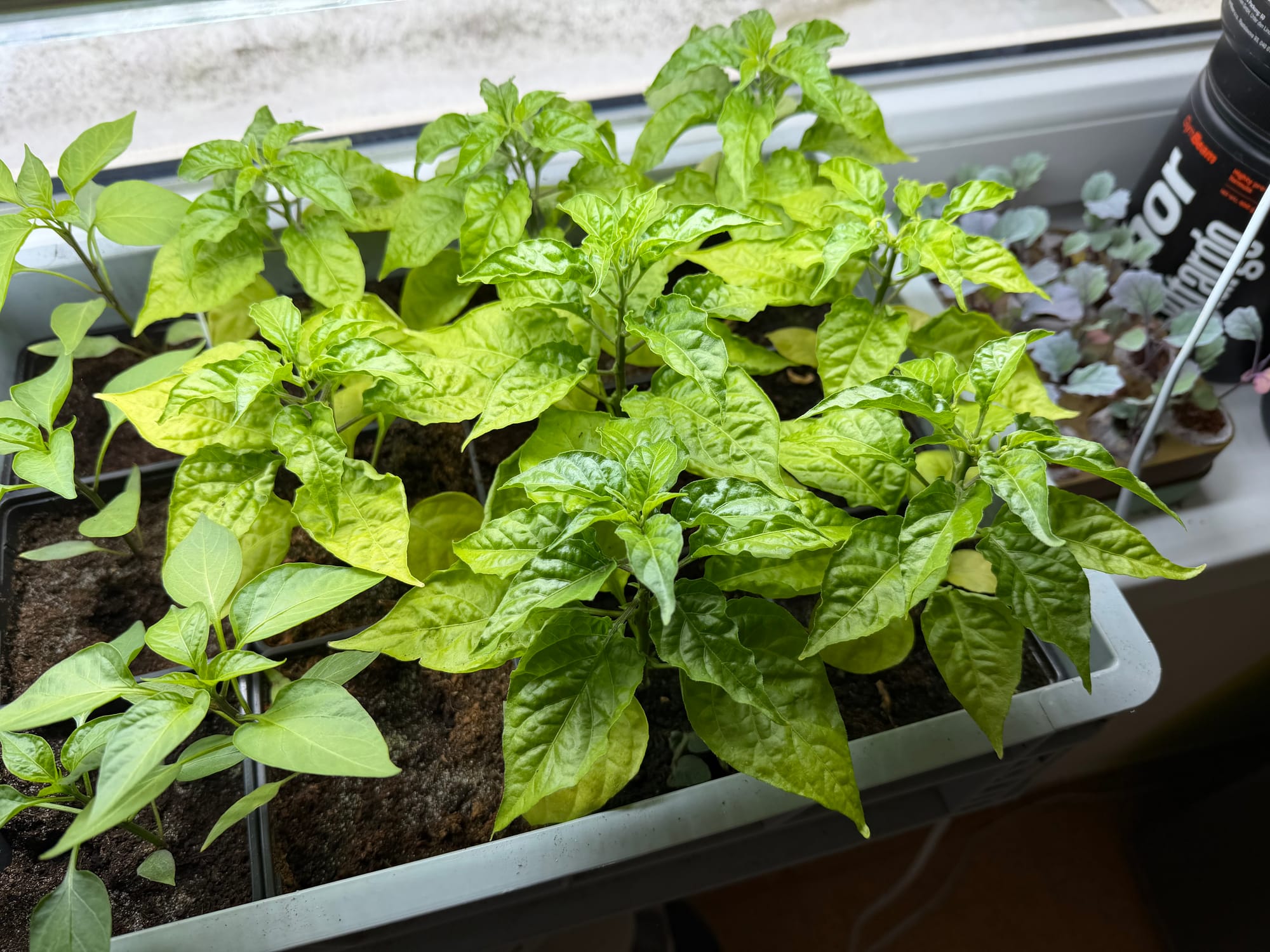
I am feeding all my peppers TA TriPart at EC 1.0, with water at pH 6.6–6.8. I don't want to give them more acidic water, even though they would probably absorb nutrients better, but the transplantation shock into a higher pH could stunt them without hardening. And to be honest, I am not great at hardening peppers, and I am trying to play it safe here. But that's just room for improvement. Slow and painful improvement.
The weather this year seems calmer than last year's. The forecast looks nice, and we barely get any morning frosts anymore. I am worried about the water supply. It's unusually dry; I still have to collect enough rainwater for hydroponics.
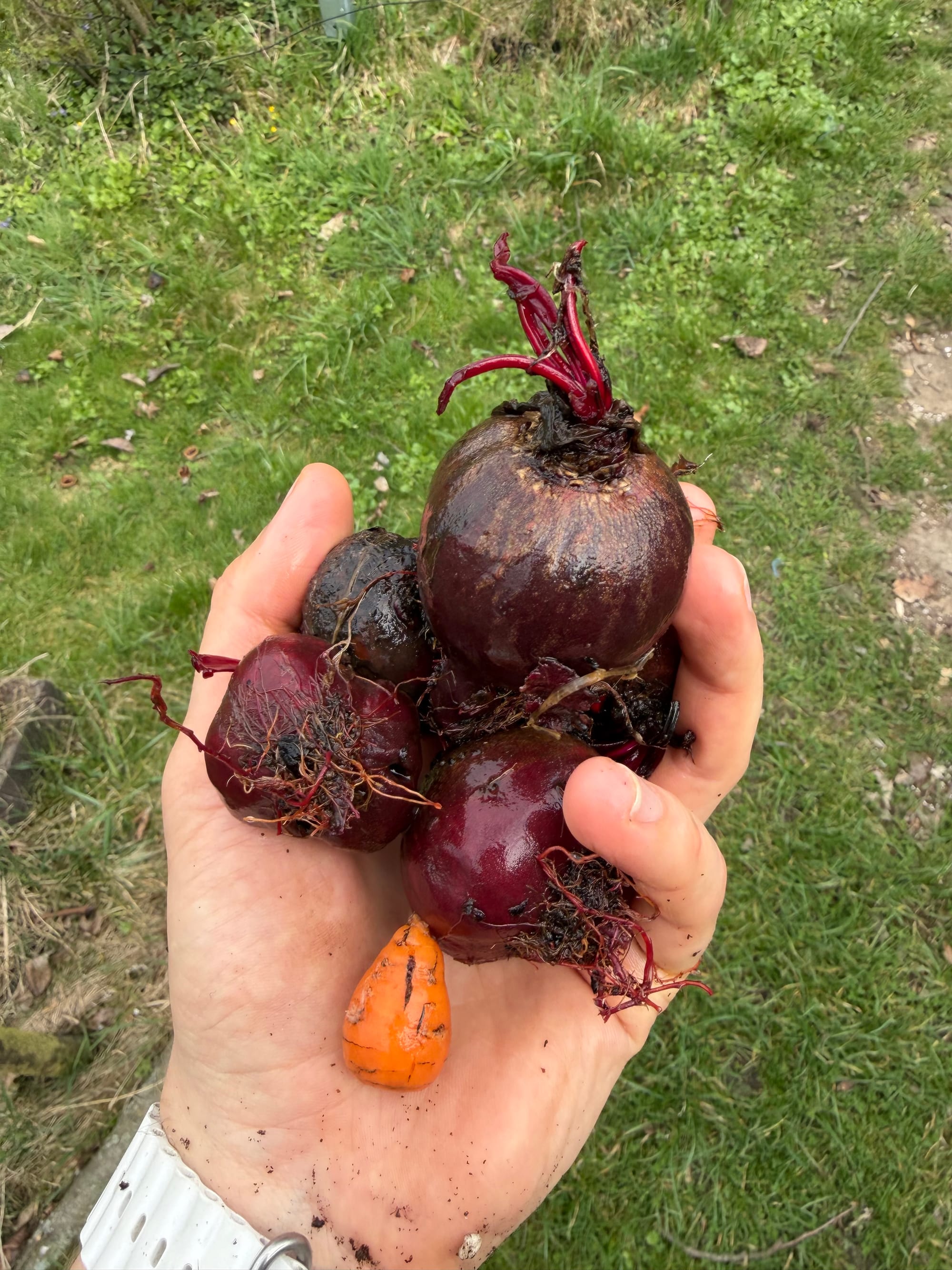
A funny thing happened the other day. I was casually digging through one of my beds and found a few beets. What a nice surprise, I must have left them there last year. They survived the winter and turned out pretty sweet.
Member discussion