March #19.2: Spud focus
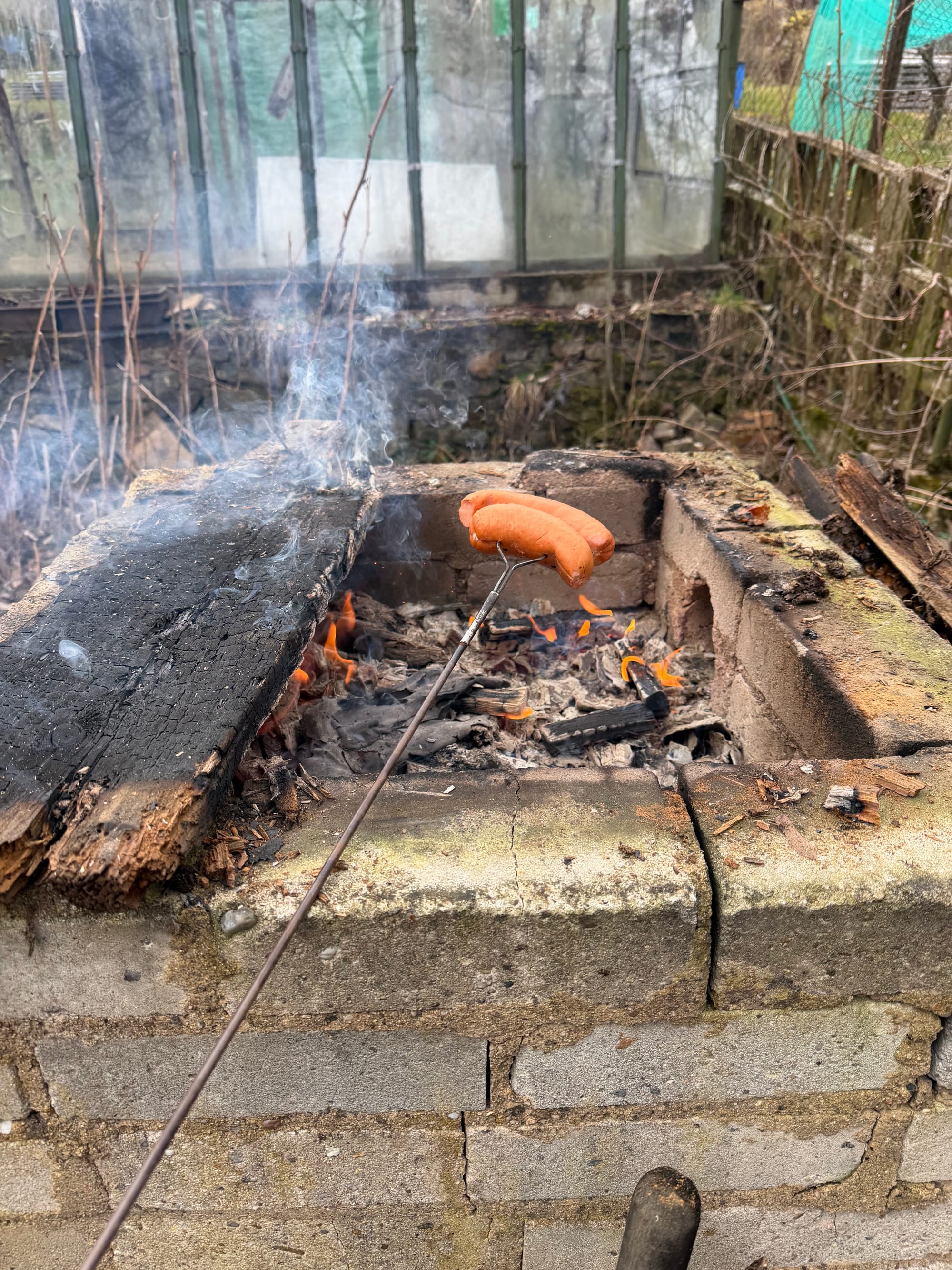
A lot is also happening in the world right now, but you know the saying: "When life gives you lemons, make lemonade." Yeah, the world is almost burning now, so I am roasting sausage over the fire.
A lot is also happening in my life, which is why there's been a delay. Thankfully, the weather is somewhat calm this year, and I can spend some quality time in the garden, because plants simply don't care, and spring is already here! So let's get cracking.
the legit stockpile
I have a feeling that this year I will finally crack the potato code. In recent years, when I was growing potatoes, I ended up with the same amount I started with at best. It's OK for me because the taste was always better, but I was low-key frustrated all the time because potatoes are supposed to be the stockpile food. The kind of food you always have at home. I have decided that this year I will do my research and read something about those yellow spuds.
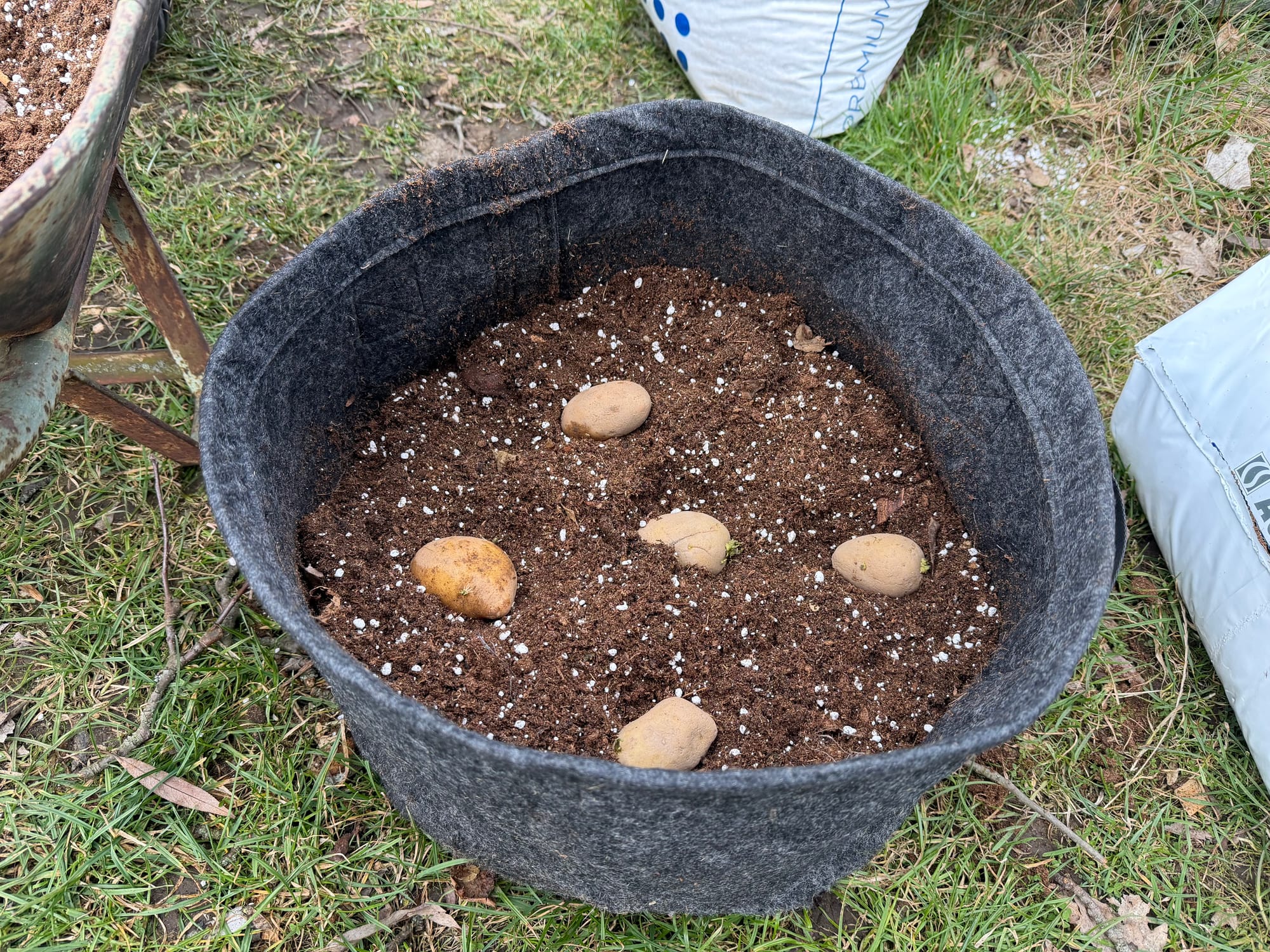
It's a bit early for my latitude to start potatoes outside while it's still freezing regularly. Still, I plan to run two batches successively this year. Once the first batch goes out, I will plant some zucchini and fill the bags with new soil mix. This way, I won't carry over any pathogens into the second part of the season, when there is already high pathogen pressure on the plants.
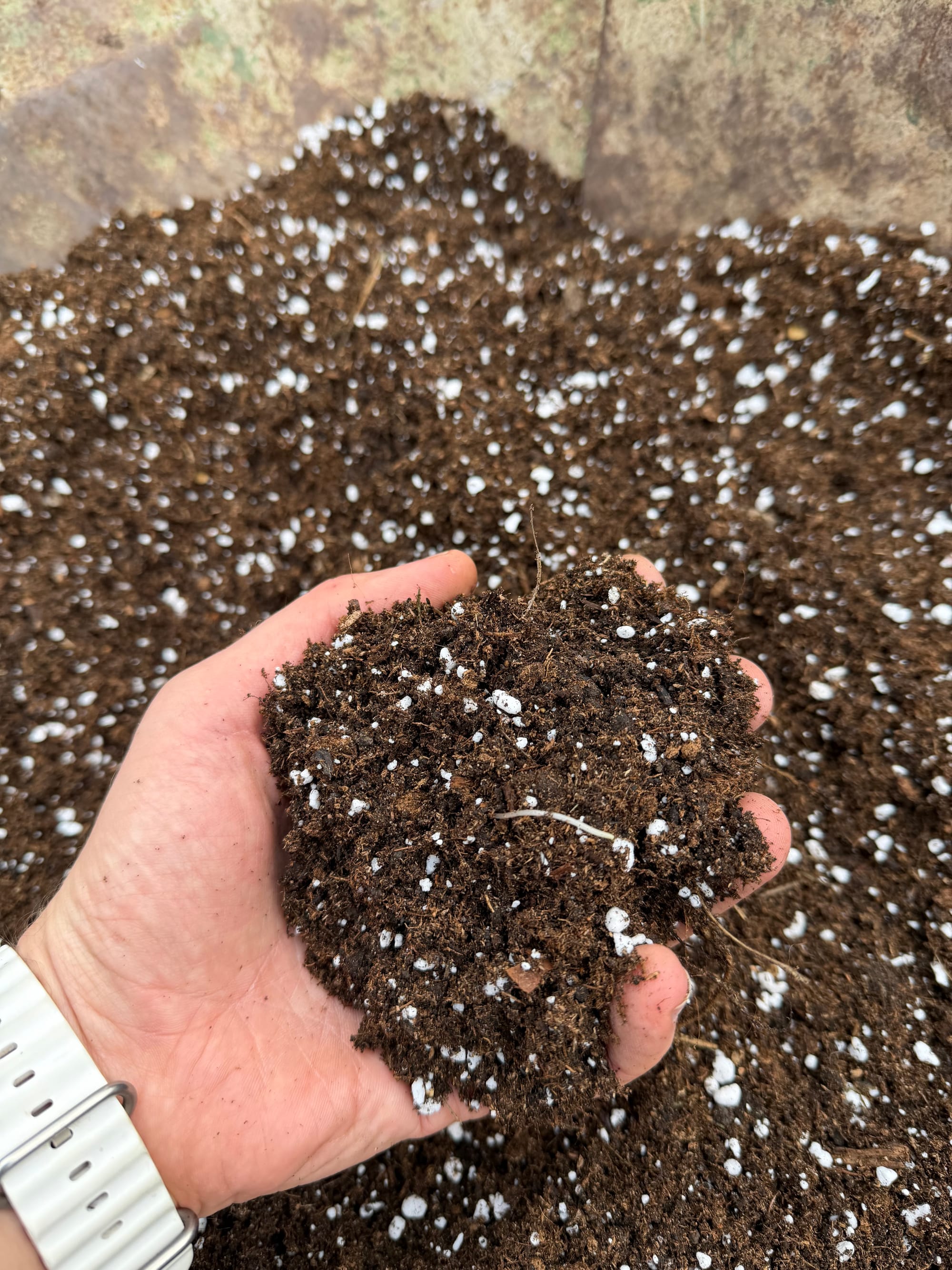
Speaking of the soil mix, this year it's a little bit more balanced. I decided to change the ratio of peat, compost, and perlite, and add some sand to make the mix coarser. The final ratio is 40:30:20:10 of white peat, compost, perlite, and sand. It's still very fluffy, but it shouldn't get as easily waterlogged as a pure compost and peat mix.
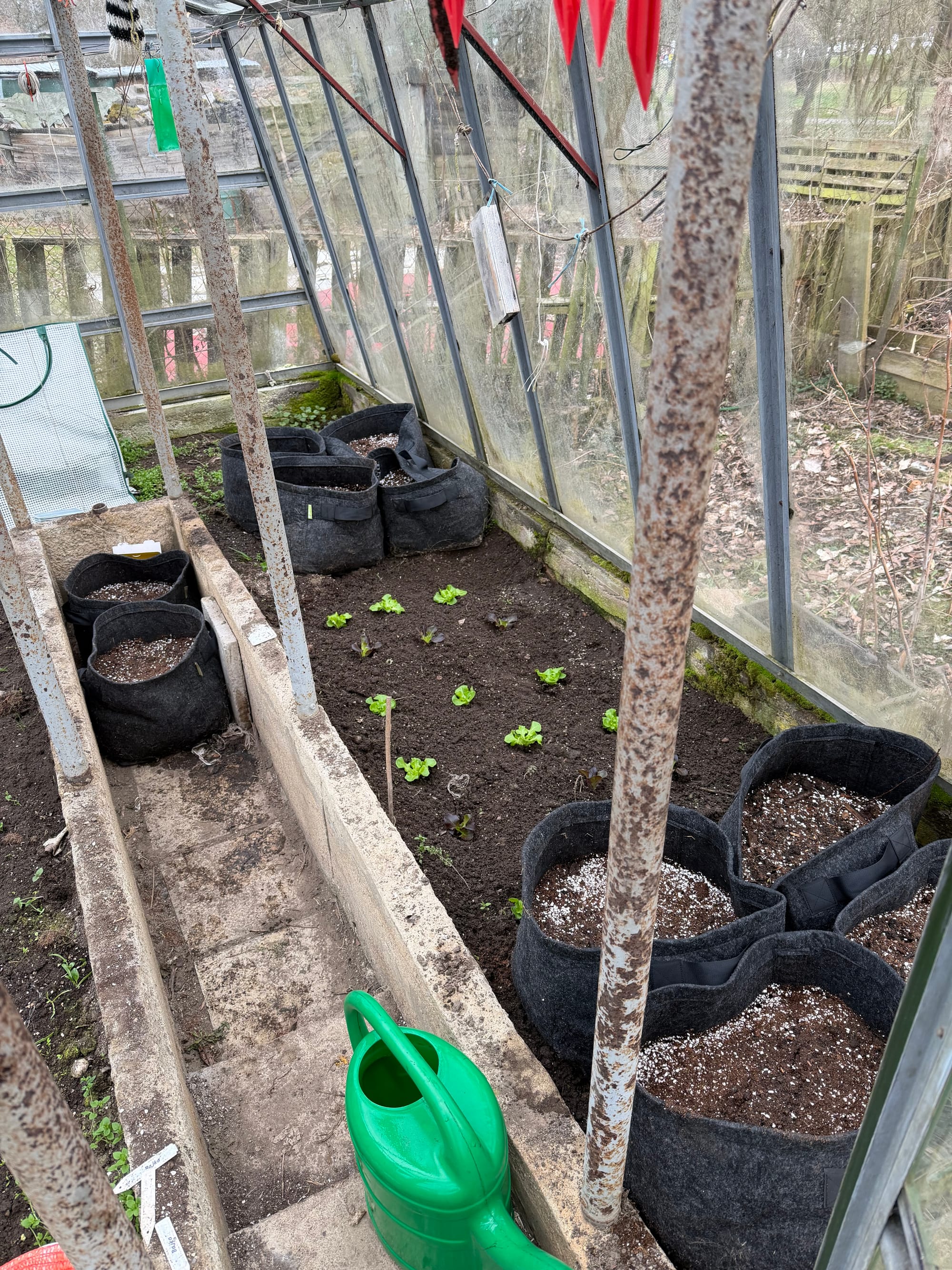
And in the worst-case scenario, I will make myself a laughing stock in the July update when the yield breaks even again.
the ramp up
Speaking of the greenhouse, I have transplanted yet another batch of lettuce. So far, the growth of lettuce and spinach in the greenhouse looks healthy, with no signs of deficiency. The pH is still a bit high for my liking, but I am drenching the soil with some acidic water.
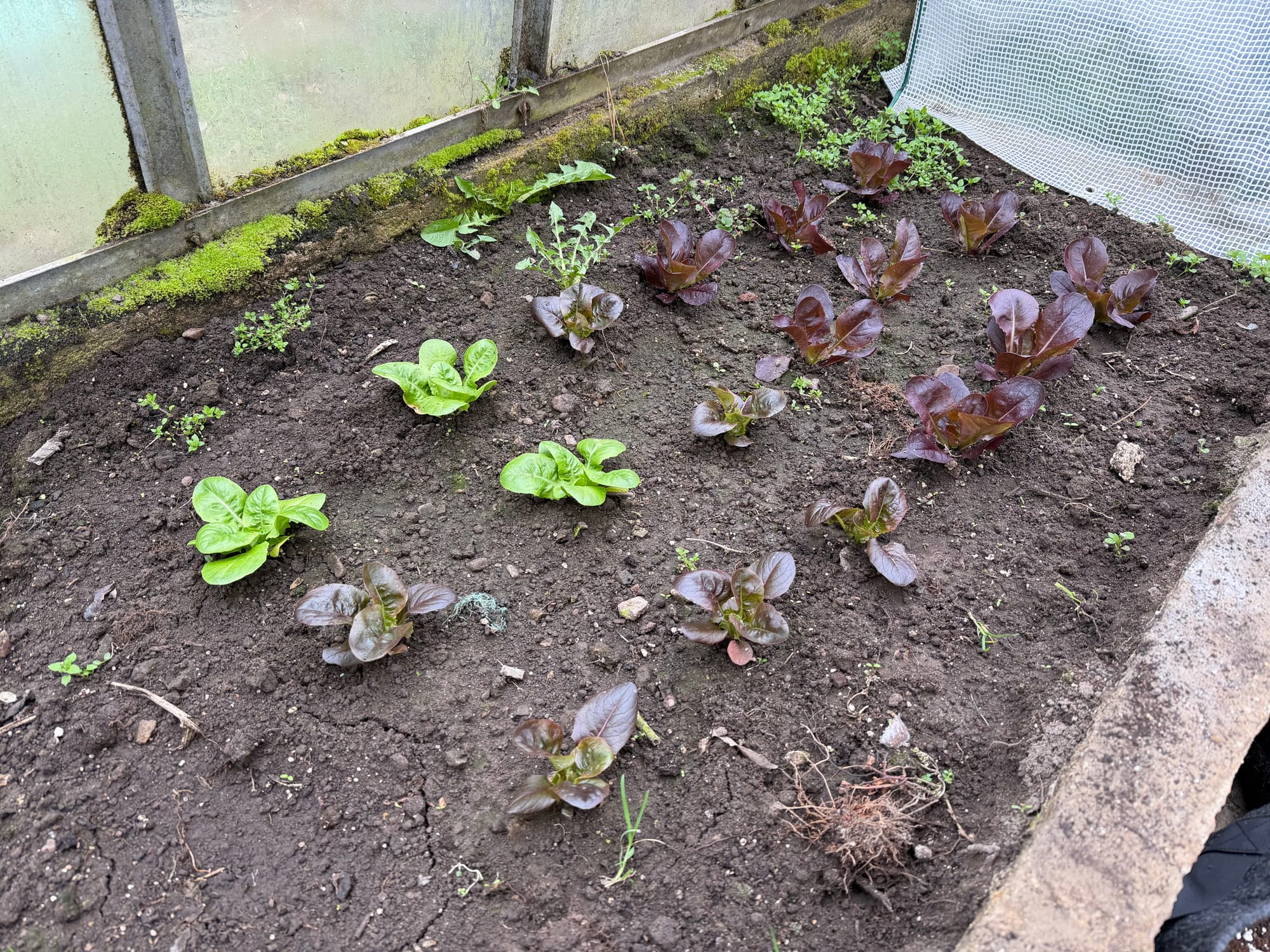
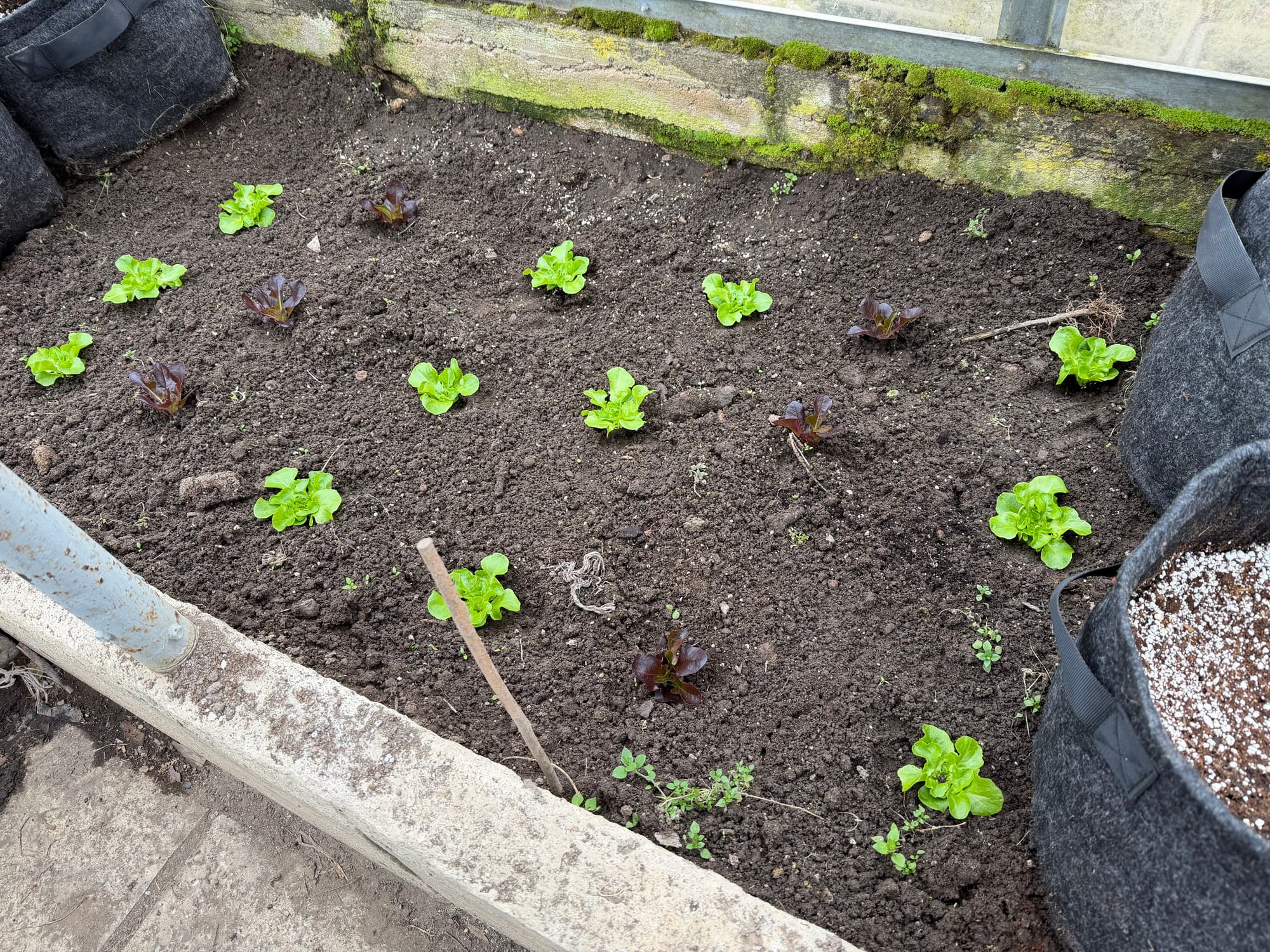
The first batch is getting some volume nicely.
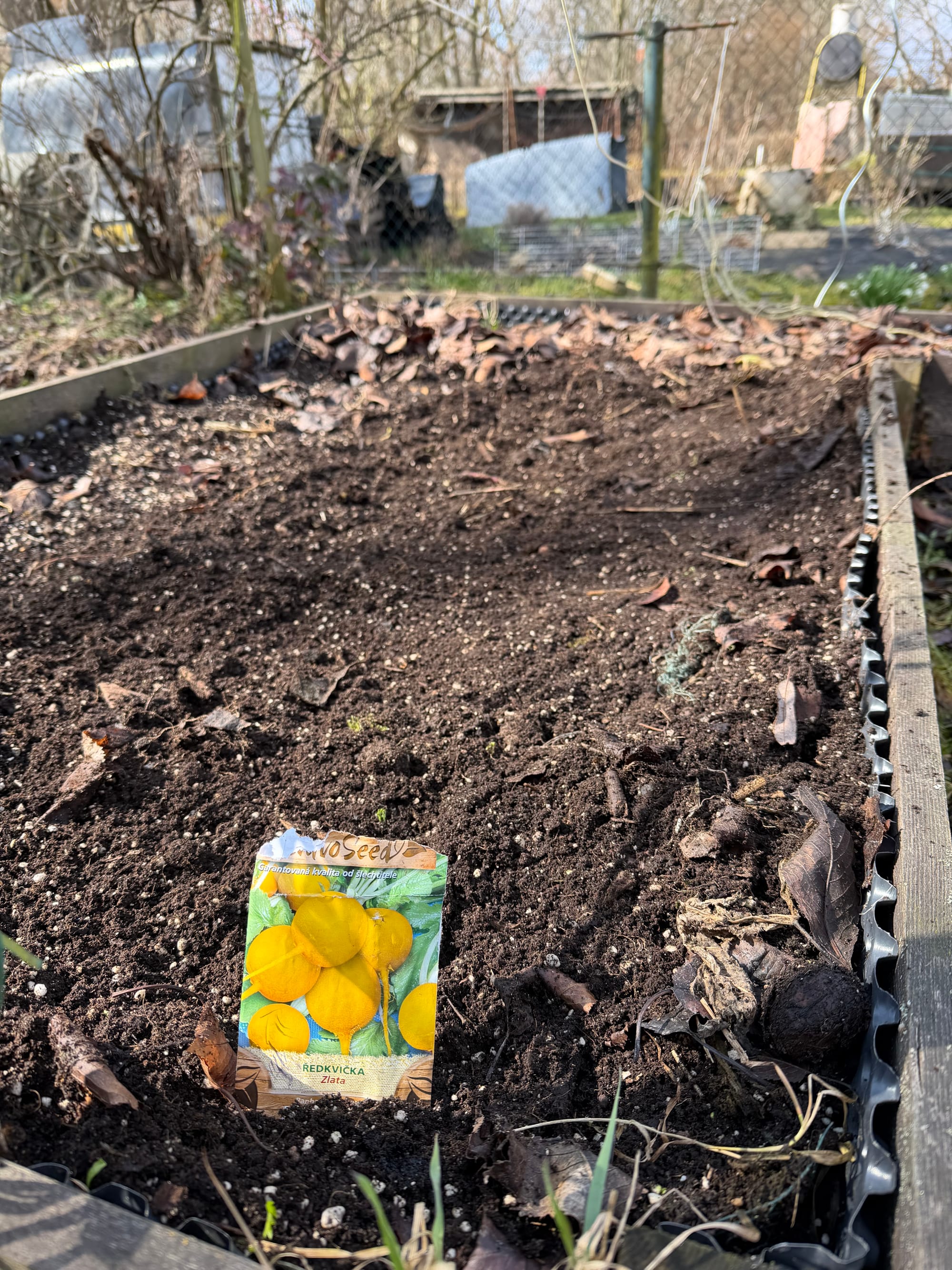
Outside, the time has come for the spring classic: radishes. This year I want to try growing some different colors — yellow and purple ones — as a complement to the traditional red radish. These should be somewhat resistant to bolting, and I should be able to grow them even in summer, which is notoriously hard for radishes.
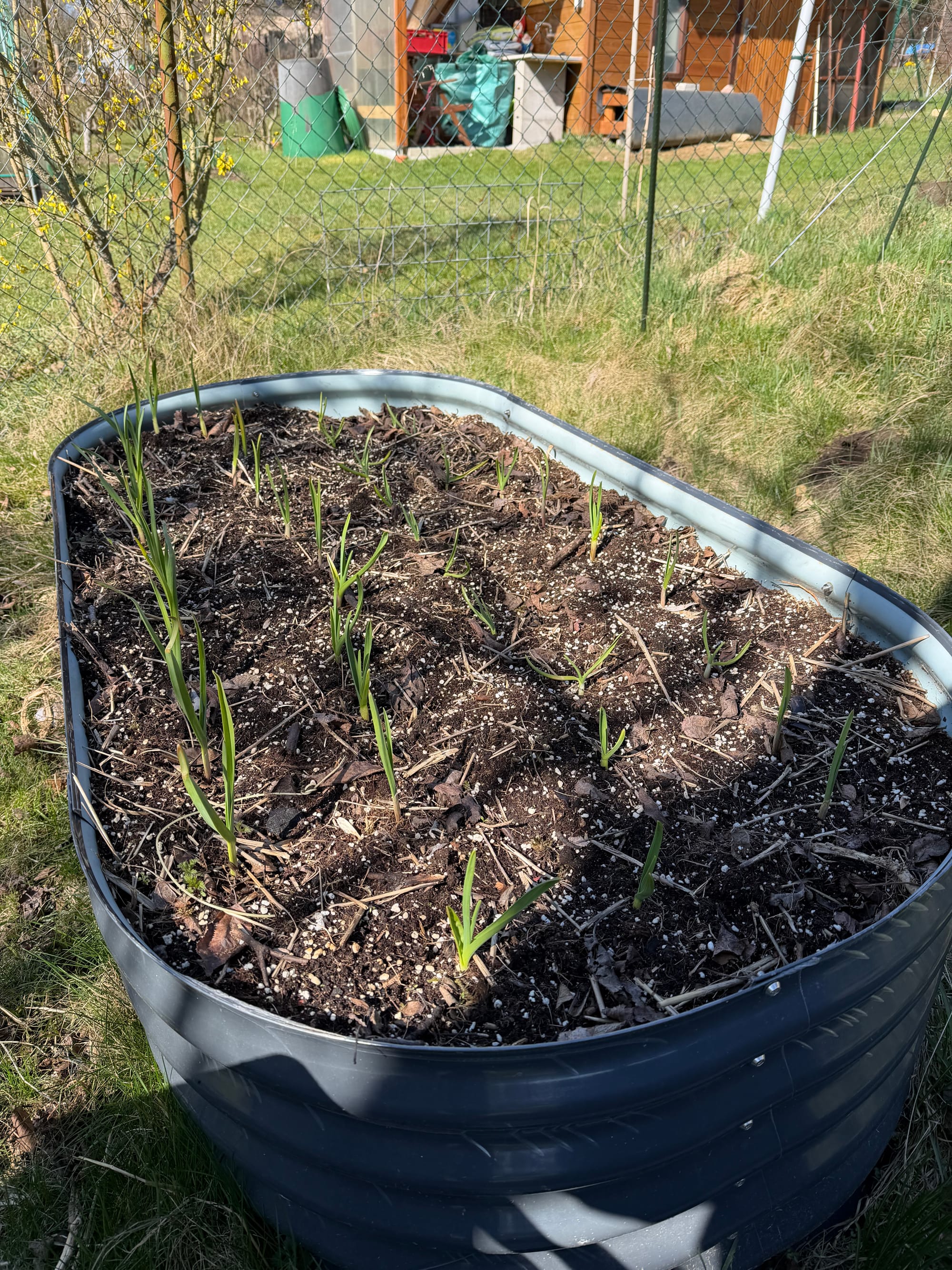
And I should not forget about the garlic. It's getting some height, and it's really funny to watch how one half of the raised bed is getting more heat from the sun in the soil. I am not exactly happy with this because it means I positioned the bed a bit wrongly.
the solanaceae solution
The second part of March is usually when the indoor situation starts to get complicated. Peppers are maturing into larger pots, and tomatoes are quickly catching up. It's the time when the organic matter's footprint increases exponentially. And this year is no exception.
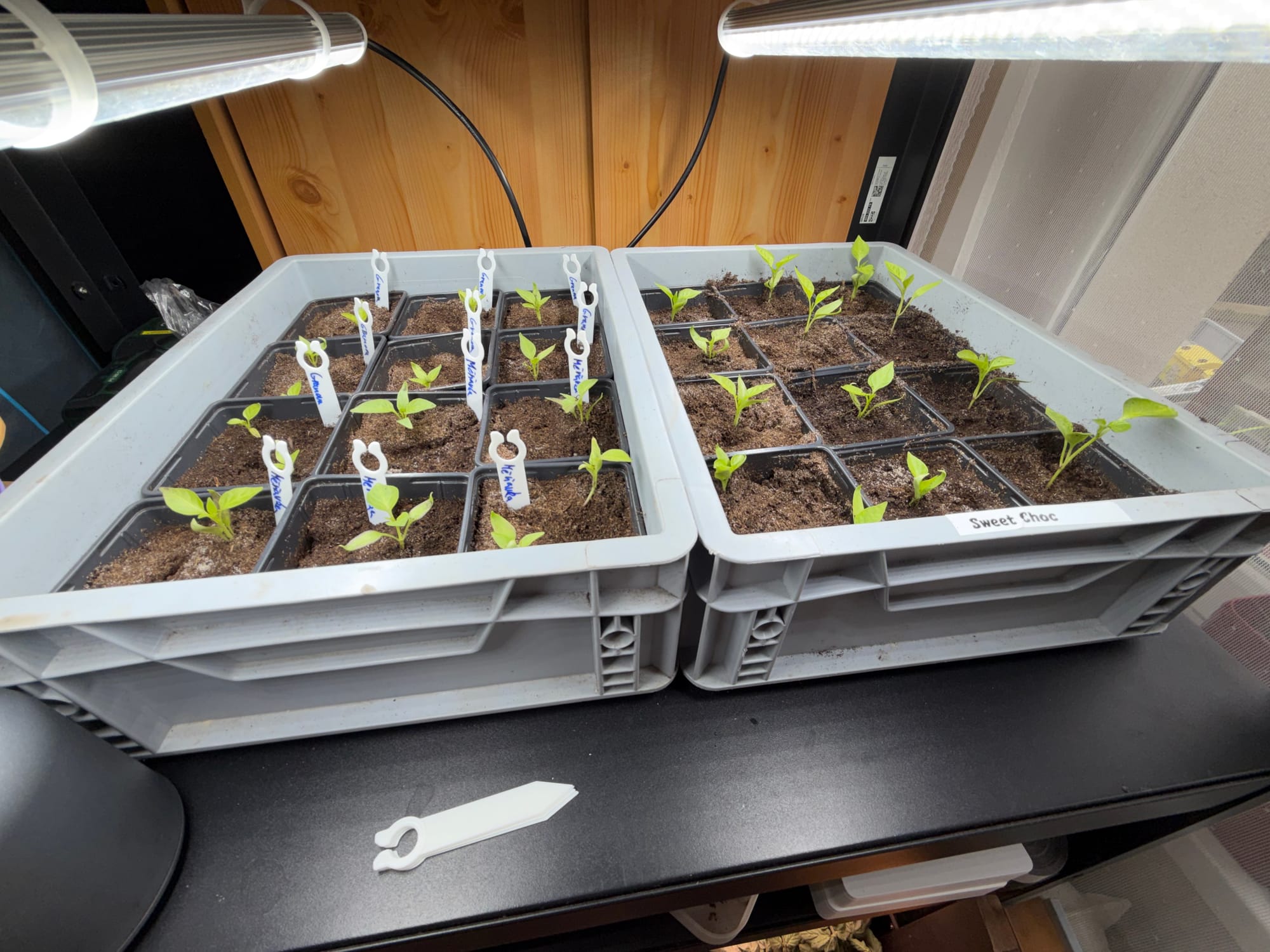
I moved my peppers into 10×10 cm pots, eliminating the rest of my BROR tomatoes in the process, because I needed the space.
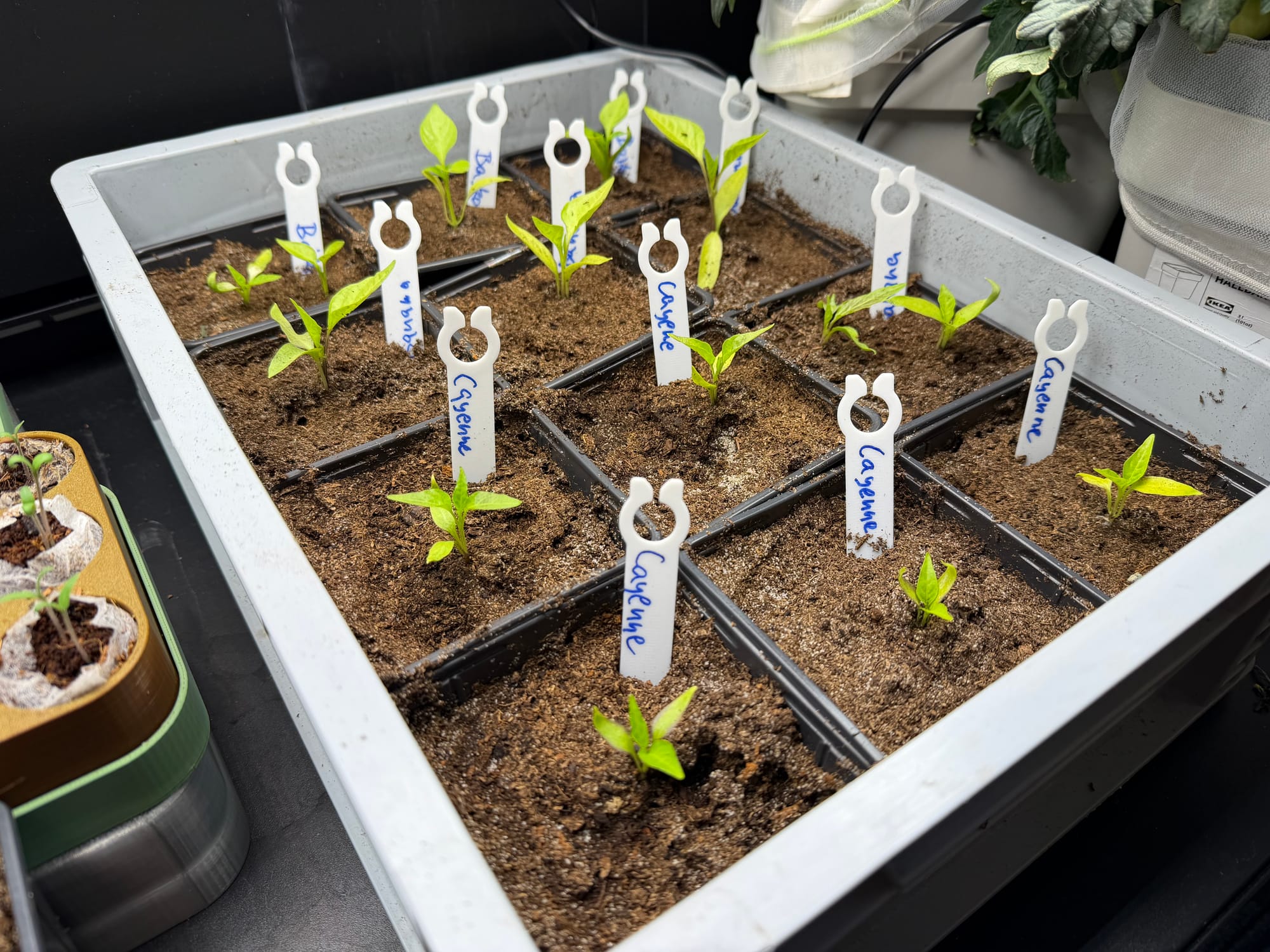
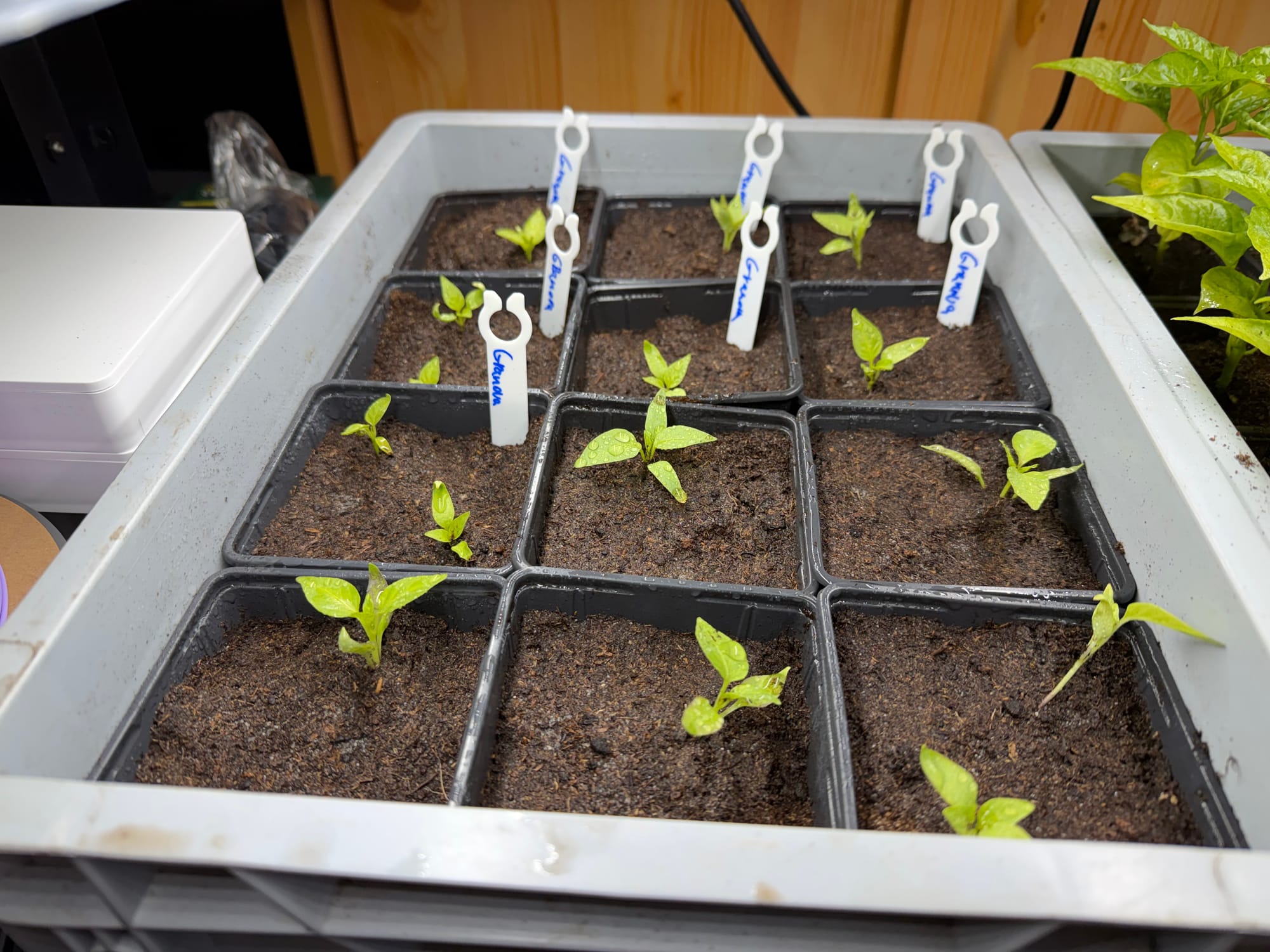
I am very happy to say that most of the younglings survived the transplantation. I guess the natural selection happened sooner, and I have more than enough plants for my needs. Now the easy part begins: do not kill them accidentally… again.
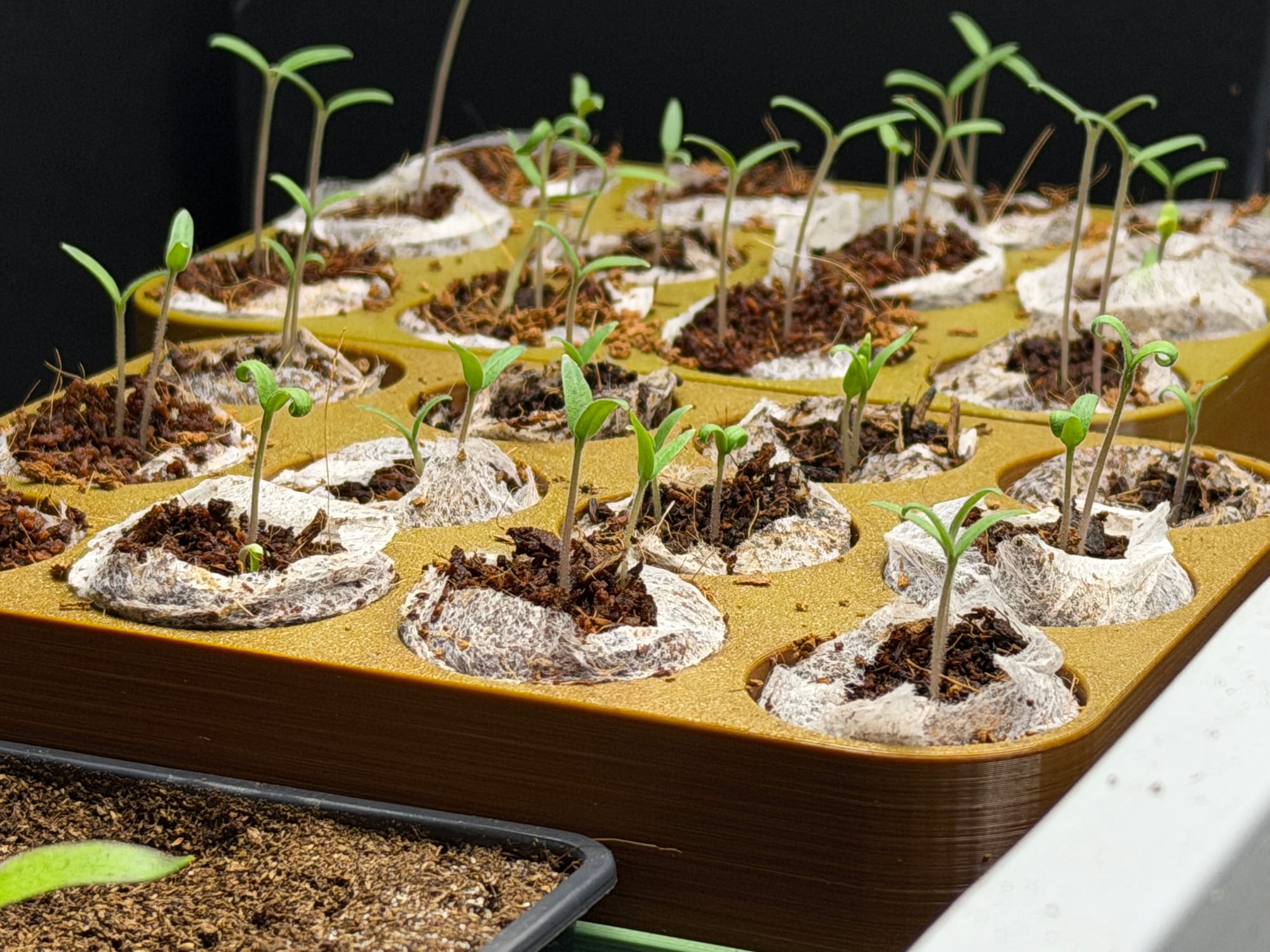
The tomatoes are catching up nicely. It took something like a week for all of them to germinate, but once they did, the usual legginess appeared.
Some varieties, especially the new exotic ones, are showing a little bit of stress, maybe: malformed leaves, yellow cotyledons, the usual stuff. I am not sure why, but I hope it will get better once I move them into peat mix or coco. And since they are staying in my old place for a while, I finally managed to lower the room temperature significantly, so hopefully they won't get as leggy this year.
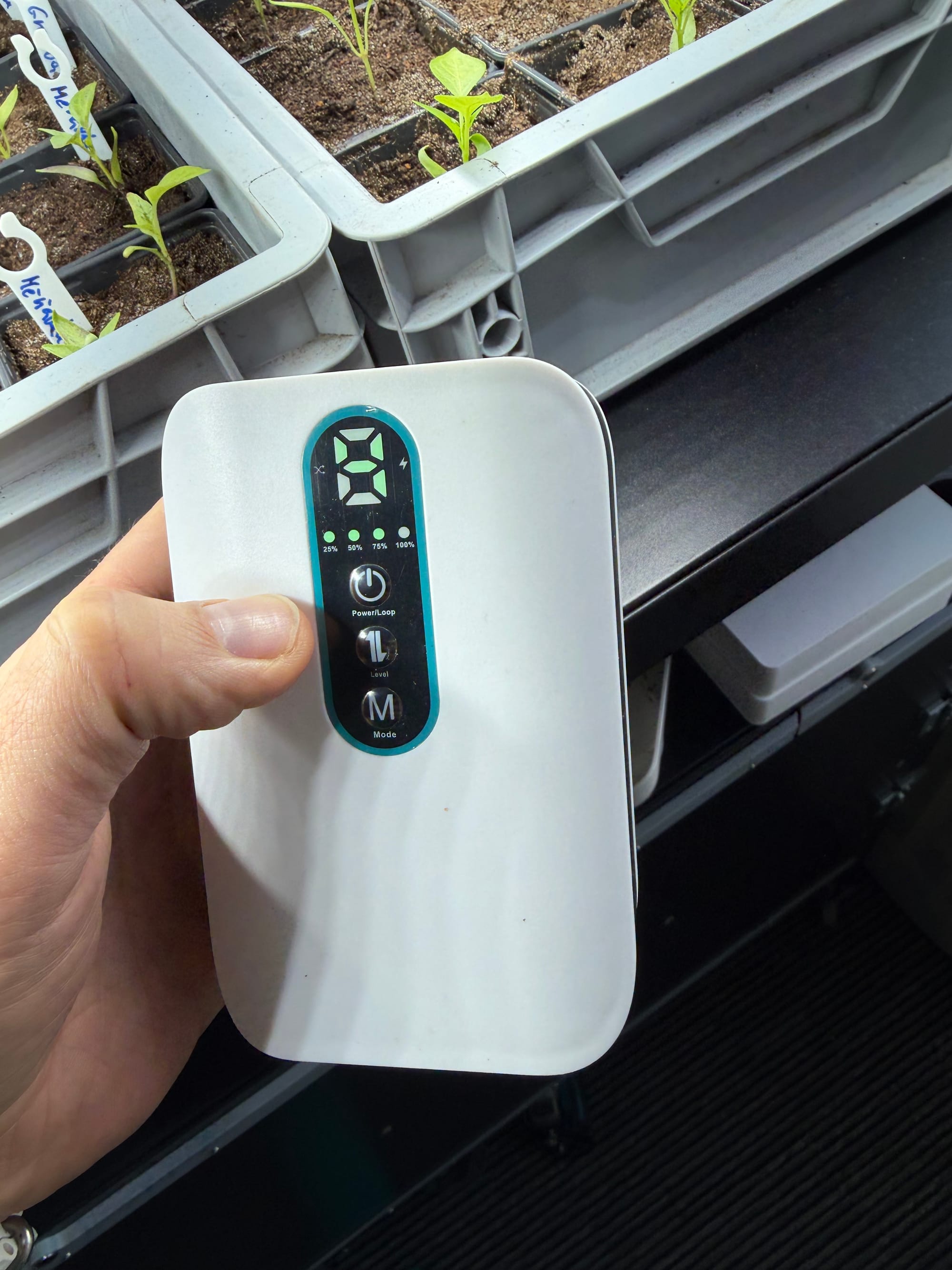
Also, a little sneak peek: I have ordered better air pumps for hydro. You might remember my solar-powered Oxy-Kratky hydroponic setup from last year. This year, I discovered an air pump with an integrated battery — this will turn my Oxy-Kratky into an off-grid DWC setup. Before, I had air only during daylight and was very limited on overcast days; this should bridge that gap nicely.


The next update is already in the works, but I am not yet sure how much time I will be able to dedicate to my garden in the first half of April. I will try my best, since I have to mow my lawn, transplant some new apple trees, and start working on the cabin again! Assuming we will all survive until then, of course.
Member discussion