Shorts #3: The ALPSTUGA
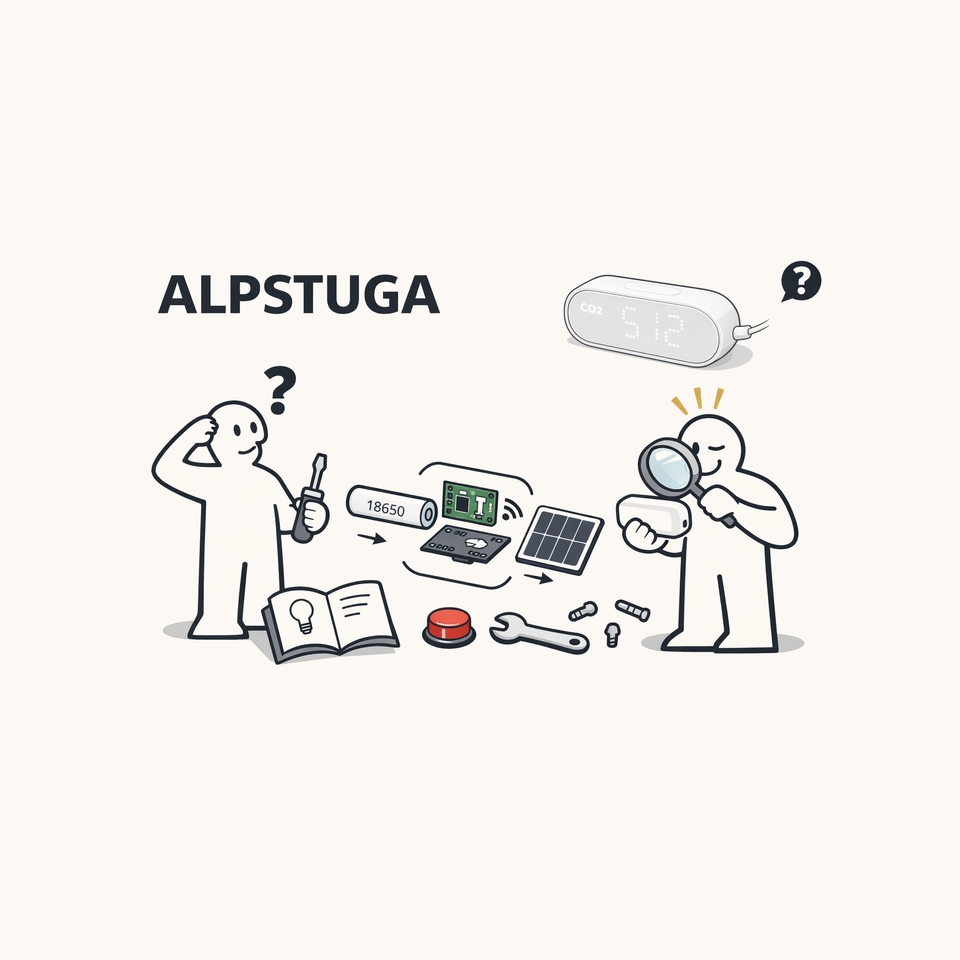
My affinity for IKEA products is kind of obvious. Not only do I like the design, but the fact that you can DIY the actual product… and then DIY yet another product from it is just the right combination that pushes the right buttons in my head. And oh boy, did IKEA push the right buttons this time.
I’ve been a loyal follower of the IKEA smart home initiative from the very beginning. I remember going to the other end of the city for their first-ever smart home product: a TRÅDFRI bulb and controller. And that was almost a decade ago. Since then, IKEA has closed a partnership with SONOS, only to end it last year, launched three iterations of the smart home line, and, at the end of 2025, finally stepped into the Matter ballpark with an all-in product line. Now, you can find the old line on sale because IKEA wants everything to run over Thread.
And that’s good. Many people already have a Thread router at home, so you no longer need a separate gateway like with Zigbee. But in case you don’t, IKEA sells DIRIGERA, and you can use that as a Thread border router, not only for IKEA products but for any Matter-over-Thread product you buy.
the air quality
IKEA has a track record of cheap air quality monitors with surprisingly good-value sensors.
The first one was the IKEA VINDRIKTNING. A dumb device with a simple interface. It’s a solid white brick with three LEDs. It tells you nothing about the actual concentration, just whether the air is good or bad. It uses the Cubic PM1006 sensor to measure PM2.5 and, based on hard-coded levels, lights the appropriate color.
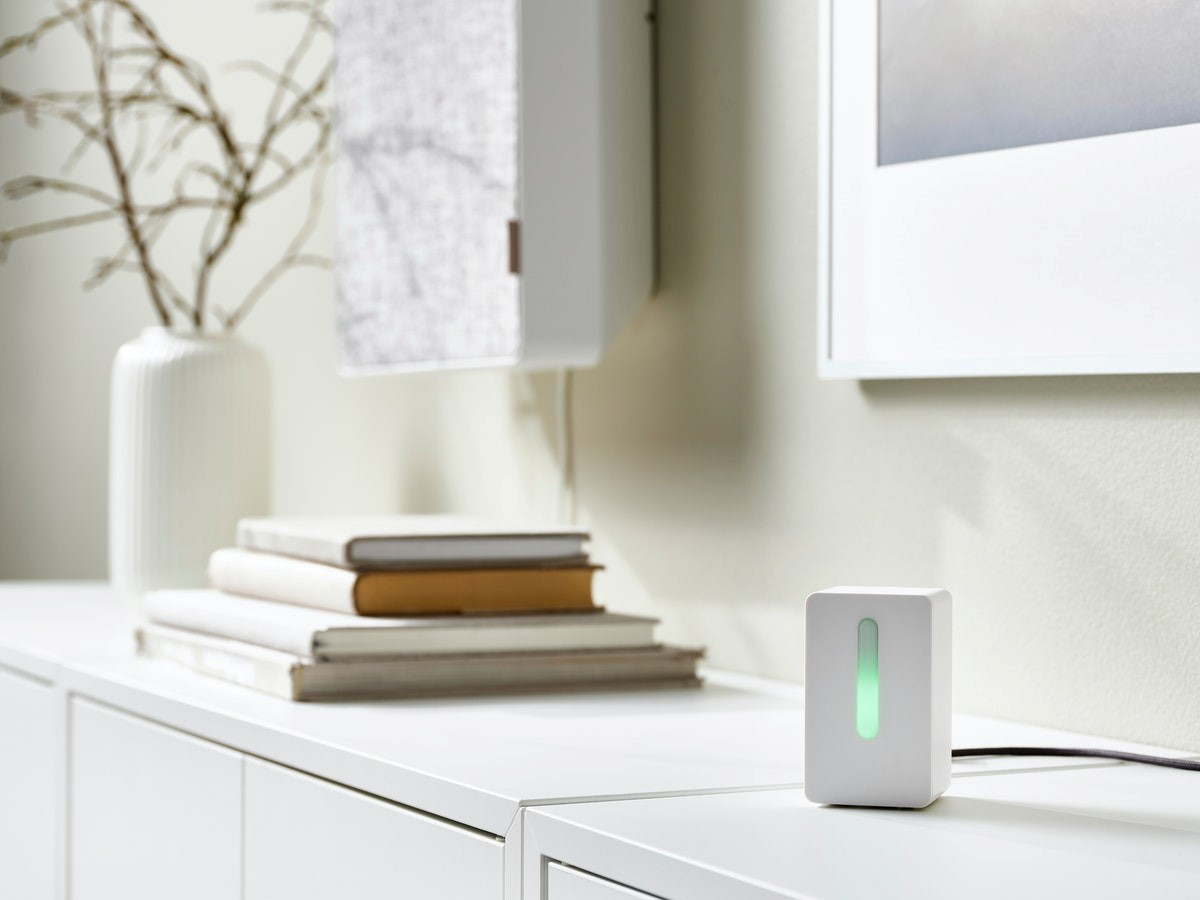
The sensor itself is very basic, but it has one really nice feature: it communicates via UART. Back in the day, it was simple to connect a basic ESP8266, because IKEA is known for leaving testing pads on the PCB not only exposed but also labeled.


 LaskaKit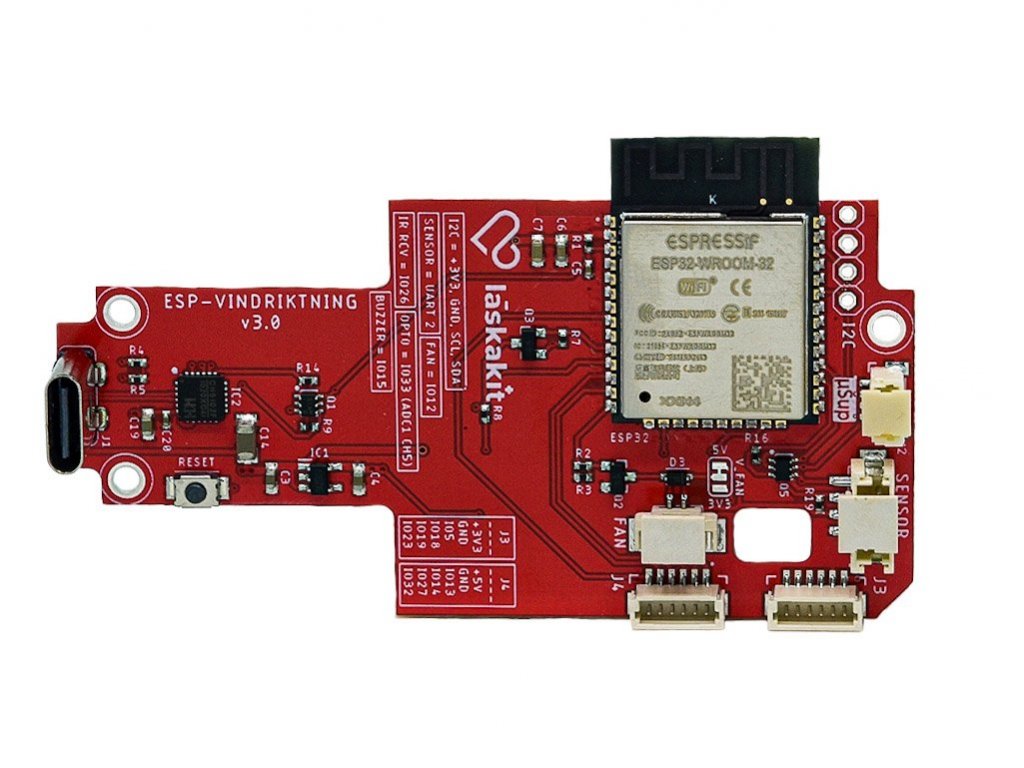
There is even an alternative control board for the sensor that fits the original housing.
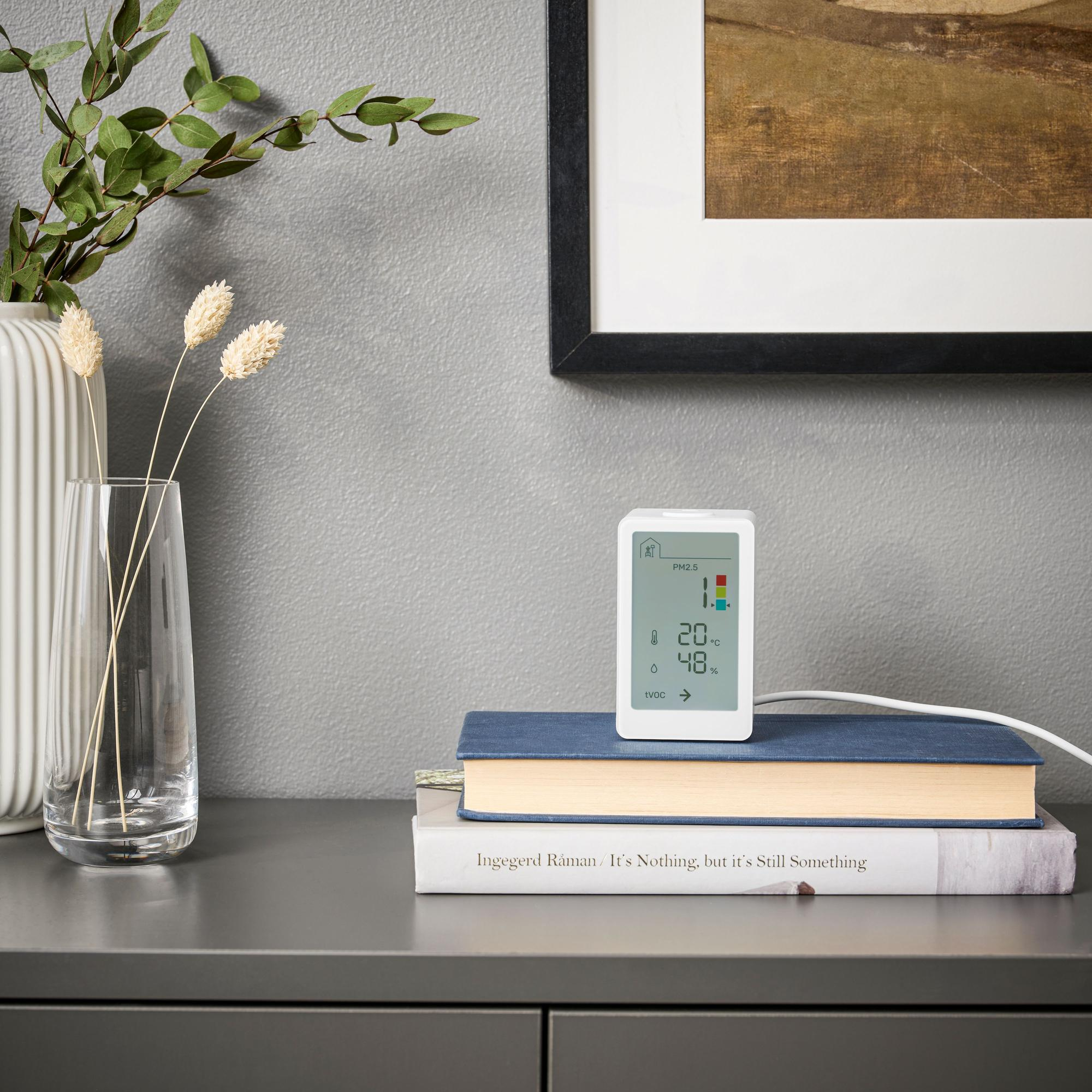
A few years later, IKEA introduced the VINDSTYRKA, and this was a real game-changer. It features a really good sensor from Sensirion, the SEN55, which can measure PM1.0–PM10, temperature, relative humidity, and VOCs in the air.
 Sensirion AG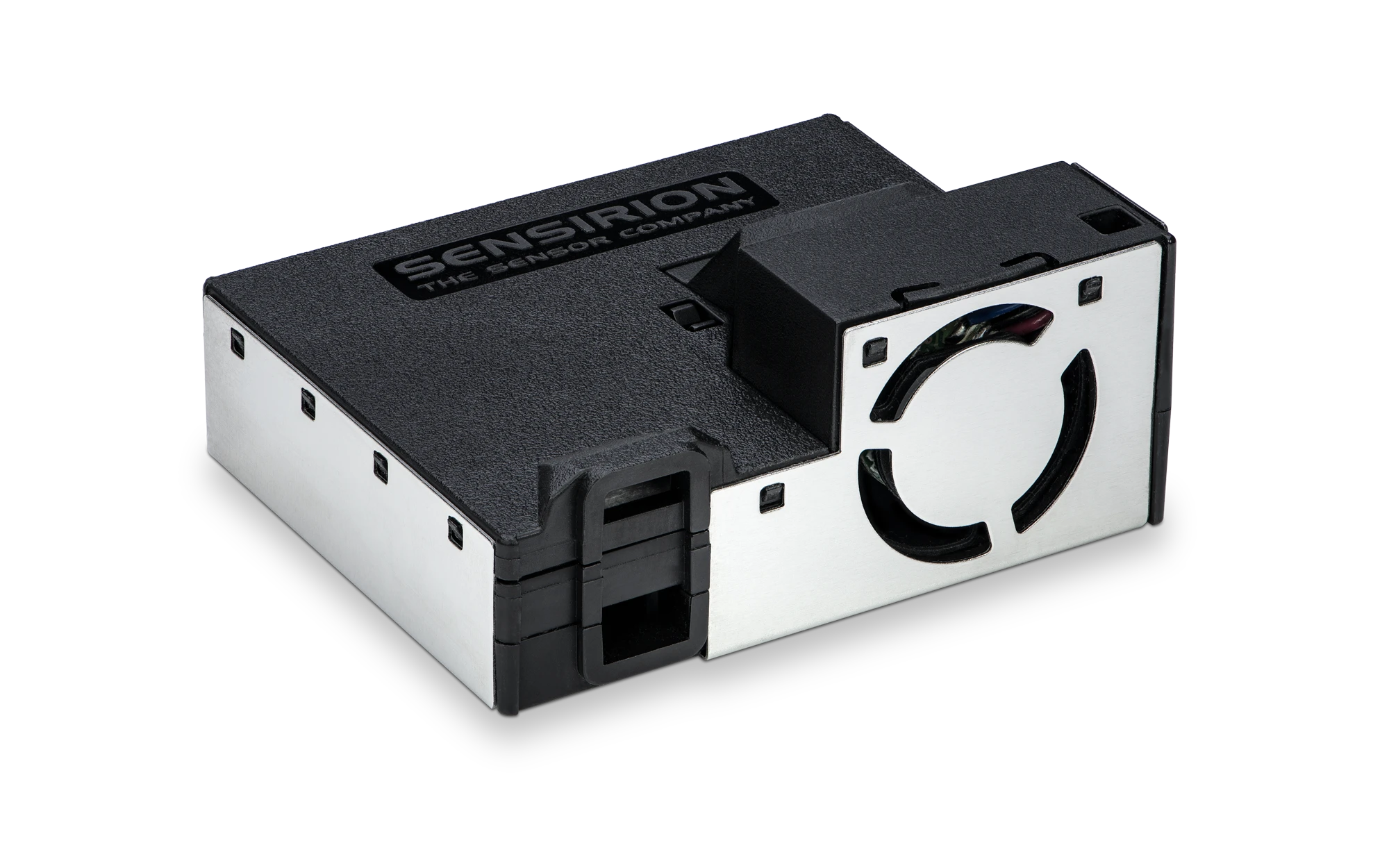
The game-changing part? This is the first smart sensor that uses an MCU from Silicon Labs to interface with the existing Zigbee ecosystem. And it actually has a user interface with real data displayed on a segmented LCD. This LCD is controlled by Vinka’s controller, with all segments memory-mapped. It’s actually a clone of a different controller, but it works as a drop-in replacement.
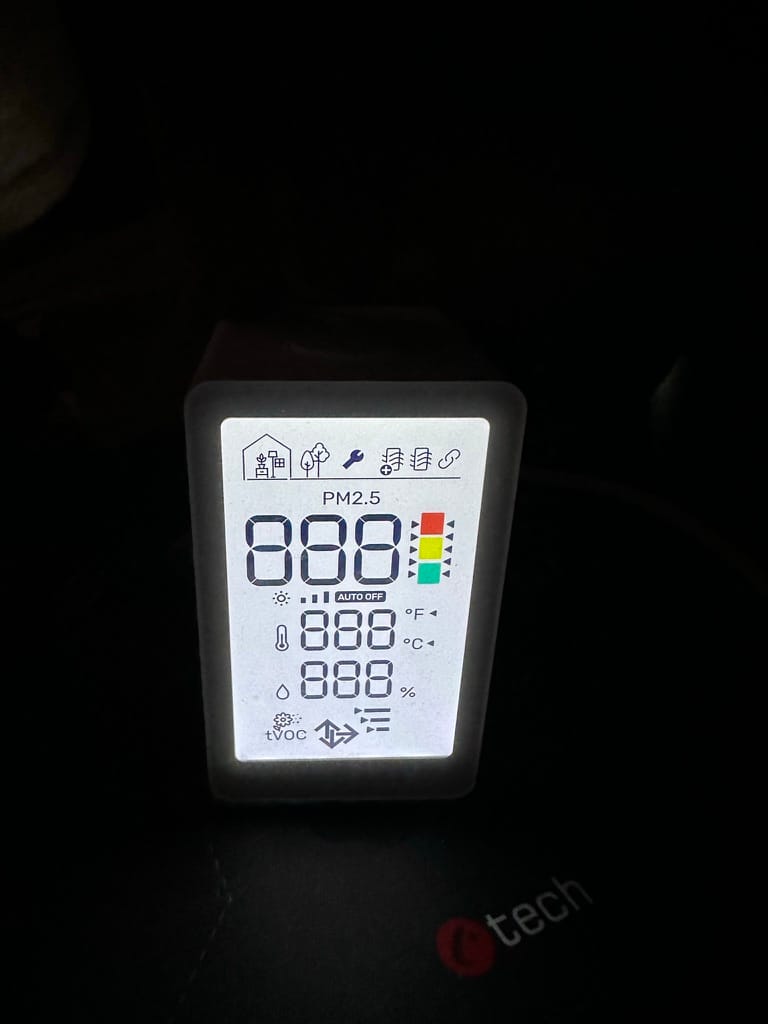
I disassembled and hacked the VINDSTYRKA back in 2023, bypassing the MCU and connecting it to MQTT using a Raspberry Pi Pico W. IKEA decided not to show the full range of measured values, such as PM10 and PM4. The display has some unused segments, indicating there were plans for more features. It’s a shame we never got them. I wrote a thread on Twitter back then, and for some reason, it was quite popular.


the present
Now, at the end of 2025, IKEA is ramping up Matter-over-Thread and has released a brand-new smart sensor: the ALPSTUGA. I snatched a handful of them the very minute they appeared in the store, because who knows how many I’ll destroy.
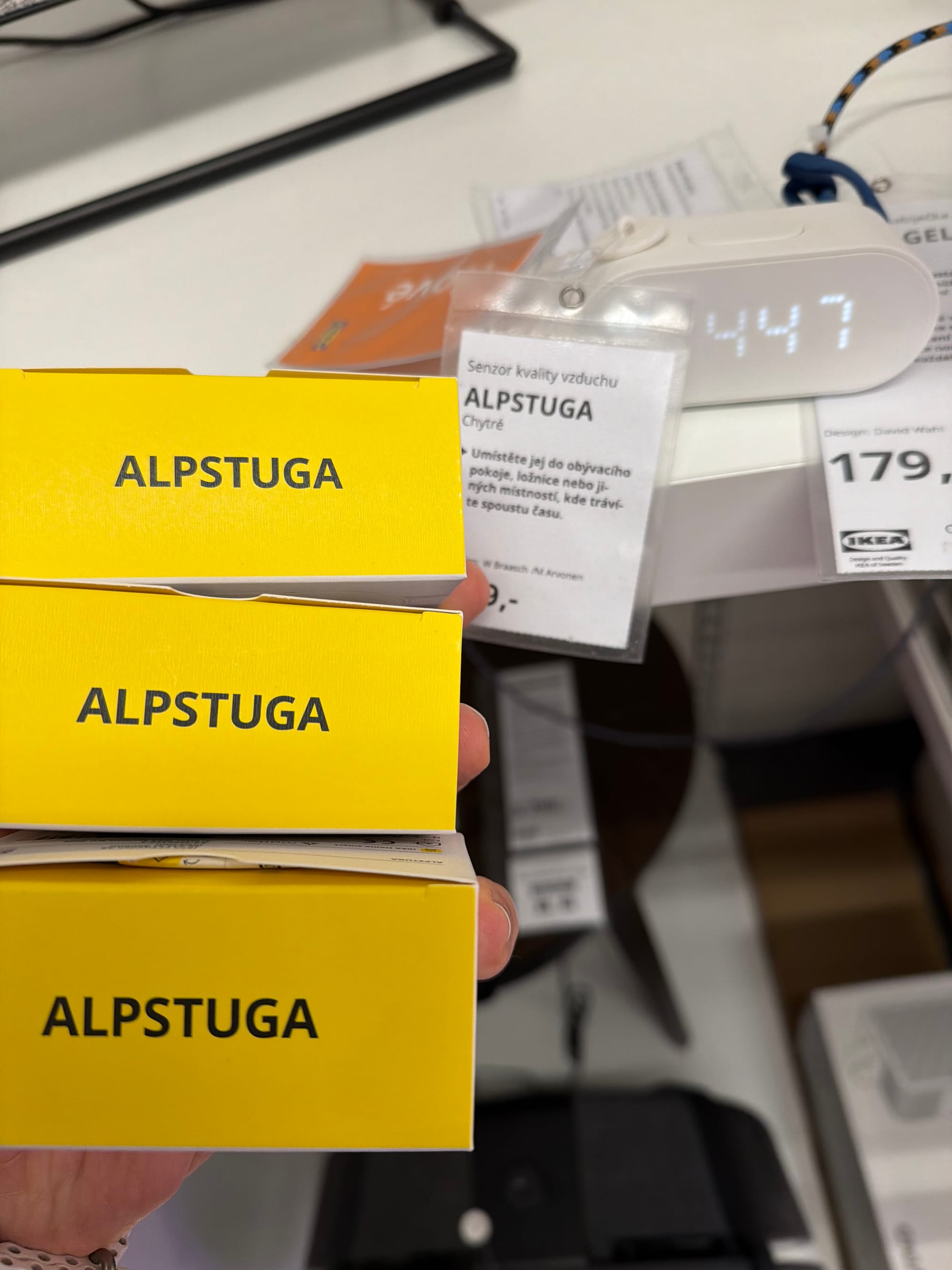
The ALPSTUGA’s design fits nicely with the new aesthetic IKEA is pushing: simple, uniform surfaces, minimal controls, and elements. It’s a pill. A white pill, with no visible interface. There’s only one button visible at first glance.
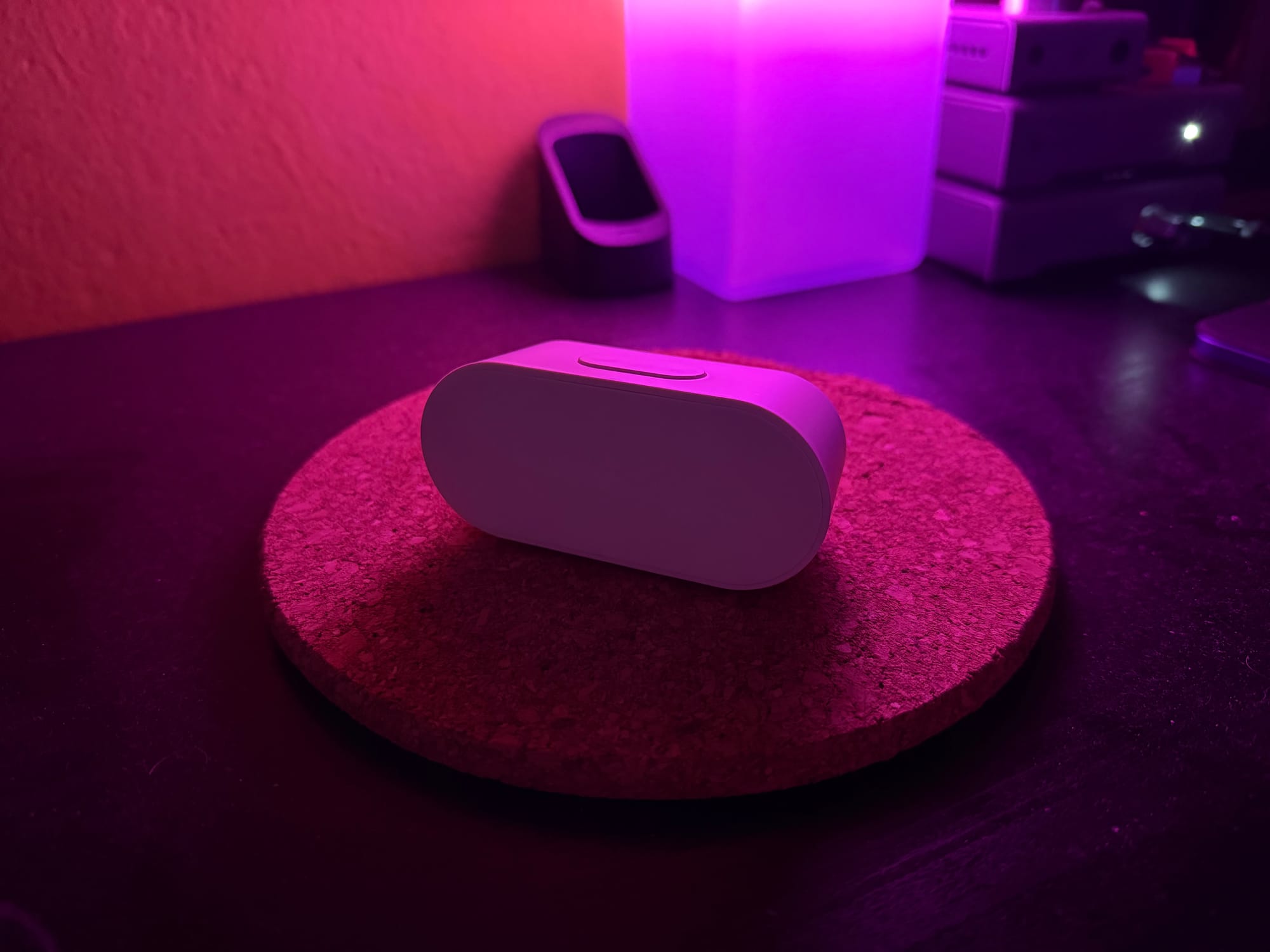
The display is hidden under the front-facing plastic surface. And here comes my first complaint: it’s a segmented LED display. I understand that it’s visually pleasing, but compared to the VINDSTYRKA, it feels like a downgrade.
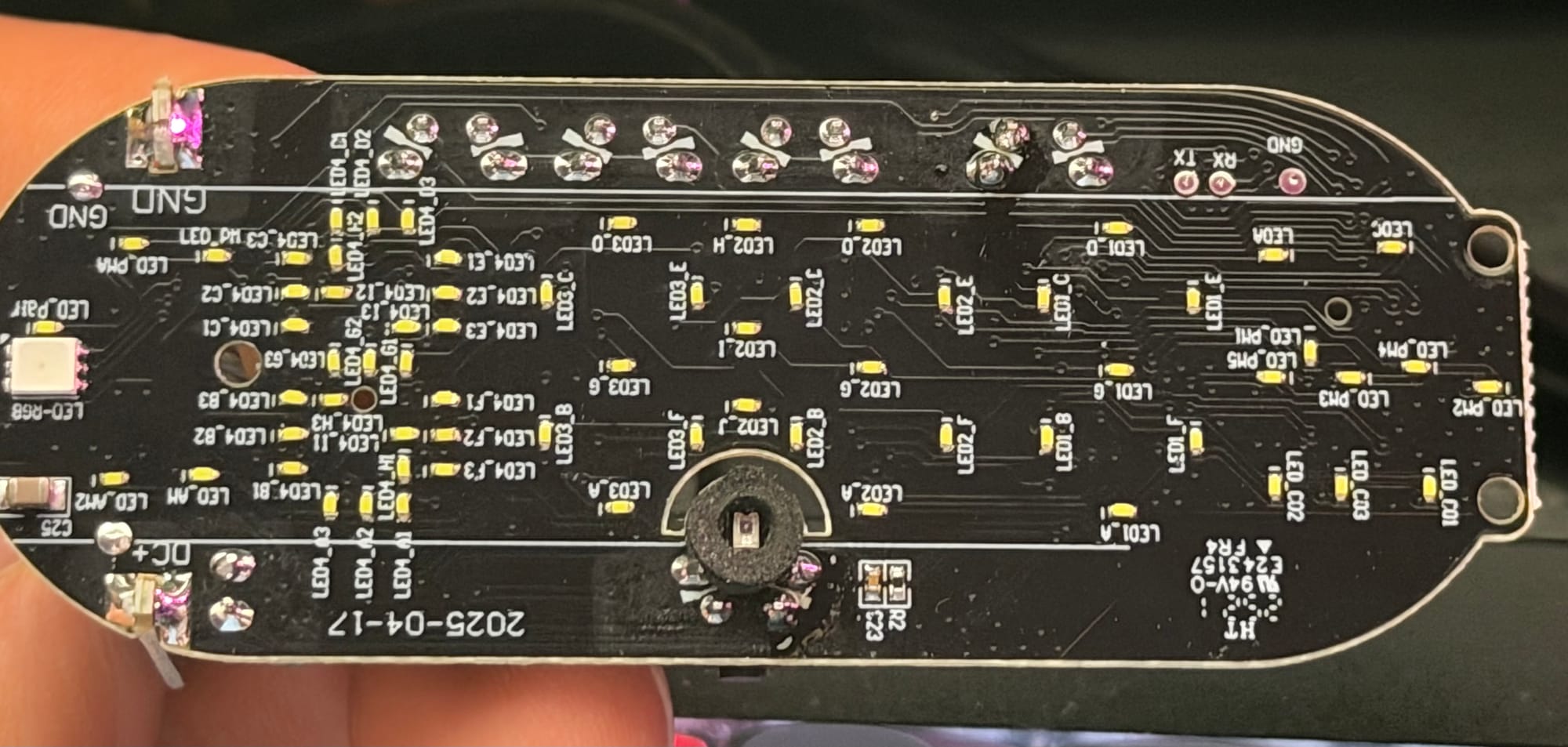
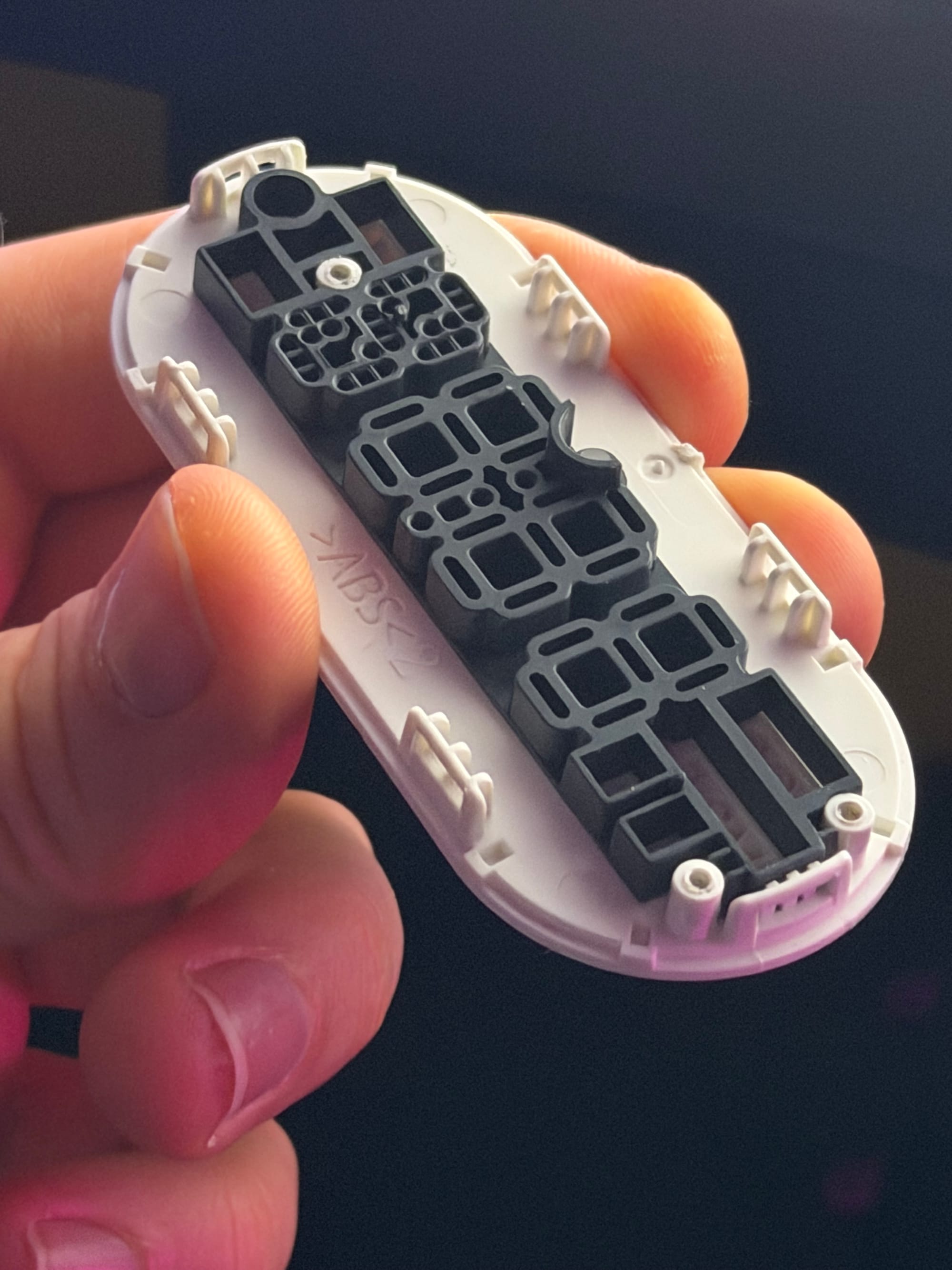
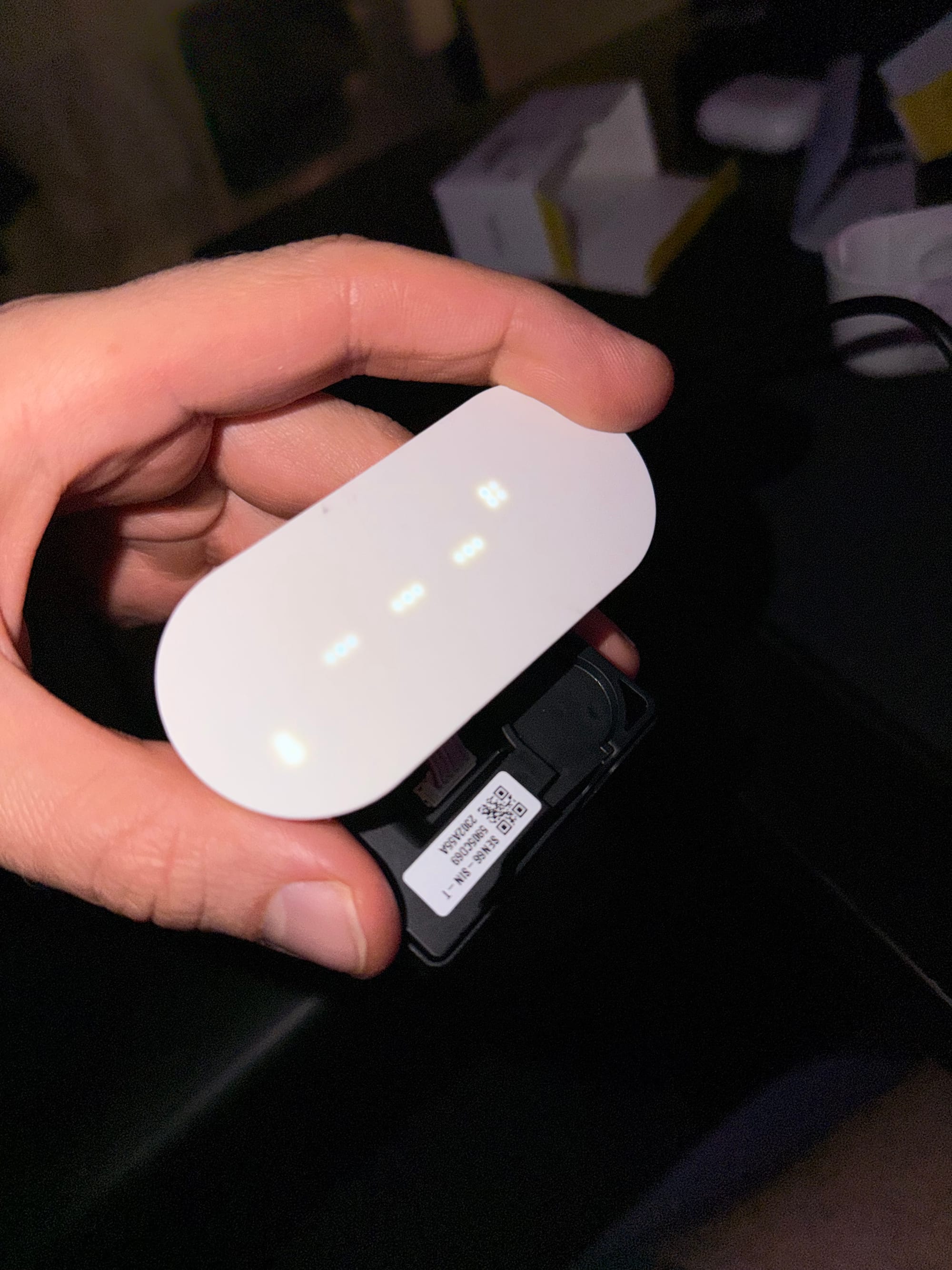
There is a small ligh sensor for automatic dimming.
The main sensor is now the Sensirion SEN63C, a recent addition to the SEN6x family. It shares the same form factor as the more popular SEN66. It can measure particulate matter from PM1.0 to PM10. However, IKEA once again decided to expose only PM2.5. I understand that there’s no space for more PMx measurements on the overly simplistic display, still, it would be nice to have them available in the app.
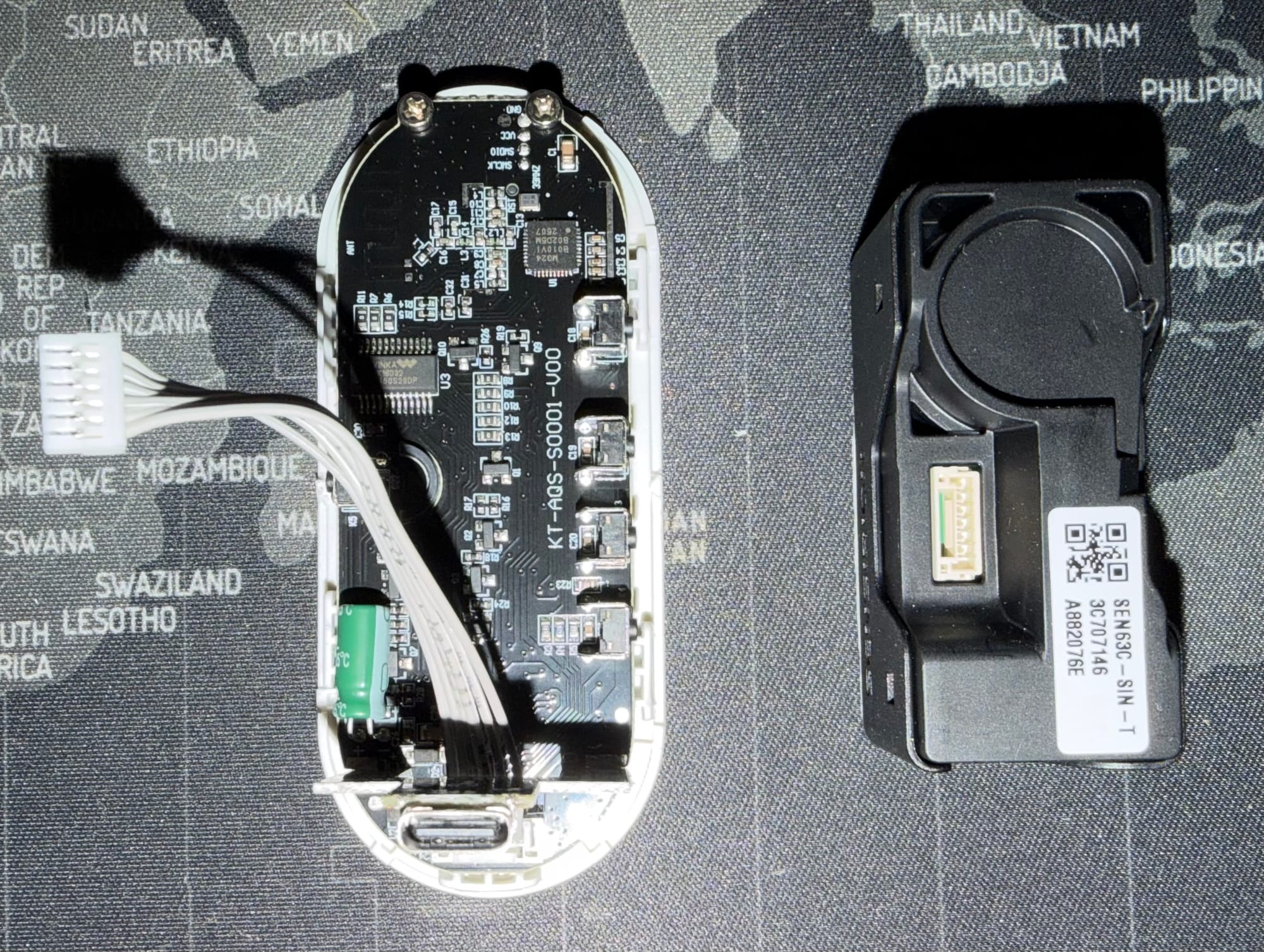
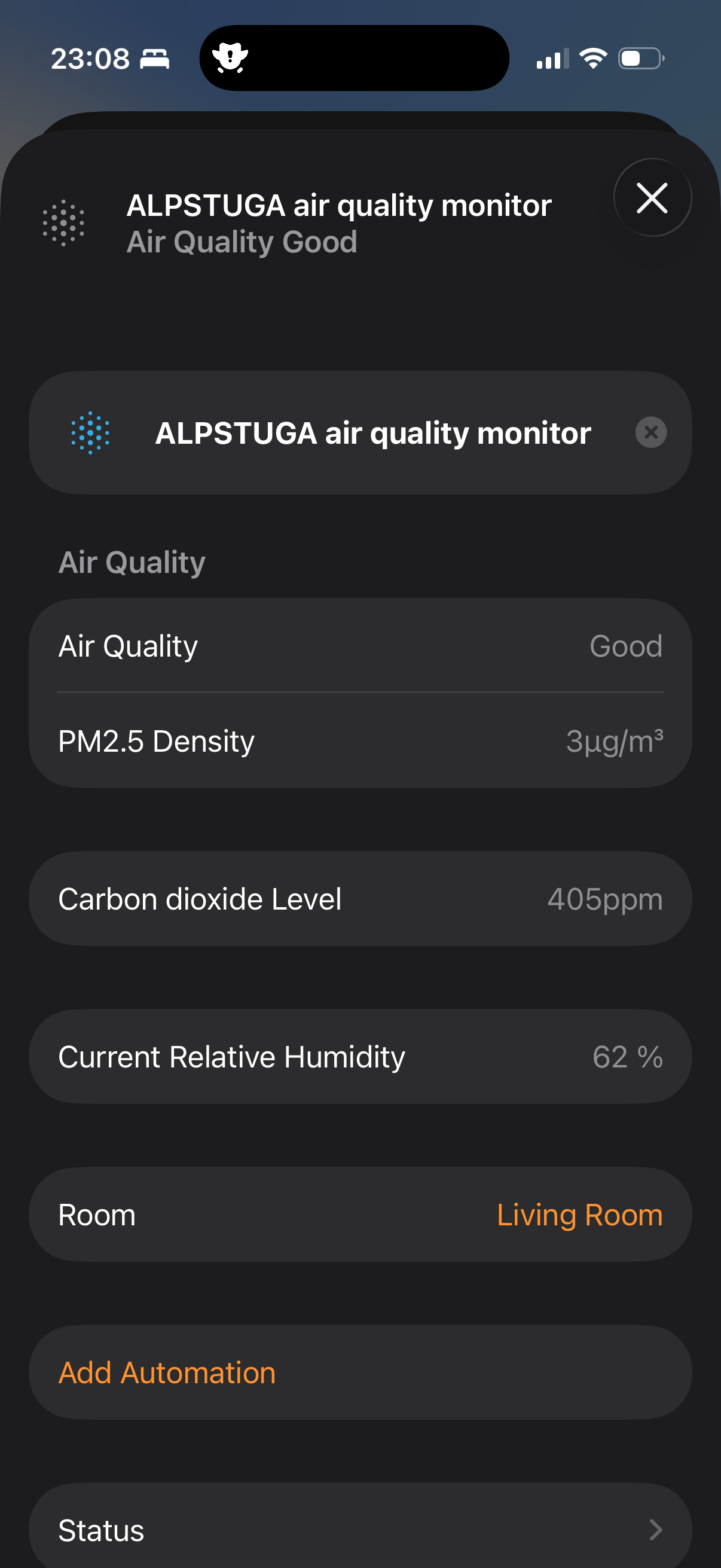
It measures temperature, relative humidity, and, most importantly, CO₂ concentration using the internal STCC4 sensor. Compared to the SEN55, it lost the ability to measure VOCs and NOx. I’m not exactly sure how to feel about this. However, I guess for most people, CO₂ concentration is more important than volatile compounds from a 3D printer.
 Sensirion AG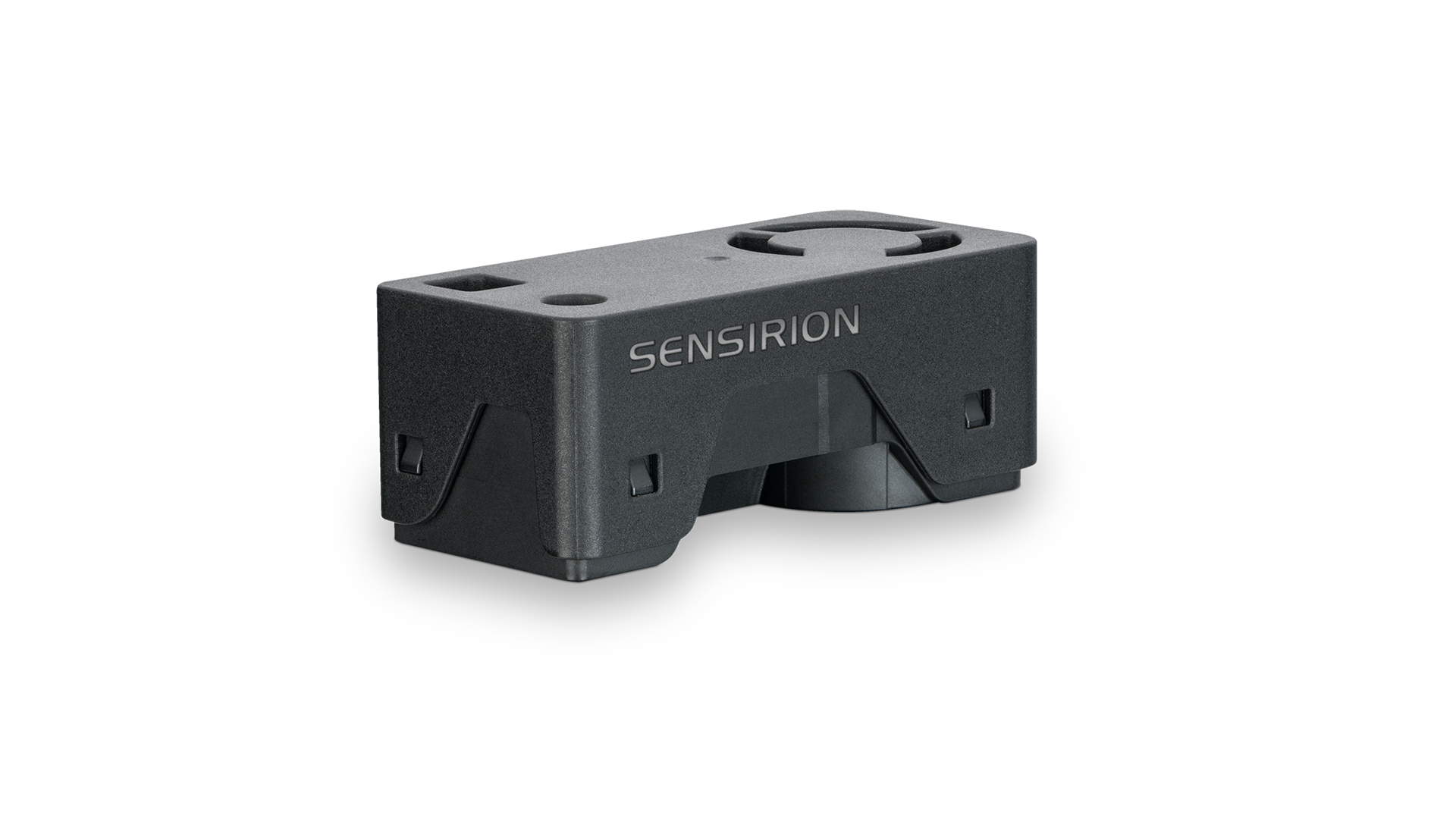
 Sensirion AG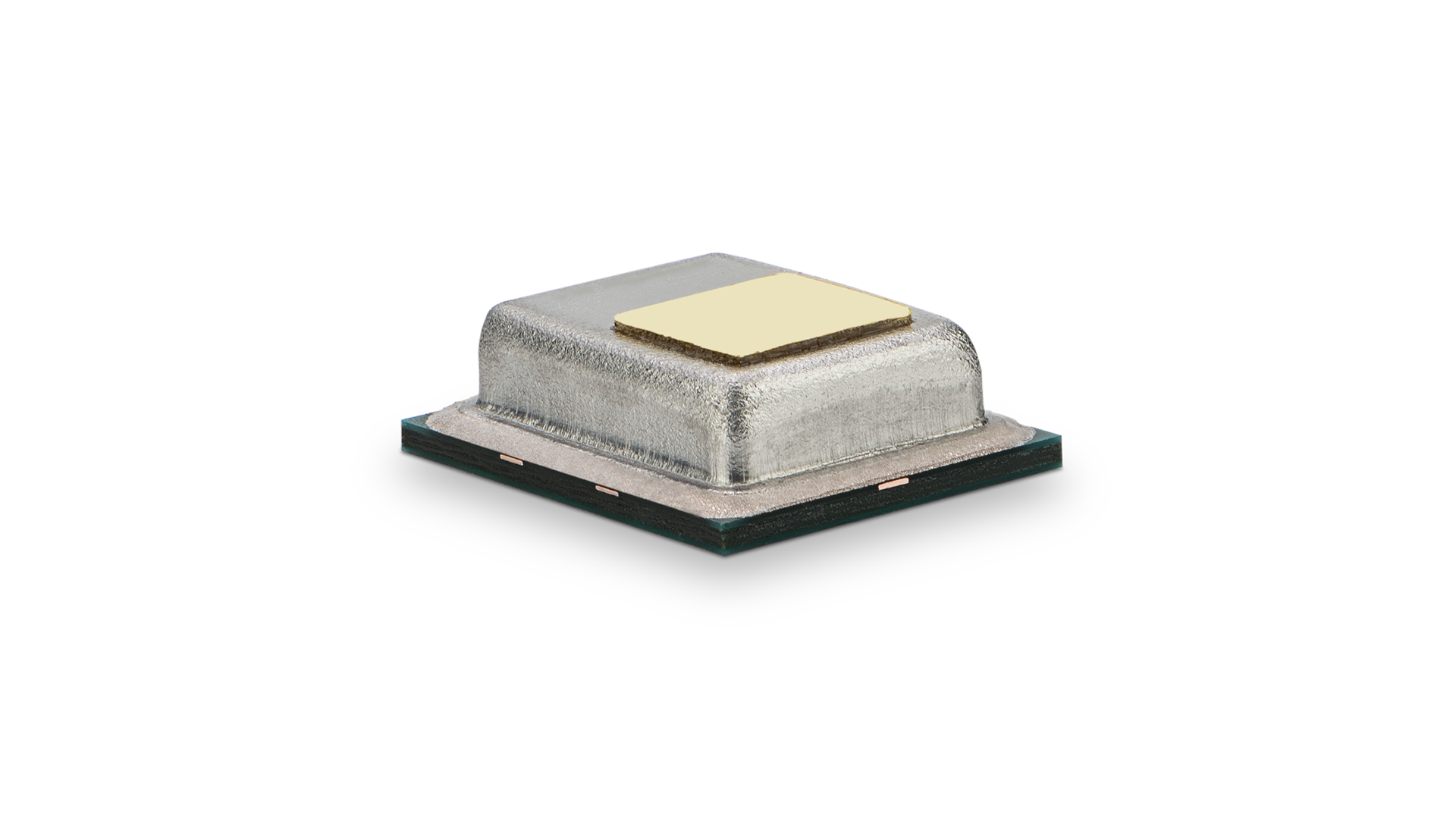
Since this is a Thread-first device, a new MCU is in place. In the past, IKEA used standardized modules that were just band-aided onto the PCB; now it’s part of the PCB itself, which means no more exposed GPIO pins, unfortunately.
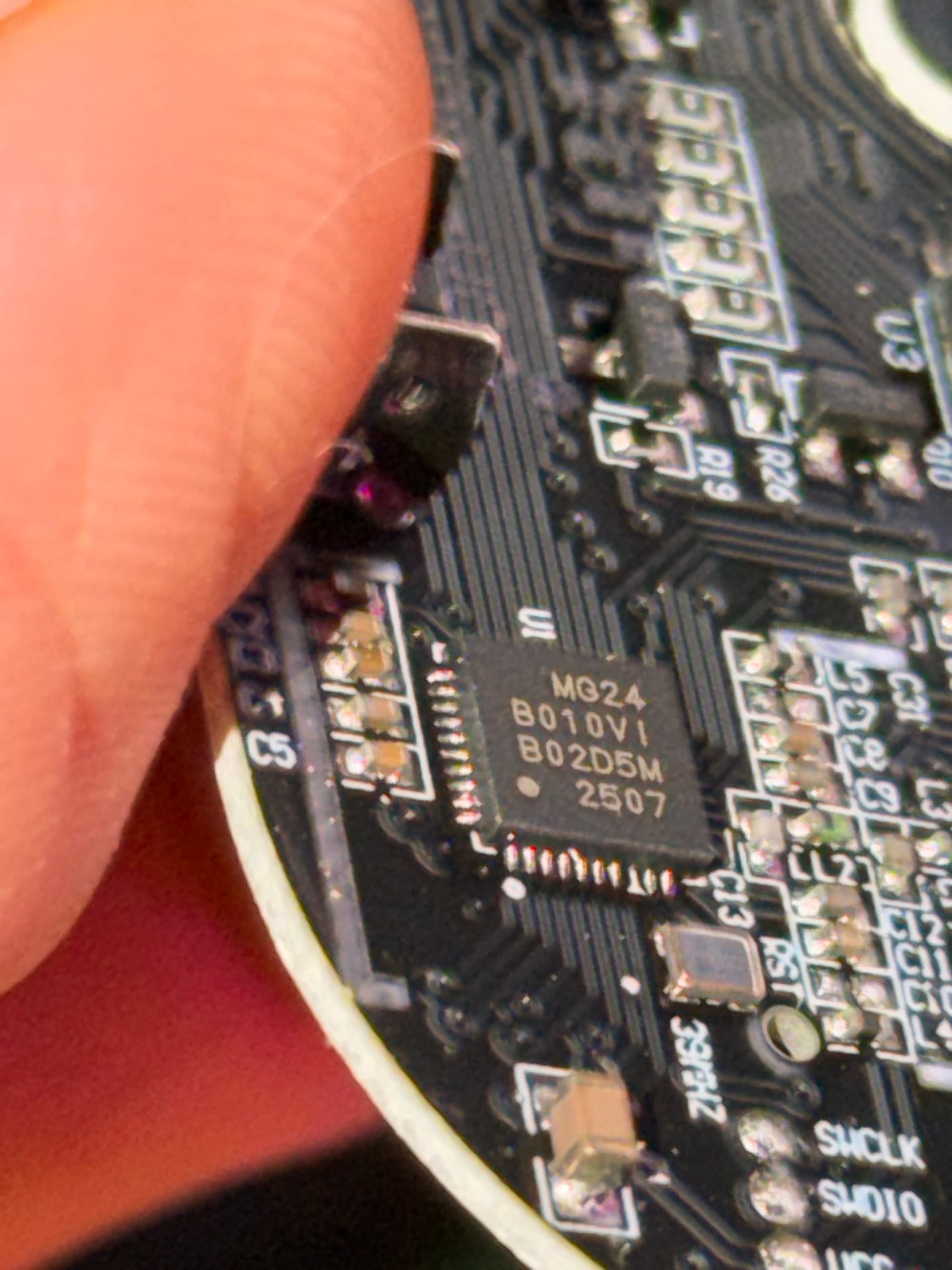
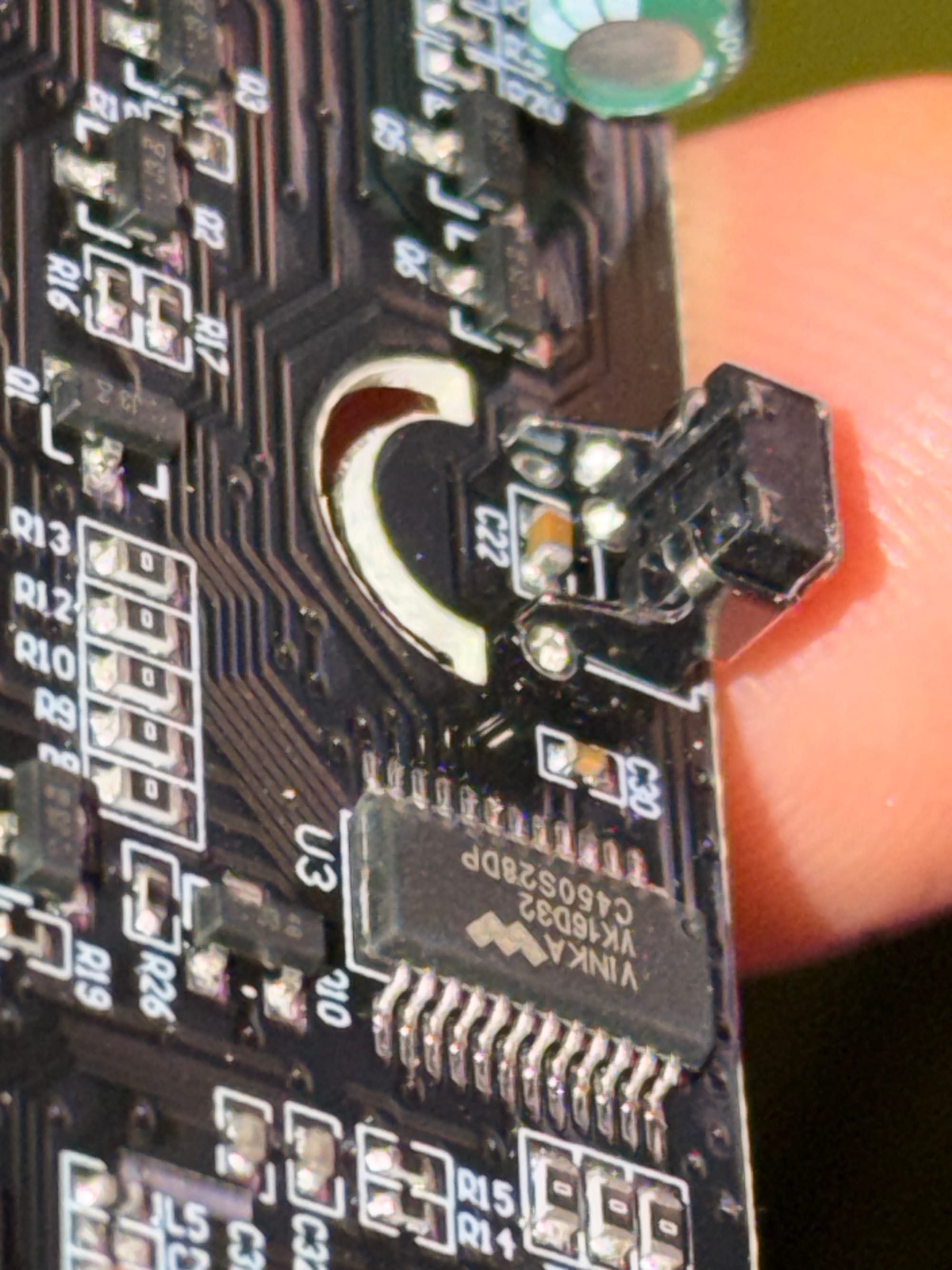
There is an SDIO interface exposed on the board, but I was unable to use it. I guess that’s just a skill issue.
the issue
This section is not intended as a how-to for the average ALPSTUGA user. It’s a great product if you just place it on a table and leave it there. Call it a day, and you’re done. But I’m not like that, I like to break stuff and make it my own.
I see the ALPSTUGA as a downgrade compared to the VINDSTYRKA, unfortunately. Yeah, sure, it can display the time now, synchronized after connecting to the border router, but I don’t care about that. I care about getting the most out of the device, which, unfortunately, isn’t much in this case.
The SEN63C can measure CO₂ concentration using an STCC4 sensor. Under normal conditions, it works fine, but in a somewhat counterintuitive way. It doesn’t actually measure absolute CO₂ concentration; instead, it produces an arbitrary value and, over time, looks for the lowest one. Once it finds that global minimum, it uses it as a reference for 400 ppm of CO₂ (the concentration of fresh air).
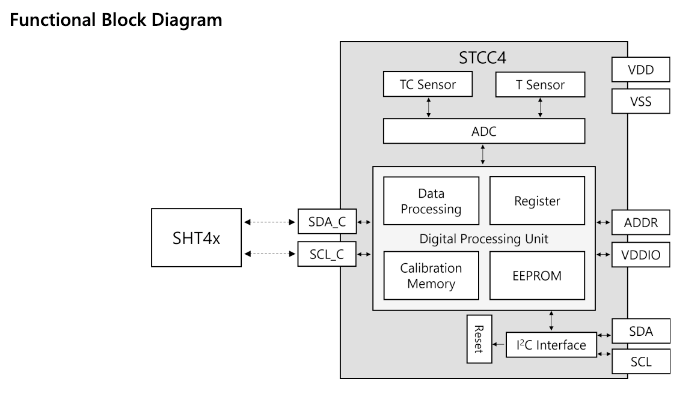
But this tuning is slow and quirky at best. It takes time to find that global minimum. Until then, your measurements are just wrong. The sensor is very sensitive to self-heating, and once it records bad numbers, they stick. Mine is currently reporting 2100 ppm of CO₂, yet I’m only dying inside. It can take up to a week for those numbers to improve. If the power is interrupted for any reason, you’ll lose data, and the CO₂ readings will be off again.
Because of this and other reasons, I created my own alternative housing for the ALPSTUGA, added an 18650 battery, and a solar charger, because I don’t have a pass-through charger in my stash right now. I call it the ALPSTUGA Pro.
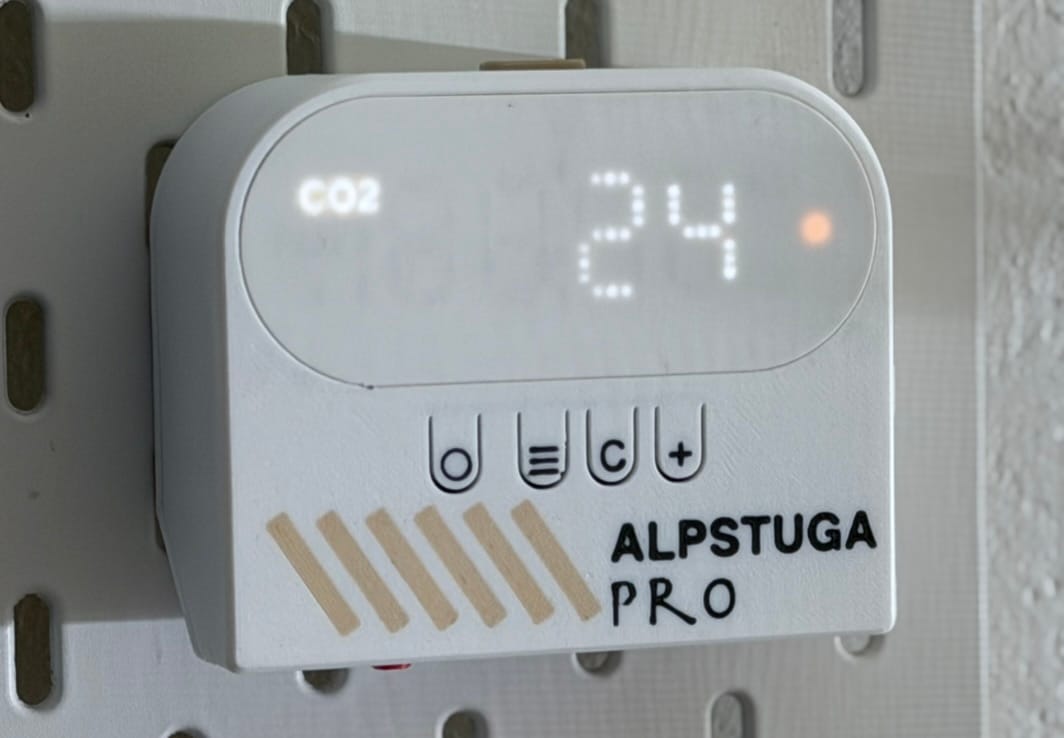
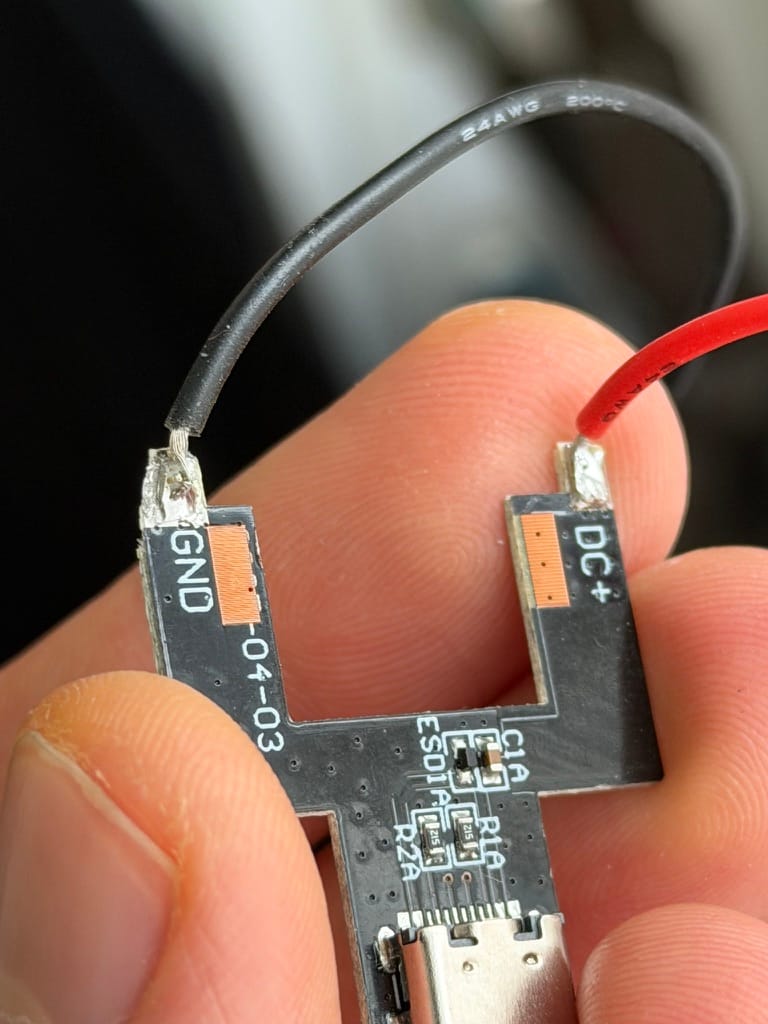
It features a whole new body, with an option to mount it on the wall using two slots at the back, which, coincidentally, are 40mm apart to fit the SKÅDIS. The sensor is tilted so it does not face the wall, and the battery bridges power outages for up to a day. And there’s a red power button now.

Although I like the design and function-over-form approach, I’ve encountered a bug. When there’s a power outage, the battery drains; that’s expected. But when you start charging the ALPSTUGA Pro again, you’re suddenly cooking the sensors in some heat. This throws off the temperature, humidity, and CO₂ measurements. Temperature and humidity readings eventually stabilize, but the CO₂ will remain off for some time. There’s room for improvement.
And by the way. I have a new tool. The xTool F1. It's great for removing solder mask.
I like the new IKEA smart home line. It’s sleek, and thanks to Matter-over-Thread, it’s universal and future-proof. The ALPSTUGA on its own is a nice product, but I don’t see it as a replacement for the VINDSTYRKA. However, I’m really hyped to see other refreshes bring Matter to more devices, such as air cleaners, for example.
Member discussion