June #22.1: Waterworld
Every time I ask AI to help me with grammar and delivery, it complains when the post doesn't start with a deadpan, self-deprecating joke. I don't know where it got this idea that I am a funny guy. Never mind, it's all going away once we start paying per usage rather than a fixed subscription fee.
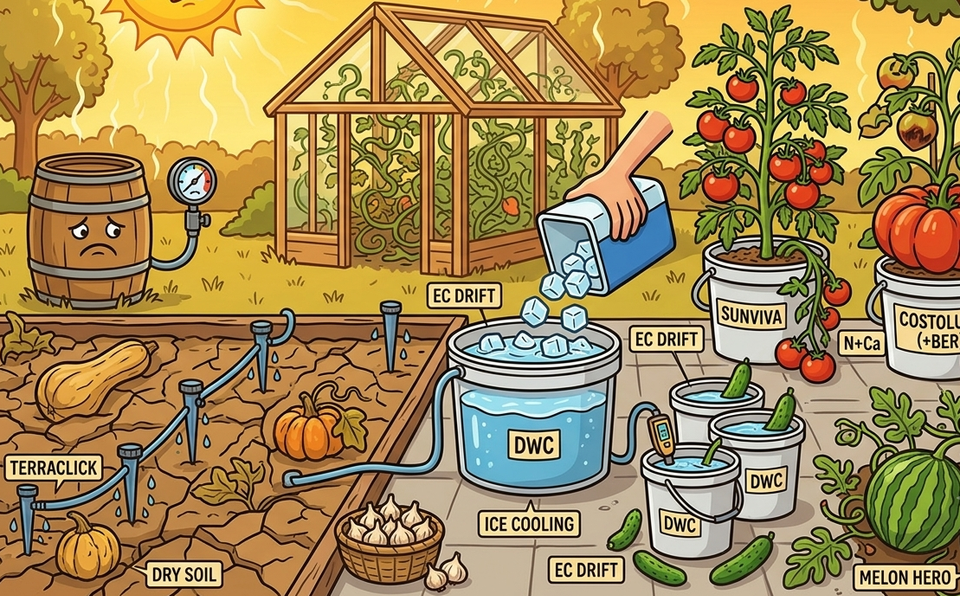
The gods of global warming were kind enough to give us not just one, but two absolute record-breaking days this month. After a brief period of cool, wet weather at the beginning of June, we got a super-tropical week. Three days in a row, the maximum temperature went over 40 degrees, breaking the absolute record in my country twice. Restaurants closed because of the heat, public transport was disrupted because of the heat, plants suffered because of the heat… You get the idea. I had to cool my plants manually. I was throwing chunks of ice into the reservoirs to prevent root damage.
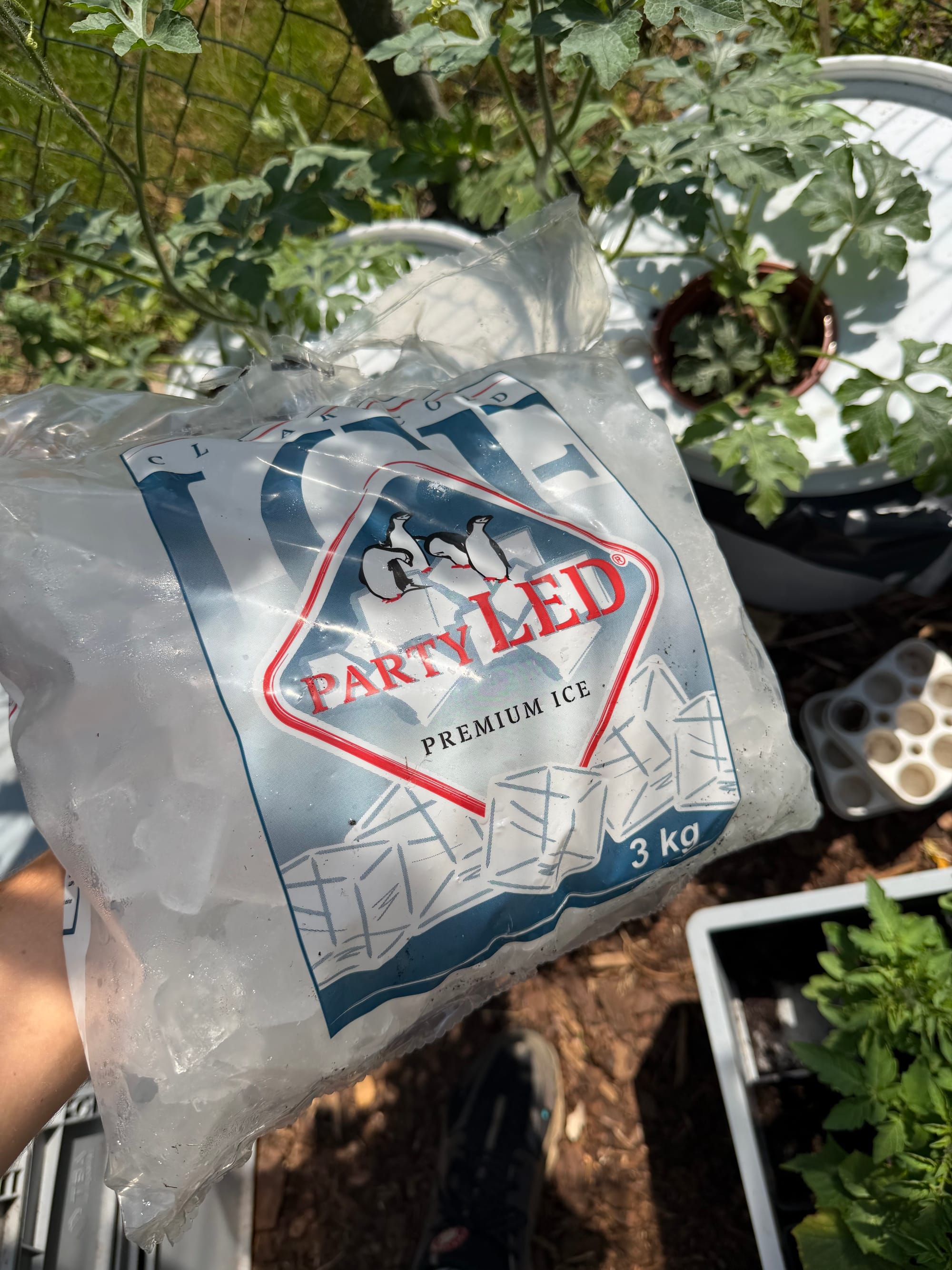
Fun times but not really. At this temperature, plants are in survival mode, pollination is basically not happening, and the water is disappearing faster than your dad. But I am sure he will get the milk eventually; let's move on.
the water pressure
Year after year, I keep getting surprised by how much tomatoes actually like coconuts. Compared with other hydroponic media, coco peat is surprisingly forgiving. It does not overheat; it has high cation exchange capacity, so rain does not easily wash nutrients out; it provides structure and composts easily. And the best thing? It would otherwise go straight into the trash. It's a win-win material. And the tomatoes love it.
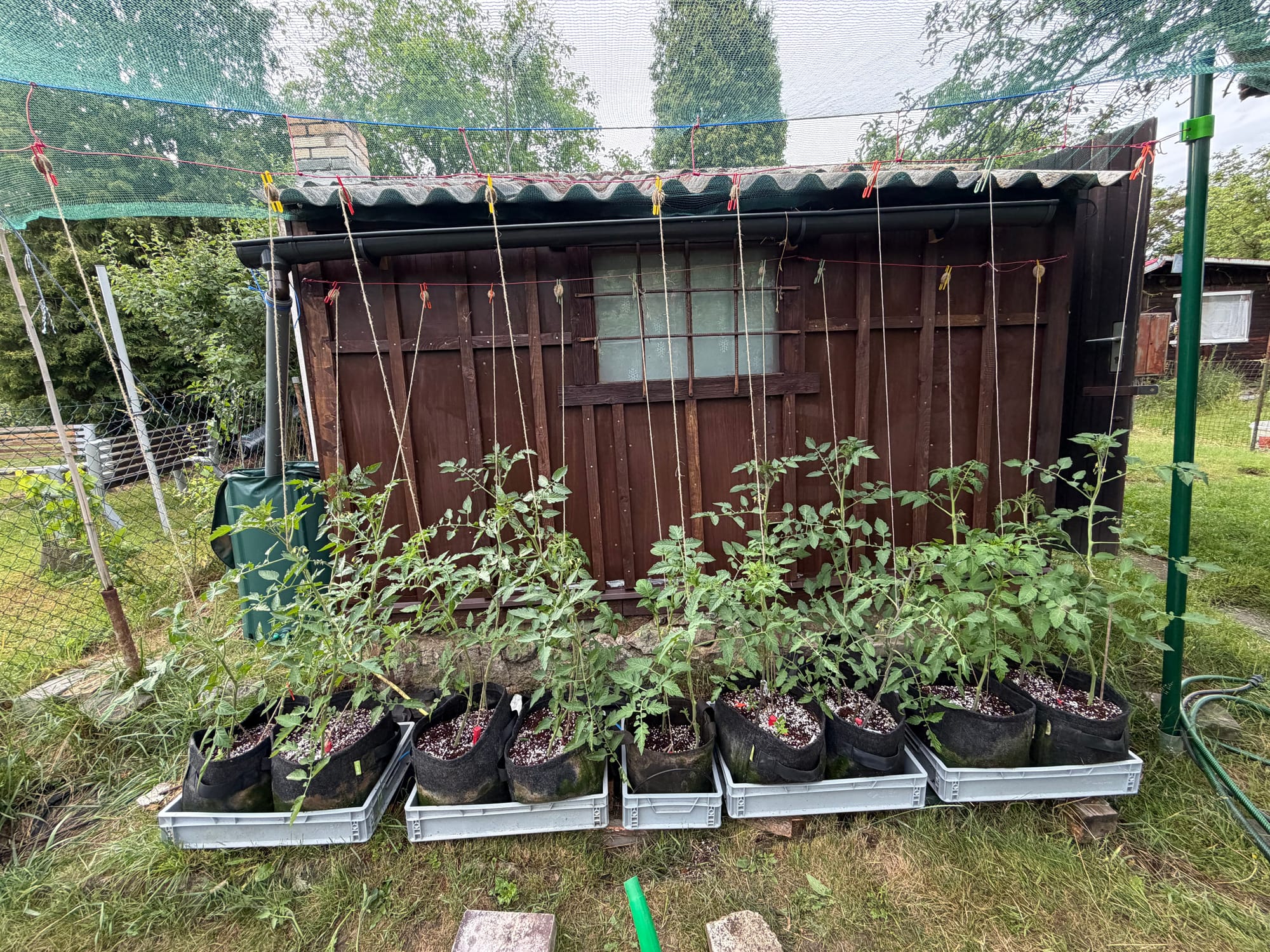
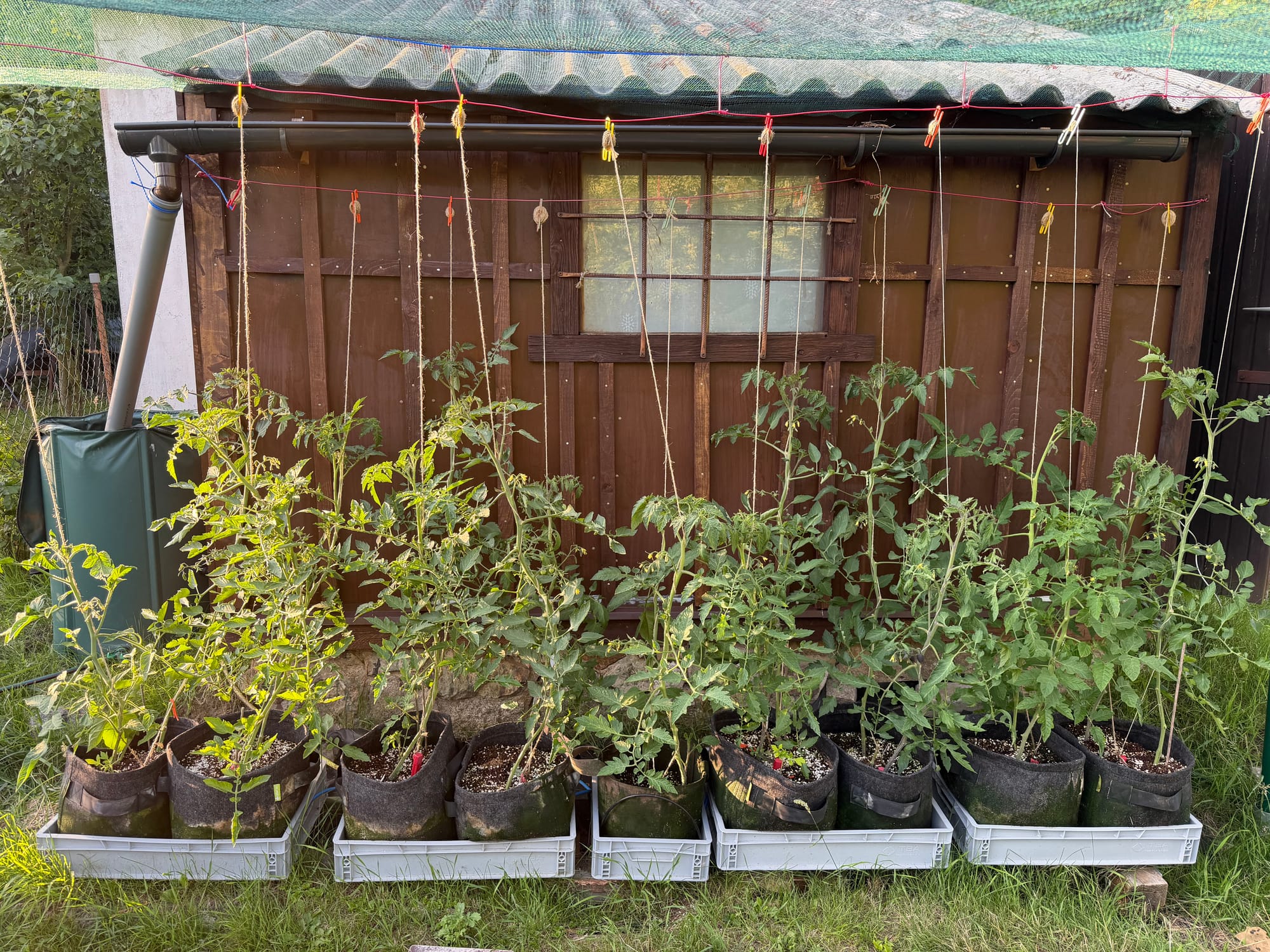
Since I am growing a lot of varieties this year, I have an opportunity to compare different tomatoes in the same conditions. I know how tomatoes like Sunviva and Resibella behave, but there is so much more. I am growing quite a lot of plum-like tomatoes called Atomic Grape, and it's generally interesting to see them grow next to the Sunviva.
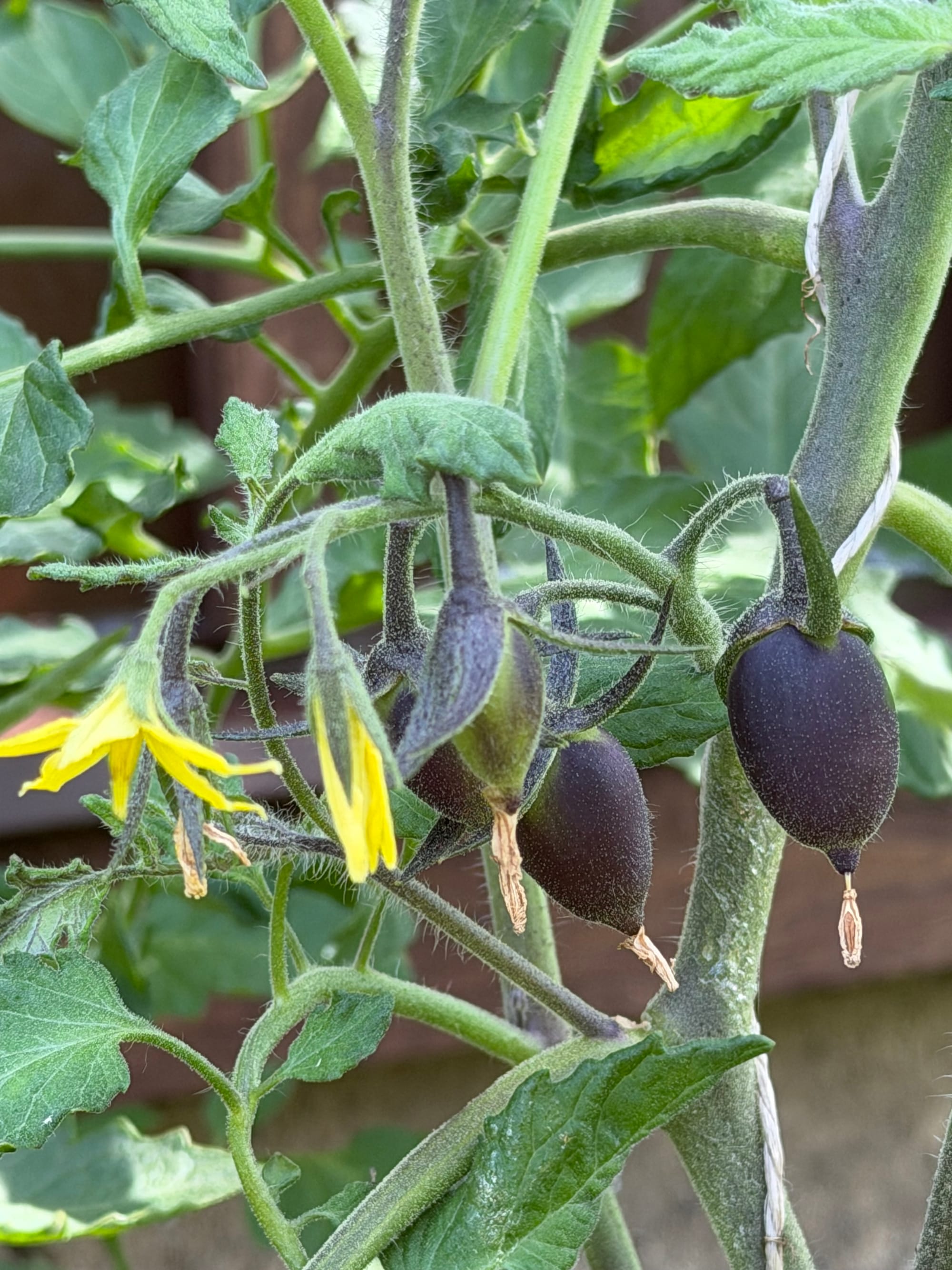
The intense heat accelerated vegetative growth in Sunviva and Resibella, both used to cooler weather, and by the end of June they are already around two meters tall. Even with the new trellis, it's just too much; there is no space. Currently, I am lowering the plants, but once the stem touches the ground, I snap the top to break apical dominance.
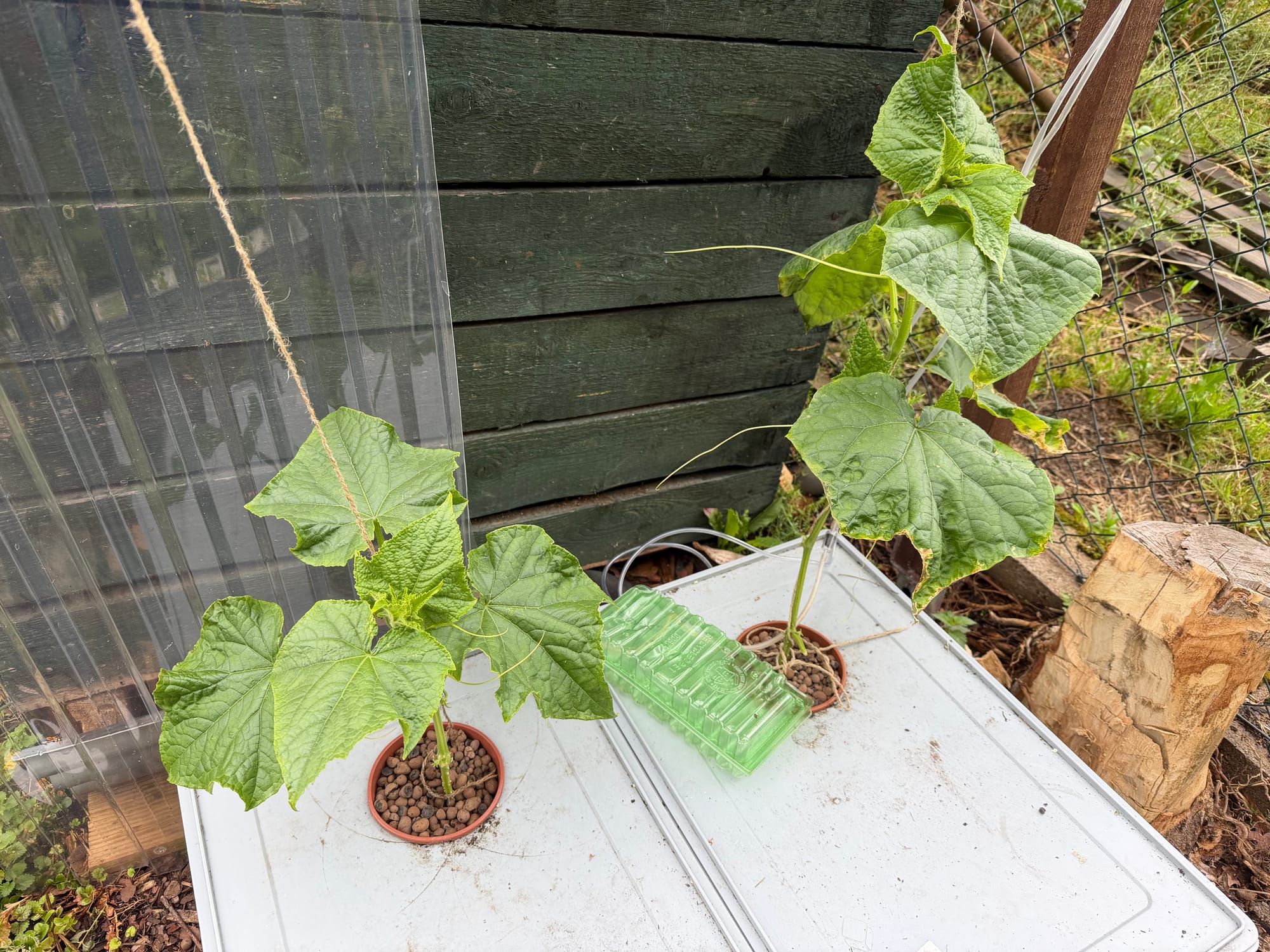
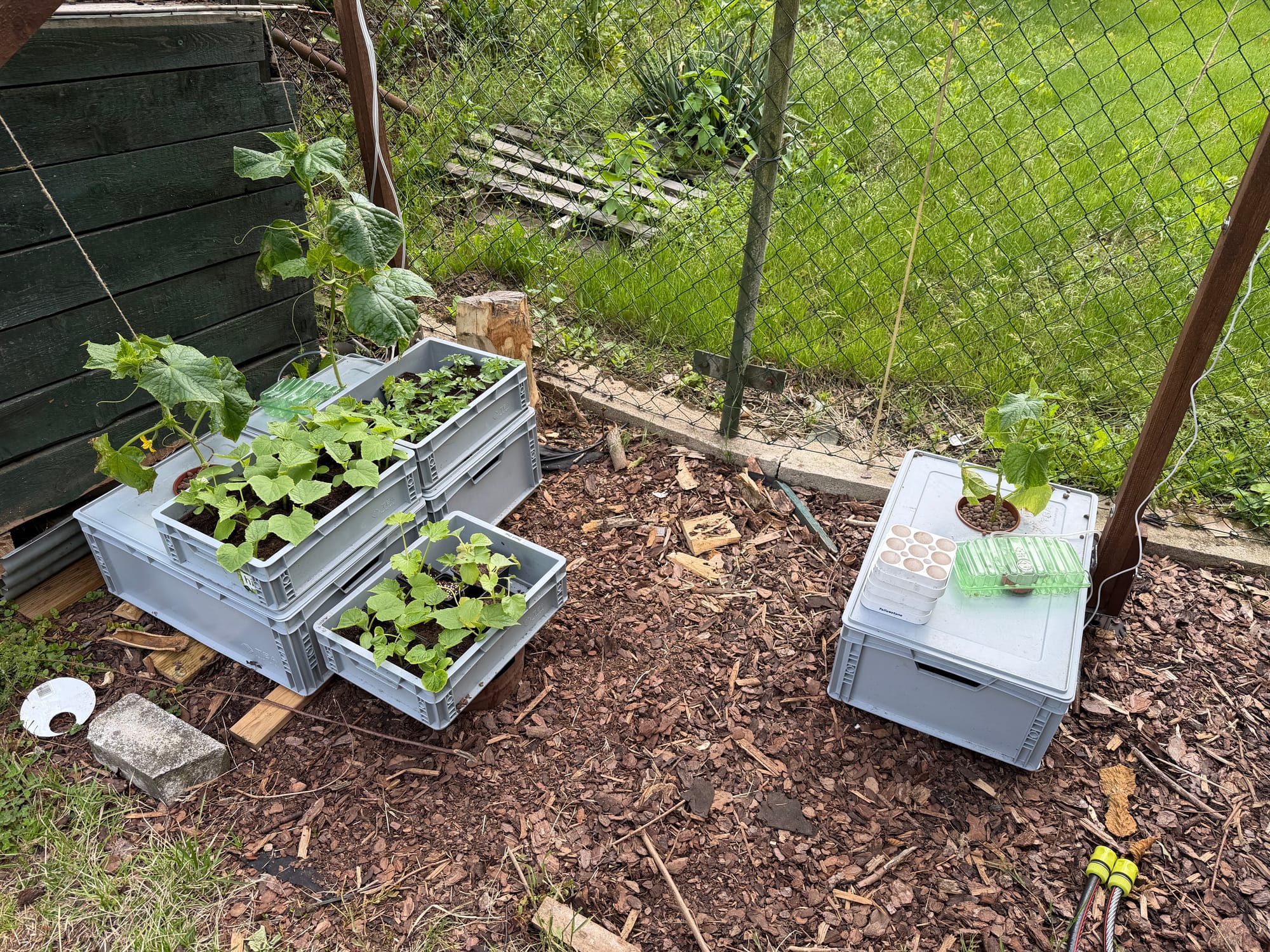
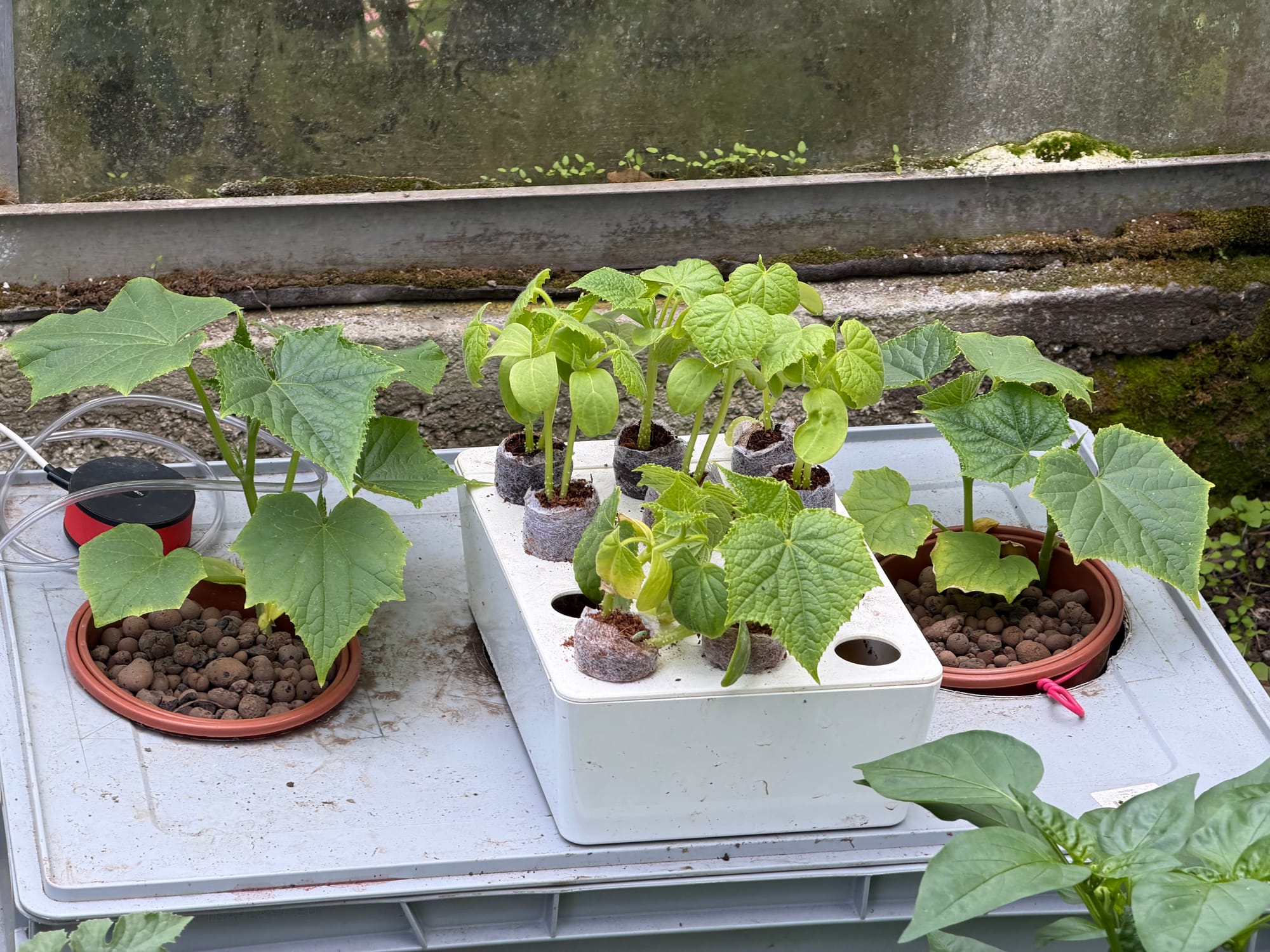
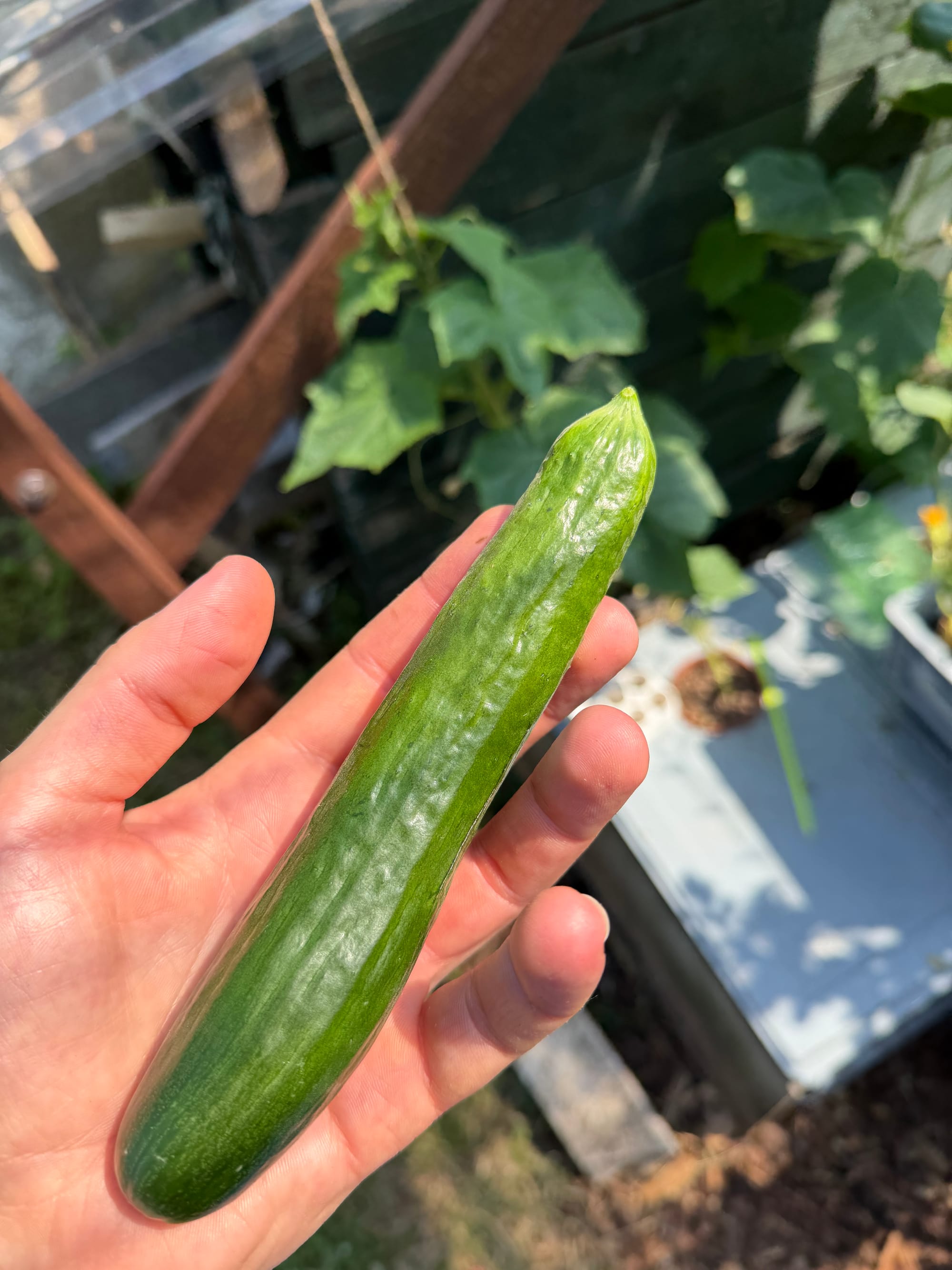
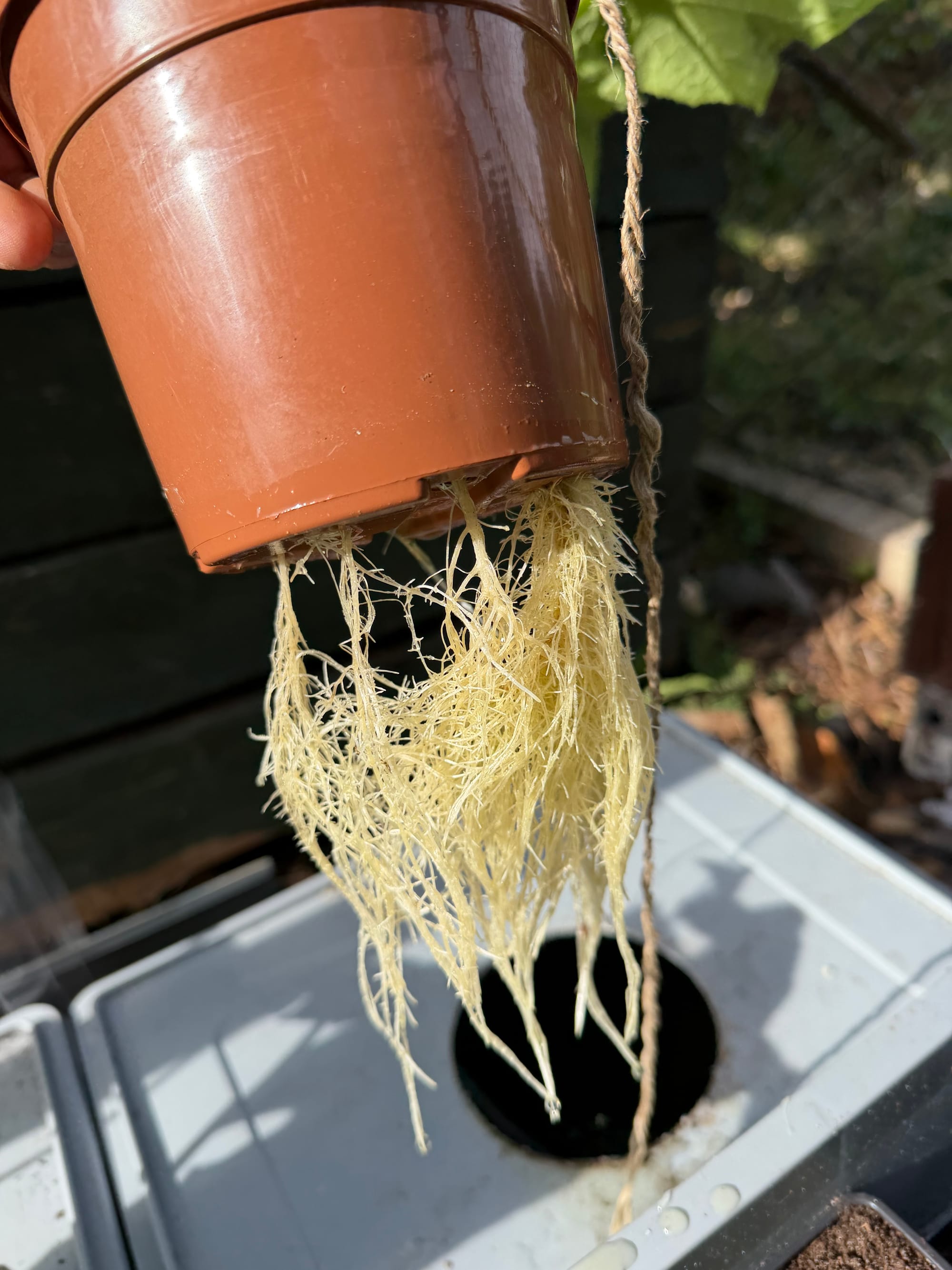
As you can see, my hydroponic cucumbers are happily ingesting nutrients. Using the EURO crate as a reservoir for the water has a few benefits. The water is somewhat shallow and provides ample area of moderately warm water for the roots to expand. It stores nicely and can be used to store items over winter. But because the water is shallow, it warms up fast, and during the heat wave I had to keep cooling the water down.
I've also quickly found out that cucumbers are more demanding than tomatoes in hydroponics. In DWC, pH and EC constantly drift, so you have to monitor them. But tomatoes are just fine with the EC being off for a few days. Cucumbers? Oh, the pH is wrong by 0.1? Ok, I will just drop all fruit and good luck. And because I have each plant in its own reservoir, I have to monitor multiple reservoirs constantly. This can be solved by changing the system to recirculating DWC, but at that point I would rather build a large-scale Dutch bucket system.
But the cucumbers have sparked an idea. A crazy one. I have some watermelons and some buckets. Watermelons. Like water. It makes perfect sense. So yeah! I quickly built a DWC system for watermelons.
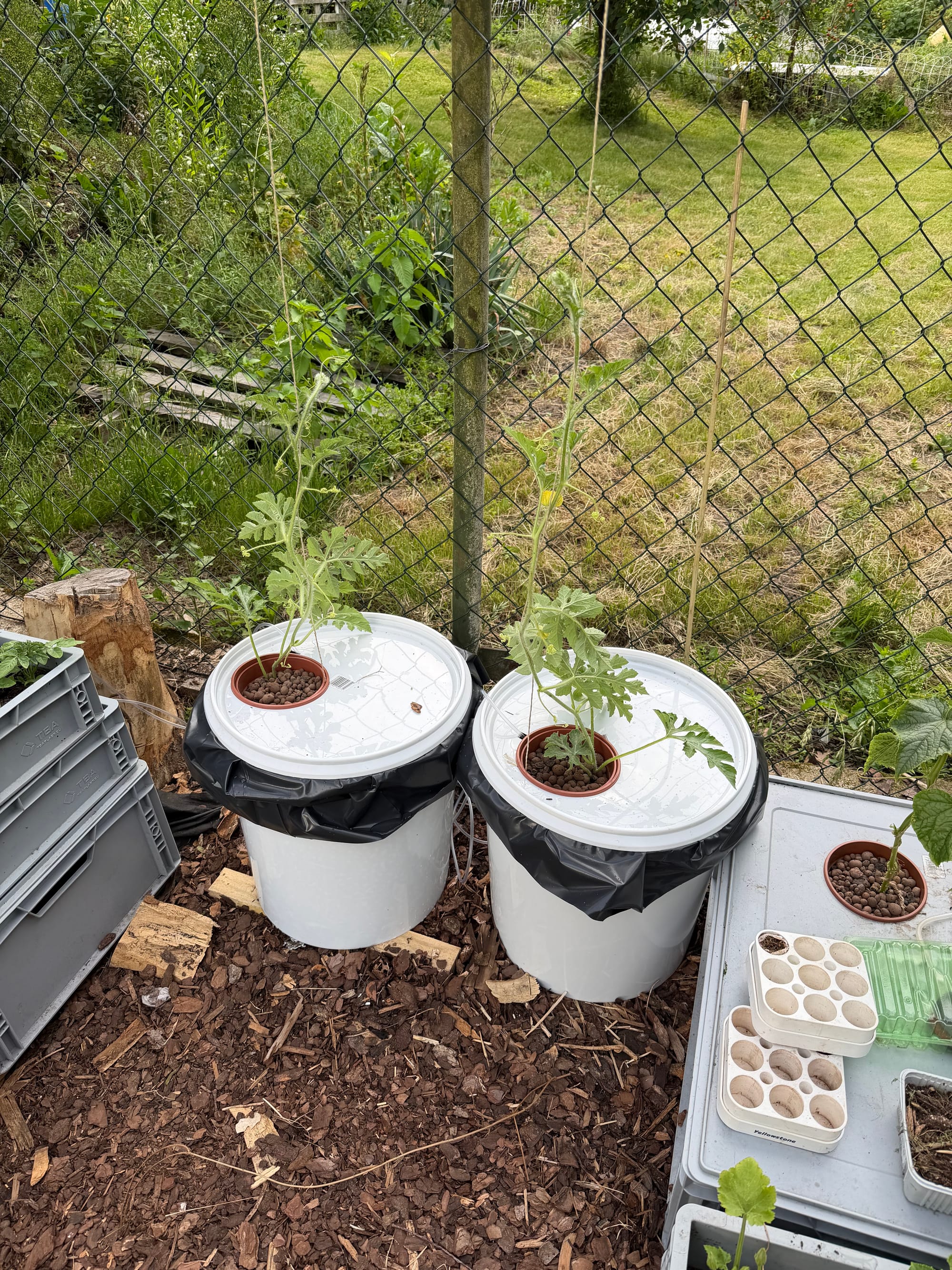
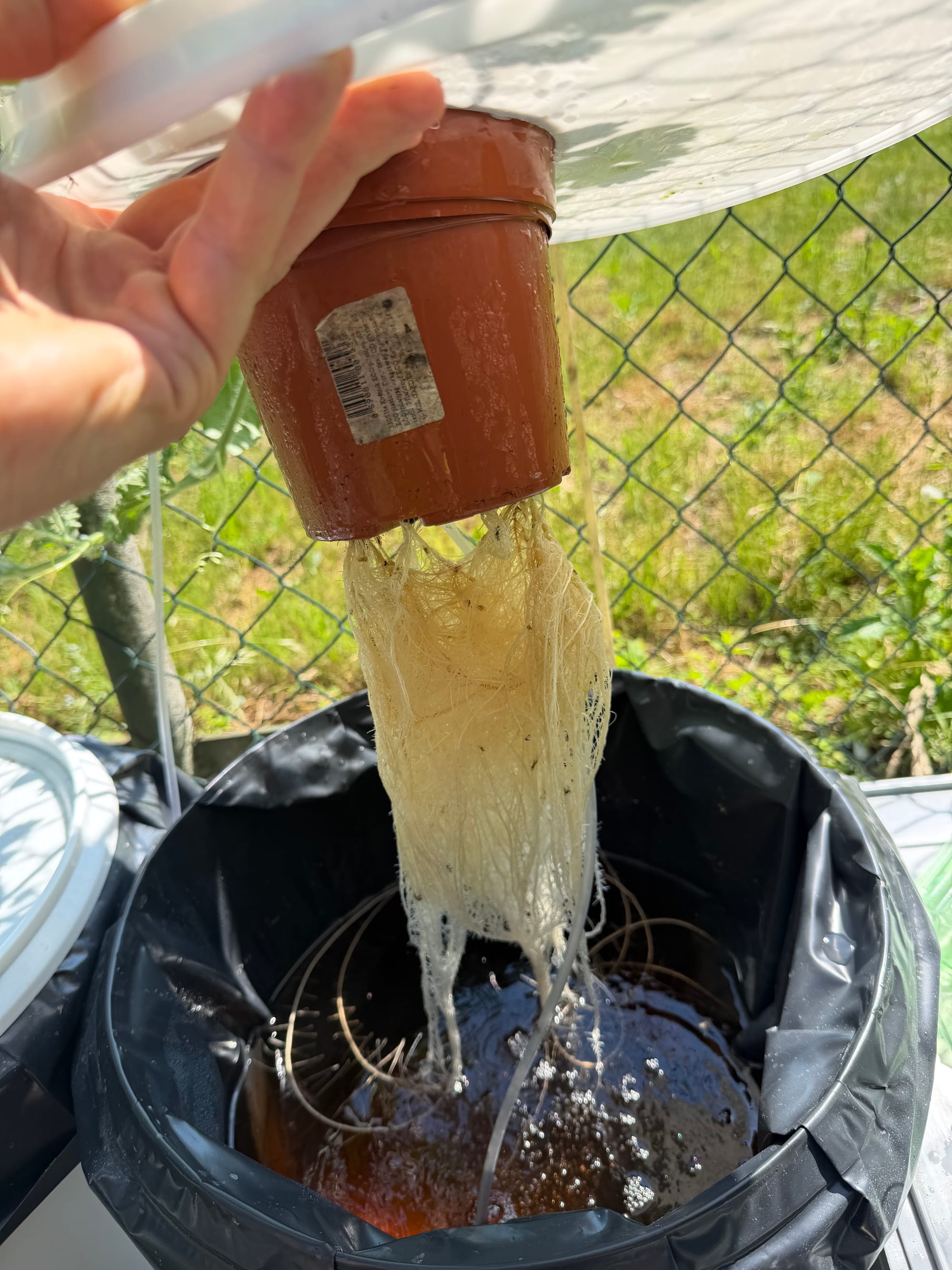
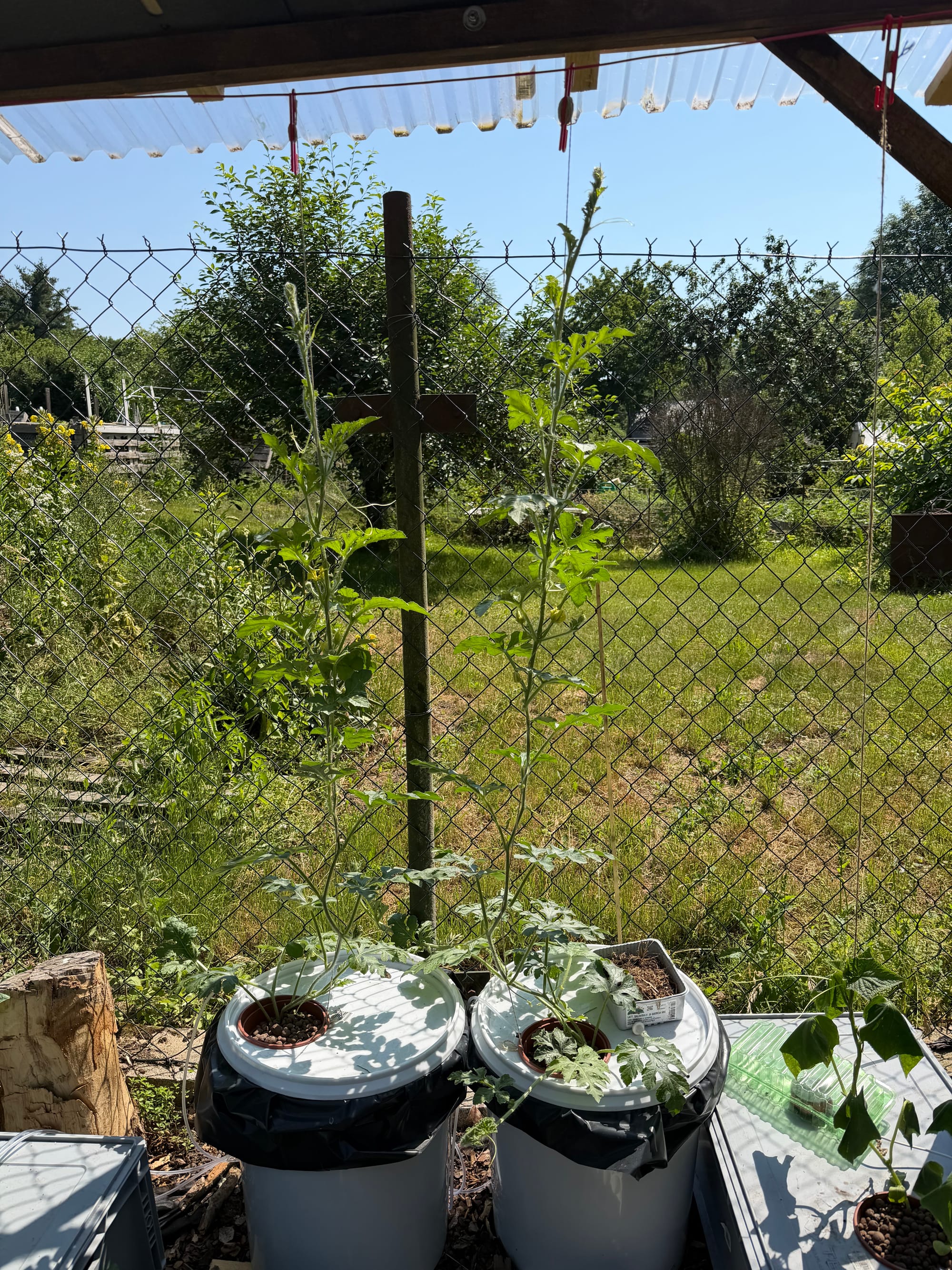
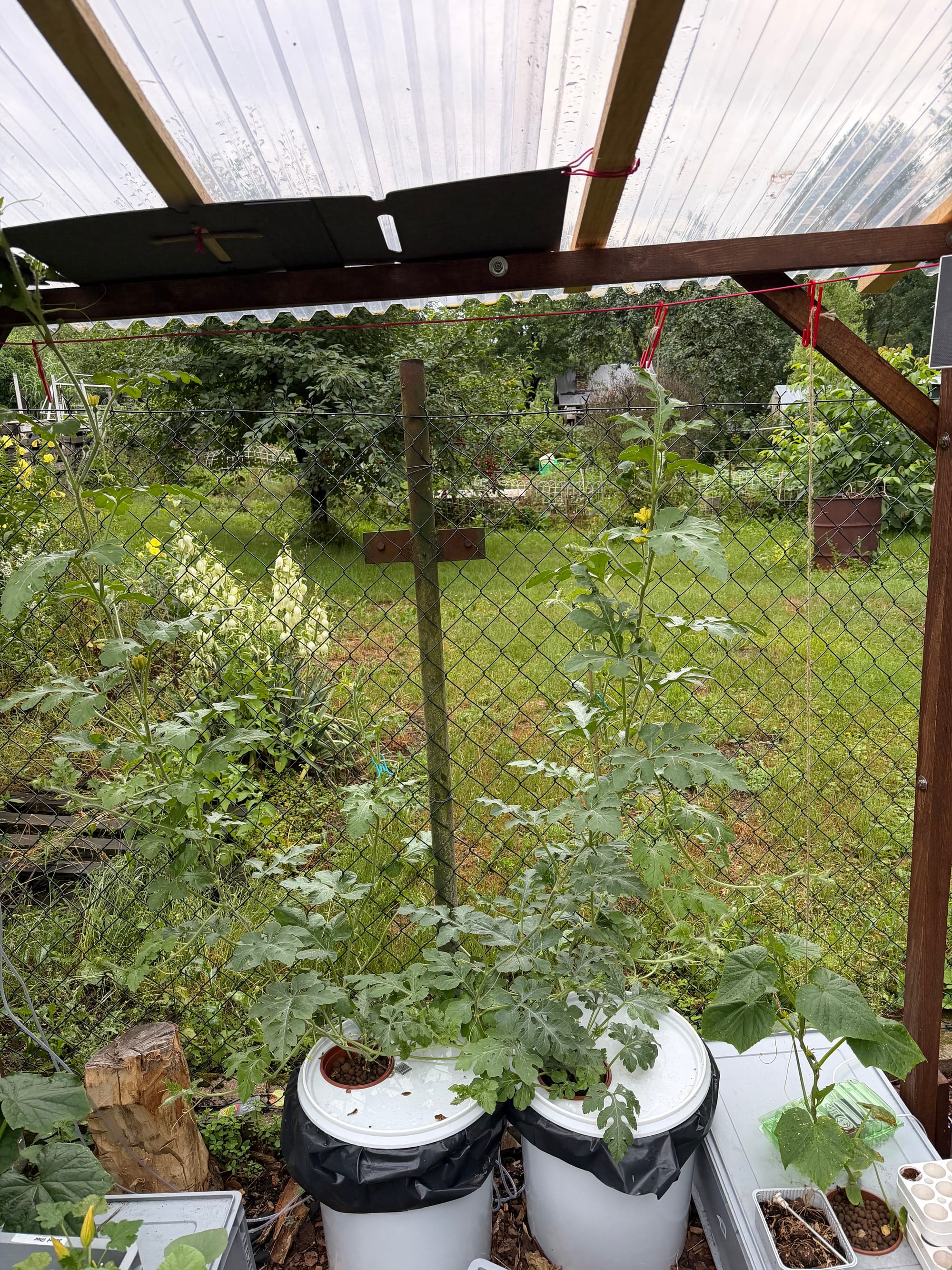
Watermelons require constant moisture and fertilization. In a DWC bucket, they, at least that's the plan, have access to everything. And oh boy do they love the bucket. The melons went from zero to hero in no time. Up to ten centimeters per day in the main vine.
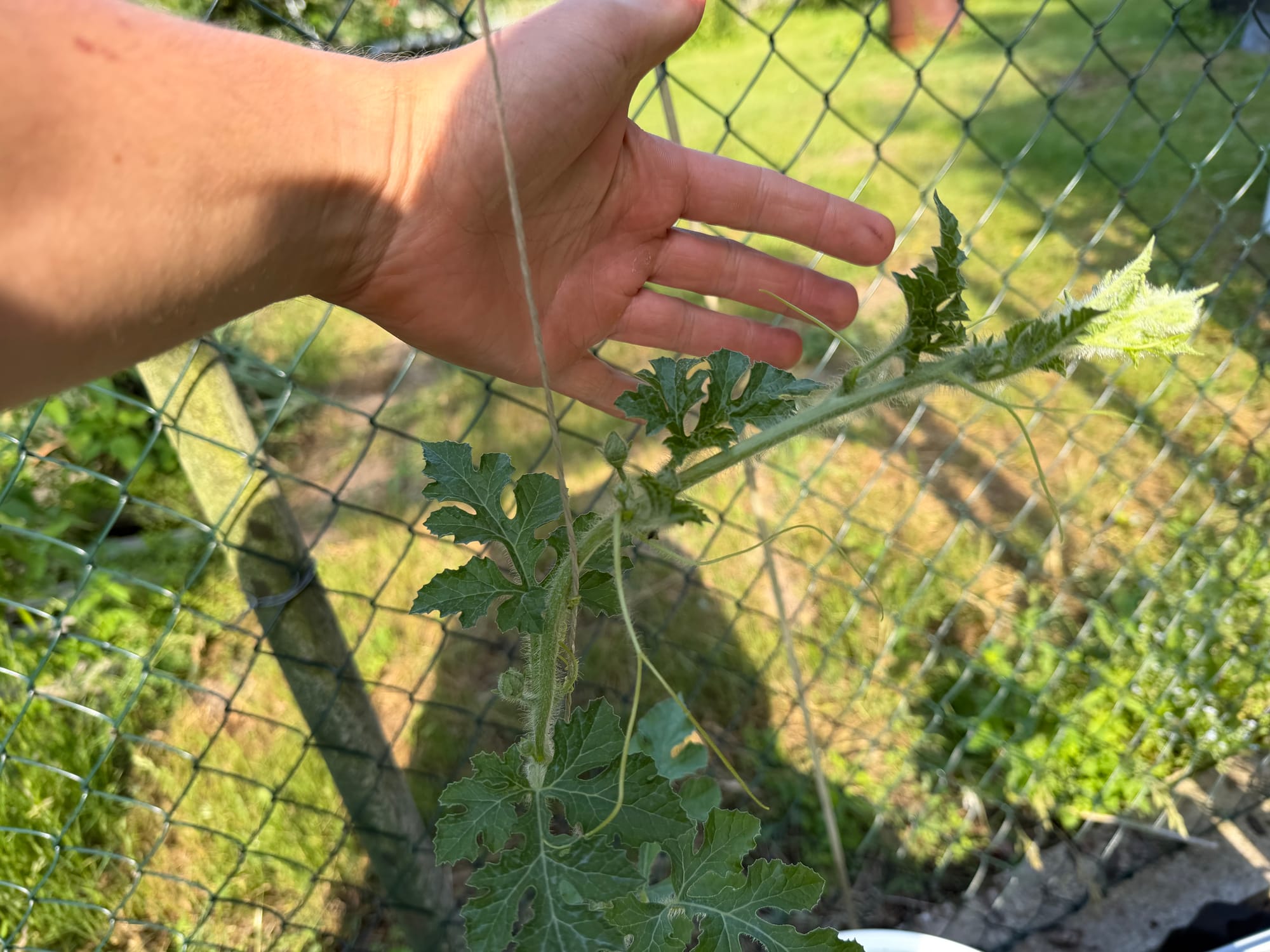
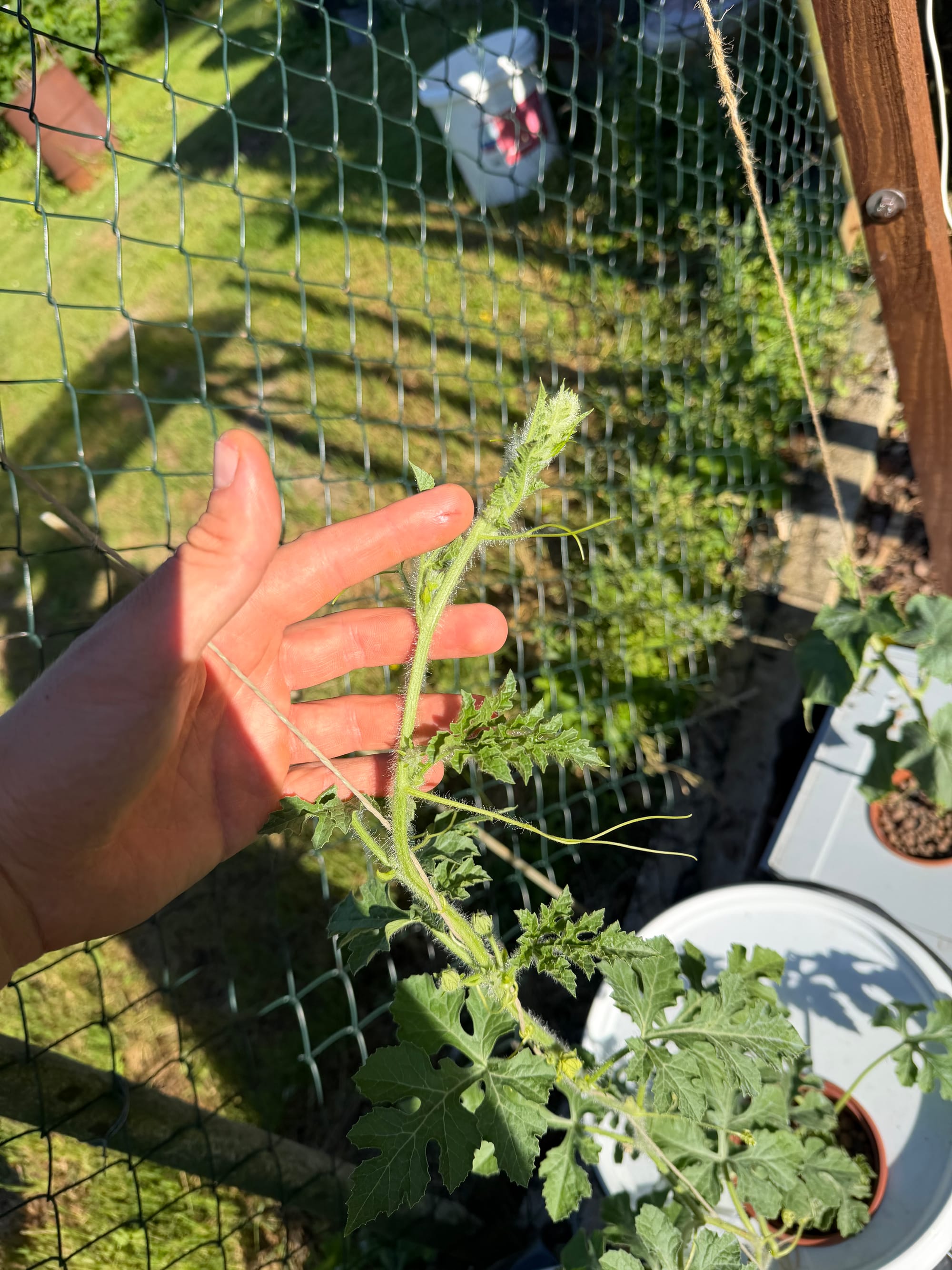
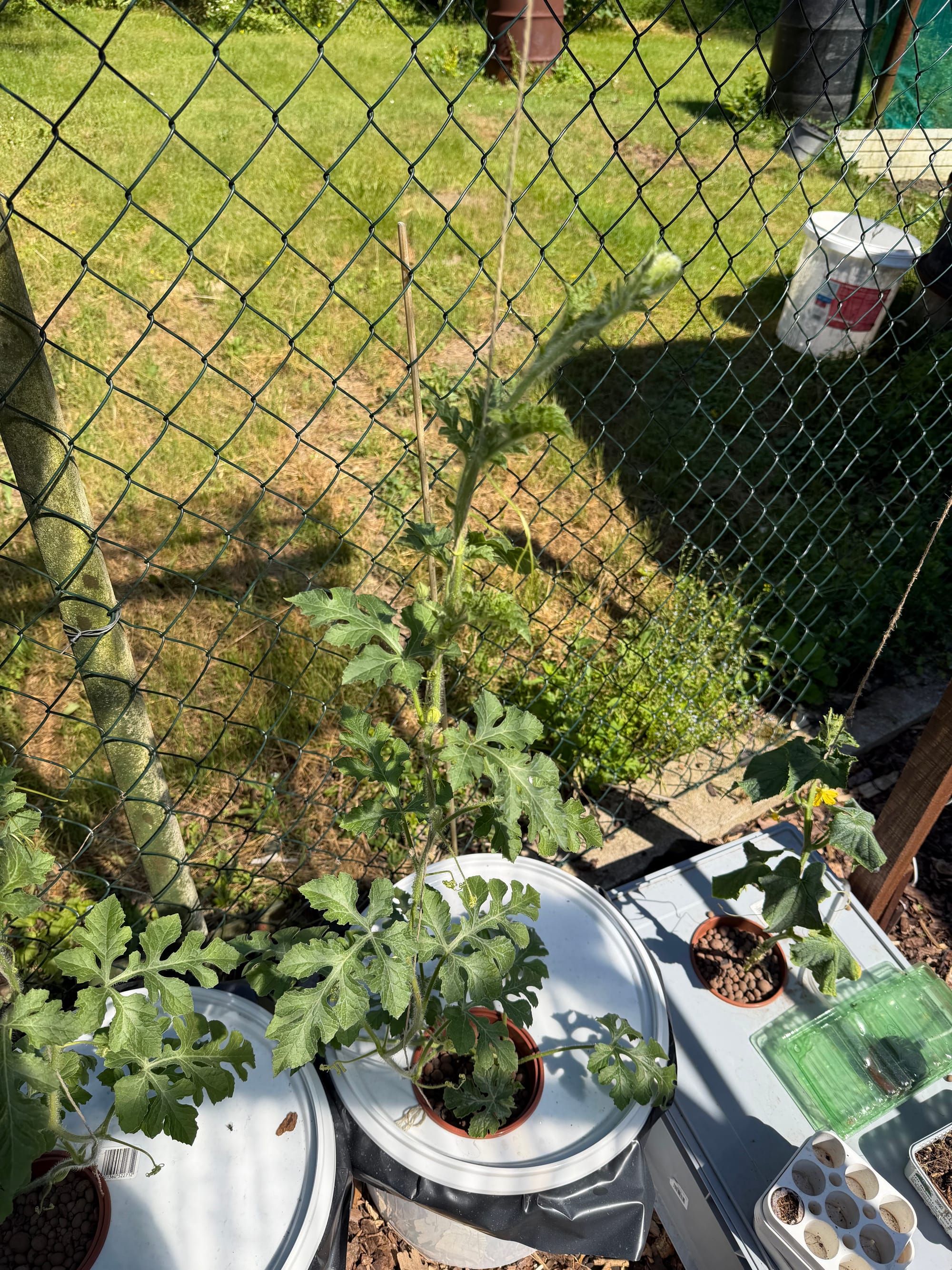
I believe the system can support up to two melons per plant, so I left two main vines.
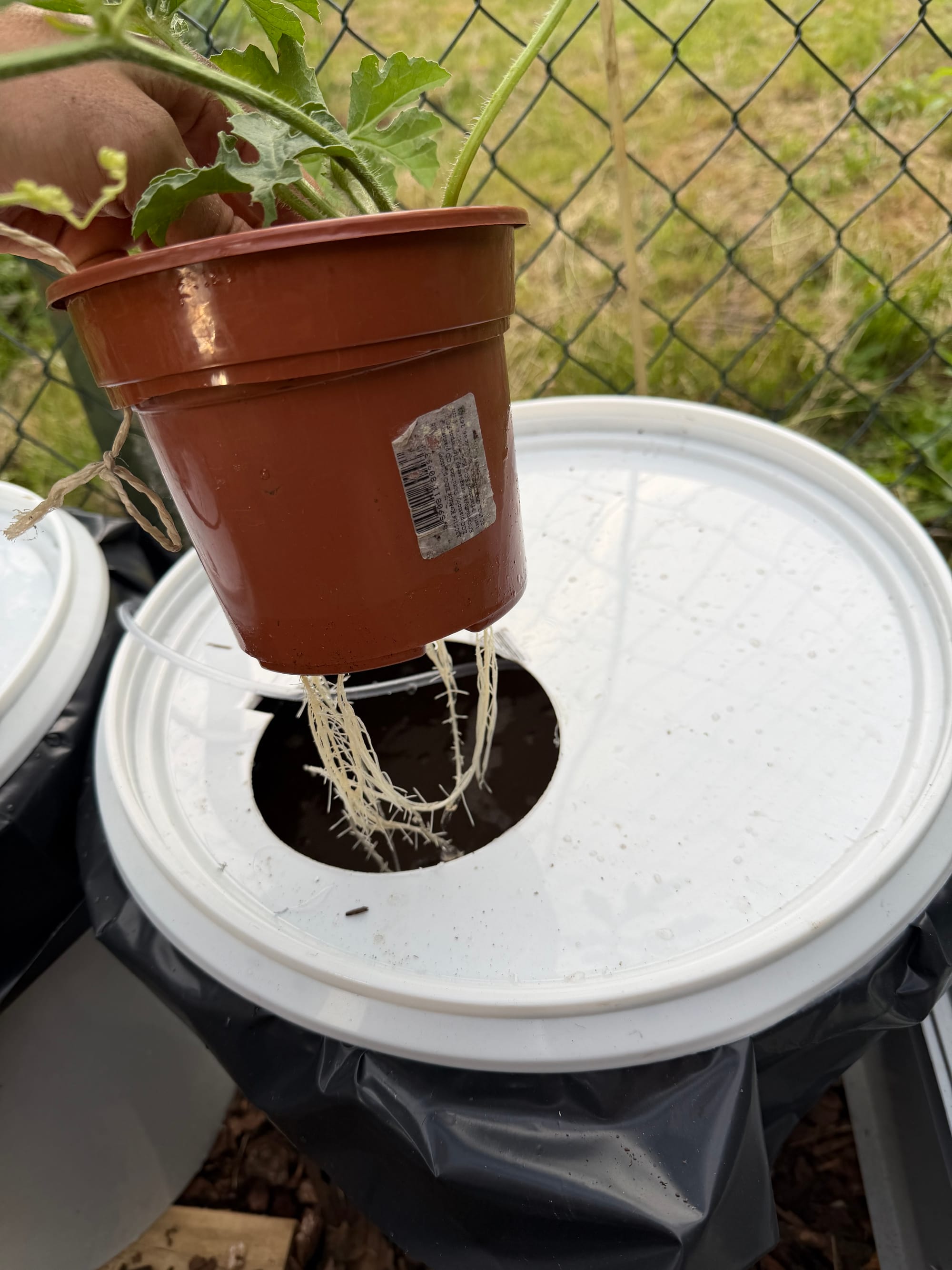
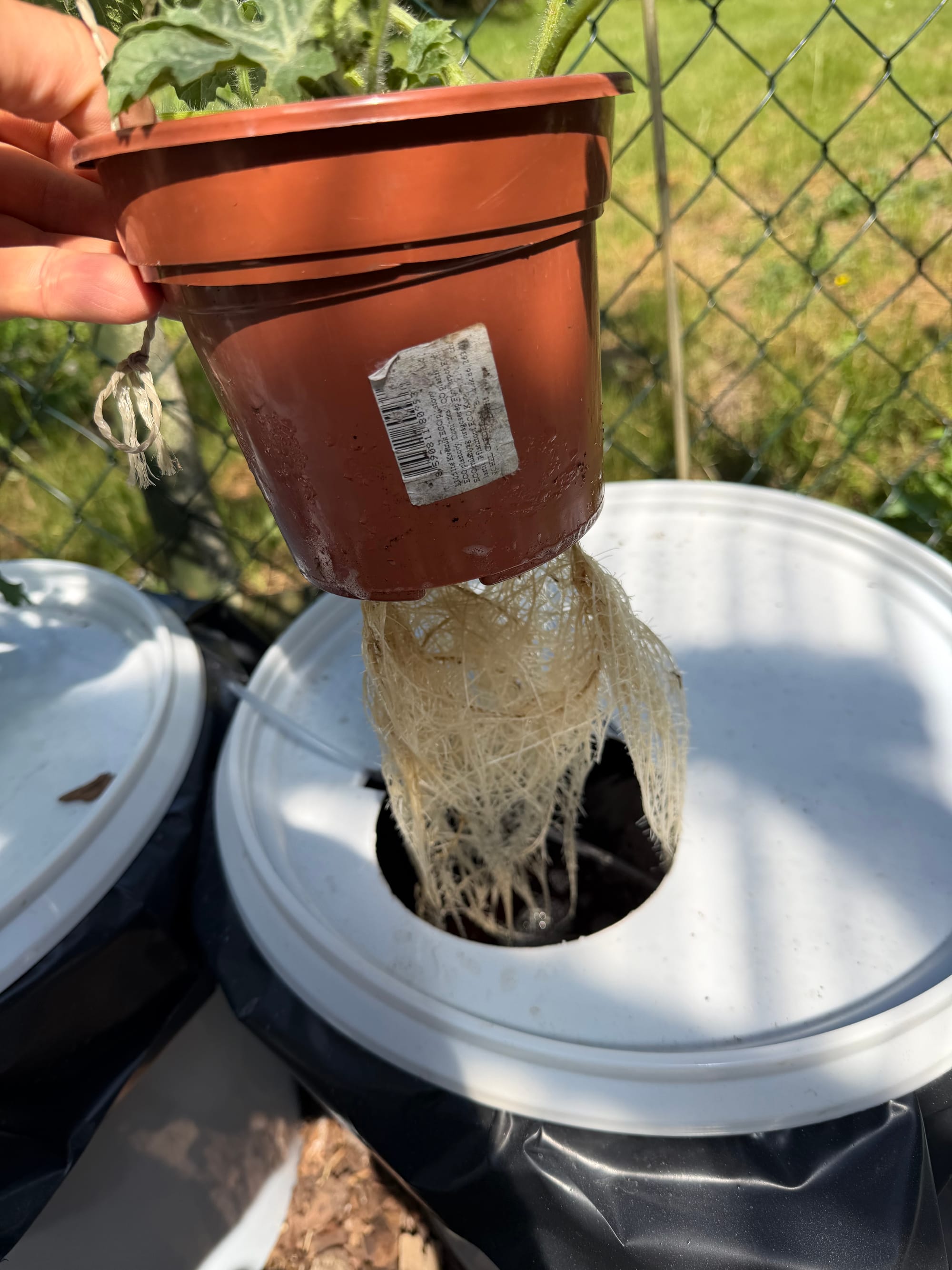
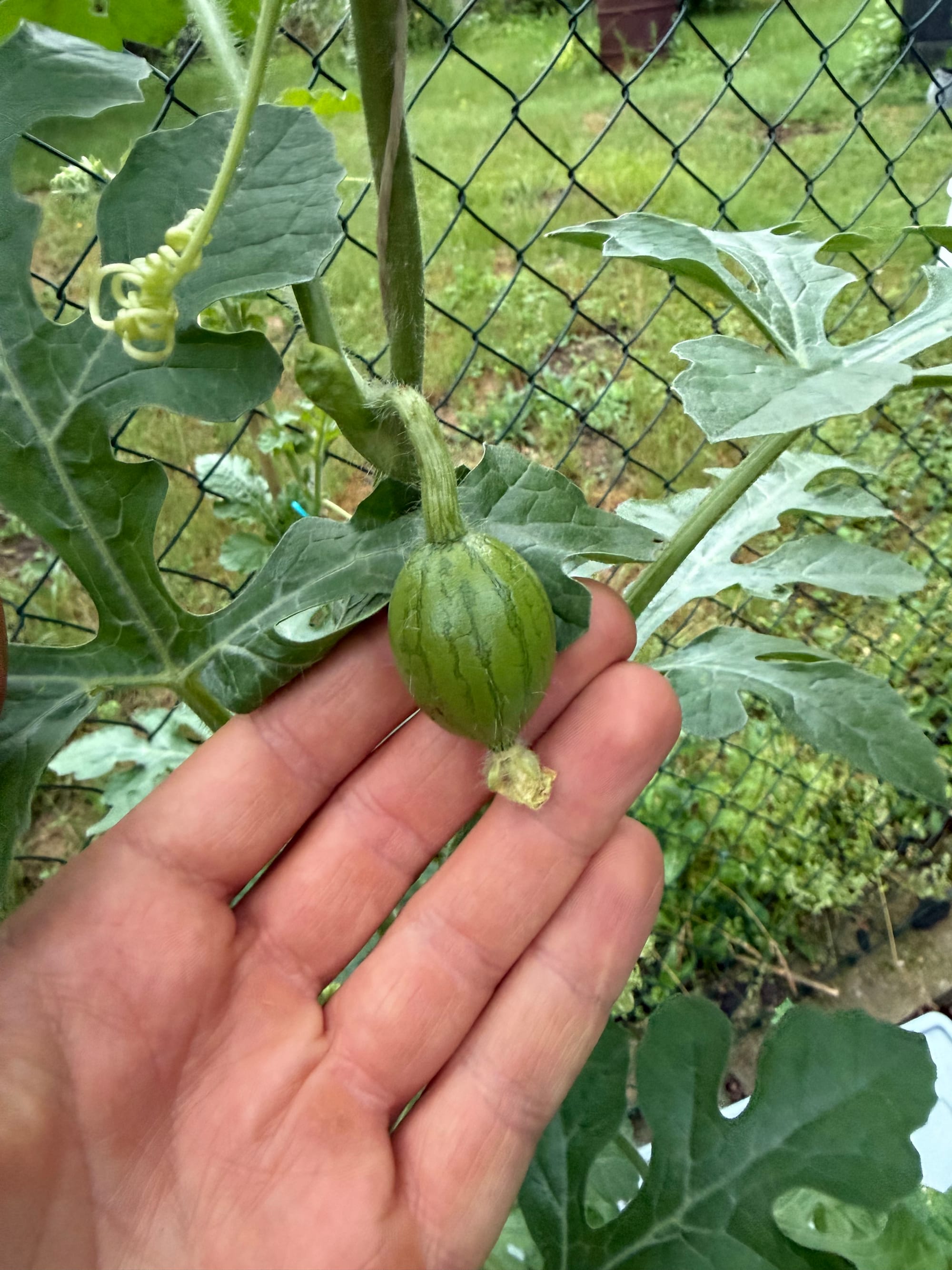
There is no point in keeping more than one fruit per vine. I managed to successfully pollinate one fruit, and to redirect all the necessary energy to ripening, I cut the end of the vine. This will redirect most of the energy to the fruit, with some to lateral growth.
the trip to italy
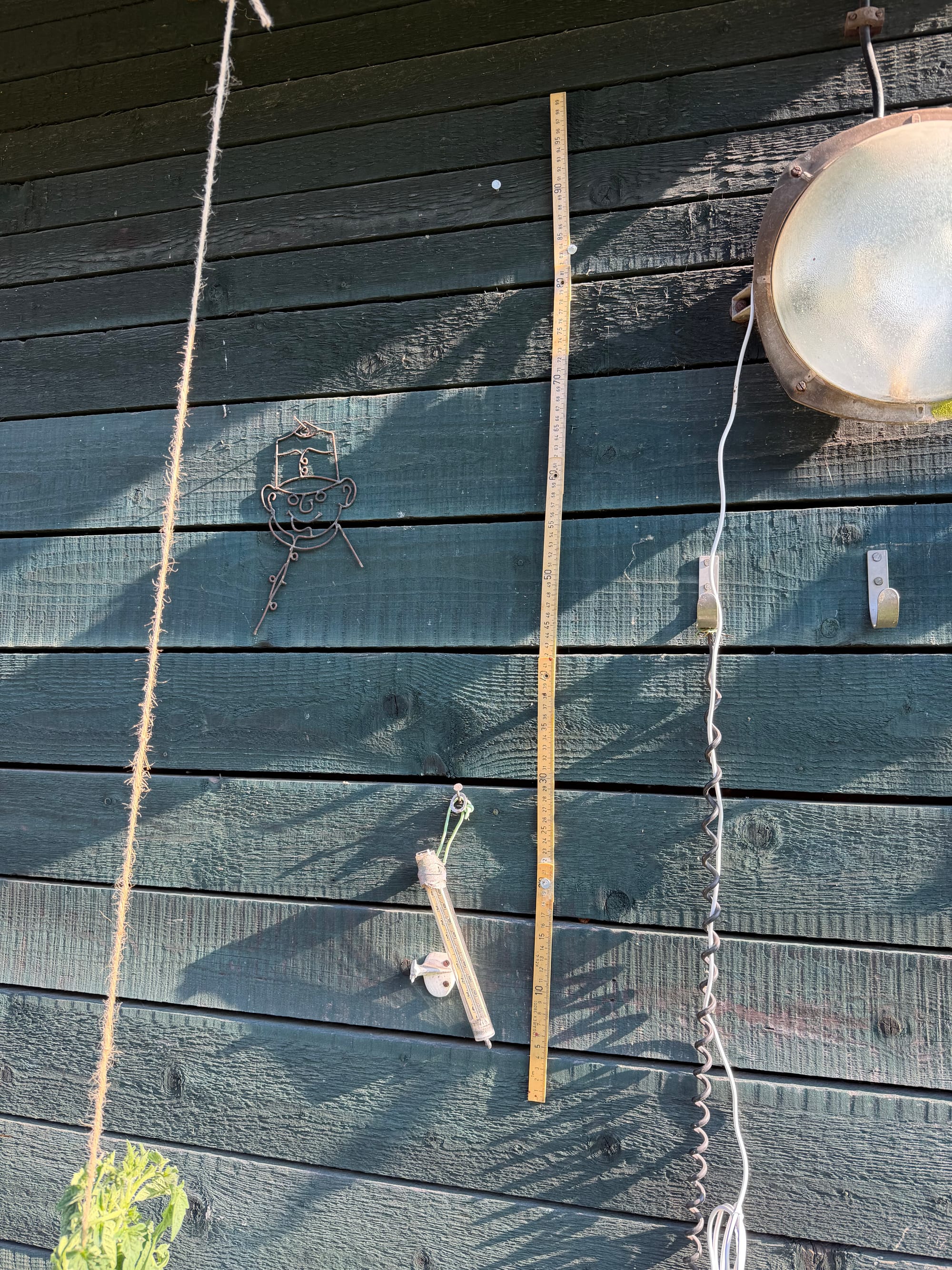
I have never grown beefsteak tomatoes before, so Costoluto Fiorentino is a totally new field for me, and it comes with some caveats. First is the vigor with which these plants grow. It's insane.
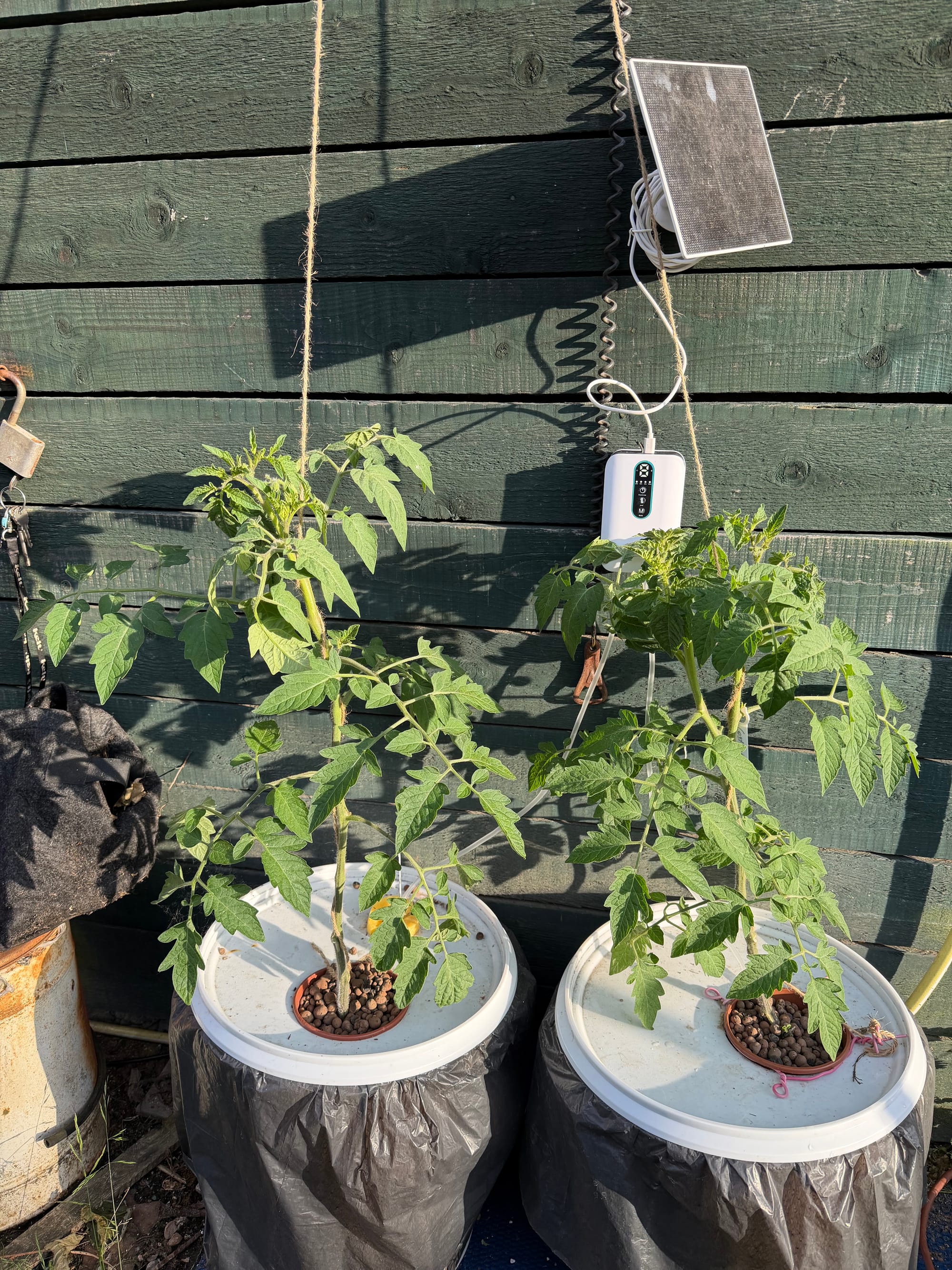
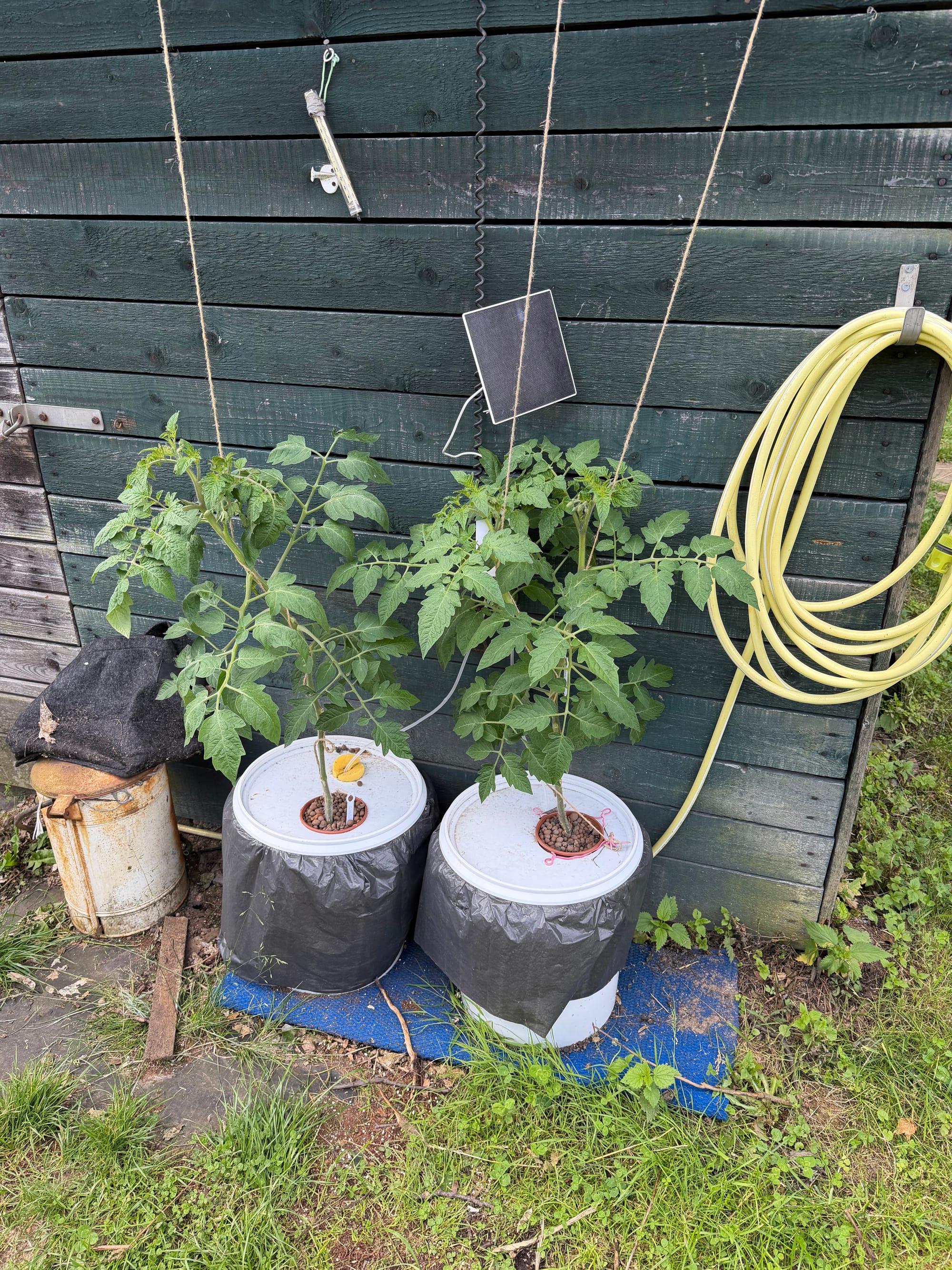
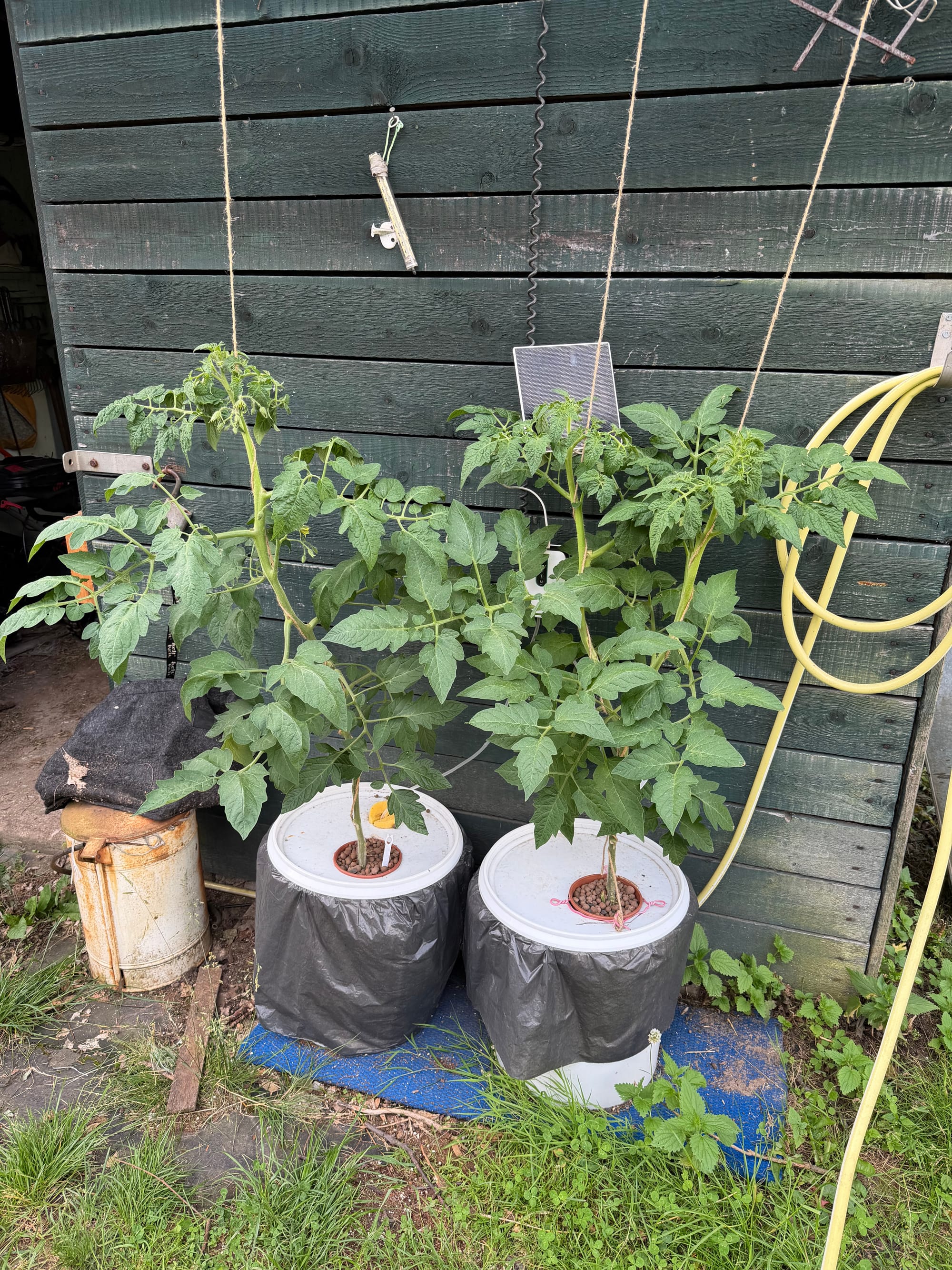
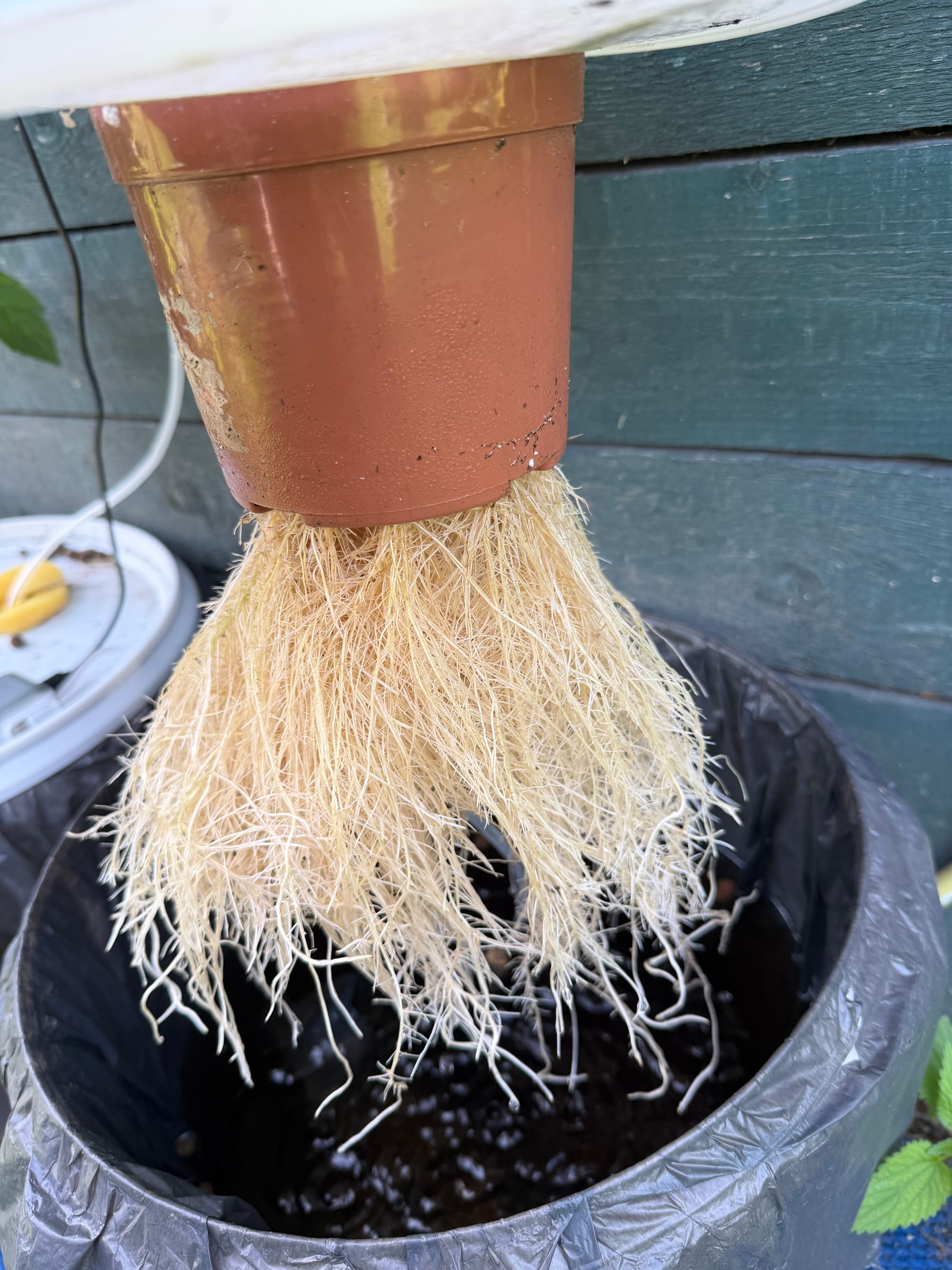
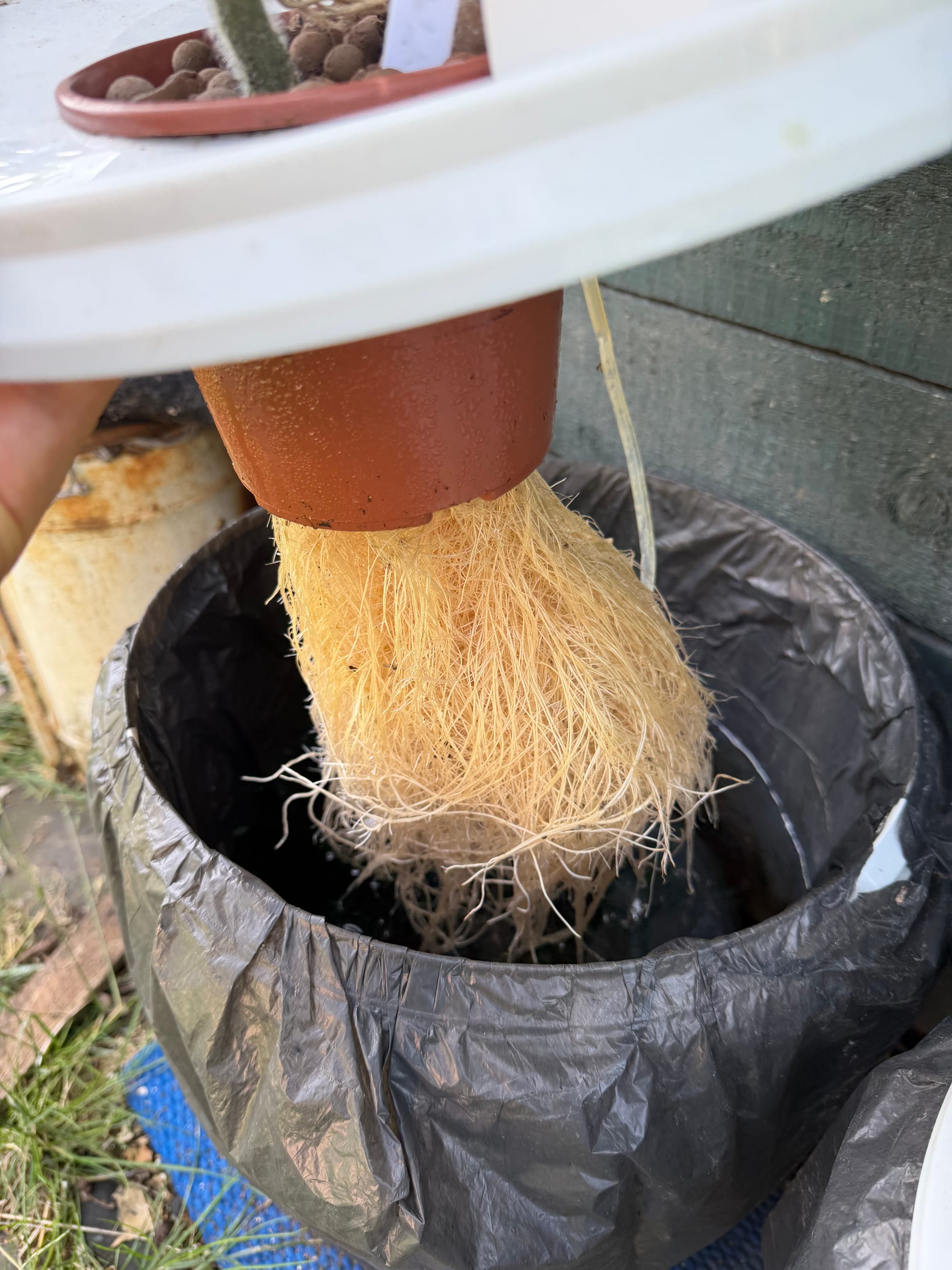
The roots are totally dominating the bucket, and both plants are turning CO2 into mass in front of my eyes.
I have installed a stick meter to measure the height.
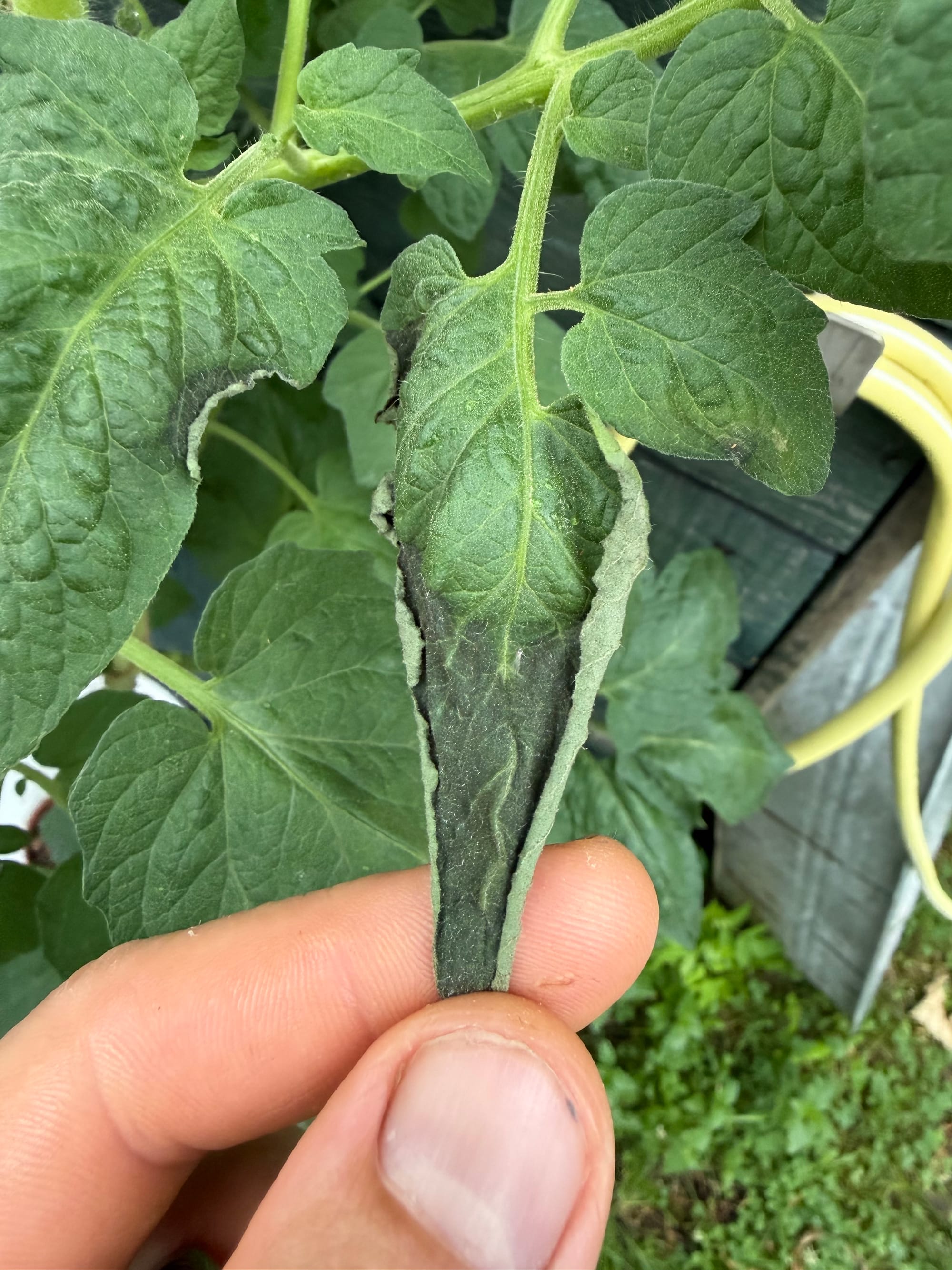
And here come the issues. First of all, the water. It disappears in front of my eyes. These plants drink too fast. This leads to EC and pH drift. But not a slight EC drift. A massive EC drift over 4. Cucumbers would already be dead in a solution like this. Thankfully, the tomatoes are resilient enough to survive this with only minor damage on some leaves. And I am not entirely sure it's just because of the high EC.
The other issue I have is the calcium deficiency. The TA Tripart nutrient line I use should have enough calcium already mixed in. But it's obviously not enough for these tomatoes, and, combined with the high EC, it's a great environment for blossom-end rot to develop. And sure it did.
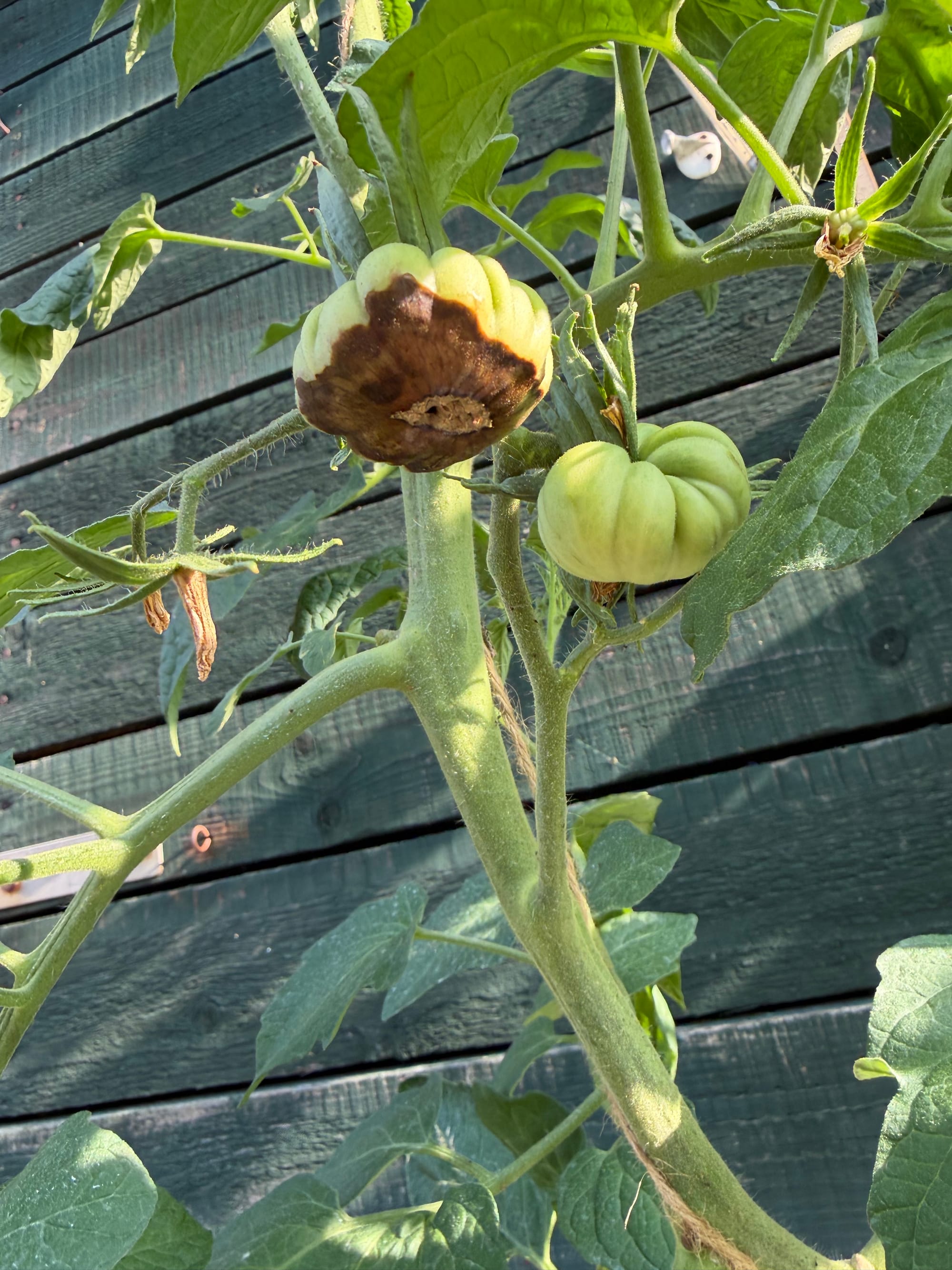
I started dosing additional CalMag into the solution to meet the calcium needs and started monitoring the solution more closely.
the soilture
Once the rain subsided at the beginning of the month, I finally transplanted the winter squash to the bed.
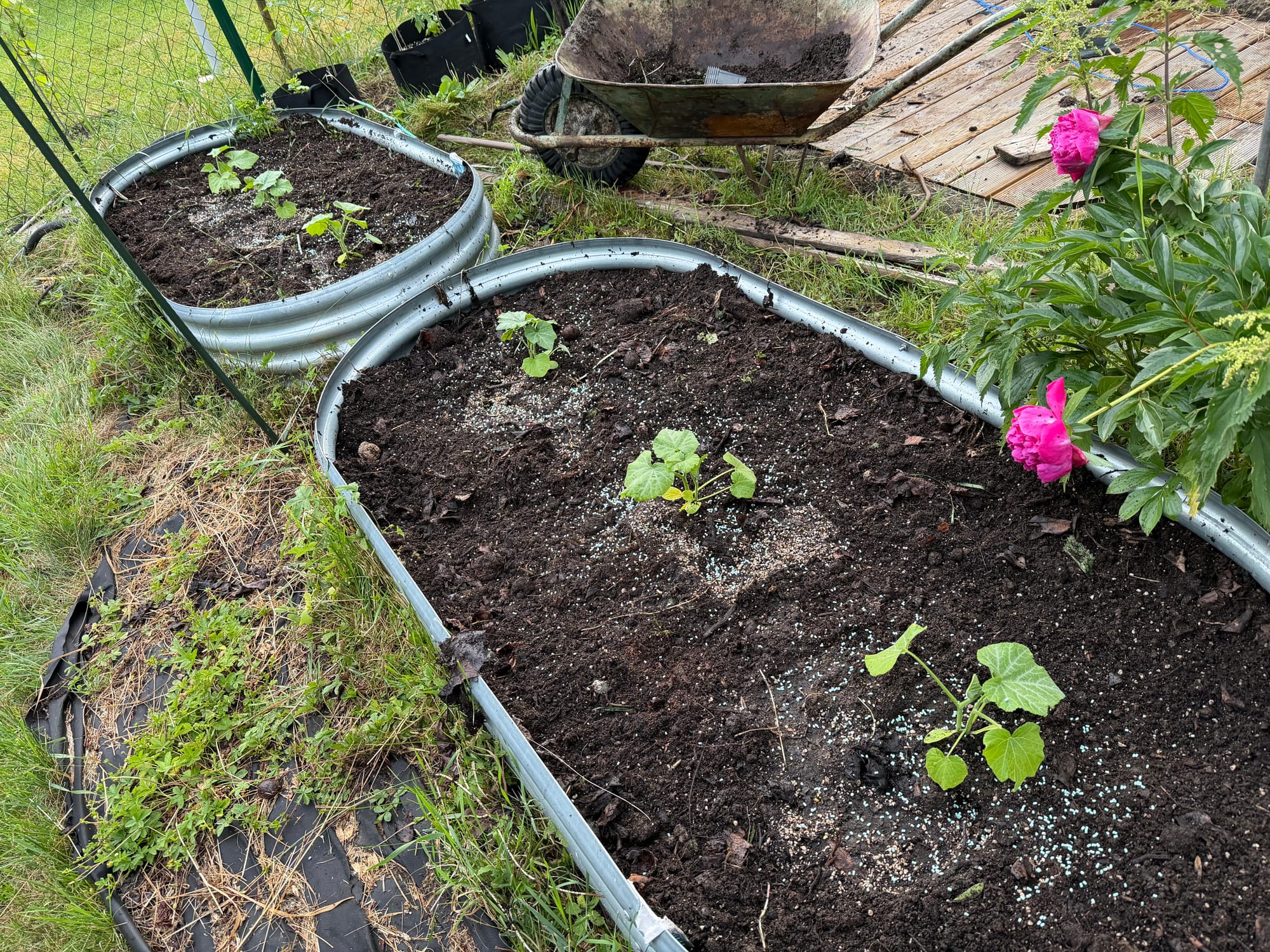
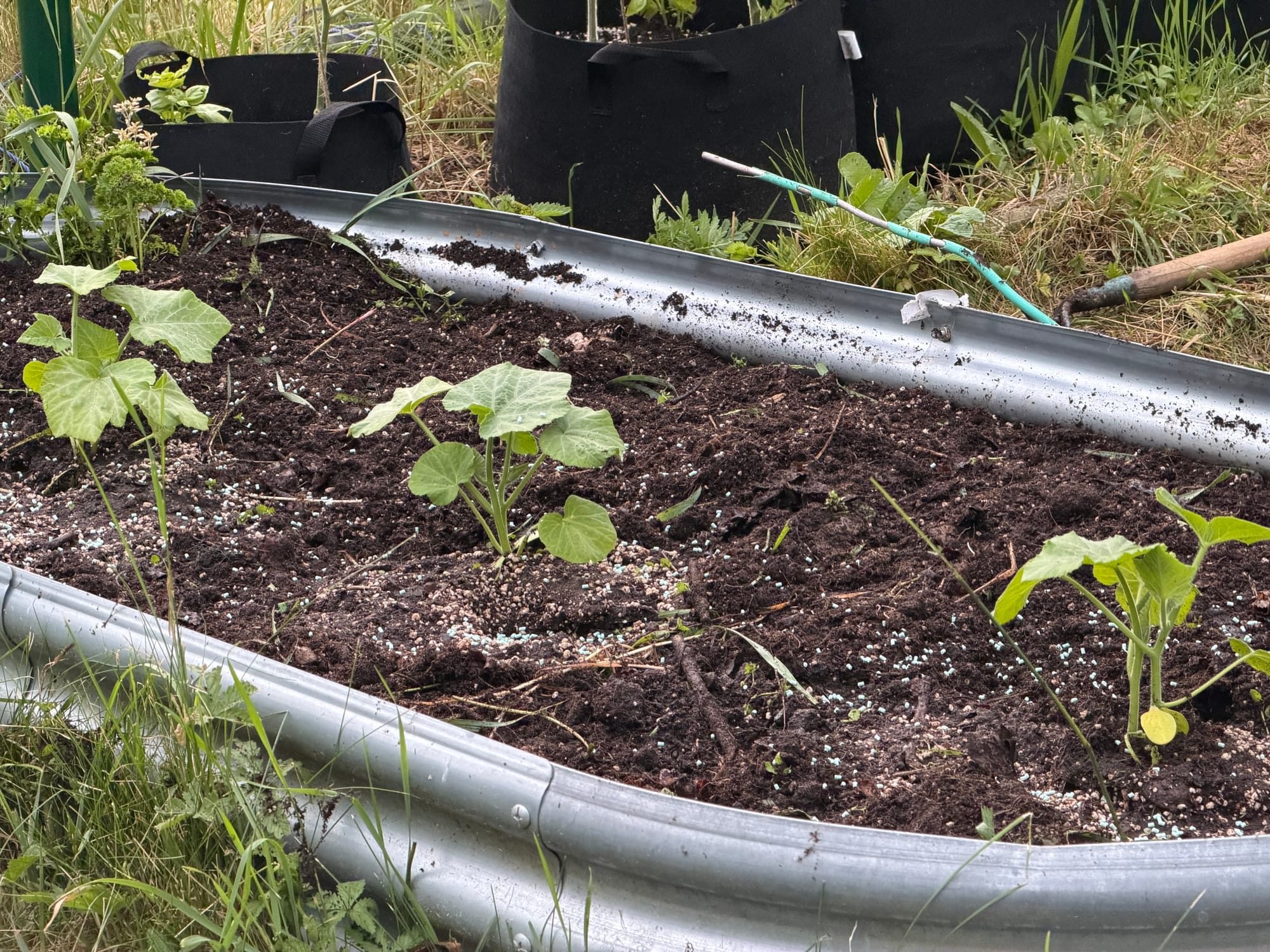
At each bed, I have installed two TerraClick irrigation spikes to maintain consistent moisture. It probably won't be enough, as these plants have massive canopies and transpire a large amount of water. Still, it should keep the soil moist enough to keep them happy between manual waterings. And to keep them even happier, I added some nitrogen and calcium to the water barrel.
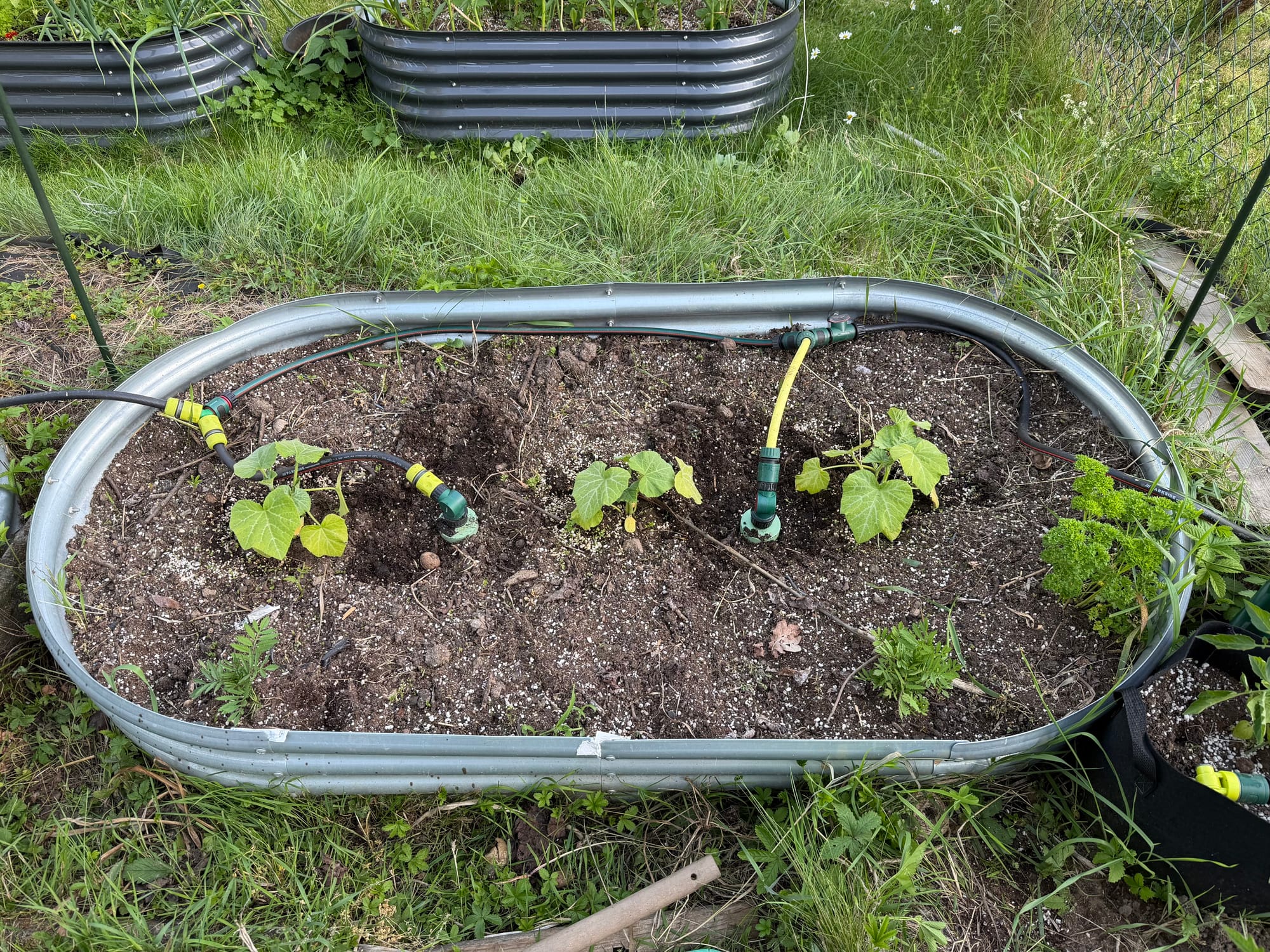
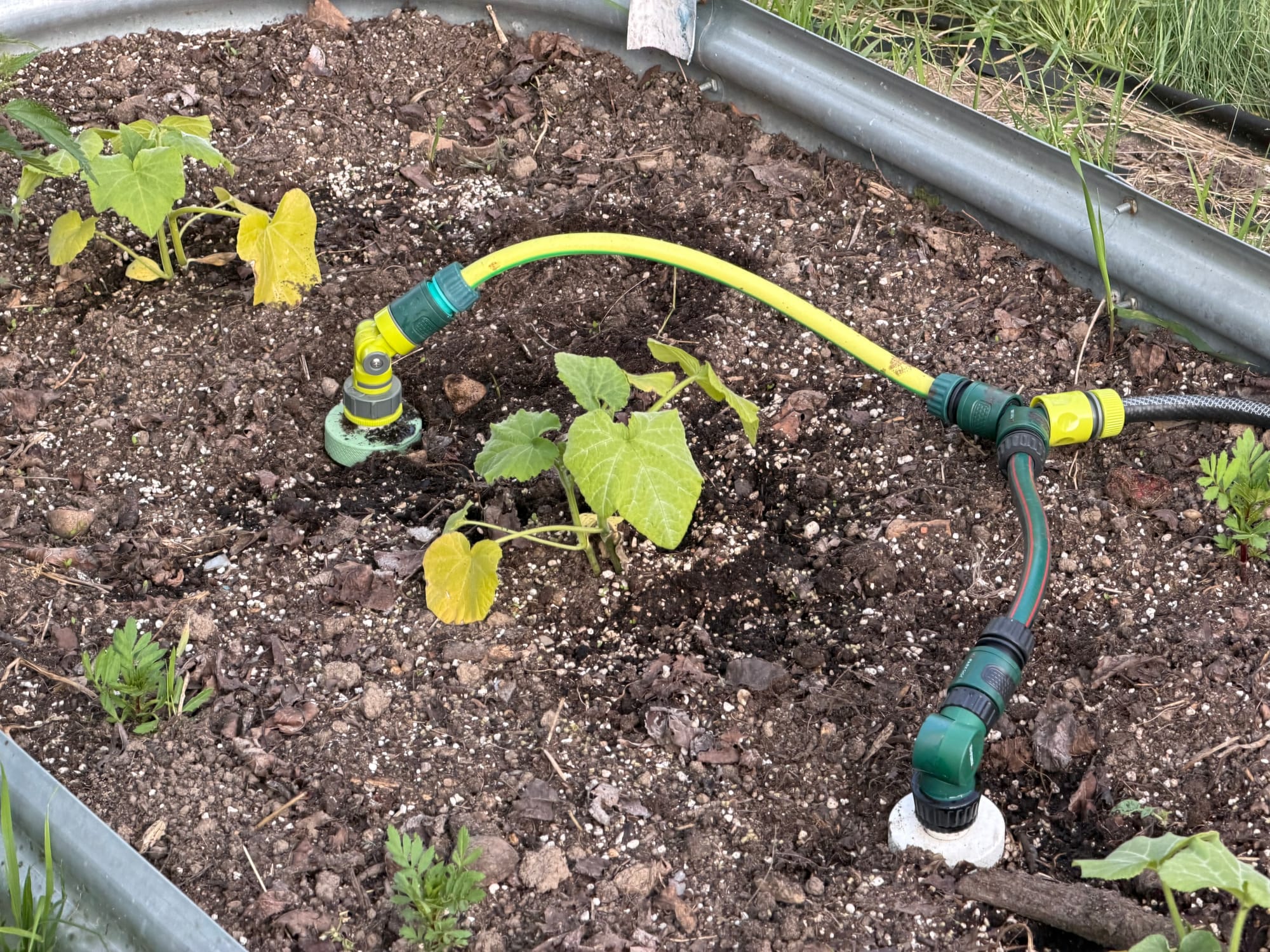
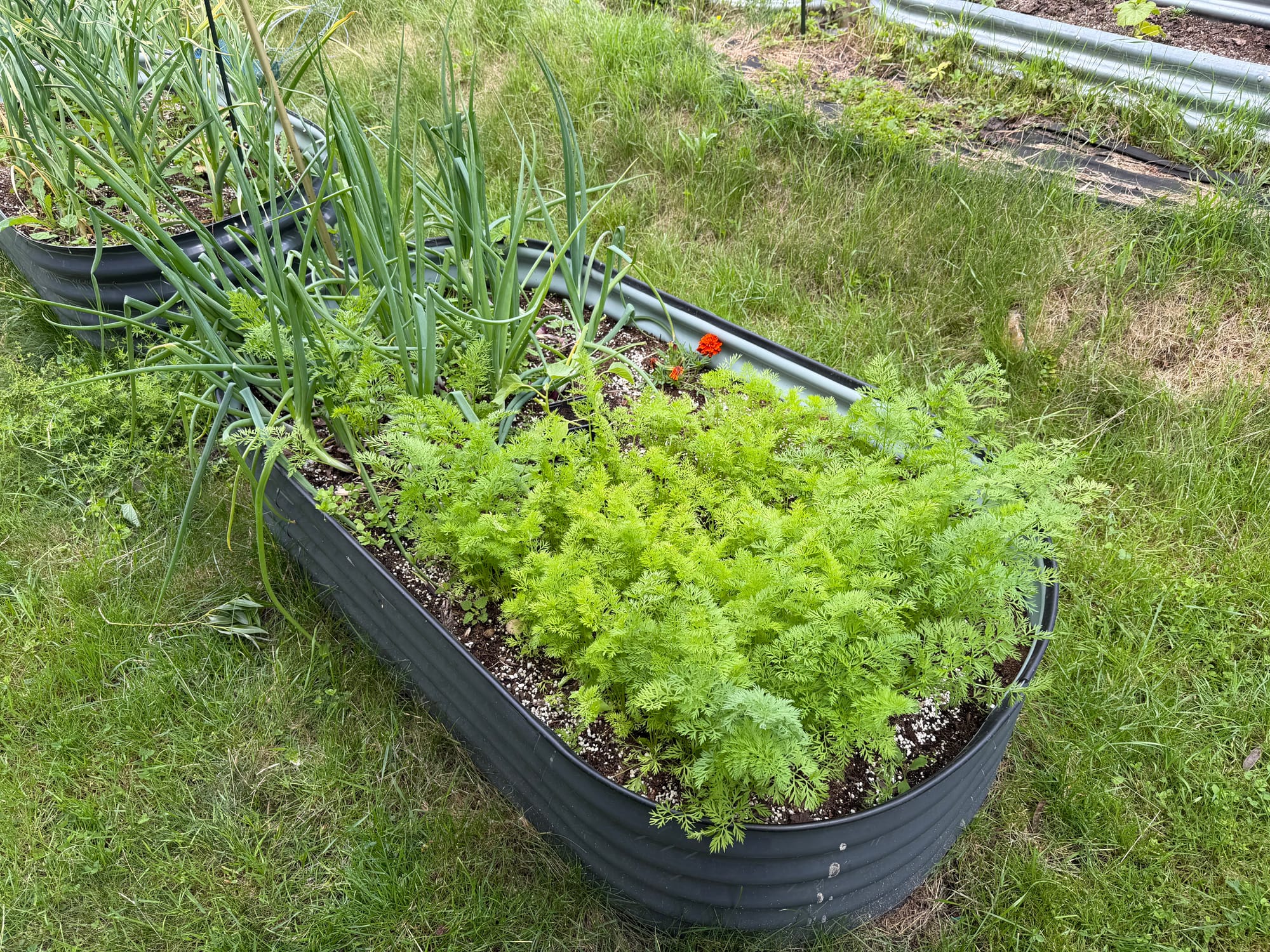
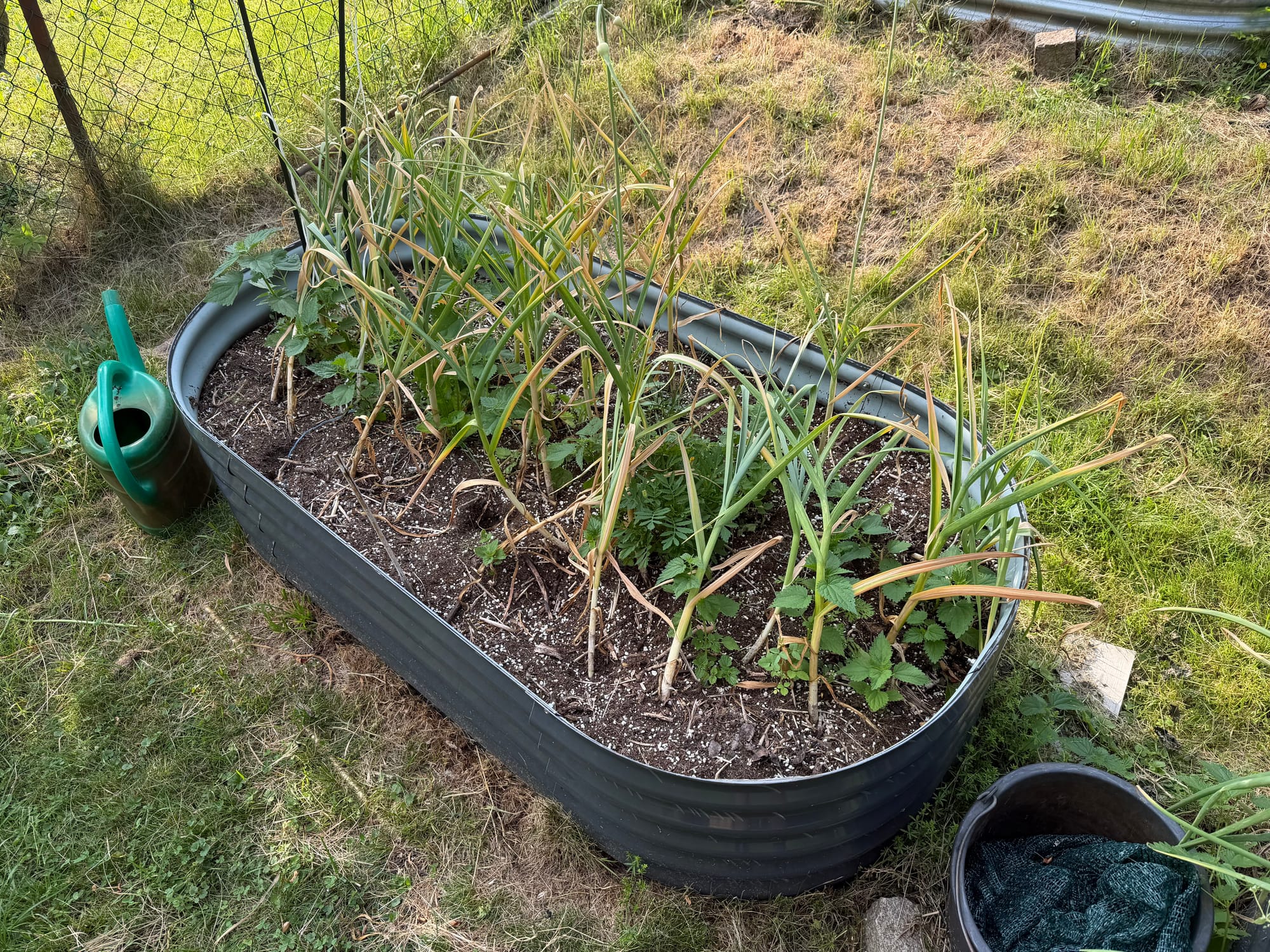
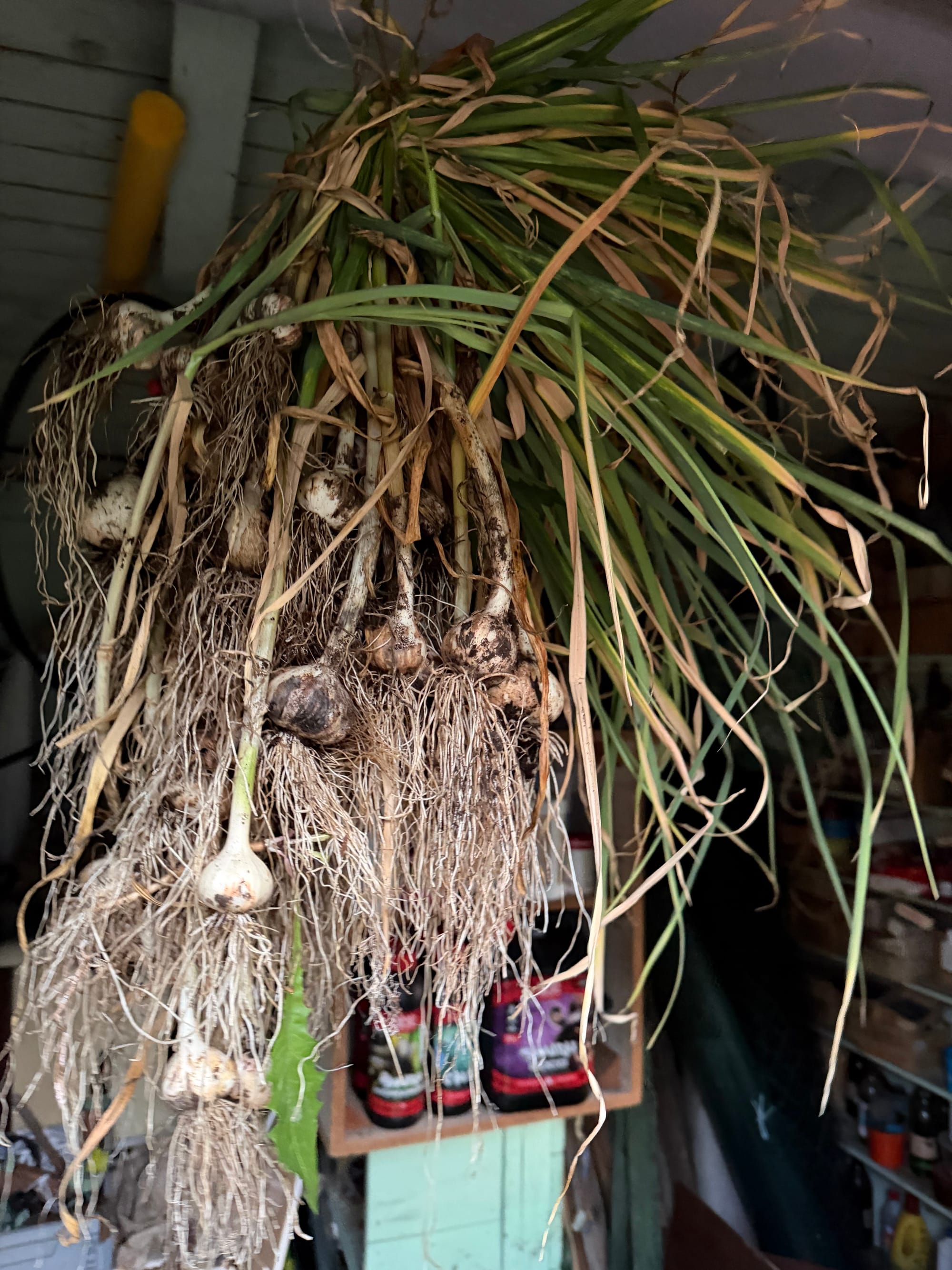
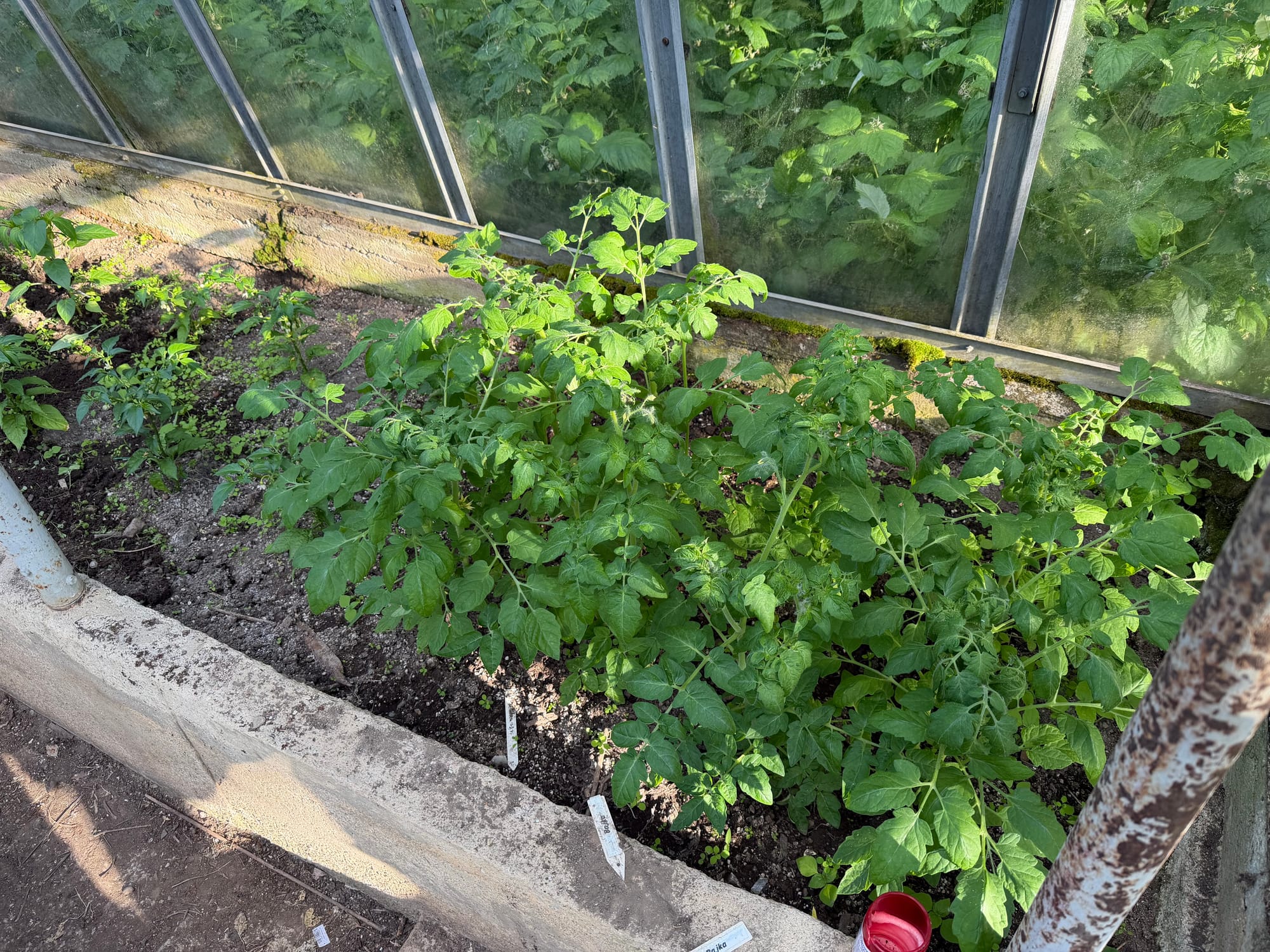
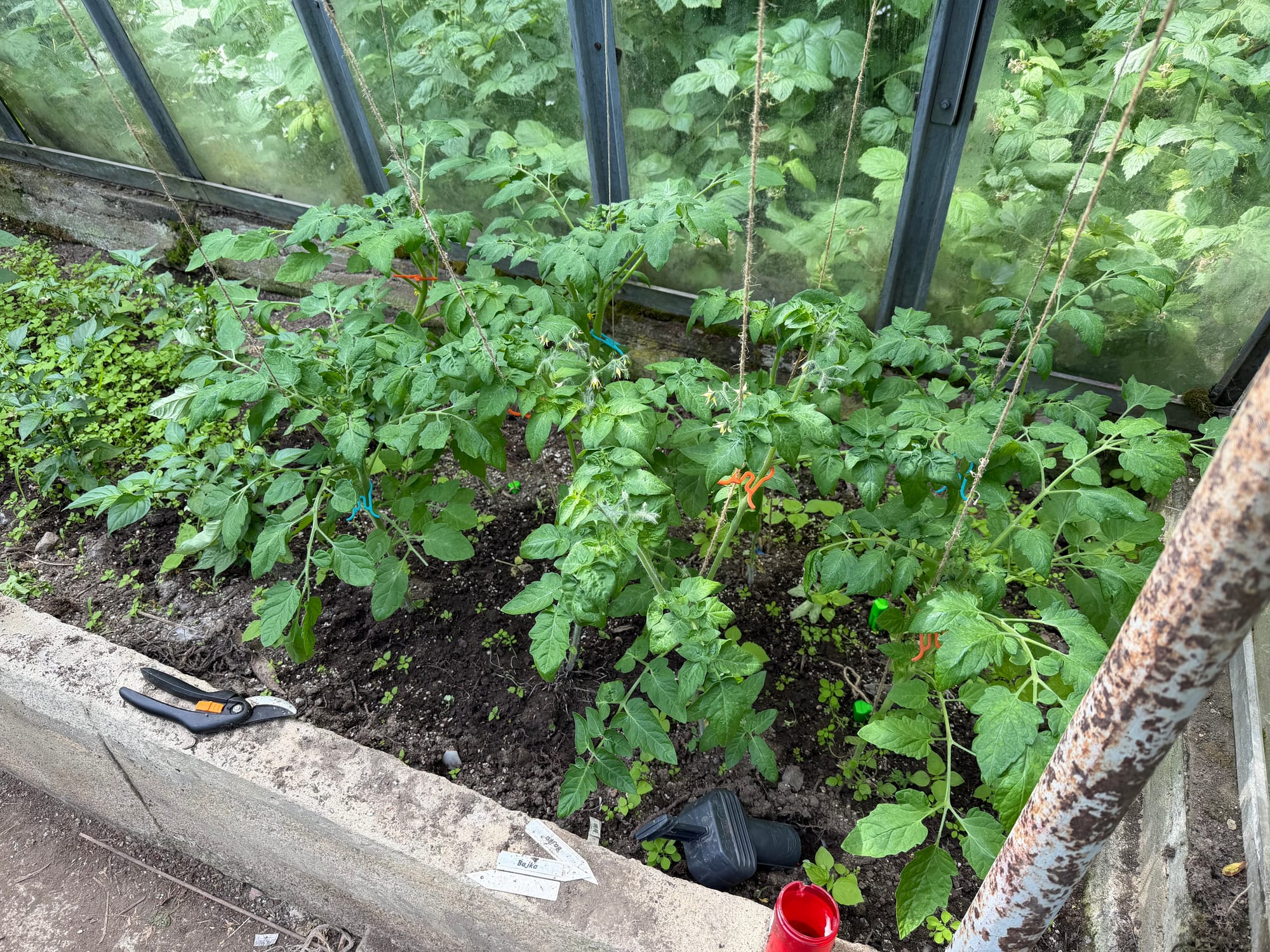
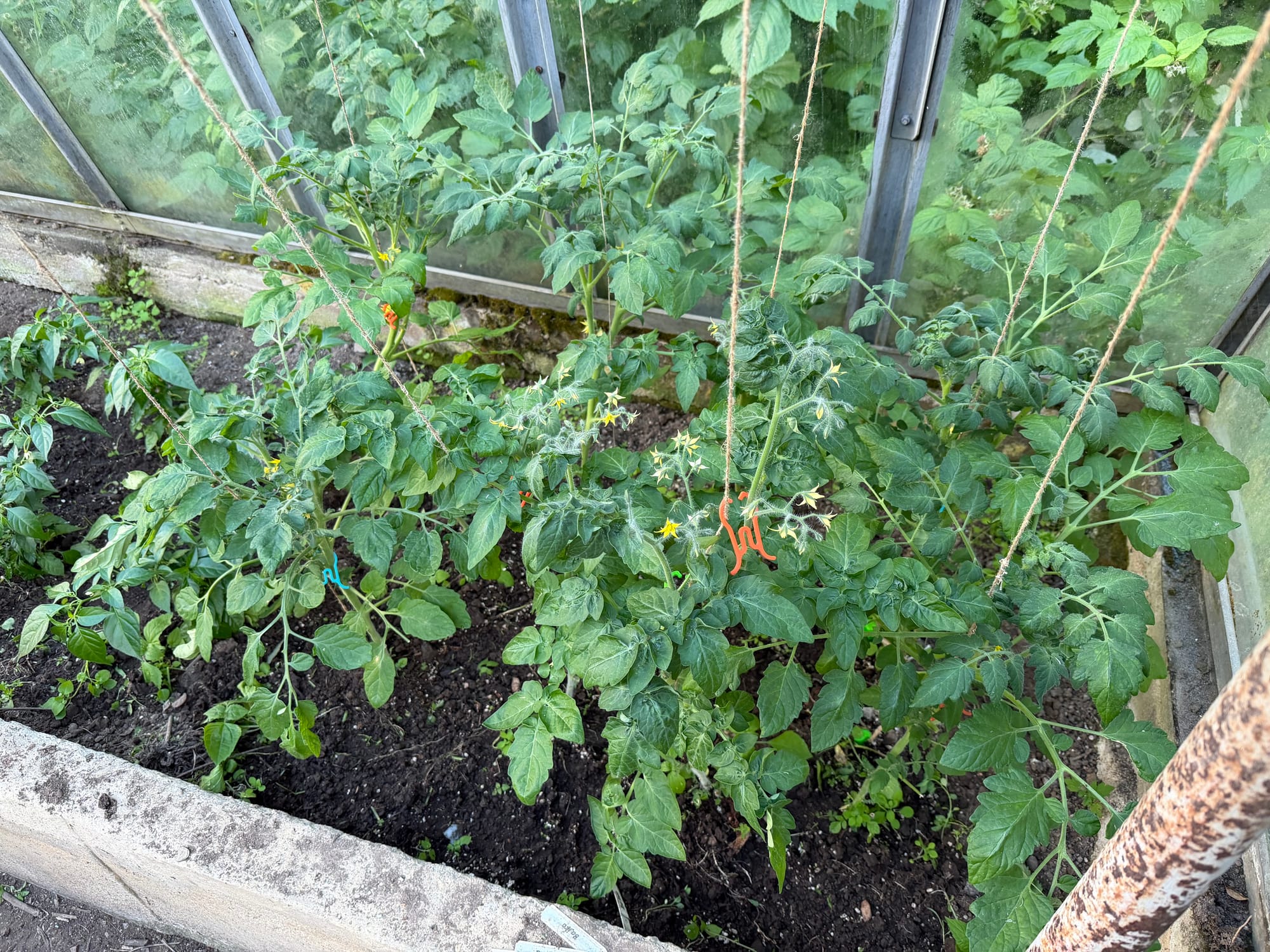
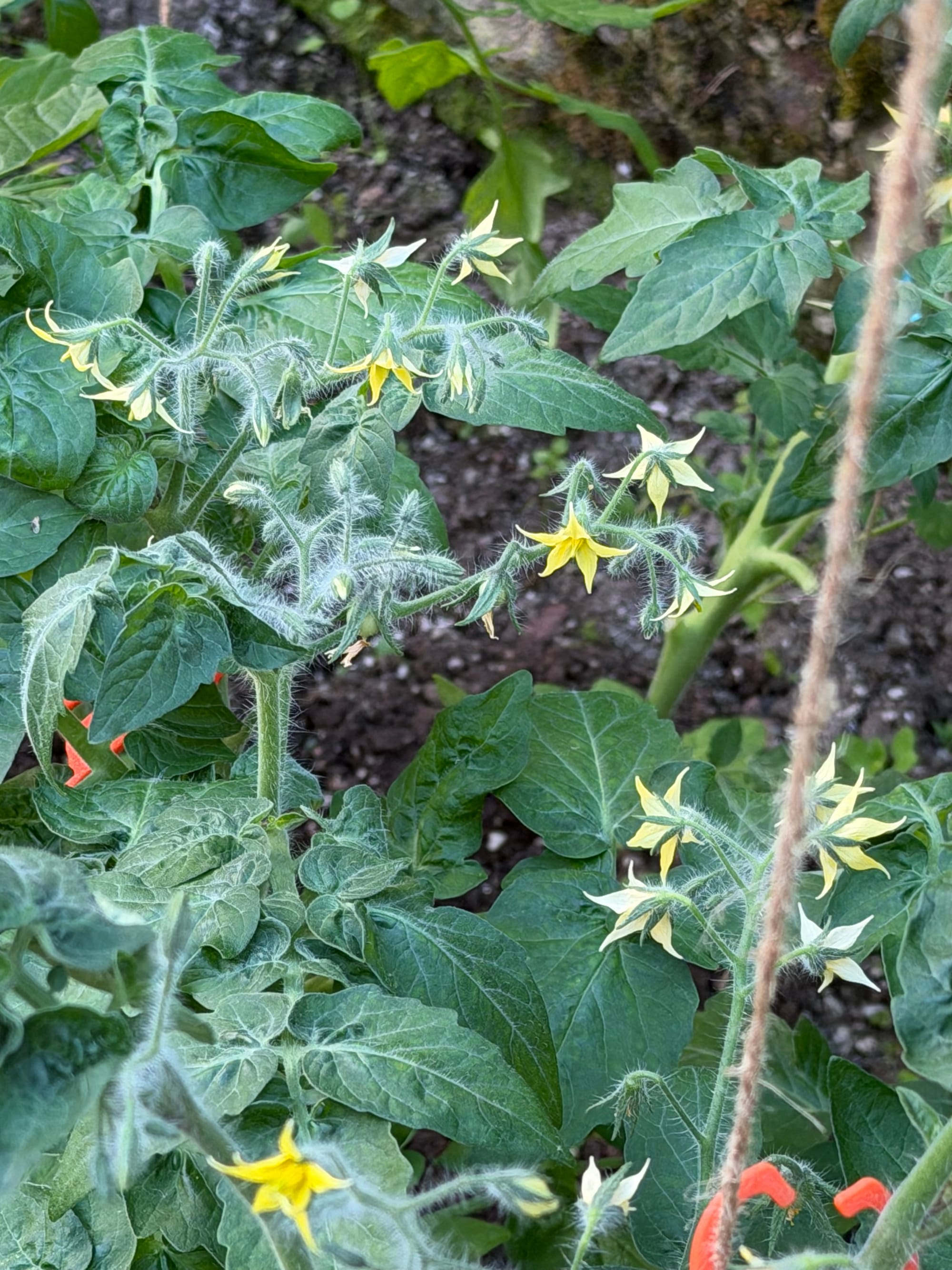
The dry spell we were in for most of the spring took a nibble out of my garlic harvest and gave me some small bulbs. I am not mad, and I am actually glad to have some garlic. The tomato seedlings for succession planting are already large enough to transplant. I just need to amend the soil a little bit. Speaking of tomatoes, it's the same variety I have in my greenhouse, the Minigelbus F1. But in the greenhouse it turned into a vining mess with tiny fruit. I should have stayed with Red Robin.
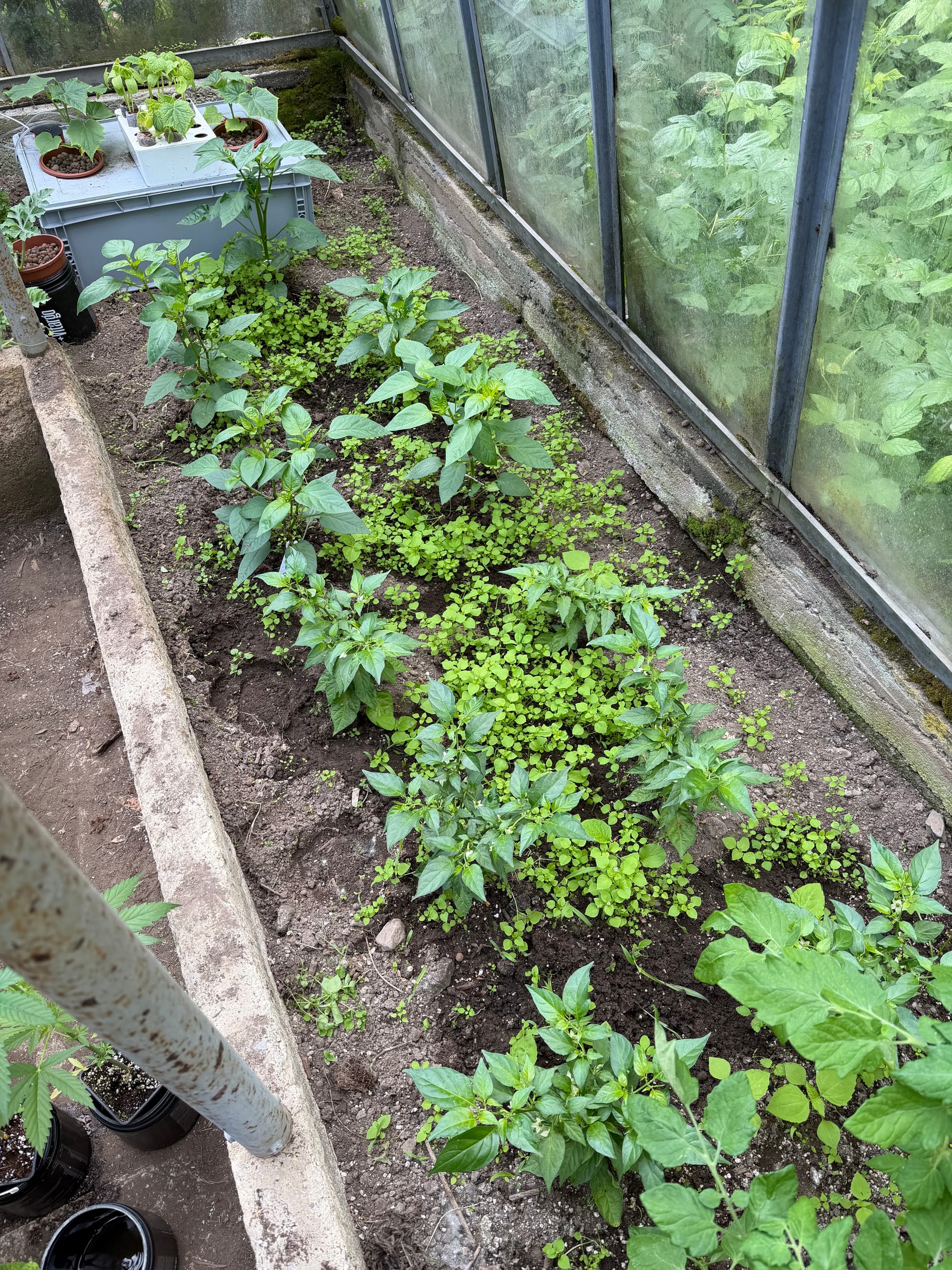
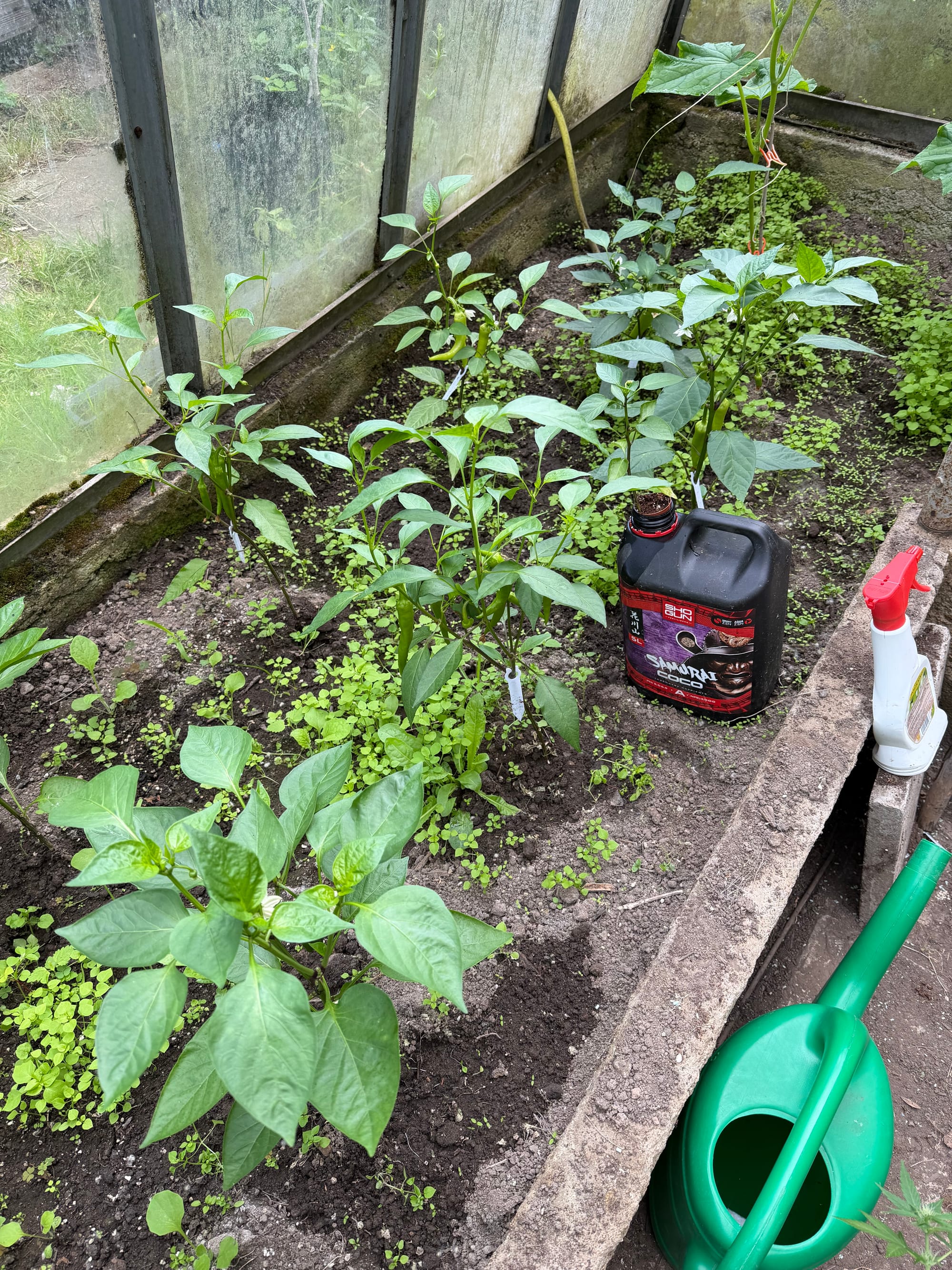
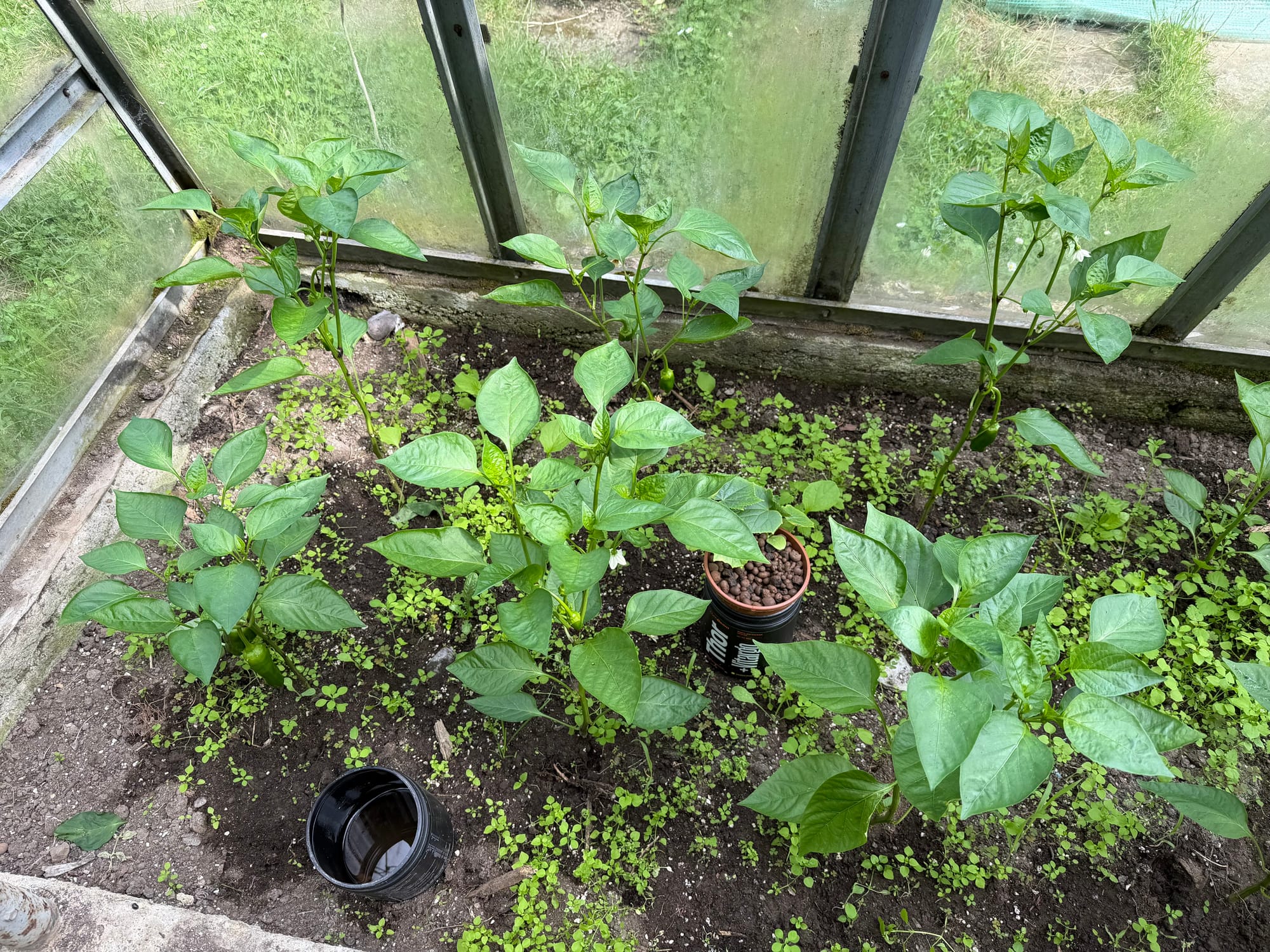
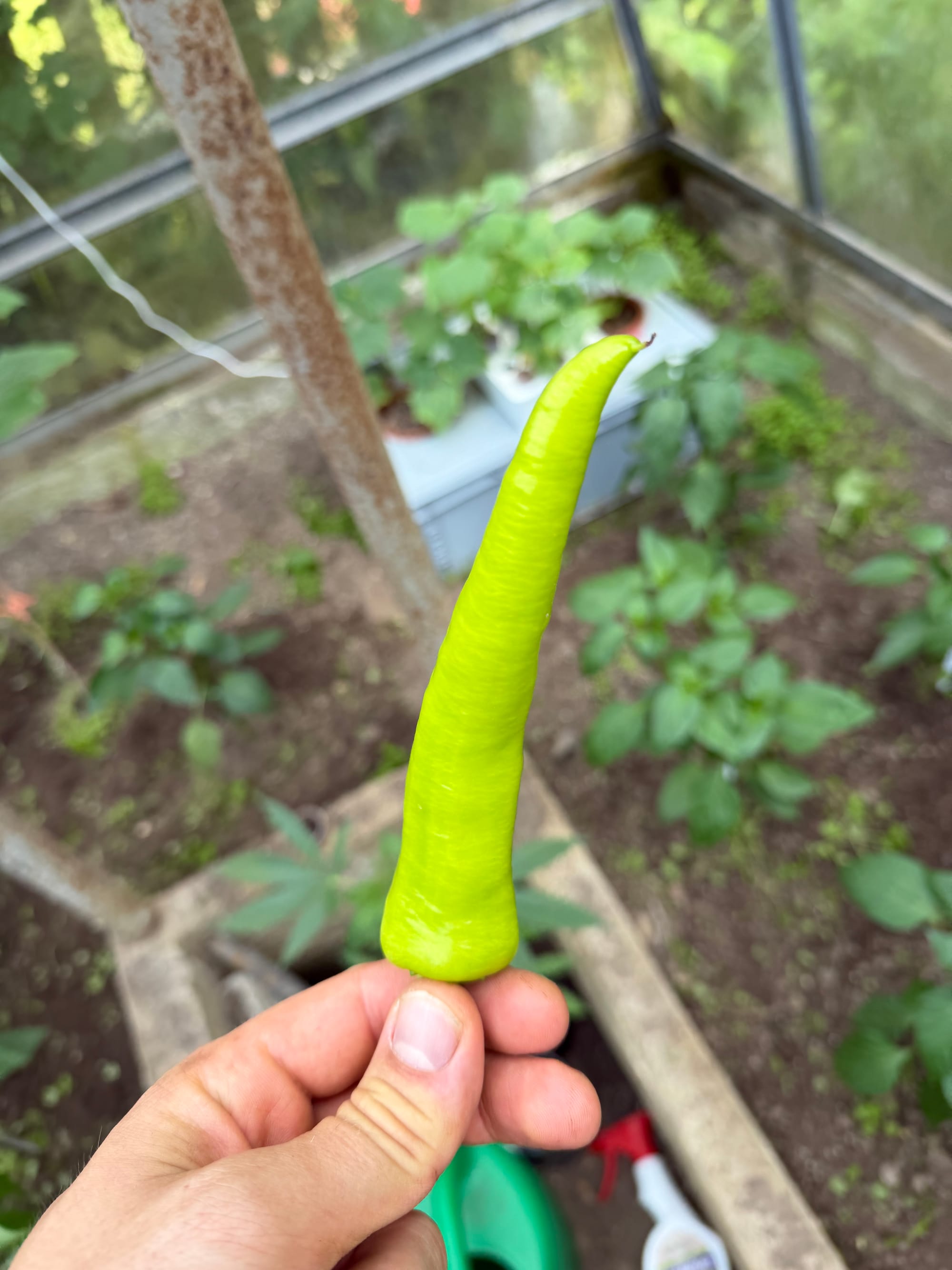
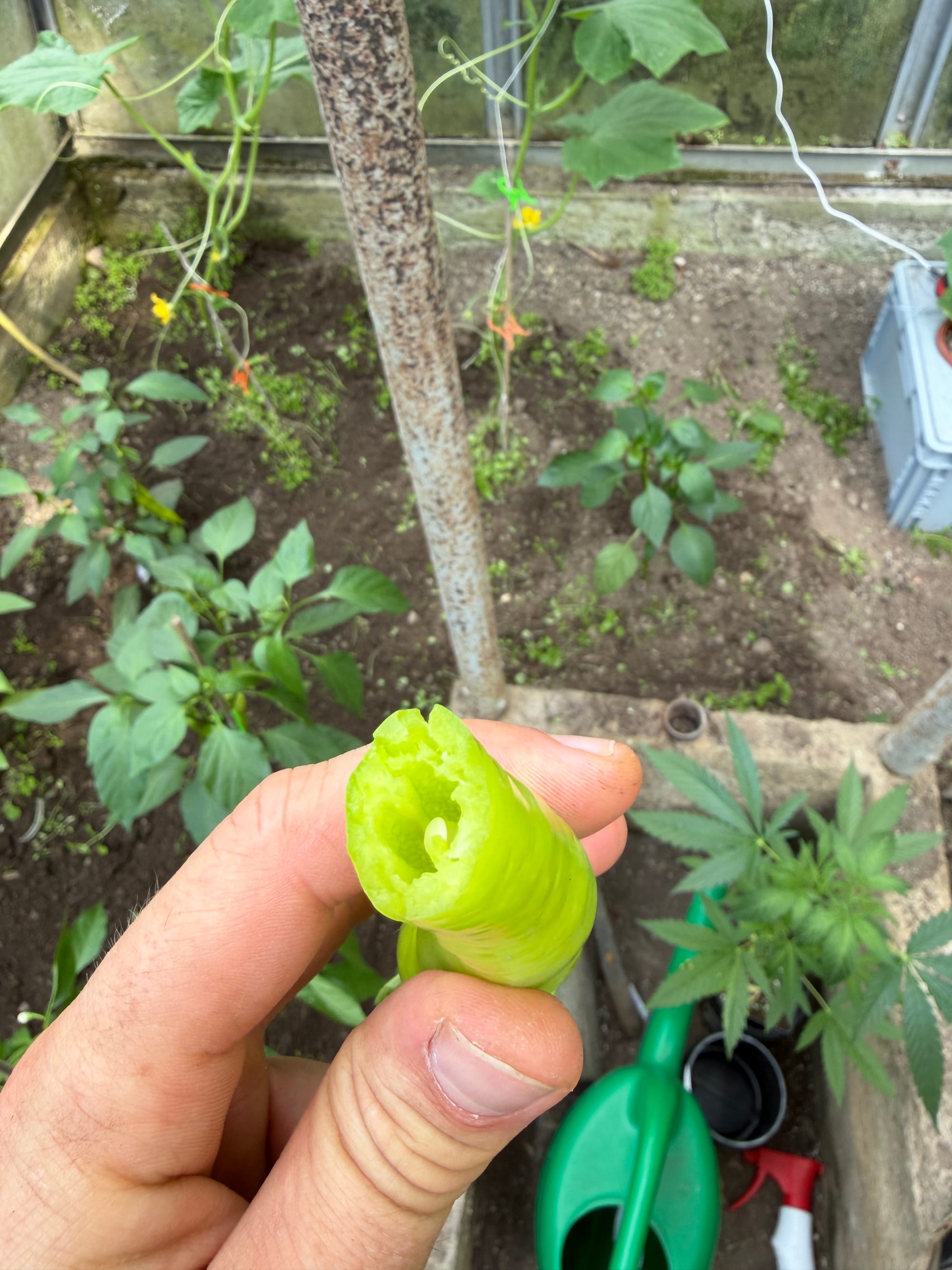
Banana yellow pepper
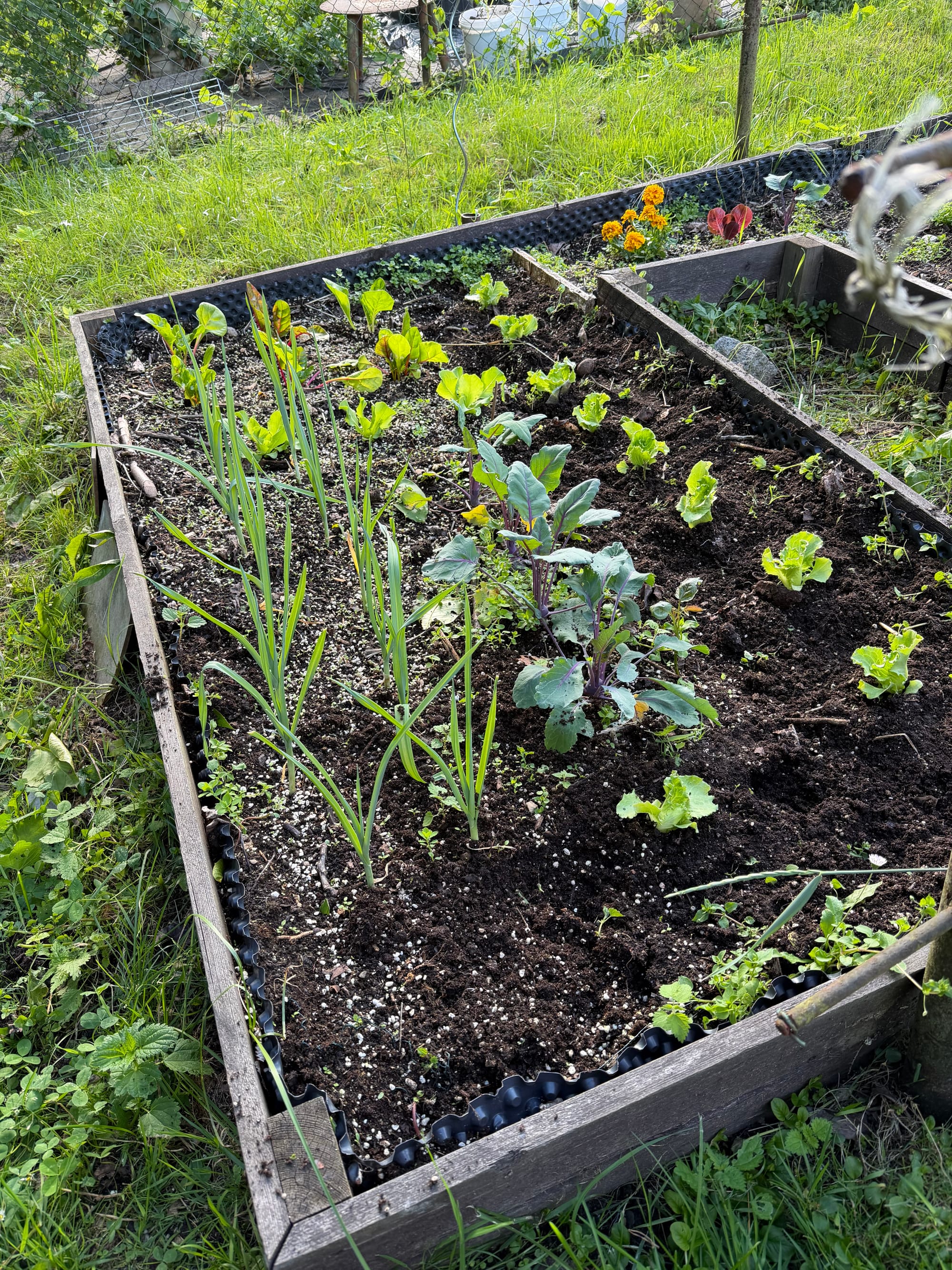
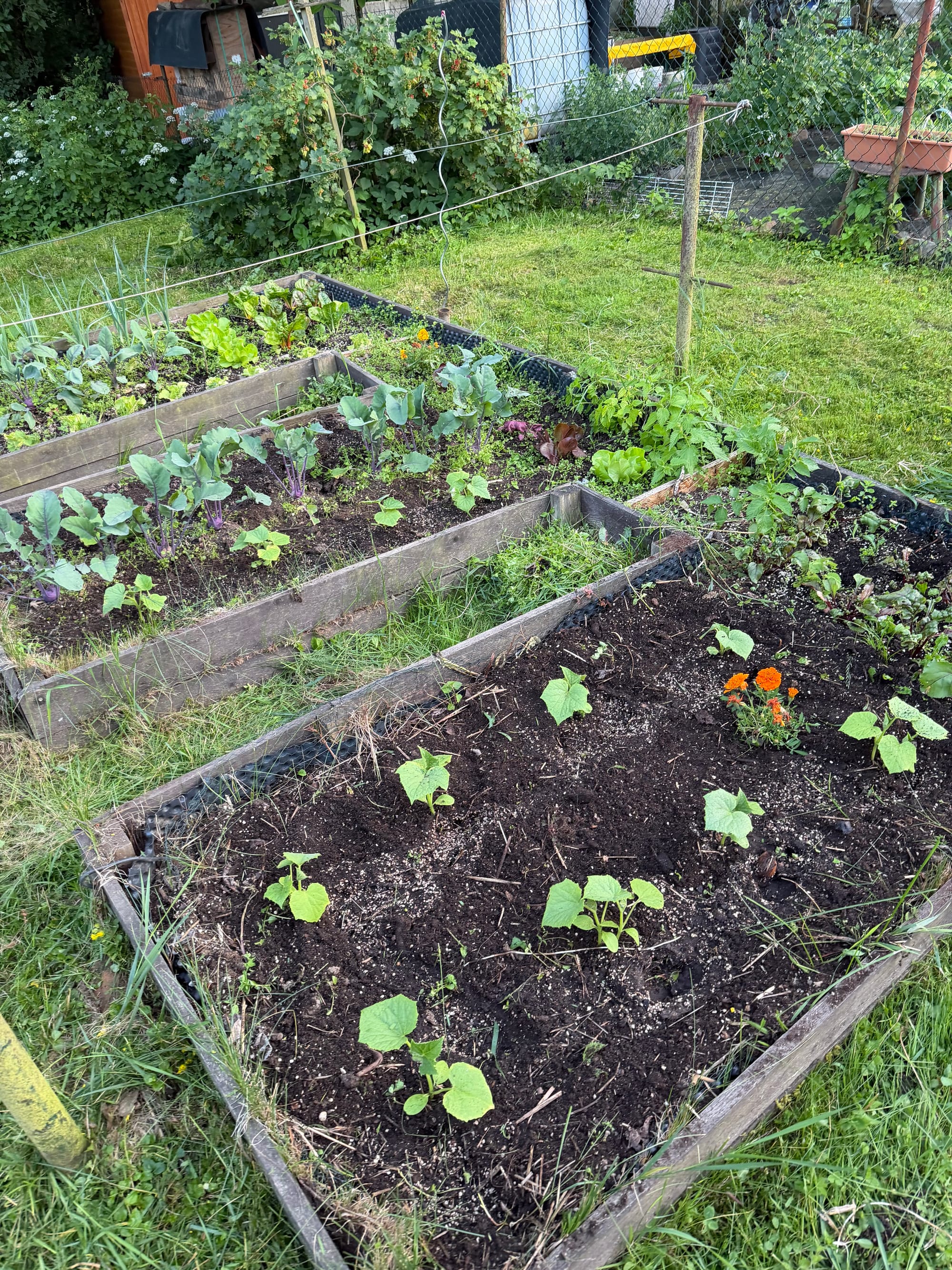
Leeks and pickling cucumbers
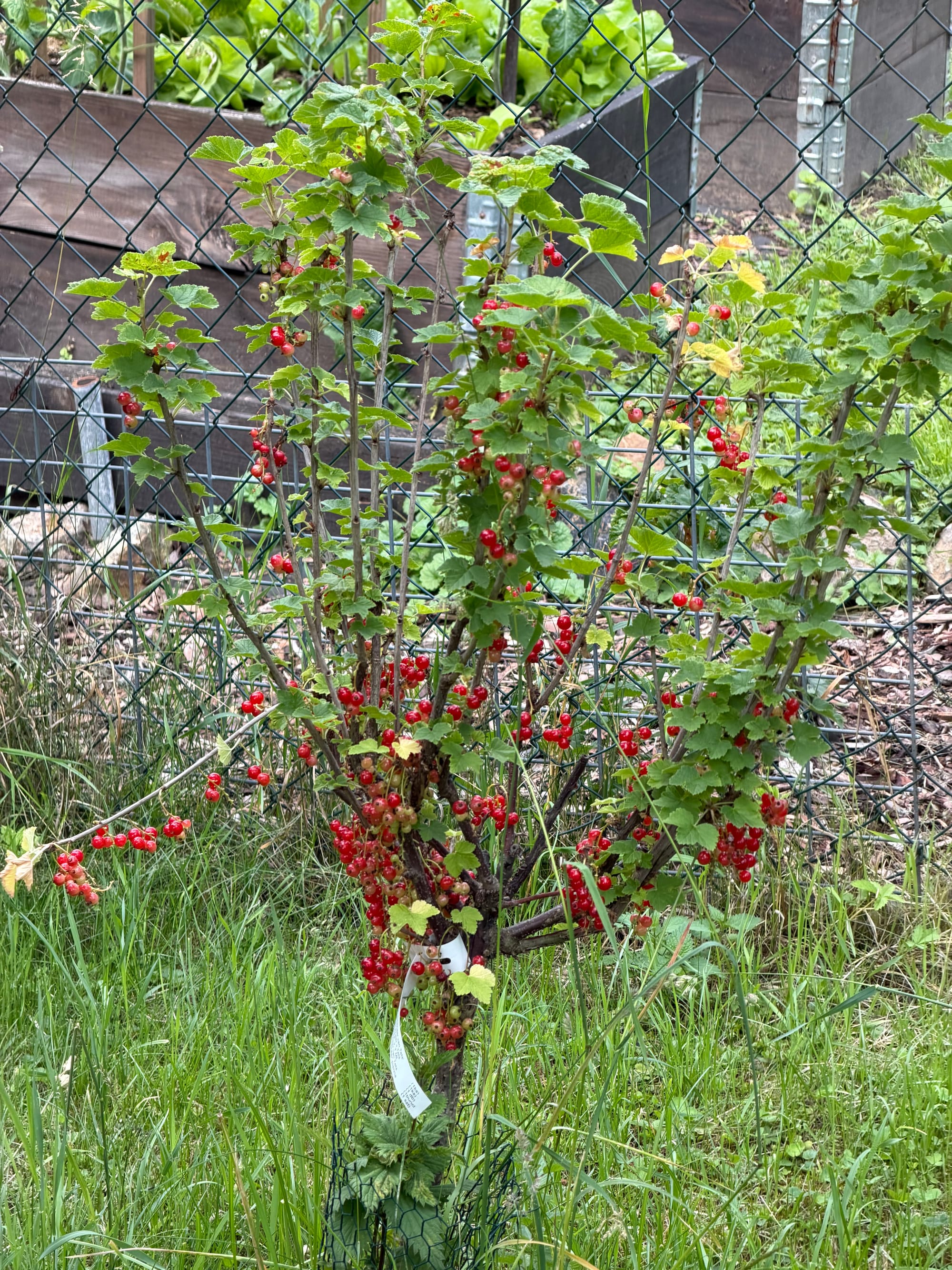
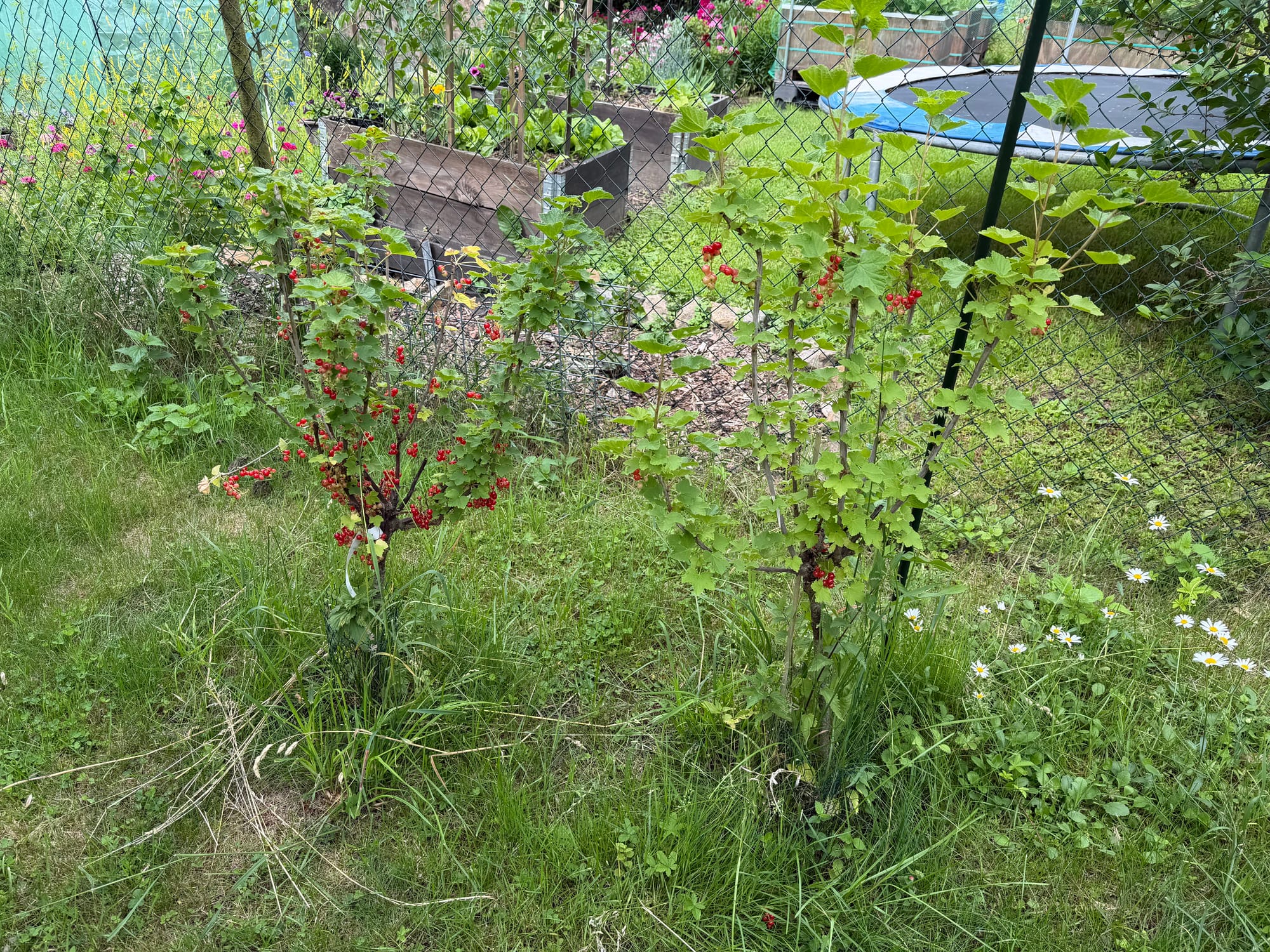
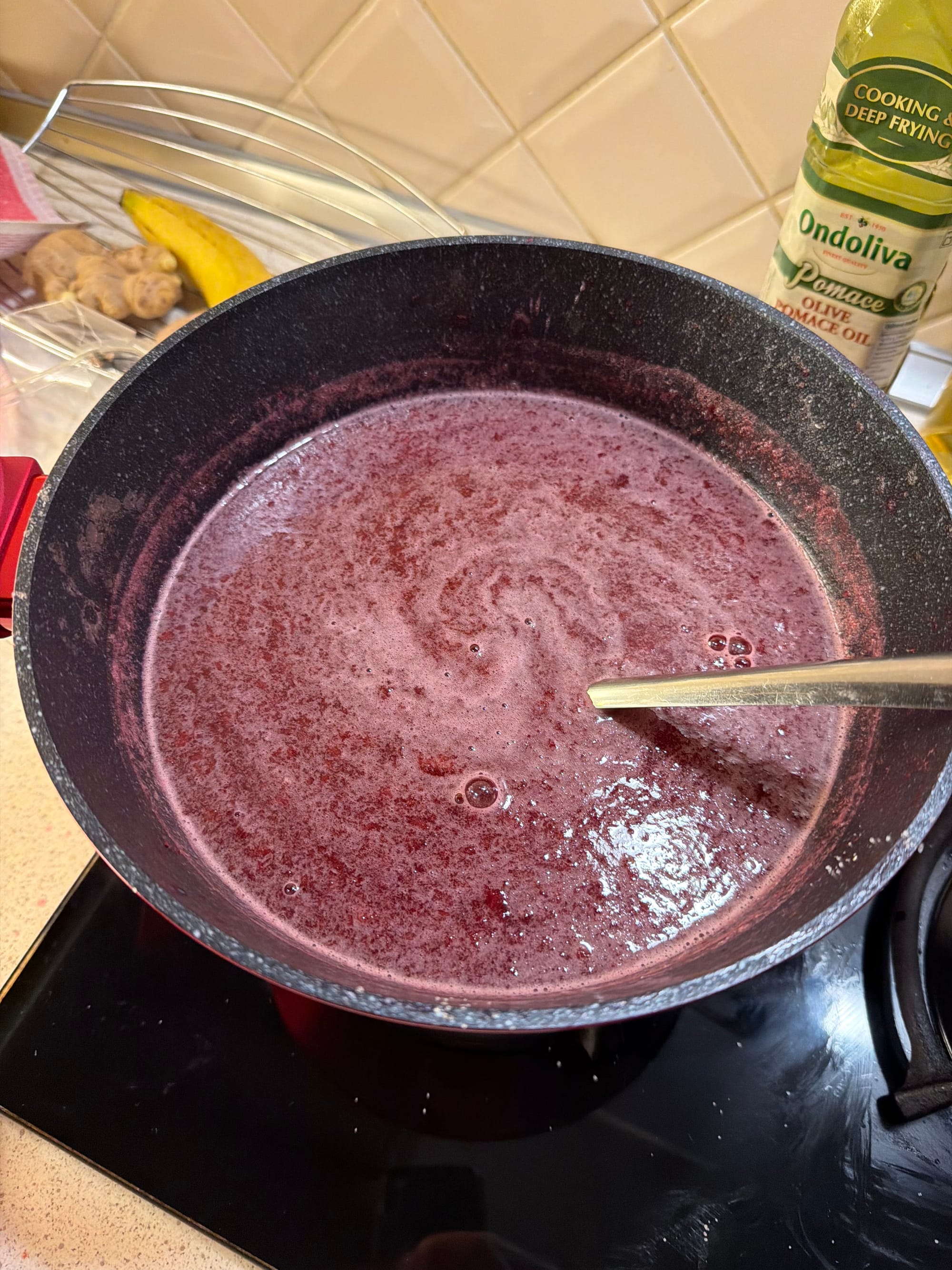
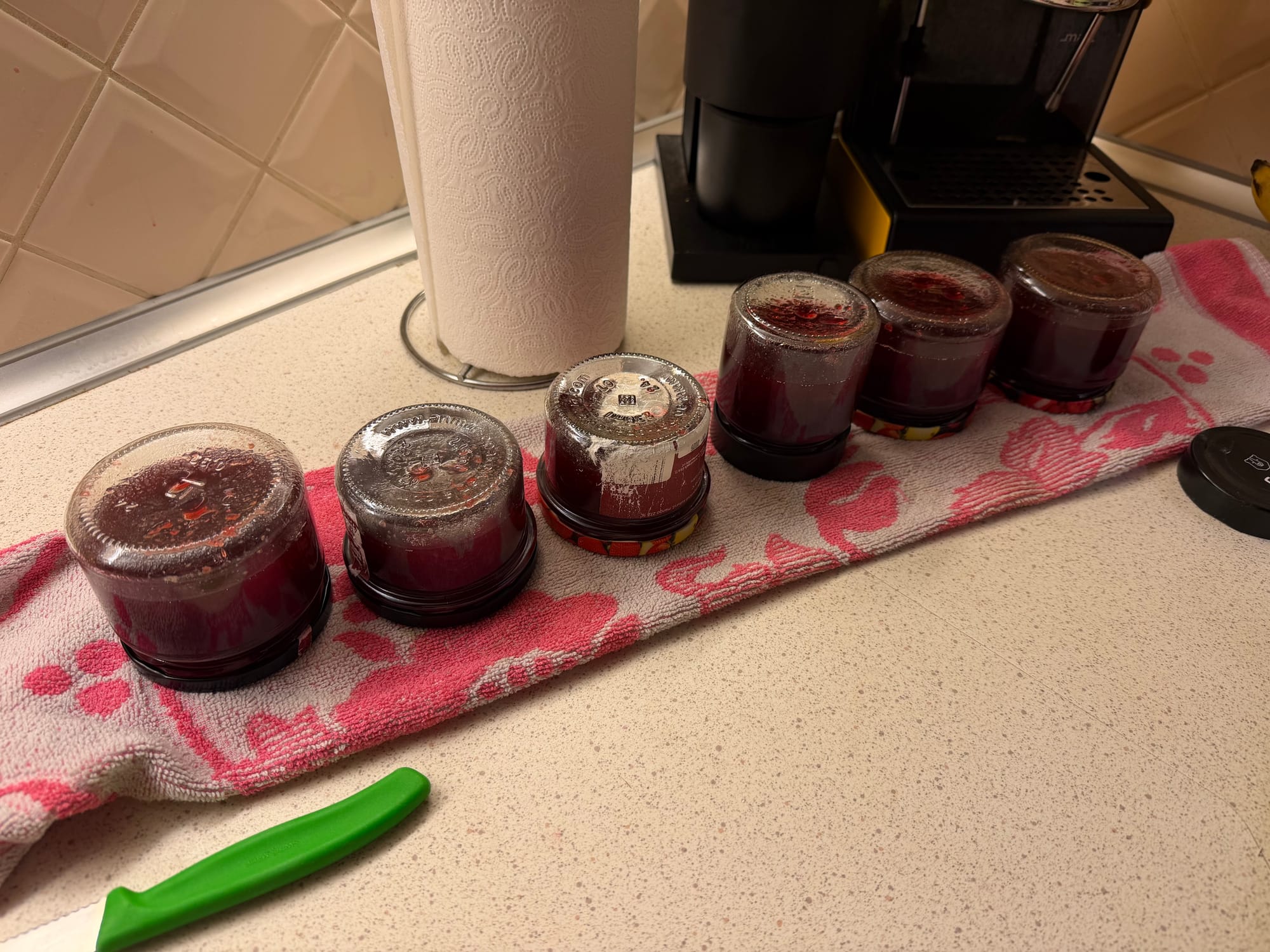
Strawberry and red currant jam. Peak preservation.
June marks the end of spring and the beginning of summer. I always feel a bit down when Midsommar comes, because it means the countdown to the first frost date has started. The growing season is short in latitudes with four true seasons, but then I watch how people in the south are constantly battling pests and diseases. We are kind of lucky to have a fresh start every year thanks to the winter killing most of the parasites and pathogens. But one more month would solve everything. Just one more month, bro, I promise. It will fix everything.
Member discussion