May #21.3: Full measure
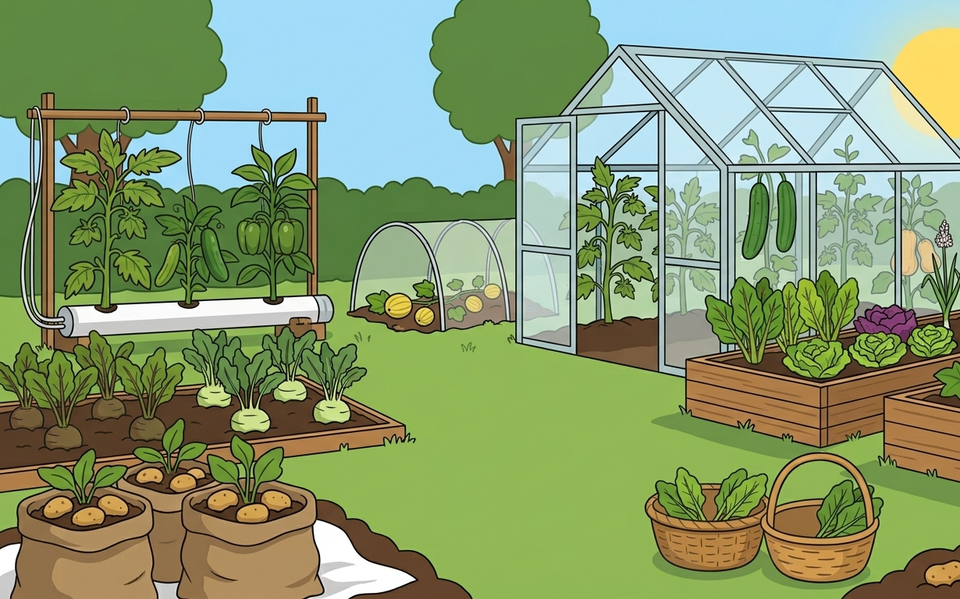
Exploring the world and discovering new and interesting stuff is something people usually seek, sometimes obsessively. Each discovery opens a world of possibilities and new experiences in your life. I have recently discovered a wasp's nest. And it brought me a world of painful experiences.
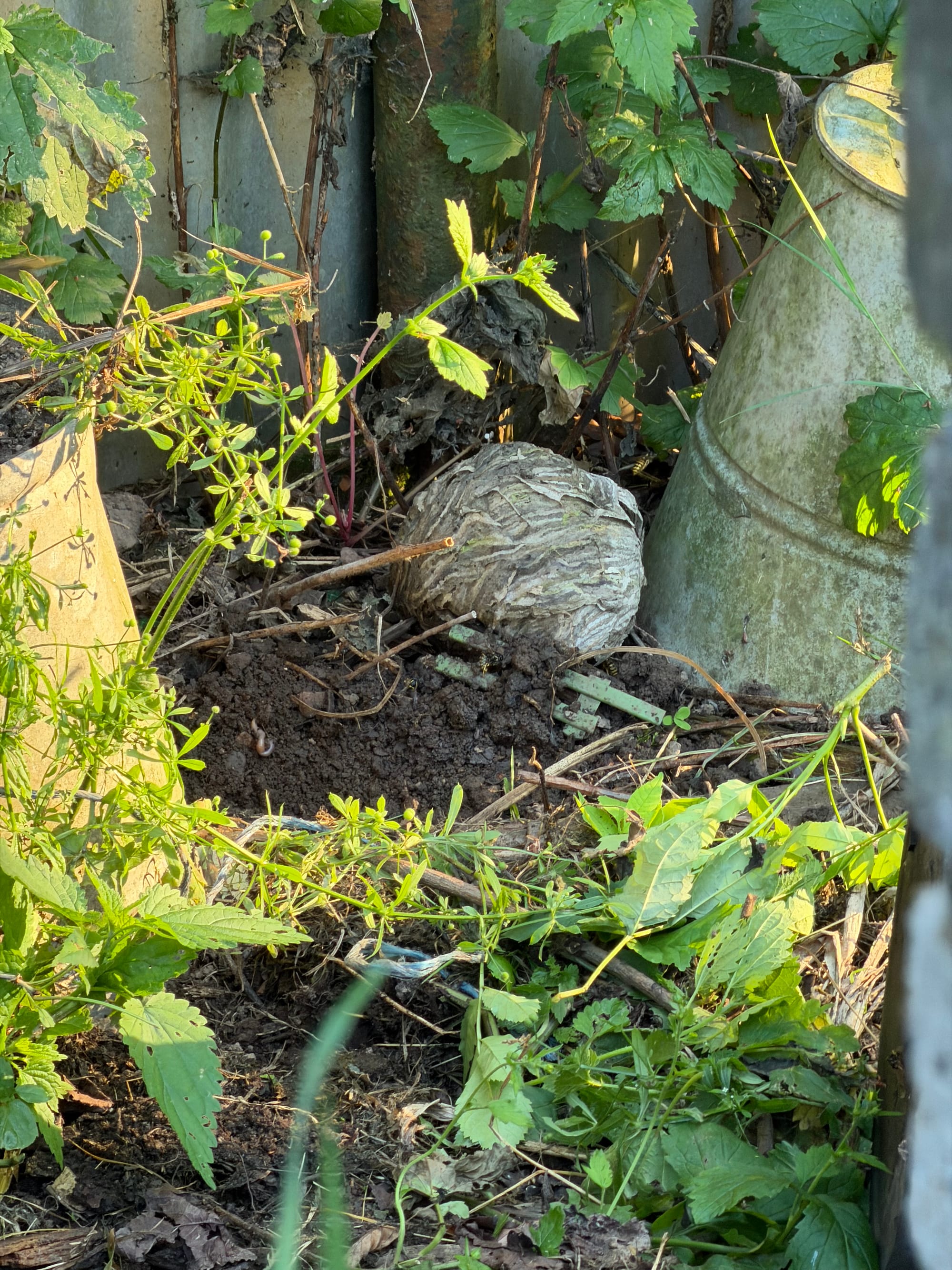
Sorry, but I needed a cold open to chill my swollen hand. This May was very dry. Thankfully, on the last day of May, we had some quality rainfall. Unfortunately, the damage has already been done to some plants. There are almost no apples this year; half the cherries died from frost damage, and the other half was hit hard by the drought.
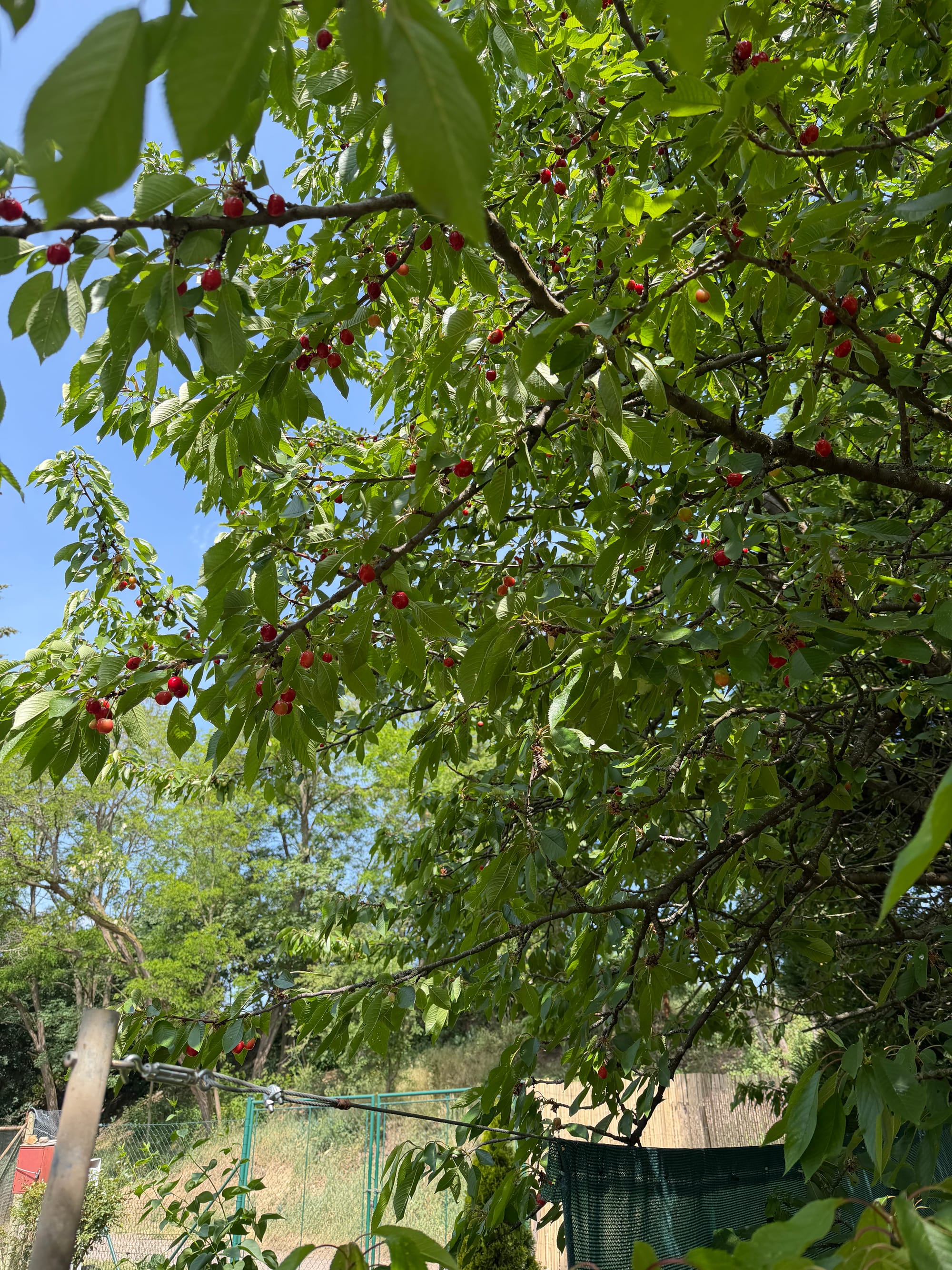
At the end of May, the cherries were already ripening, almost two weeks early. It might look like a good thing, but my cherry tree is the only tree around with some red bulbs, which will attract birds, and they will probably ravage the rest. Oh well, there is not much to do anyway, so let's focus on what I can do something about.
the spud progress
Leaving potatoes in the greenhouse for a while turned out to be a good idea. By the end of May, they are lush and strong. I used the lack of rainfall to hill them up a little bit to maximize the tuber production layer.
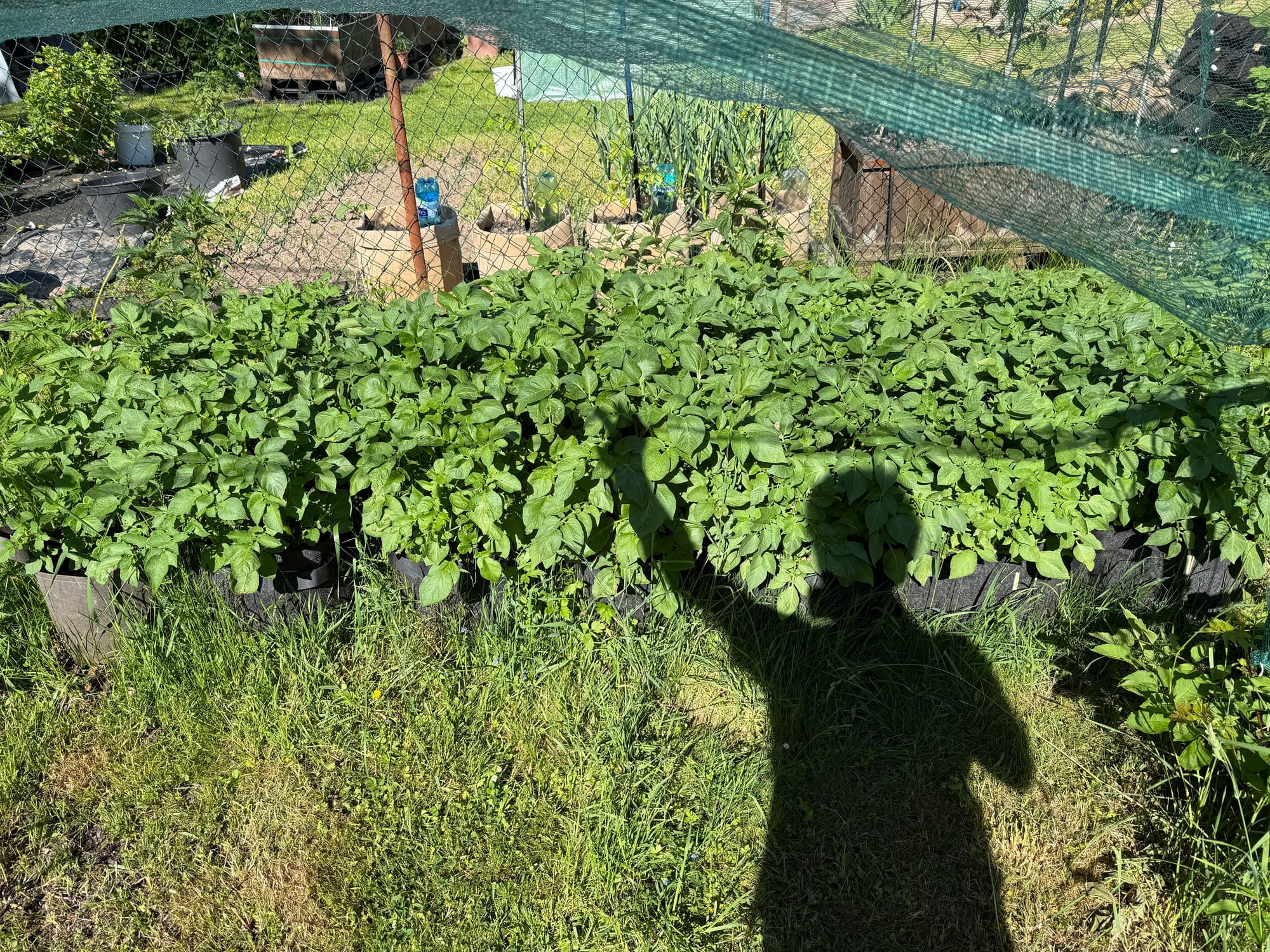
This year, the last frost date corresponded nicely with the old saying. By the middle of May, I was protecting potatoes using some white geotextile. Still, since the canopy was huge, I guess it was merely a placebo more than anything else.
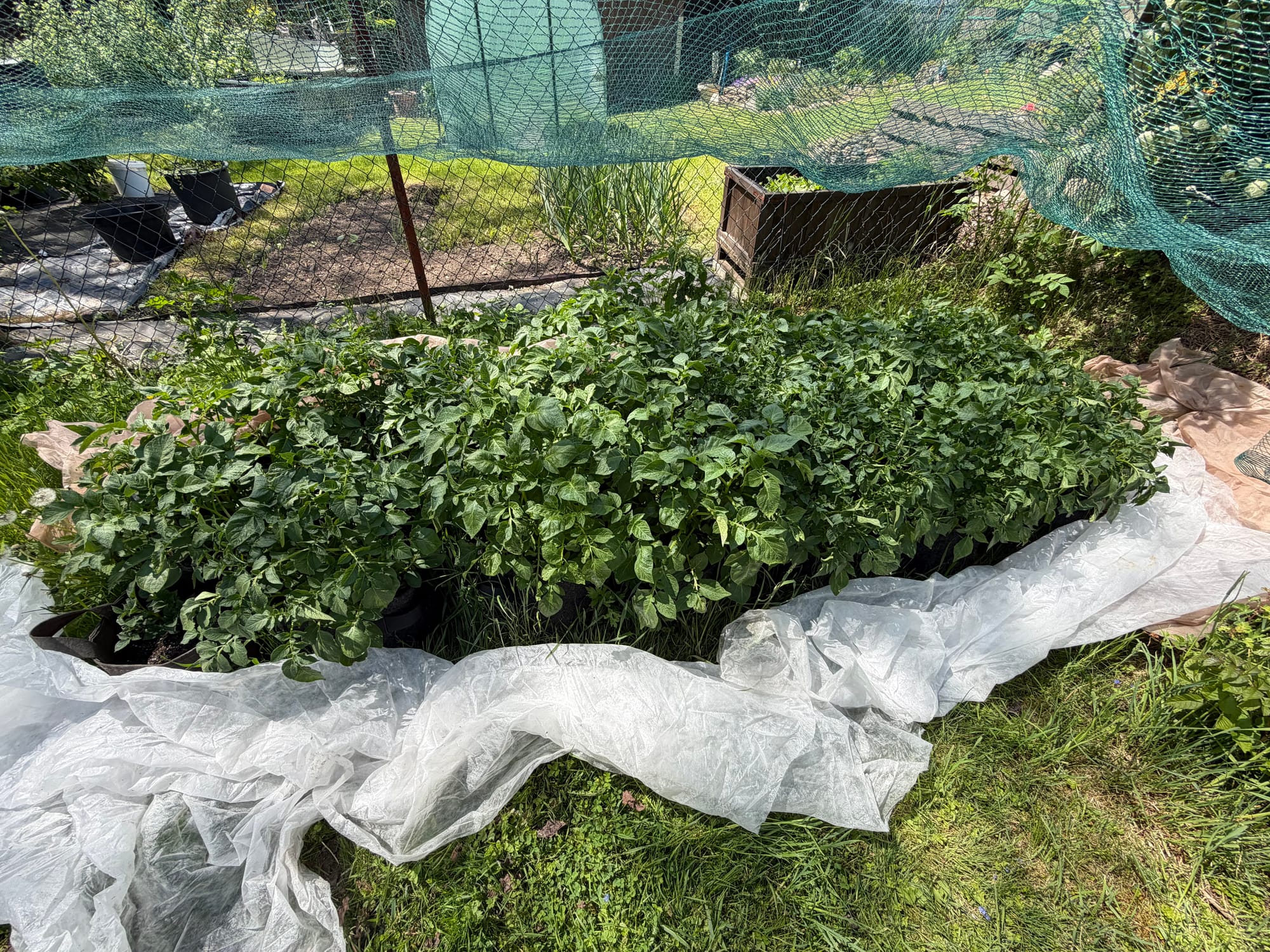
While these potatoes chill outside, the day of harvest is inevitably approaching, and I plan a second batch. Some of the potatoes I kept in the basement are already chitting and beginning to search for the soil. I plan to harvest by the end of June or early July. That should leave me with a comfortable two months of really nice weather.
the initial investment
With the last frosts usually comes the great transplantation. All plants must go to their final destination. Once again, I overestimated the number of seedlings I would need.
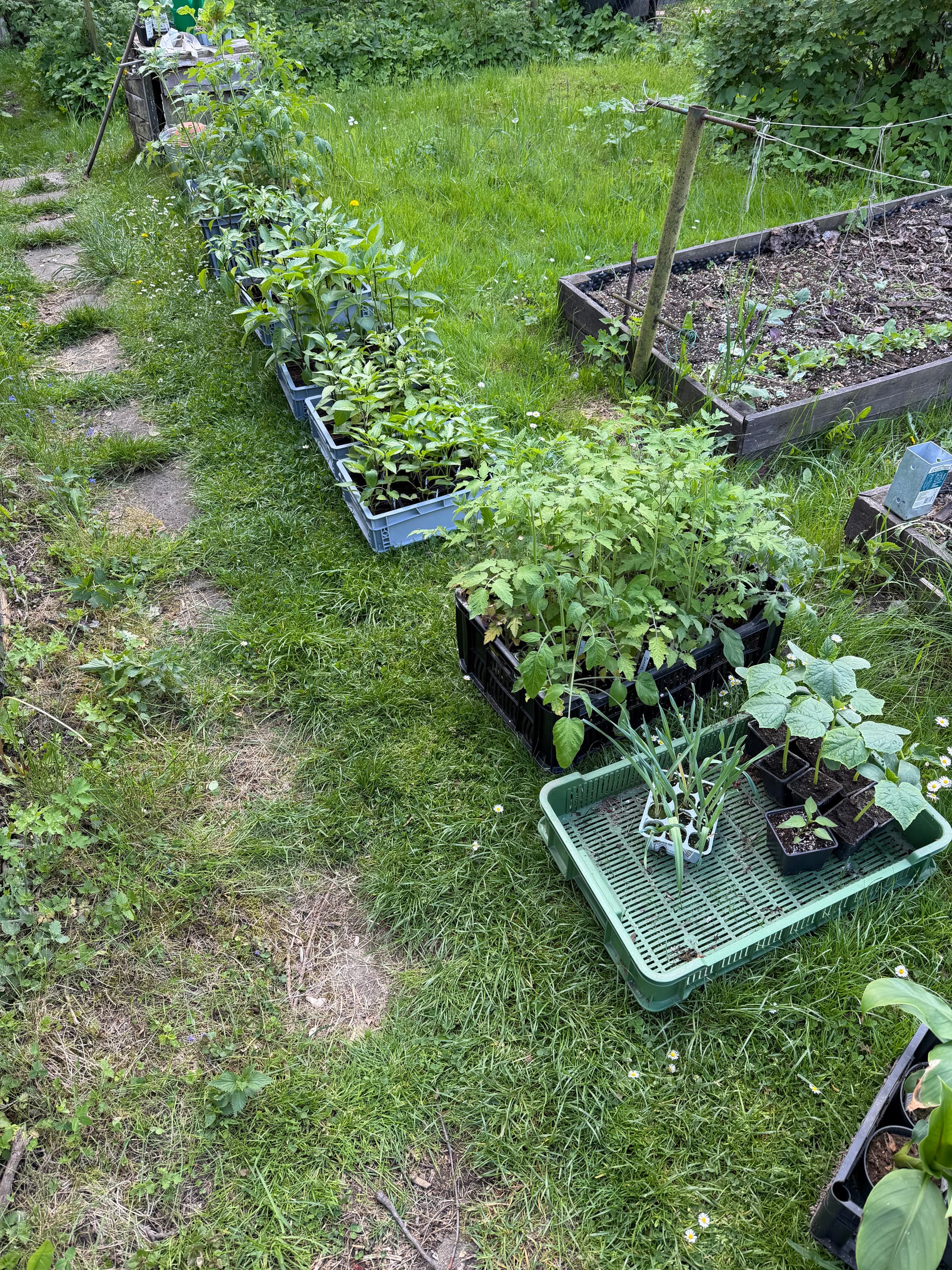
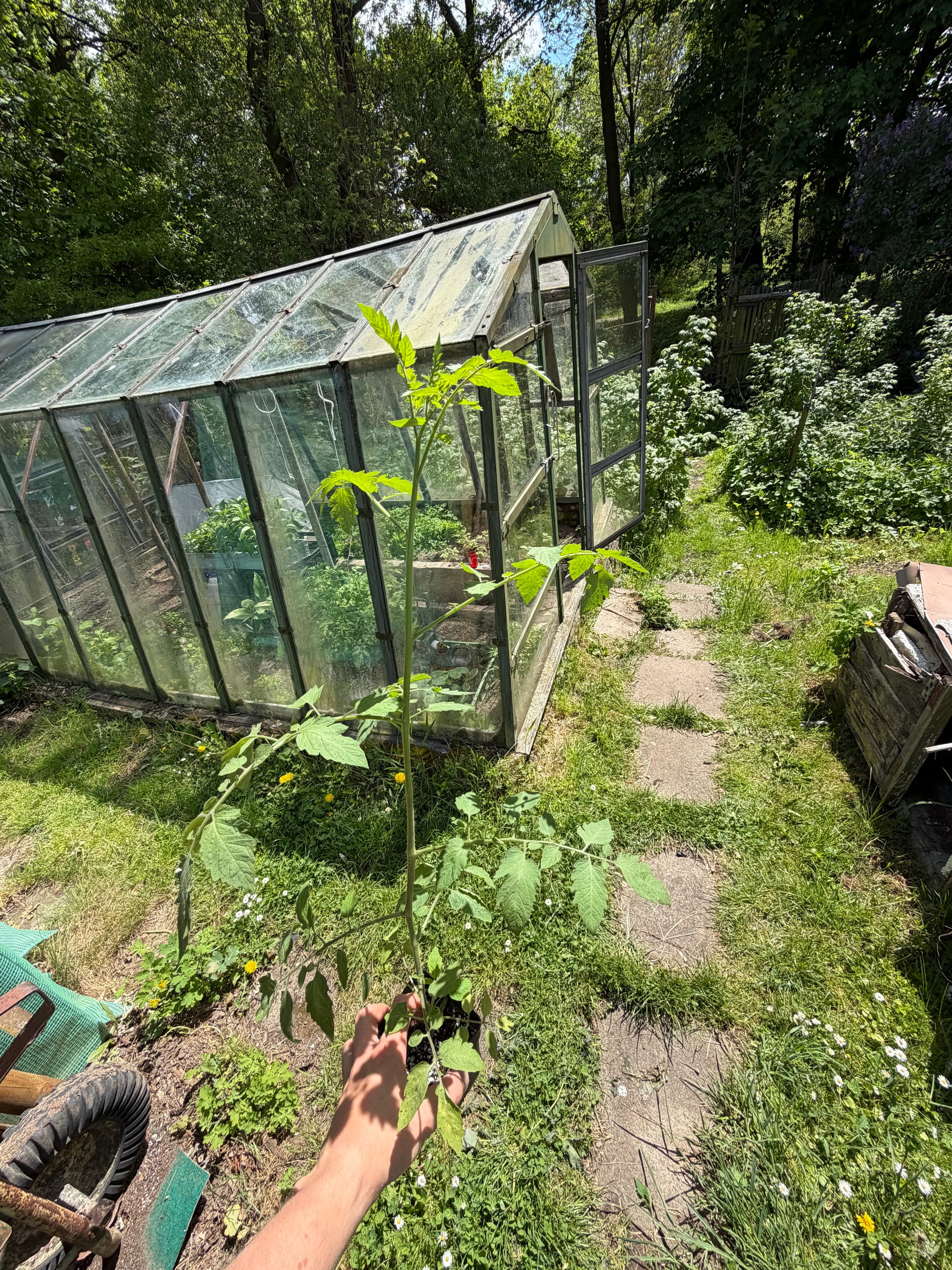
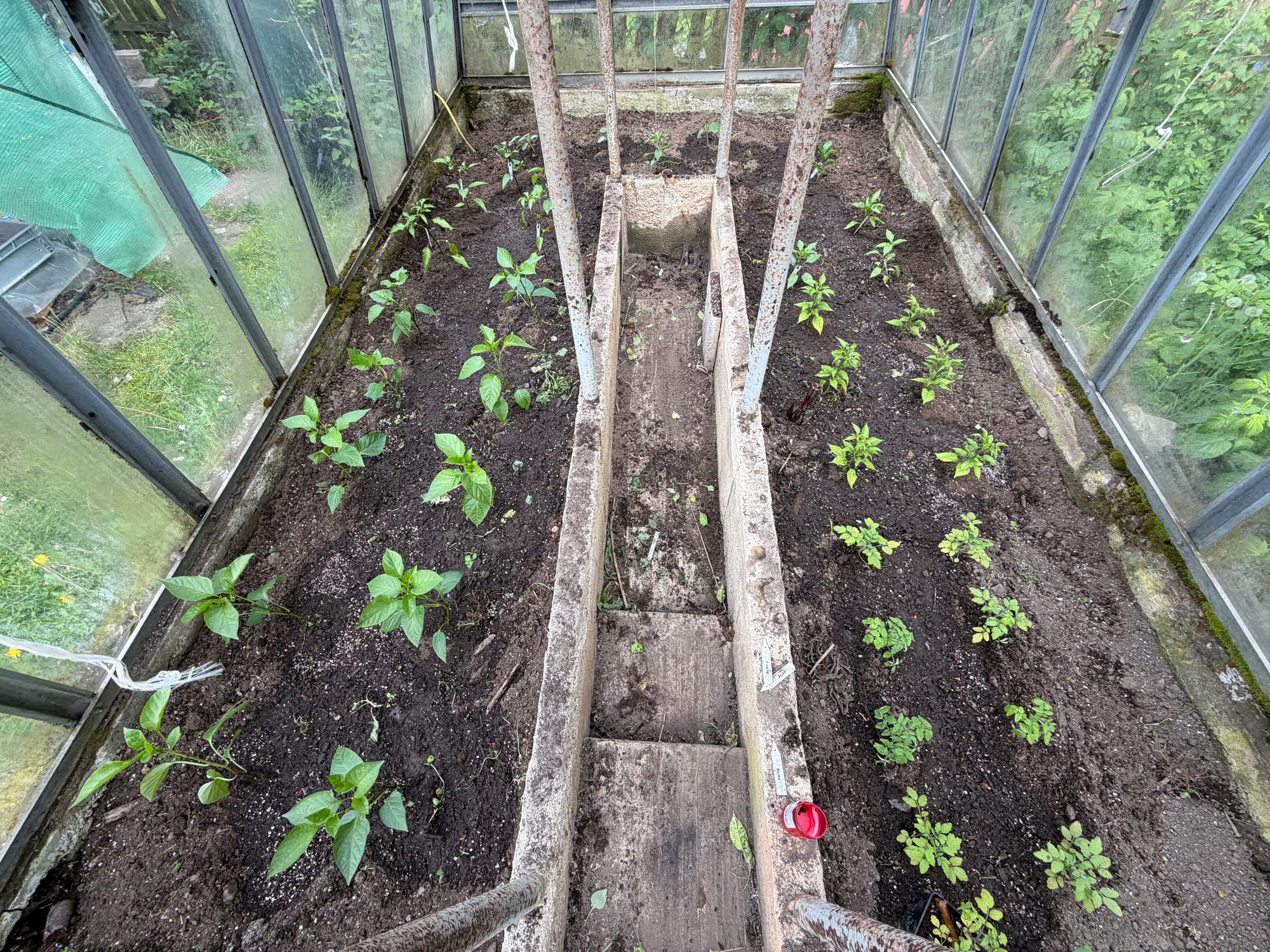
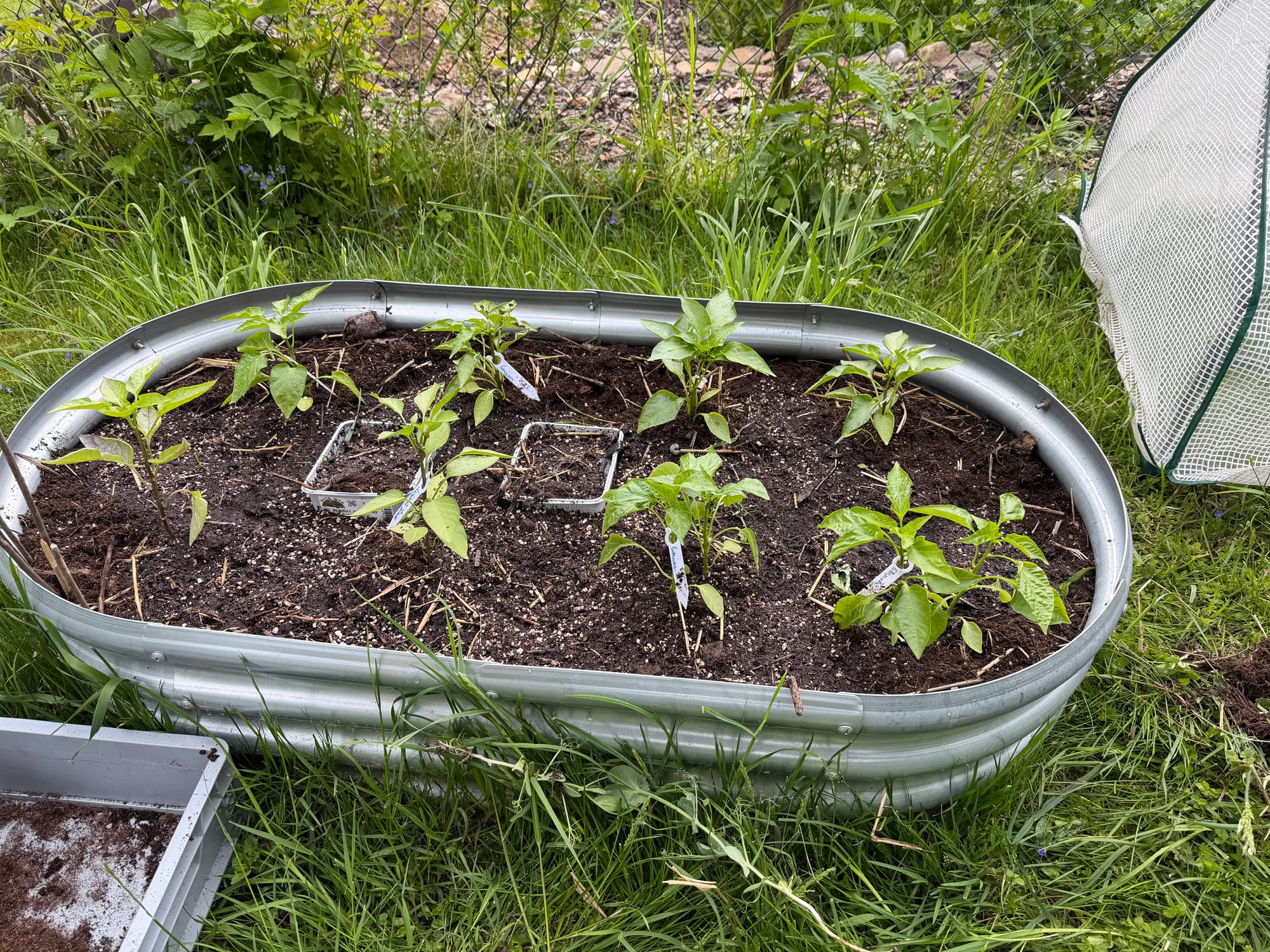
I landed with ~50 tomato plants and ~50 pepper plants. While I had plans with tomatoes, a hefty chunk of them went into cocoponics; up until the last minute, I had no idea what to do with all those peppers.
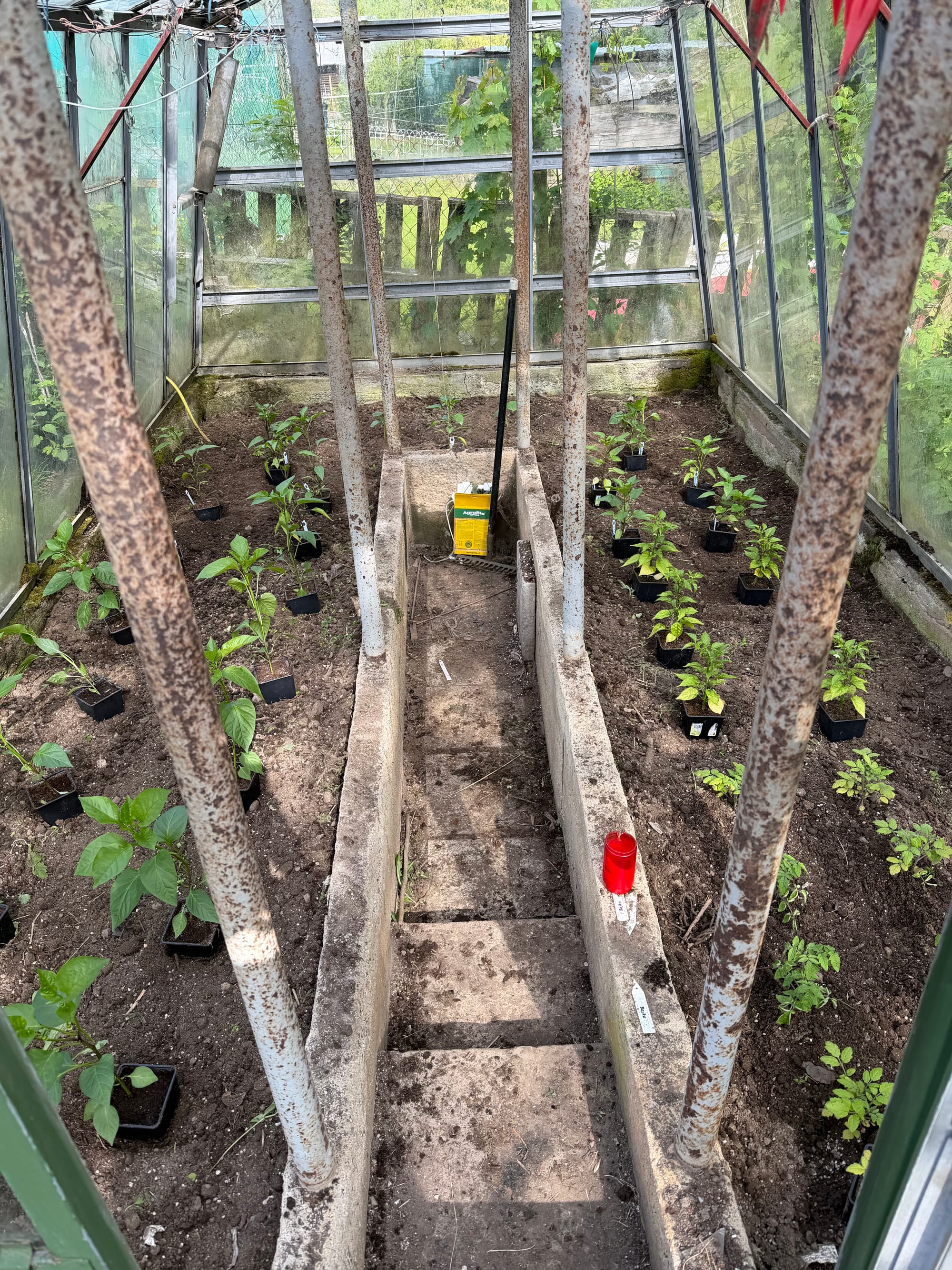
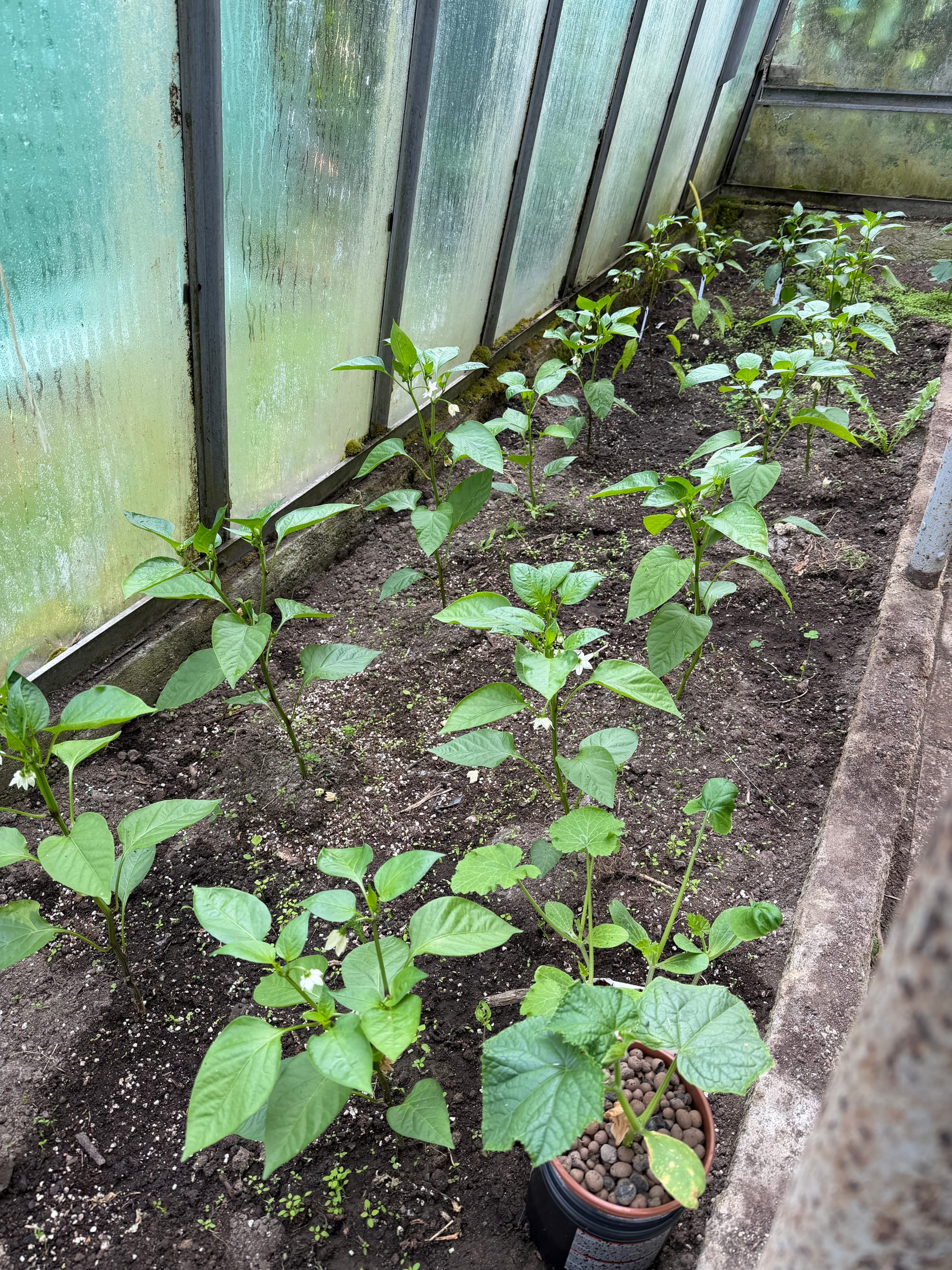
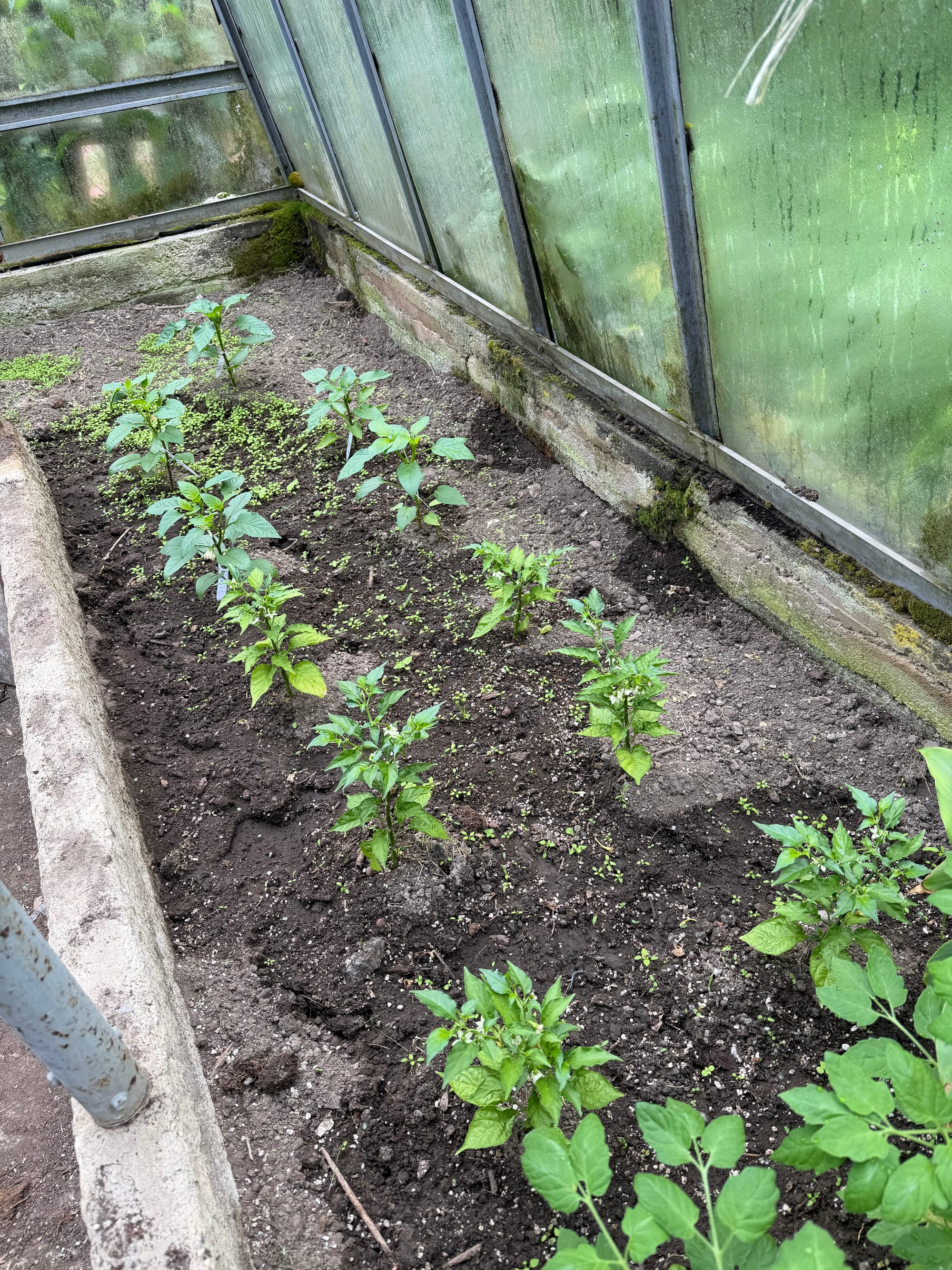
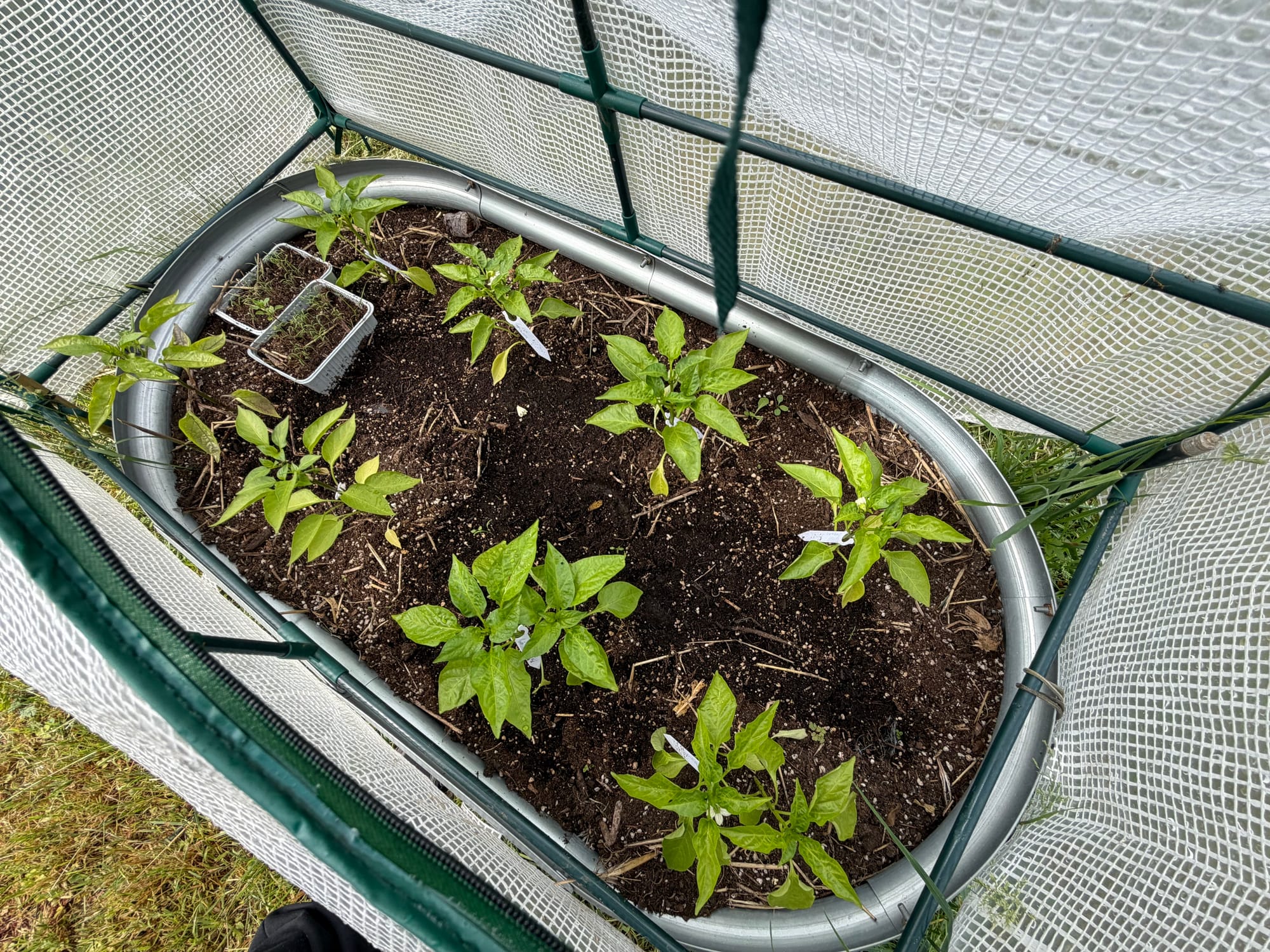
The majority of the pepper plants went into the greenhouse, as usual. Yet I was still left with approximately twenty plants. So, last-minute, I decided to put half of them into cocoponics and the other half into a bed I planned to use for strawberries.
You can read about those in hydroponics here:
 Jakub Dušek
This year, I am growing a slightly different variety of Minigelbus tomatoes in the greenhouse. I am a little bit afraid those will grow larger than I would like, because even though it's a determinate variety, it's not a dwarf variety. The size is mostly driven by the available root space.
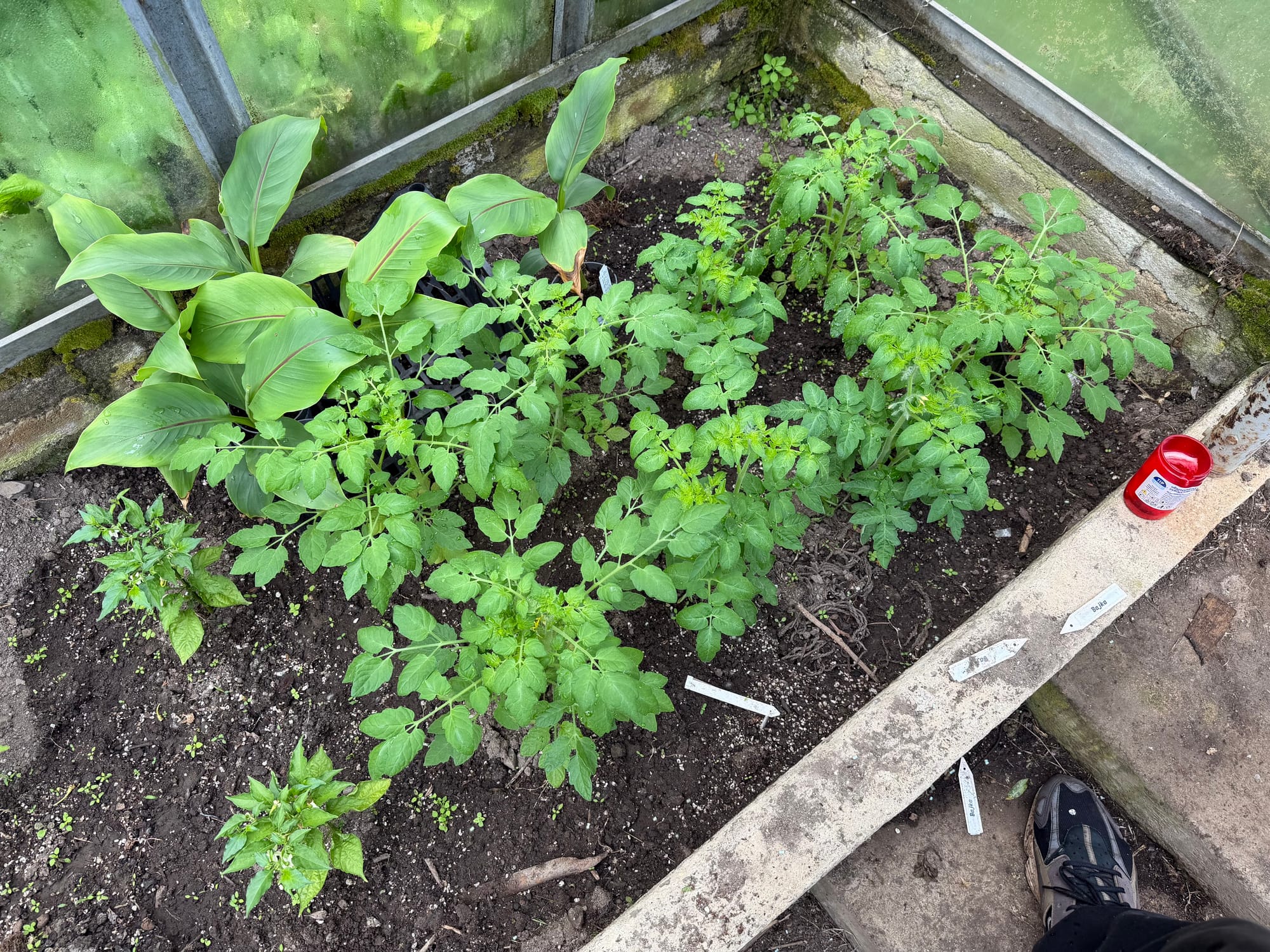
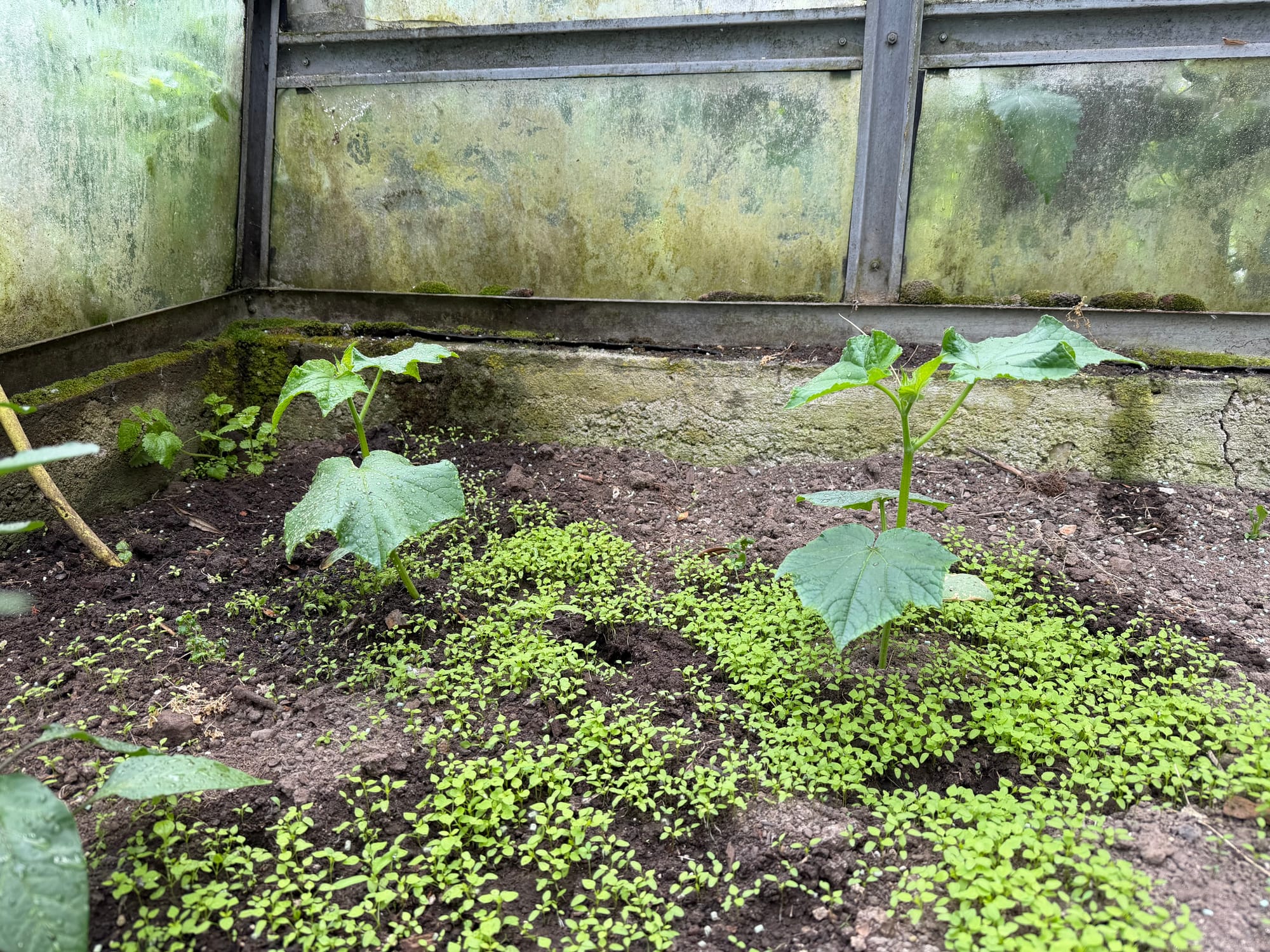
And because I thought the greenhouse wasn't cramped enough yet and because I had some leftover slicing cucumbers, I put two of them in there as well, just for good measure.
the outdoor situation
It's probably the third year in a row that I expect the bulk of my tomato production to come from hydroponics. Yet, I still keep about the same number of plants in regular soil.
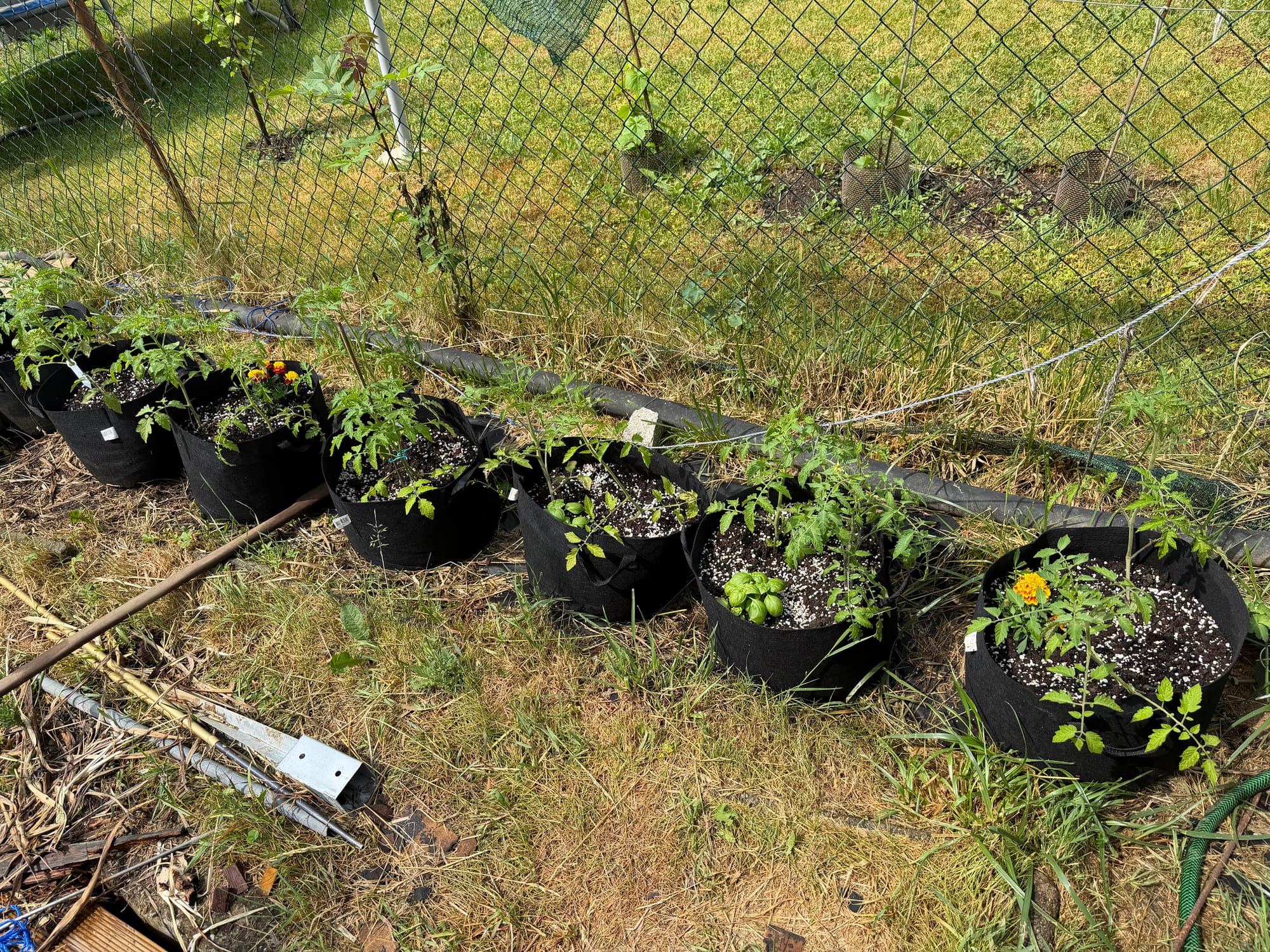
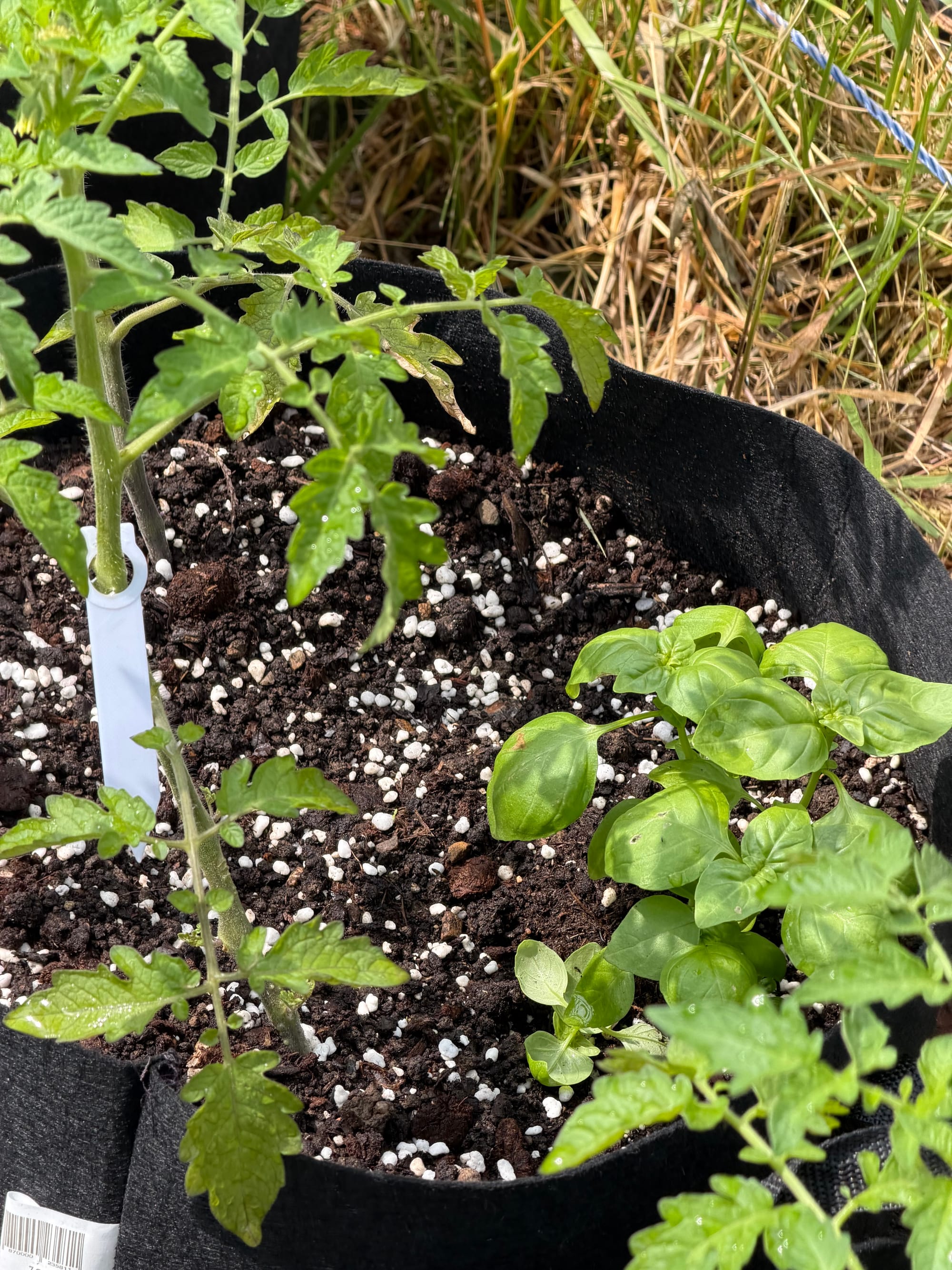
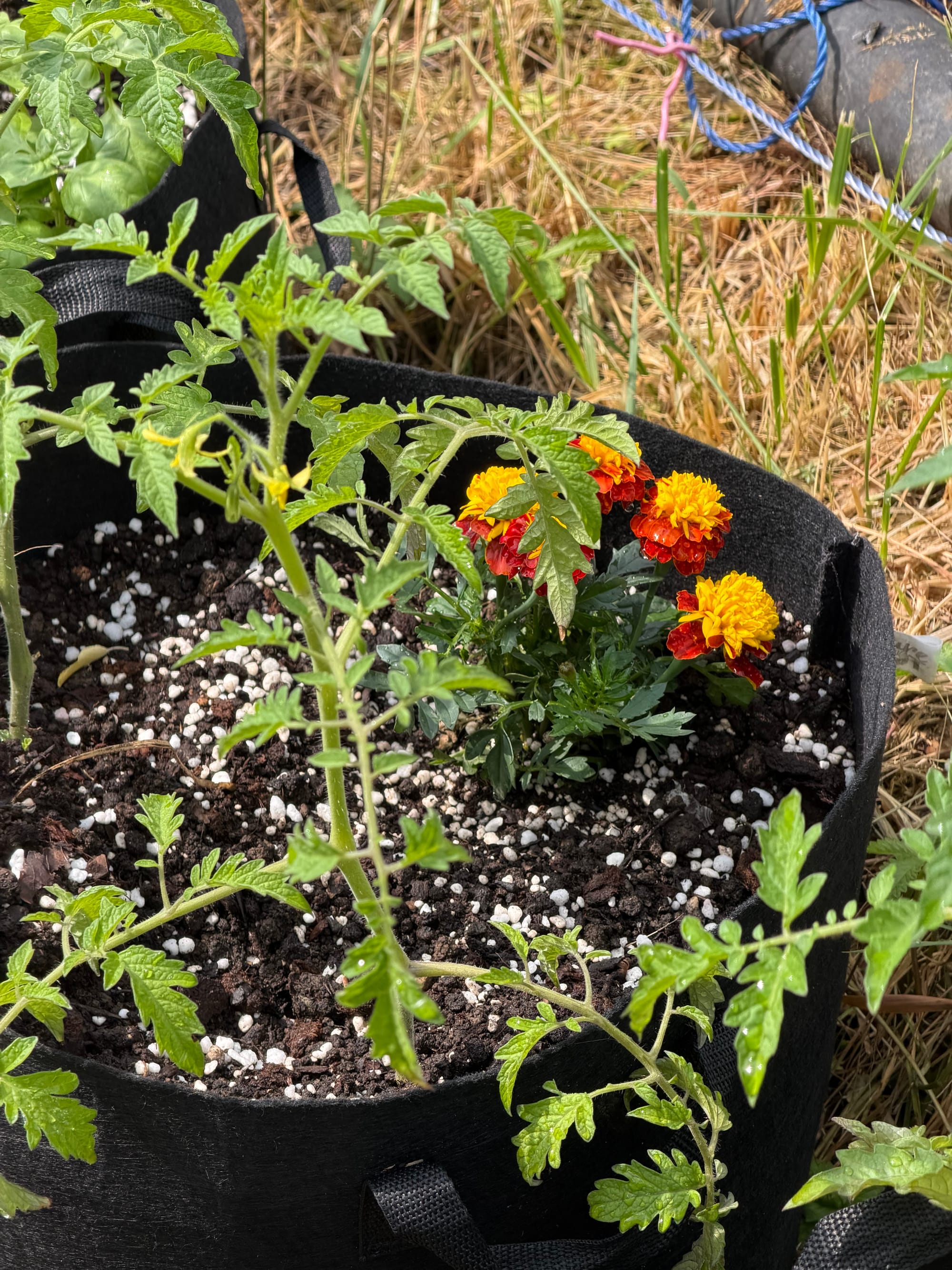
It might be just out of pure sentiment for the soil. Next year, I will probably switch to pure hydroponic tomato production; it depends on the hydroponic pepper experiment, because I would like to use the same system there. But to make the last year of my soil-grown tomatoes a little bit special for them, I planted some companion plants, basil and tagetes.
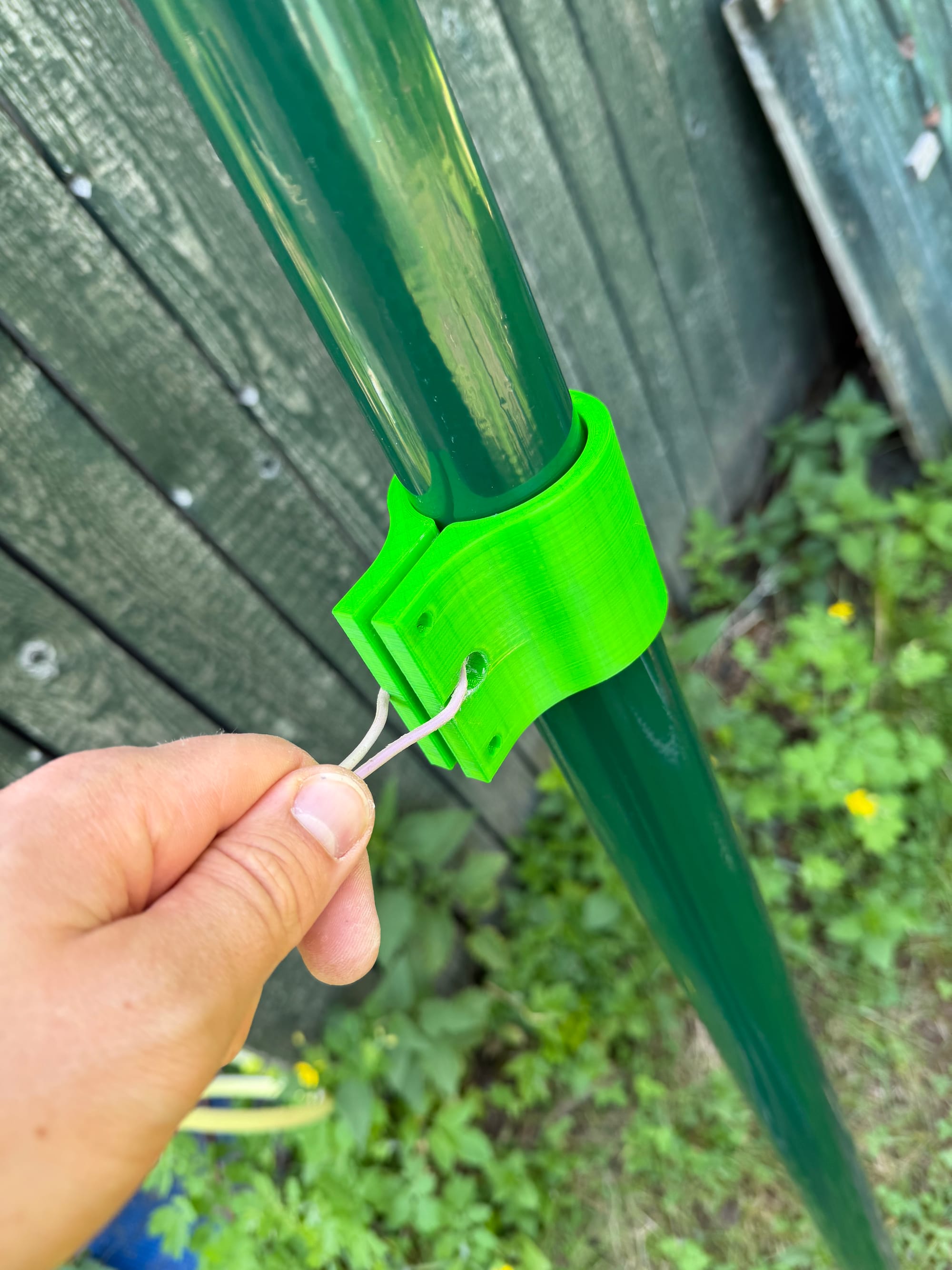
As I already mentioned in the hydroponic post, I had to tear down my tomato trellis. Again, the construction I built last year was too finicky. It's the same story as with the old and new hydroponic shelter. I used the wrong materials. I replaced the ground spikes with more ground screws and some sturdy fence poles. And to mount the wire, I 3D-printed a simple loop for the wire to thread through.
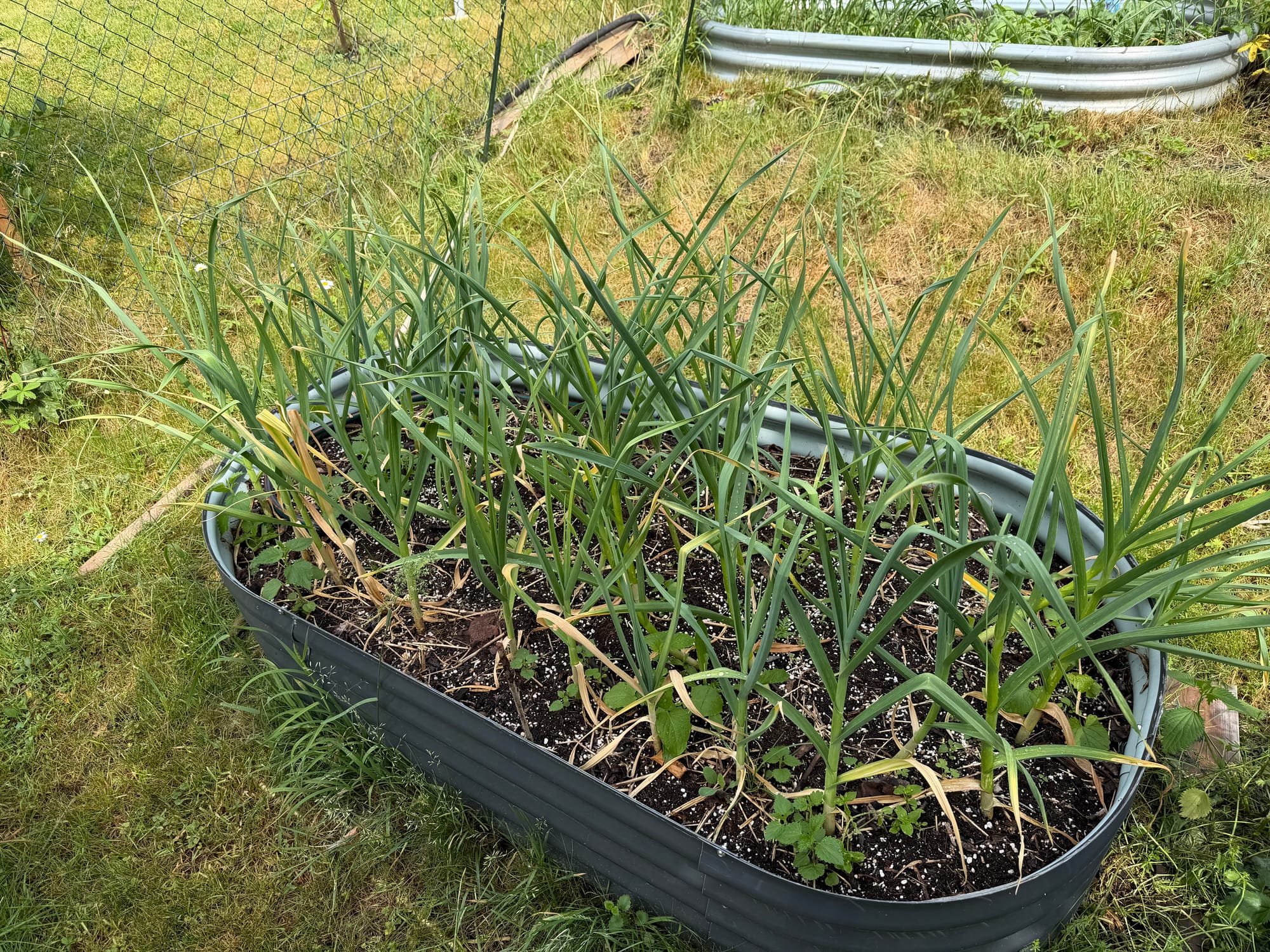
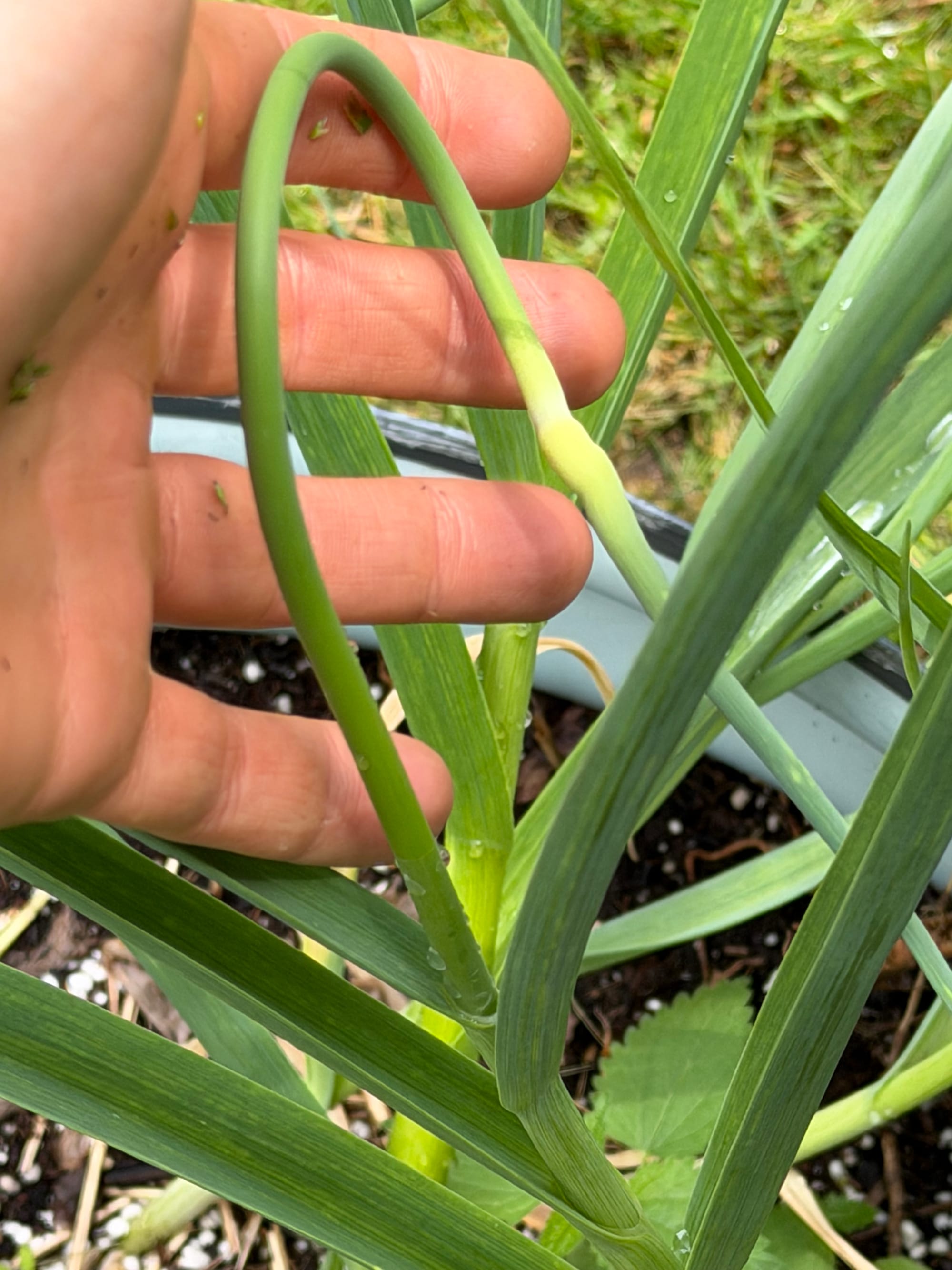
Let's now move to the beds. The garlic starts to flower. This means we are entering the final stretch, as planned.
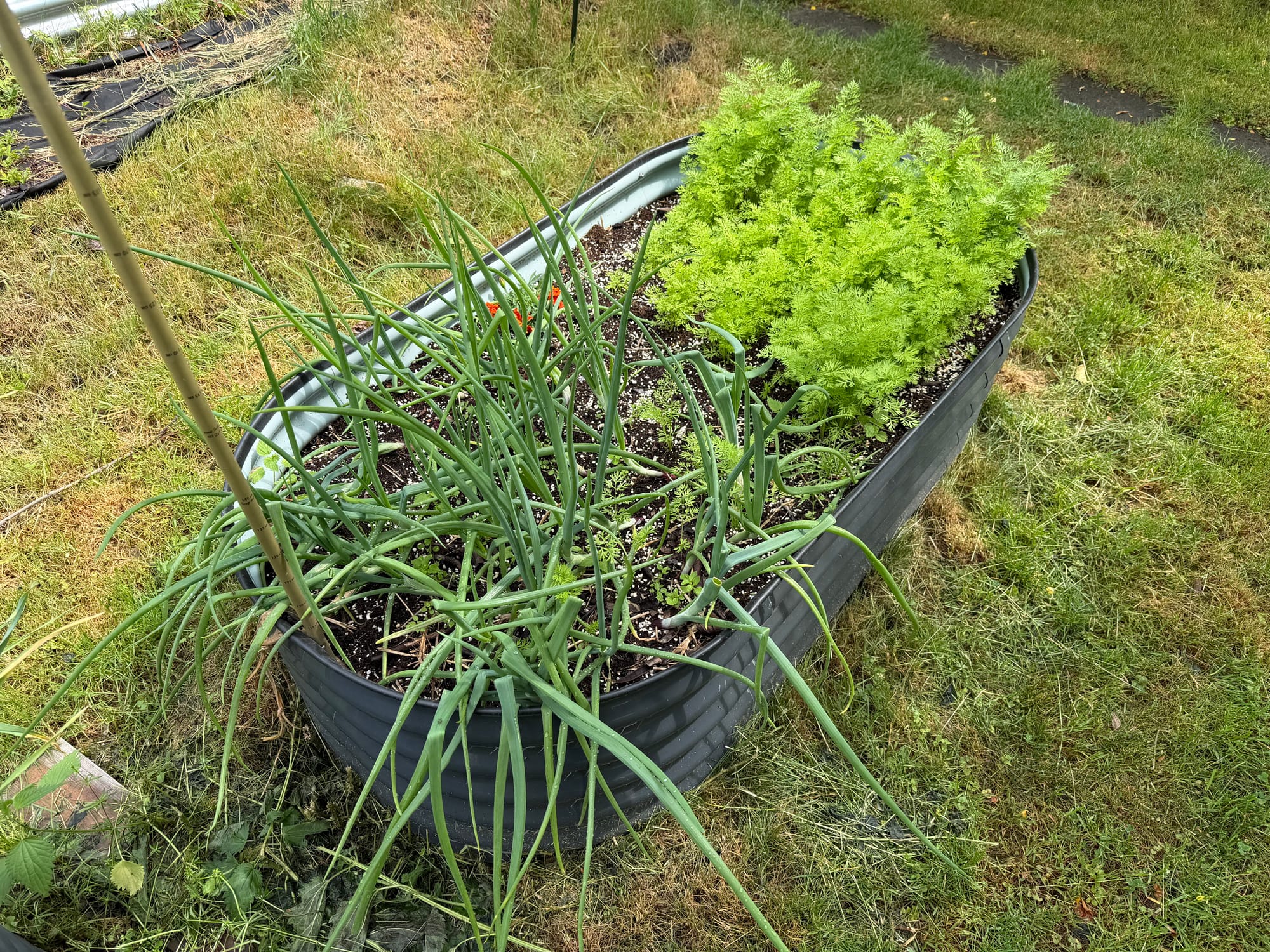
I am a little bit displeased with the development of the tomatoes that should go in the bed by the end of June. These are not exactly good examples of great-looking seedlings. There is still time, but not much, especially with the forecast calling for the first week of June to be on the cold side.
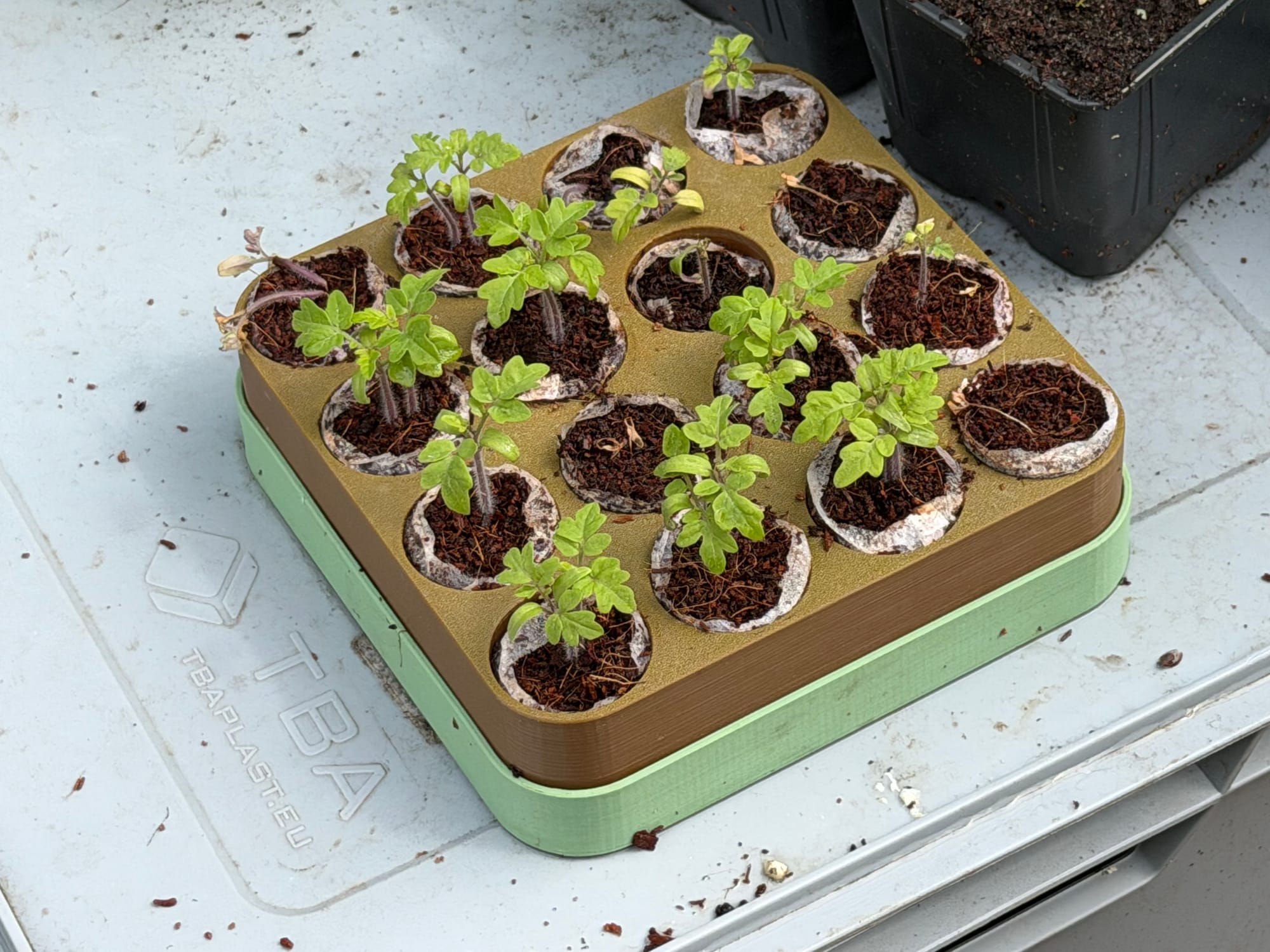
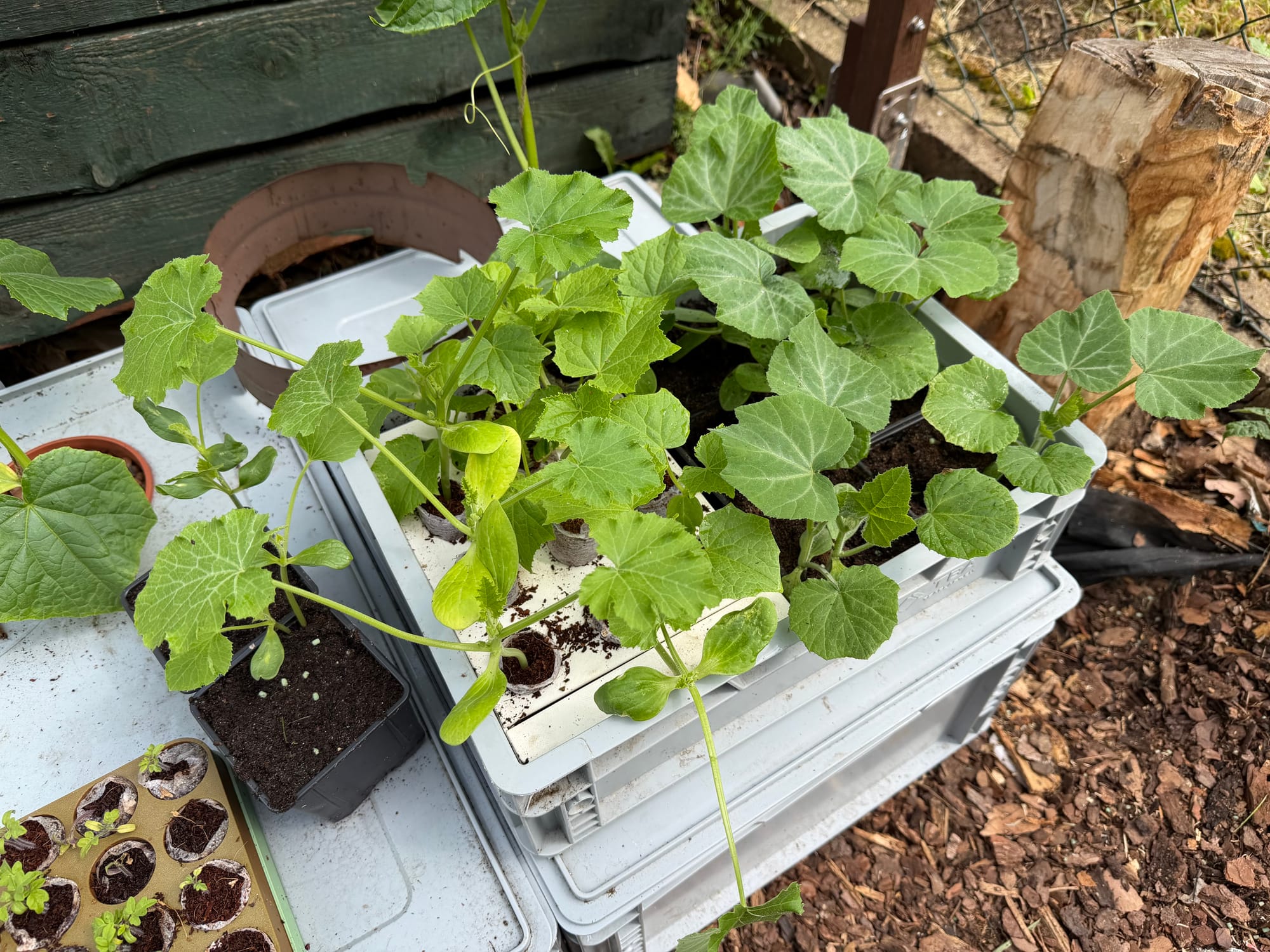
And because of the weather forecast, I am still a little reluctant about the butternut squash. I don't want to transplant it into a cold, wet bed, because that's just the right conditions to get absolutely smashed by some fungus.
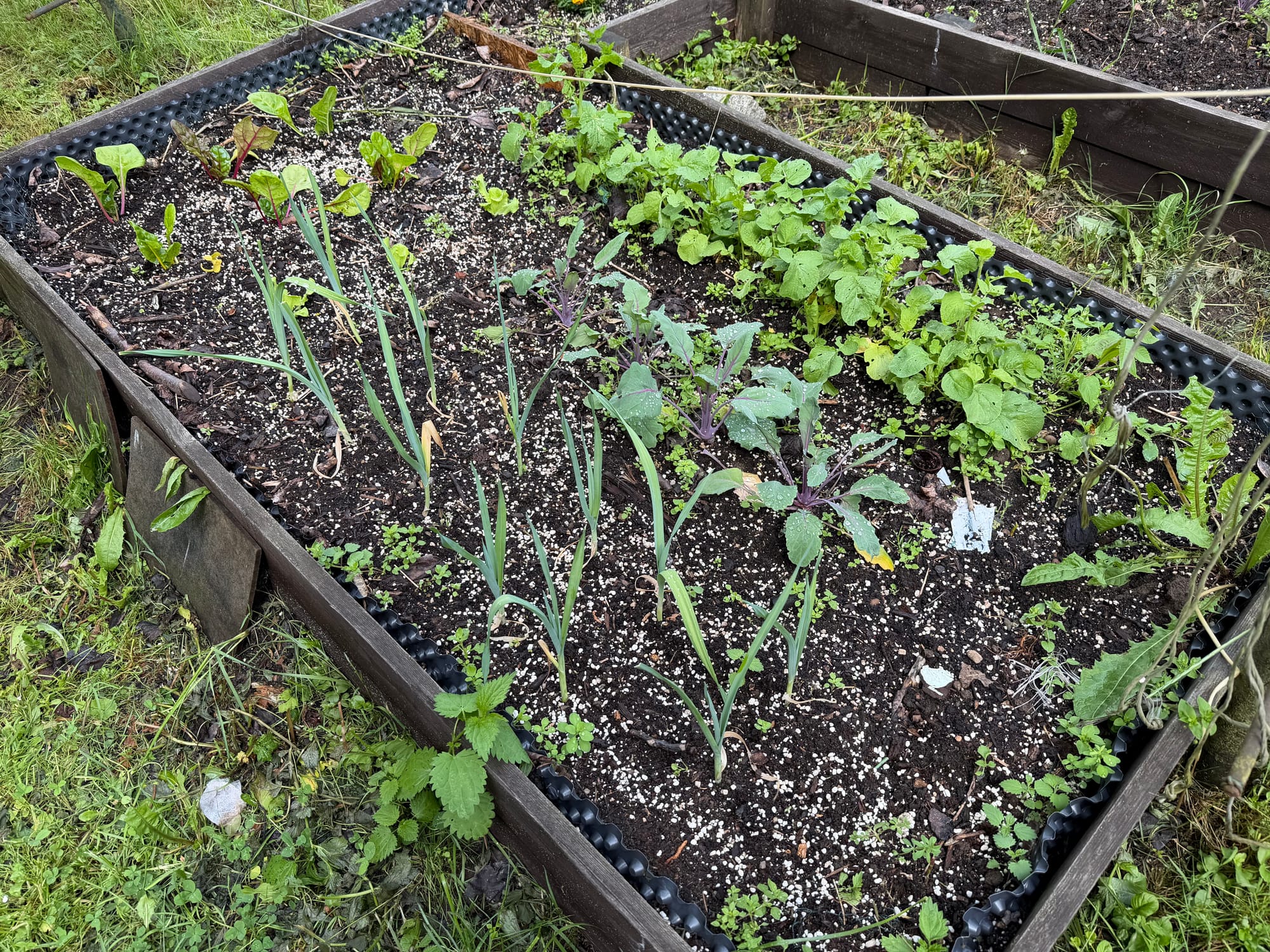
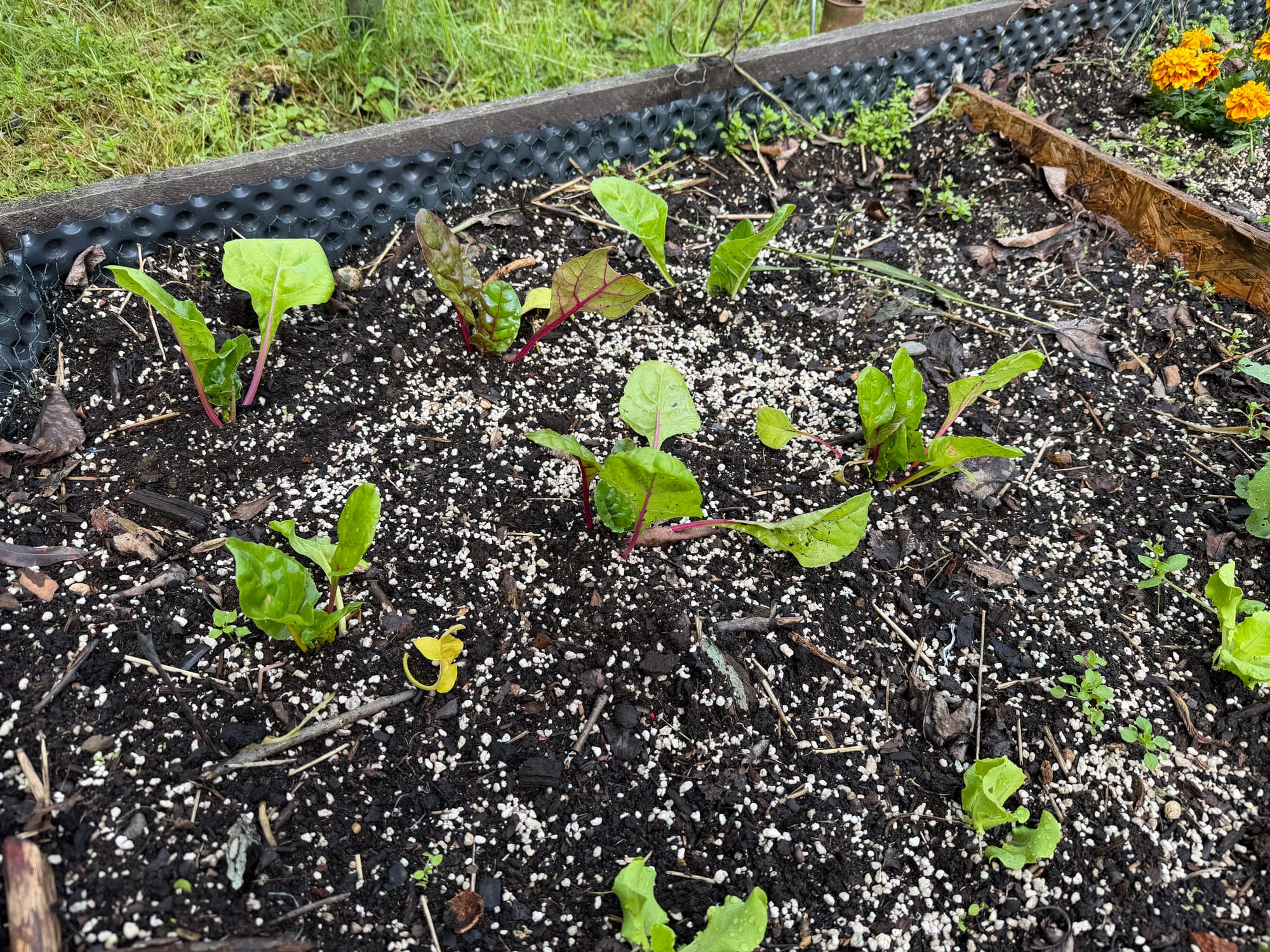
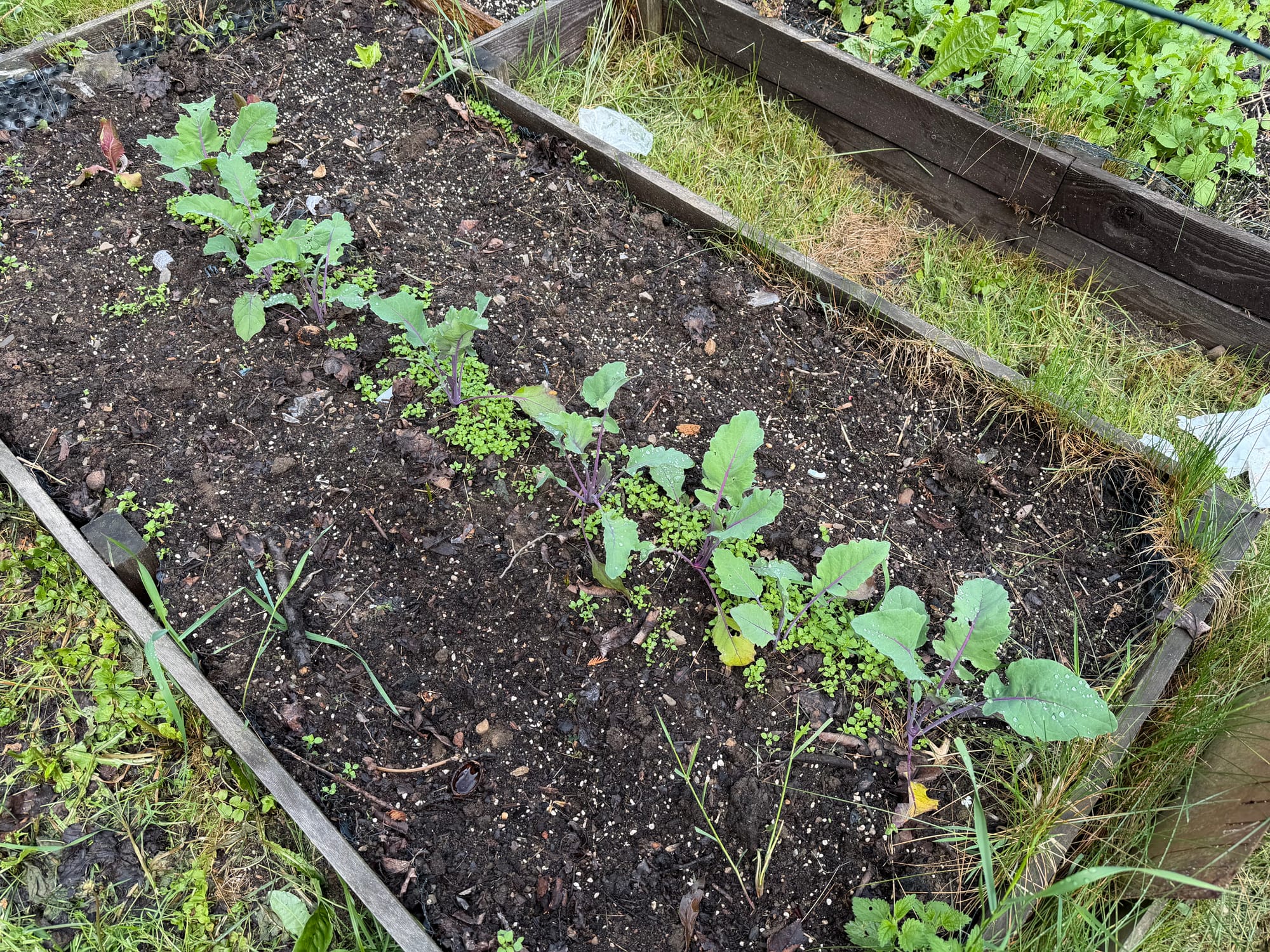
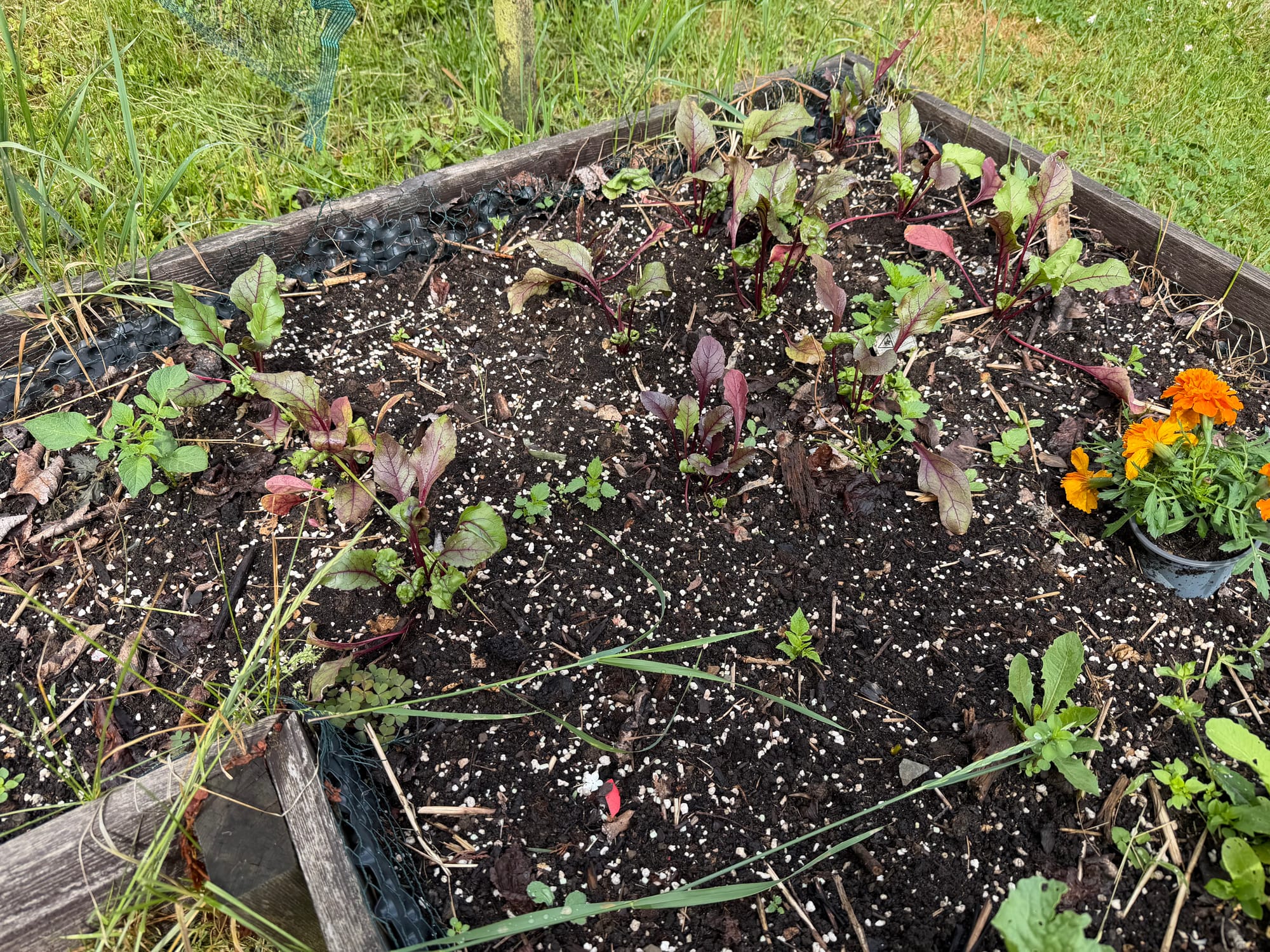
For the wooden beds, I've got some colorful mangold and lettuce. And because the Parmex carrot never showed up in there, I put some leek in the spot. There is no point in waiting, I guess. I am already waiting for kohlrabis and those beaten beets to spring back a little bit.
the cocomelon situation
And as a last but short topic, let's talk about the evergreen. Melons. As you might know, I have a very complicated relationship with melons. People are living as high as 500 meters above sea level and happily growing melons. Yet, I am struggling for the fourth year in a row to achieve any adequate results. This year, I have decided to grow the Kajari melon. But, as in any other year, the seedlings are substandard, not dead.
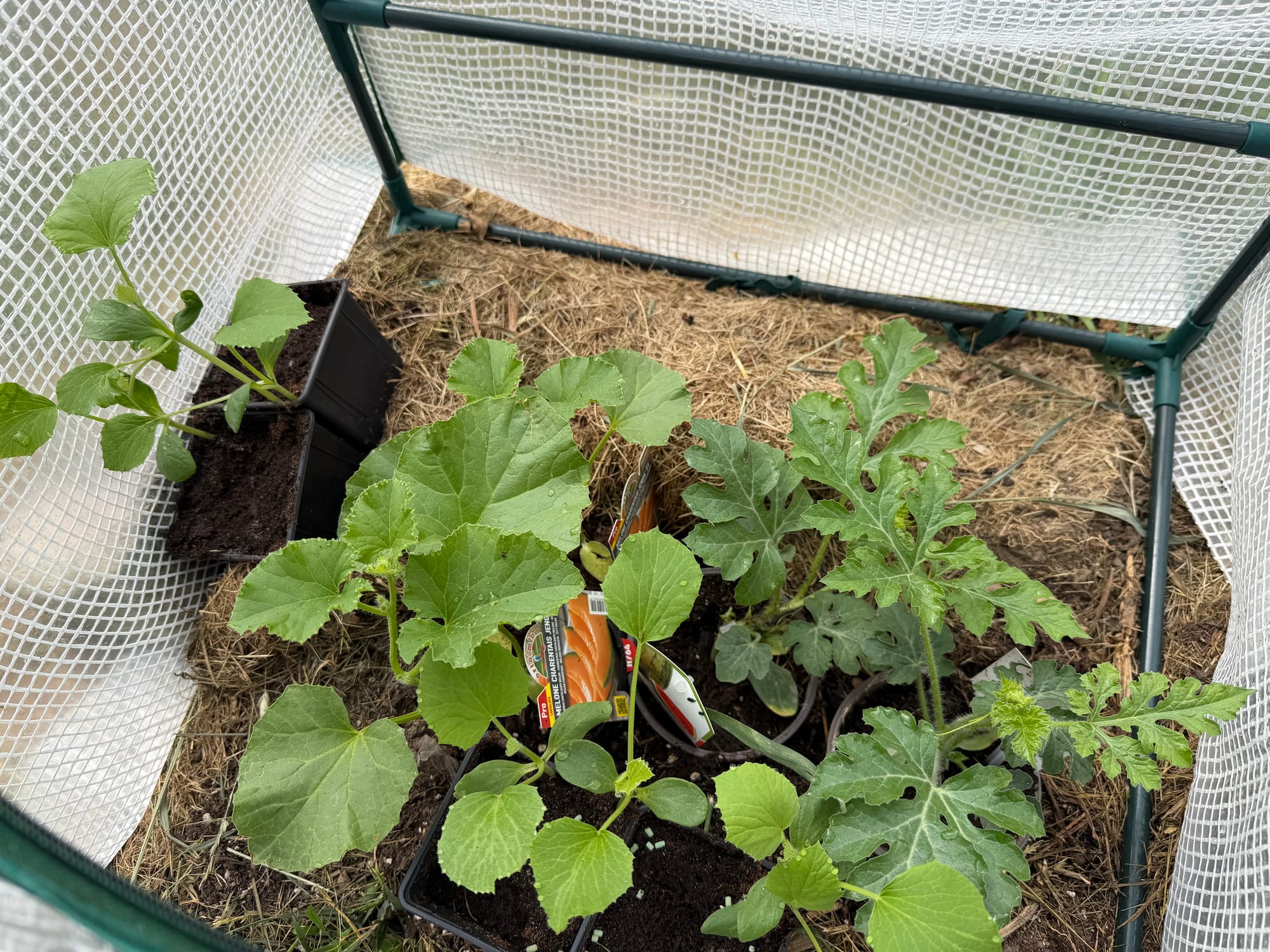
Just to increase my chances this year, I bought two more varieties. Two seedlings of watermelon, which I plan to grow in hydroponics because watermelons love water, and two plants of regular cantaloupe. I created a nice, fresh compost pile at the old root cellar because this spot gets a lot of sun, and covered it with a hoop house.
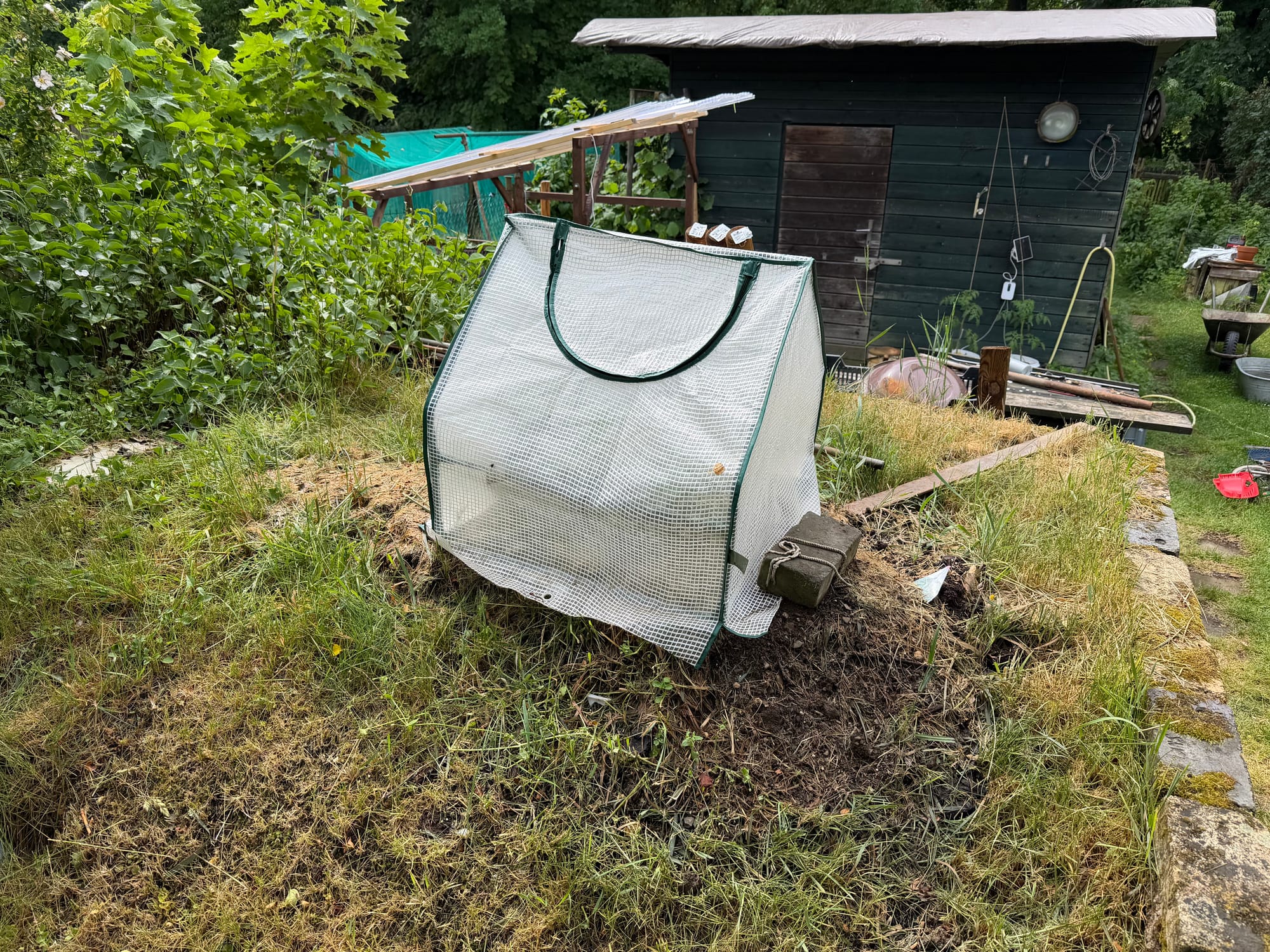
And if I am still left with no melon this year, I promise myself I won't do it ever again. This is the last attempt! Probably not, but…
I still don't know whether I like this year's weather. On one hand, we have the warmth, but at a cost of less water. While hydroponics are very efficient, as you can see, I still grow a considerable amount of stuff in soil, including my fruit trees, and I am concerned about what summer will bring. But I guess this is what we wanted; otherwise, we would not be fucking up the climate, right?
Member discussion