May #21.2: Vertical integration
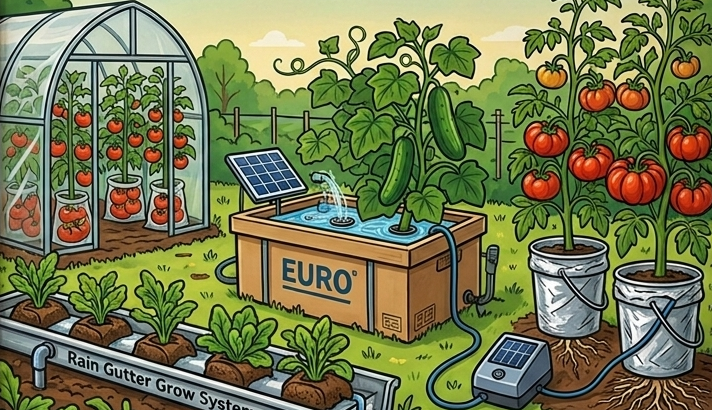
I think it is finally time to have "the" talk. It's time to talk hydroponics. I could quote some boring definition of what and why, but I don't want to cause you brain death in the first paragraph, so here's the tl;dr version you need to know: hydroponics is basically growing a plant with a feeding tube. There is no soil, only water and some inert stuff. But even that can be skipped, as you will see.
the structure
First, let's look at the real estate changes I had to make. Last year, I built this monstrosity.
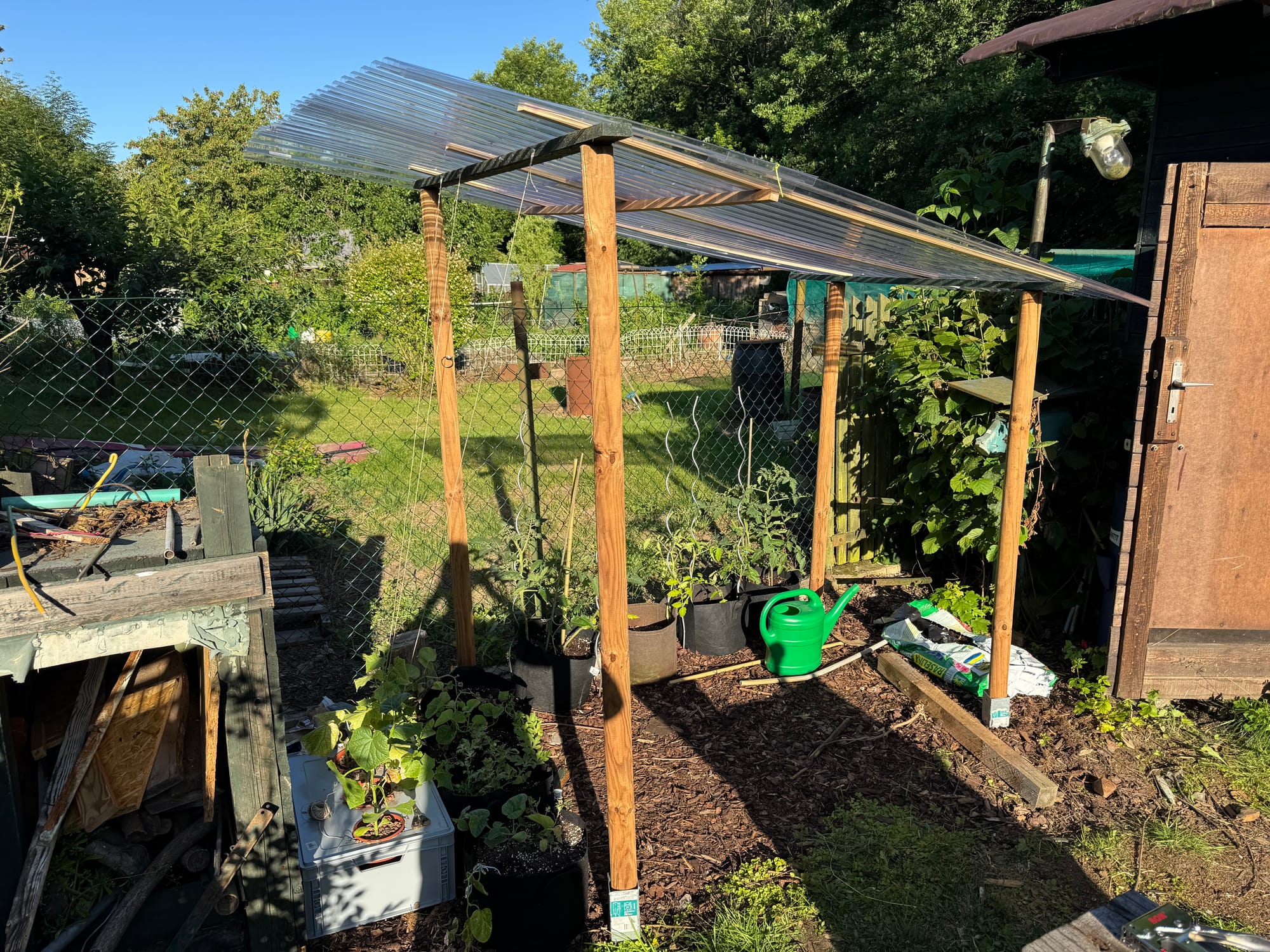
It should have been a rain shelter for my cucumbers, tomatoes, and melons, all of them grown mostly in bags with regular soil. It was not very sturdy; there is literally no bracing or horizontal support, and the structure is flimsy at best. So I tore it down to build a new one. I obtained some wood, mostly just some battens, but it will serve my purpose nicely.
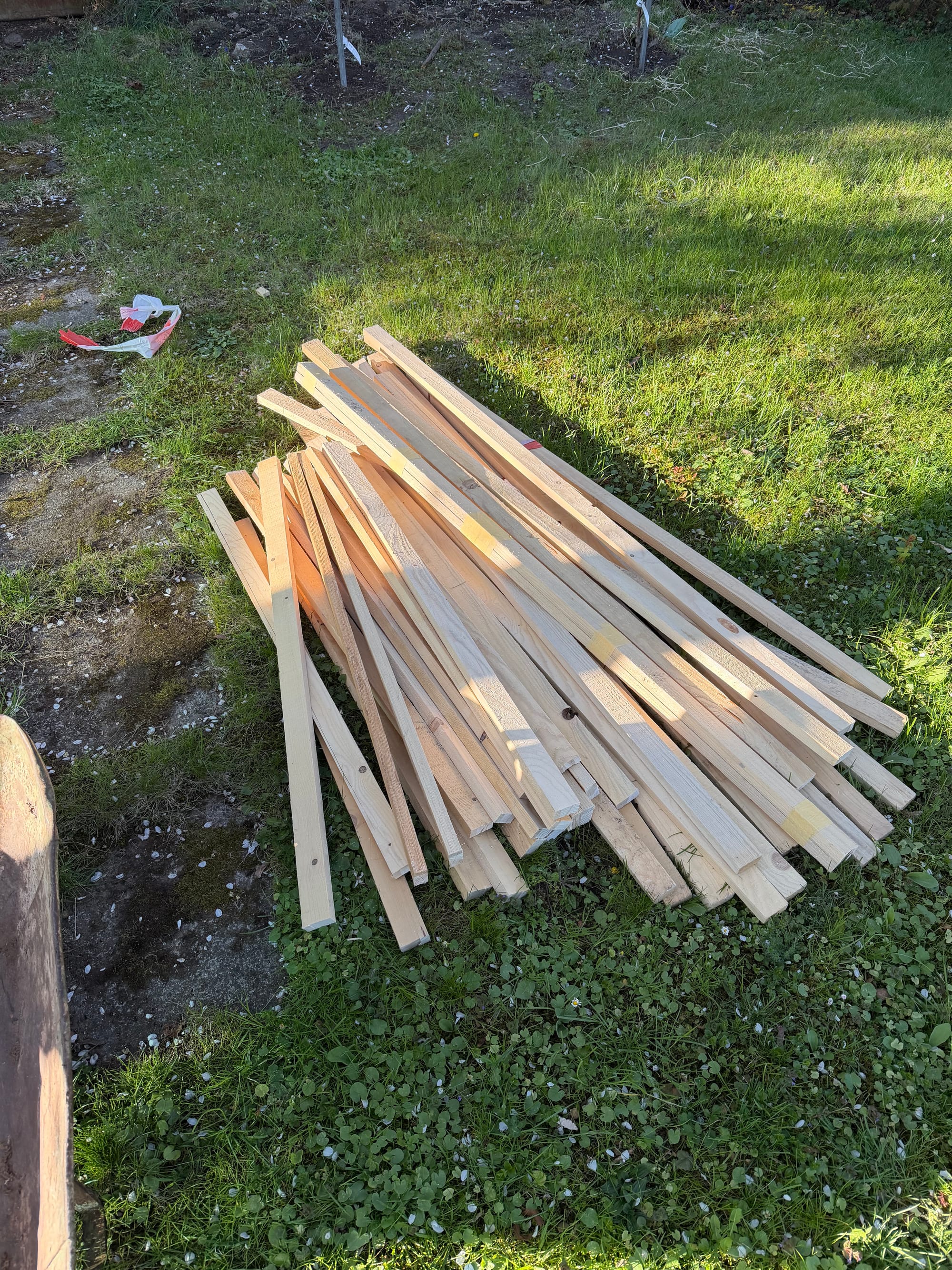
I needed two support beams and four corner beams. For these, I bolted two battens together in three places. I am fully aware this is not the best practice. Still, the wood was free, and I recycled the existing lightweight polycarbonate roof.
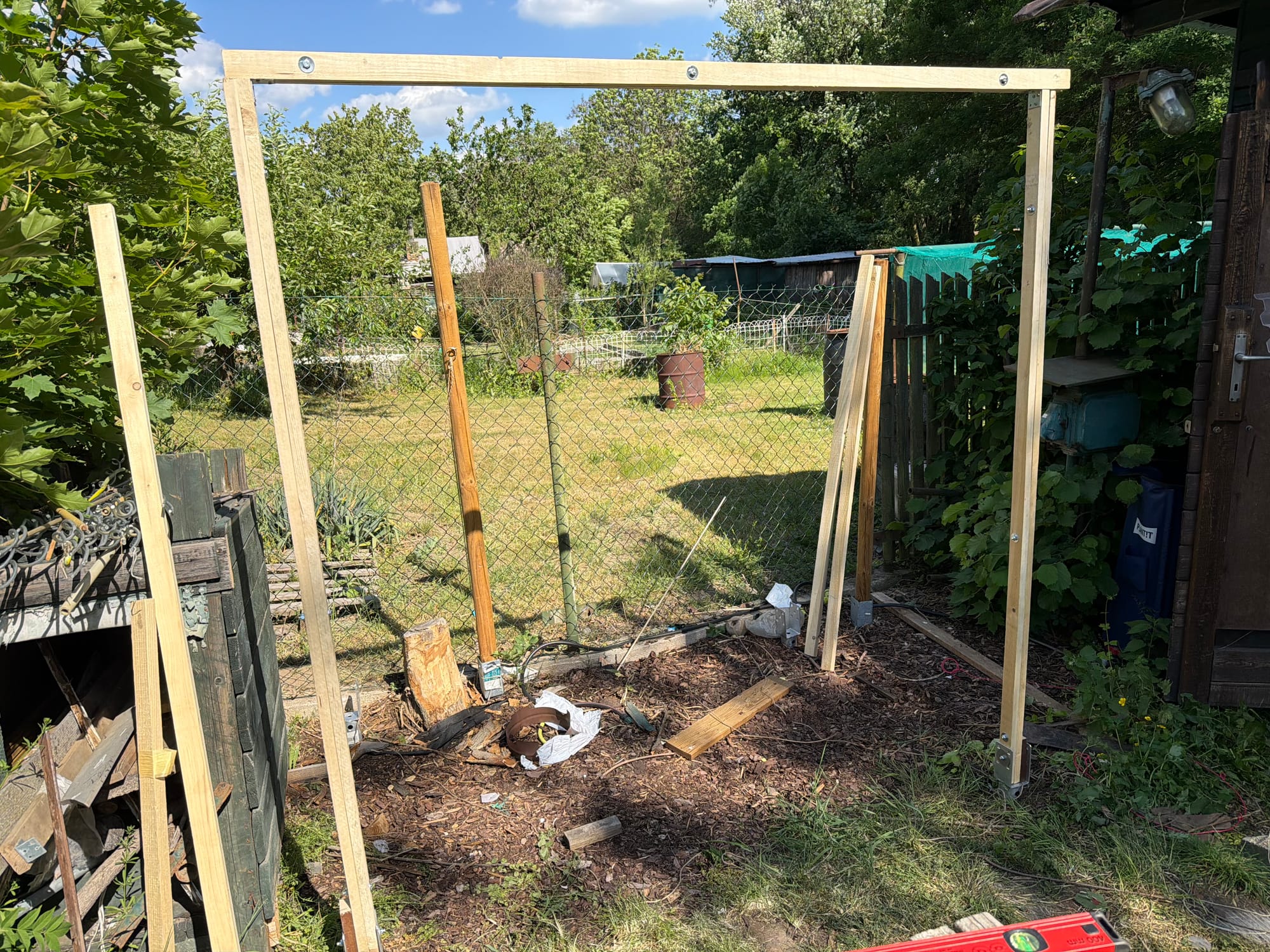
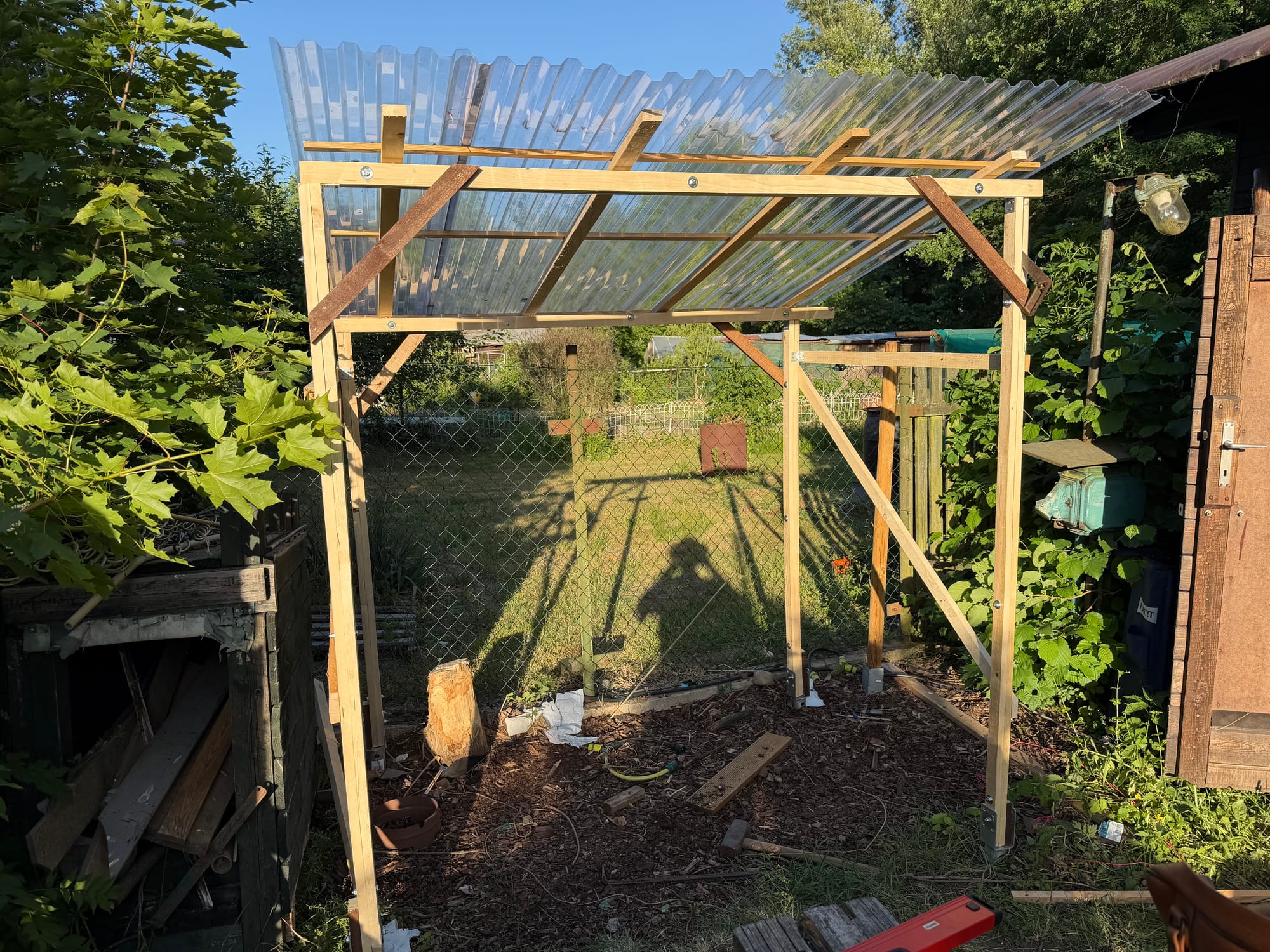
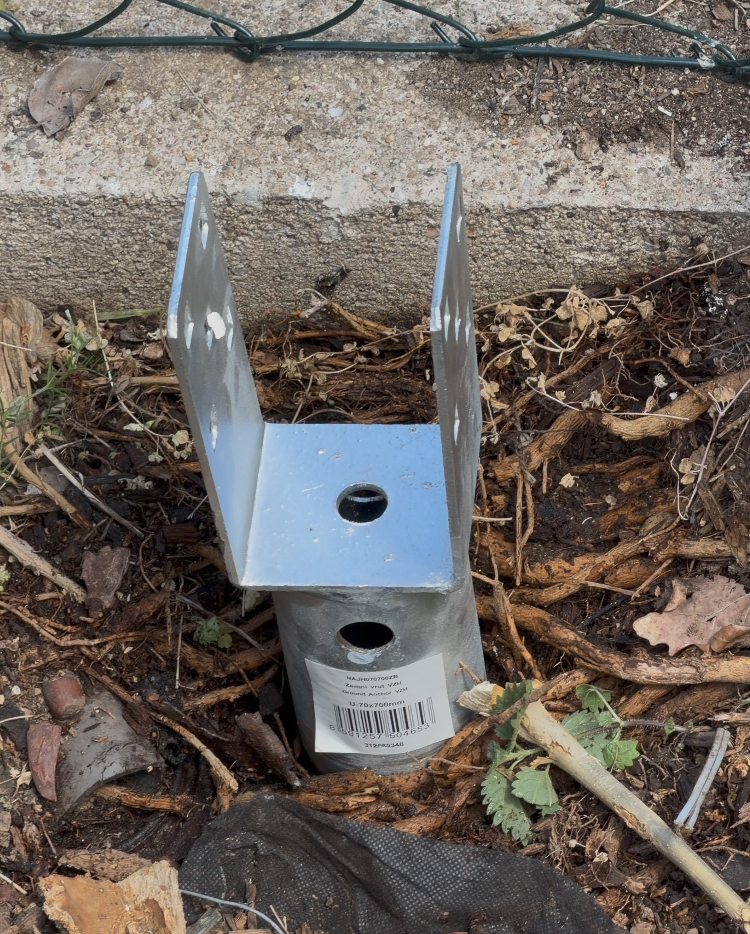
To mount the structure into the ground, I used ground screws instead of the old ground spikes. The ground screws are much sturdier and easier to level properly.

The construction is very simple, and I don't even know if I managed to create a proper roof slope. However, I braced the structure at every corner and braced the opposing sides together, and painted the bare wood with the same lacquer I used for the shed.
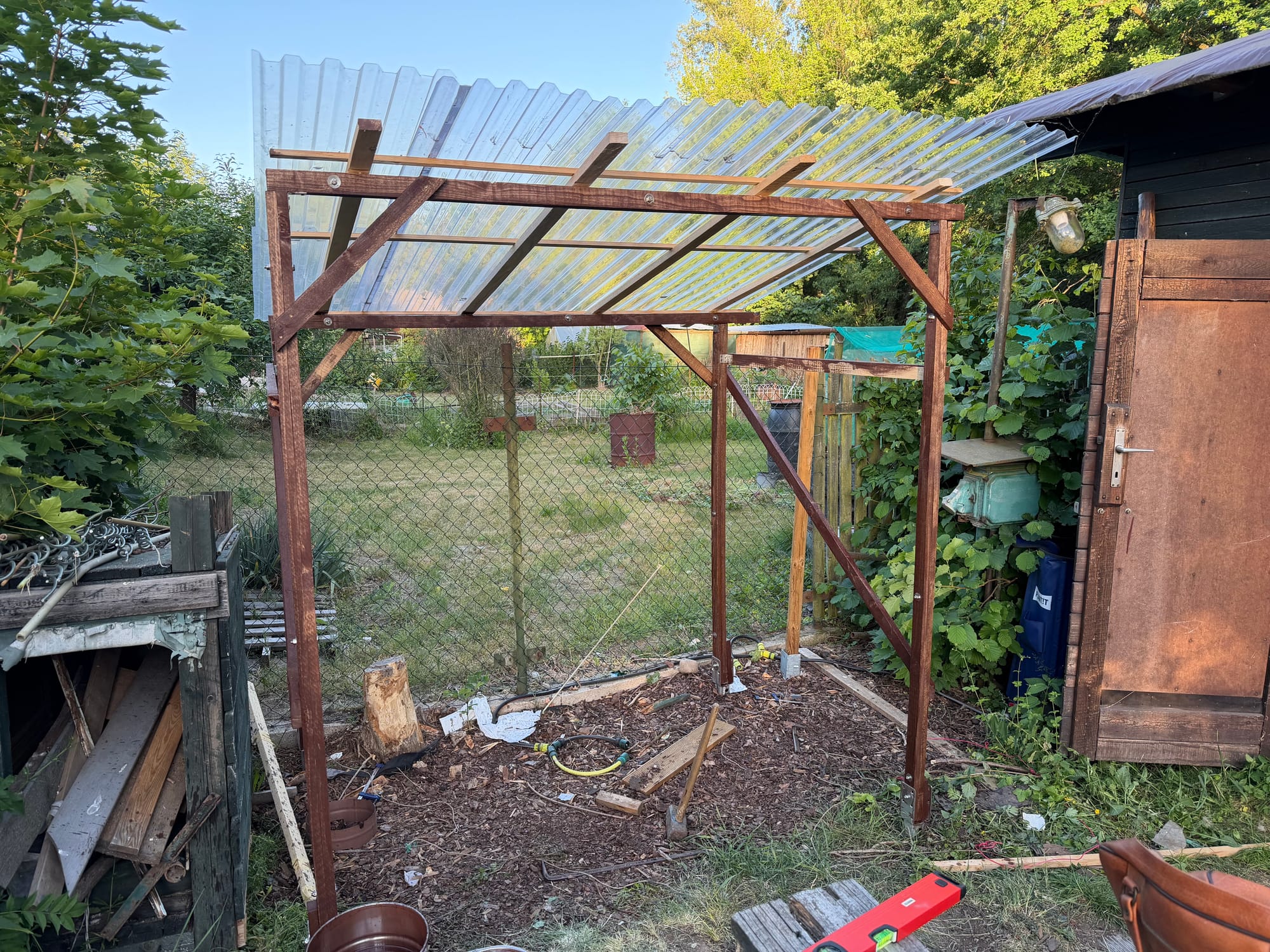
And now it can house up to 6-8 hydroponic plants, for which I will be installing a small 40W solar panel to power my pumps.
the deep cucumber
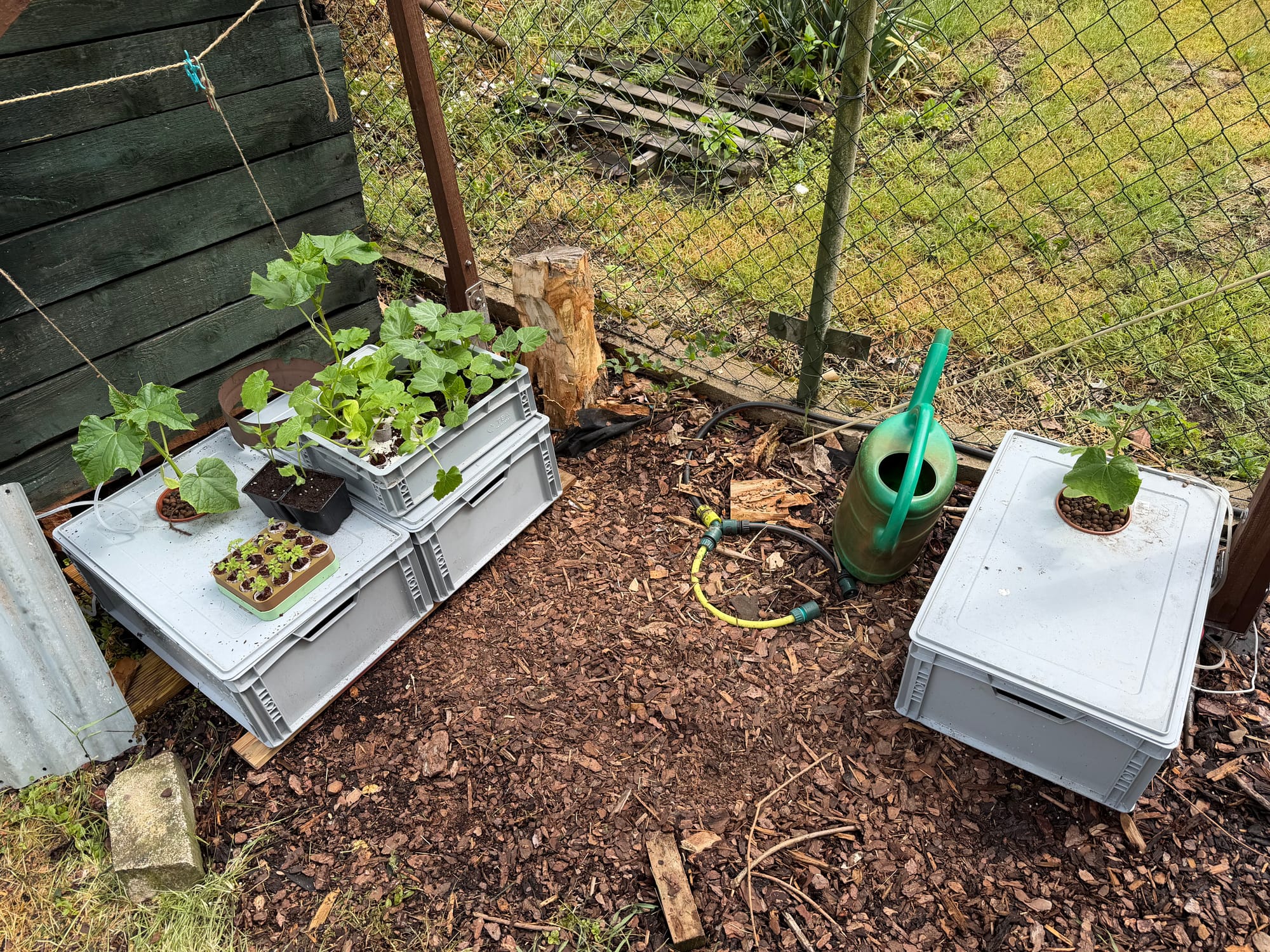
Last year, I accidentally killed most of my slicing cucumbers. Ironically, the one I thought would die survived the longest. I threw that one into a makeshift Kratky system jerry-rigged from a 40x60 EURO box, originally meant for zucchinis.
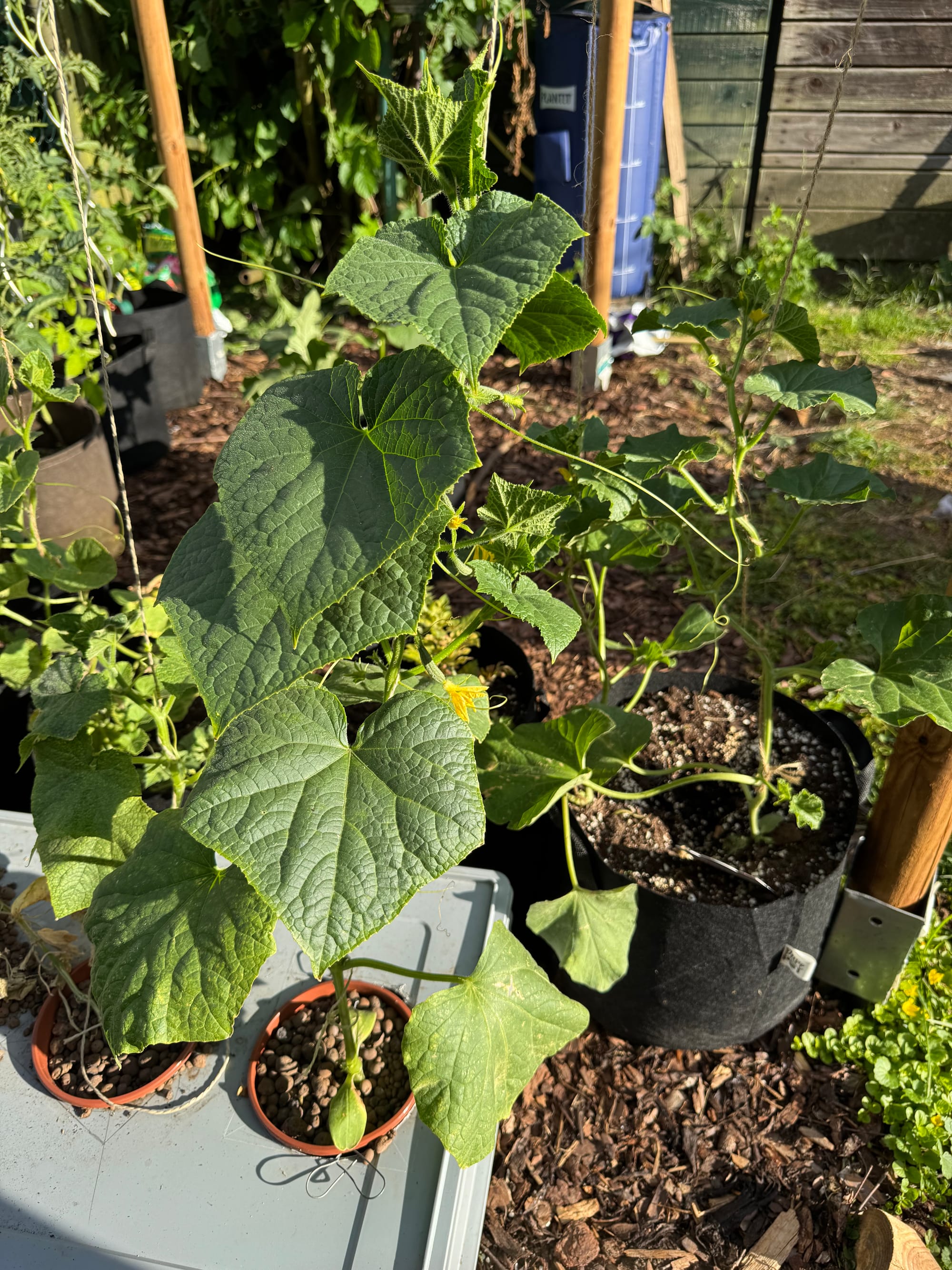
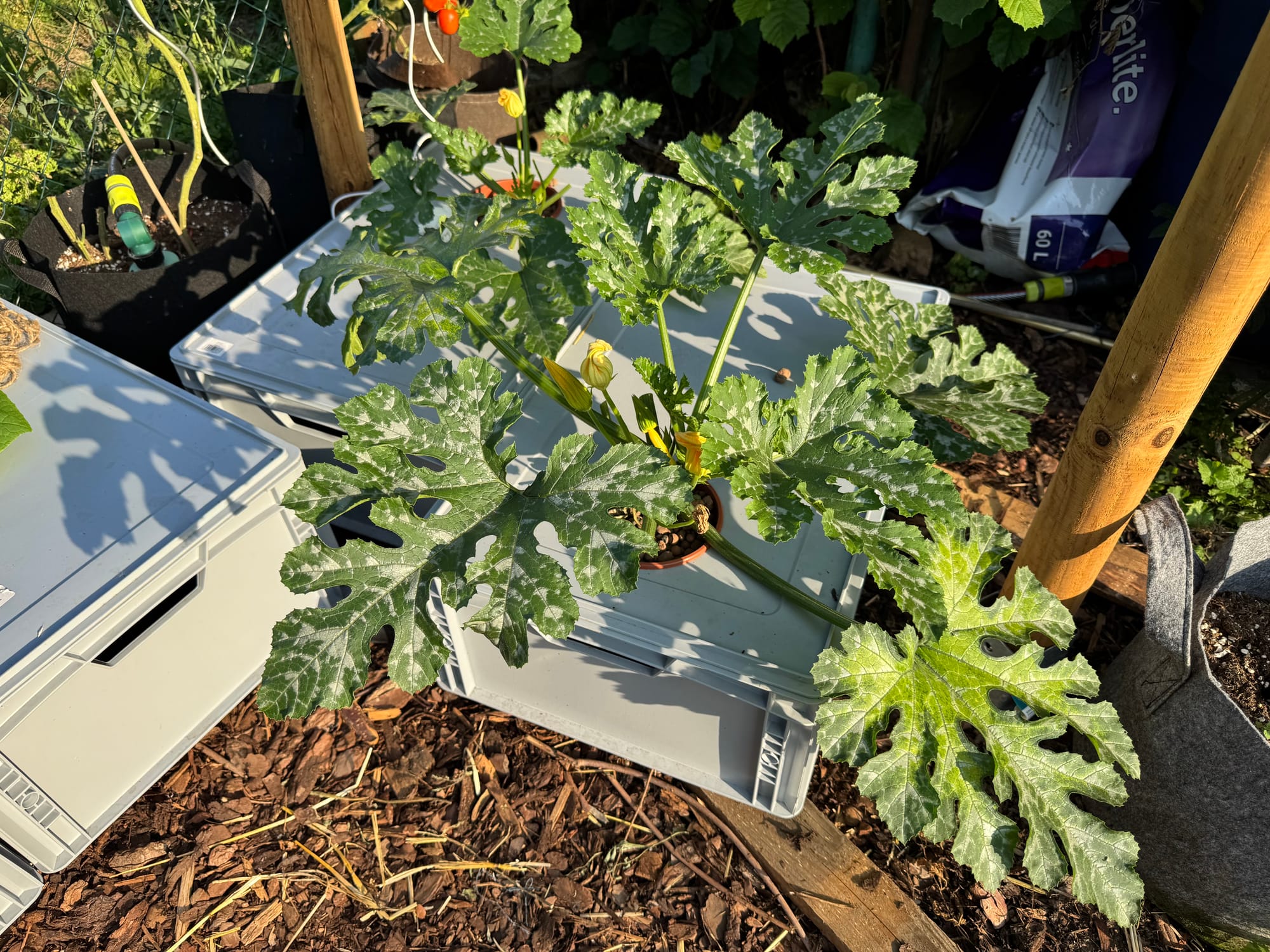
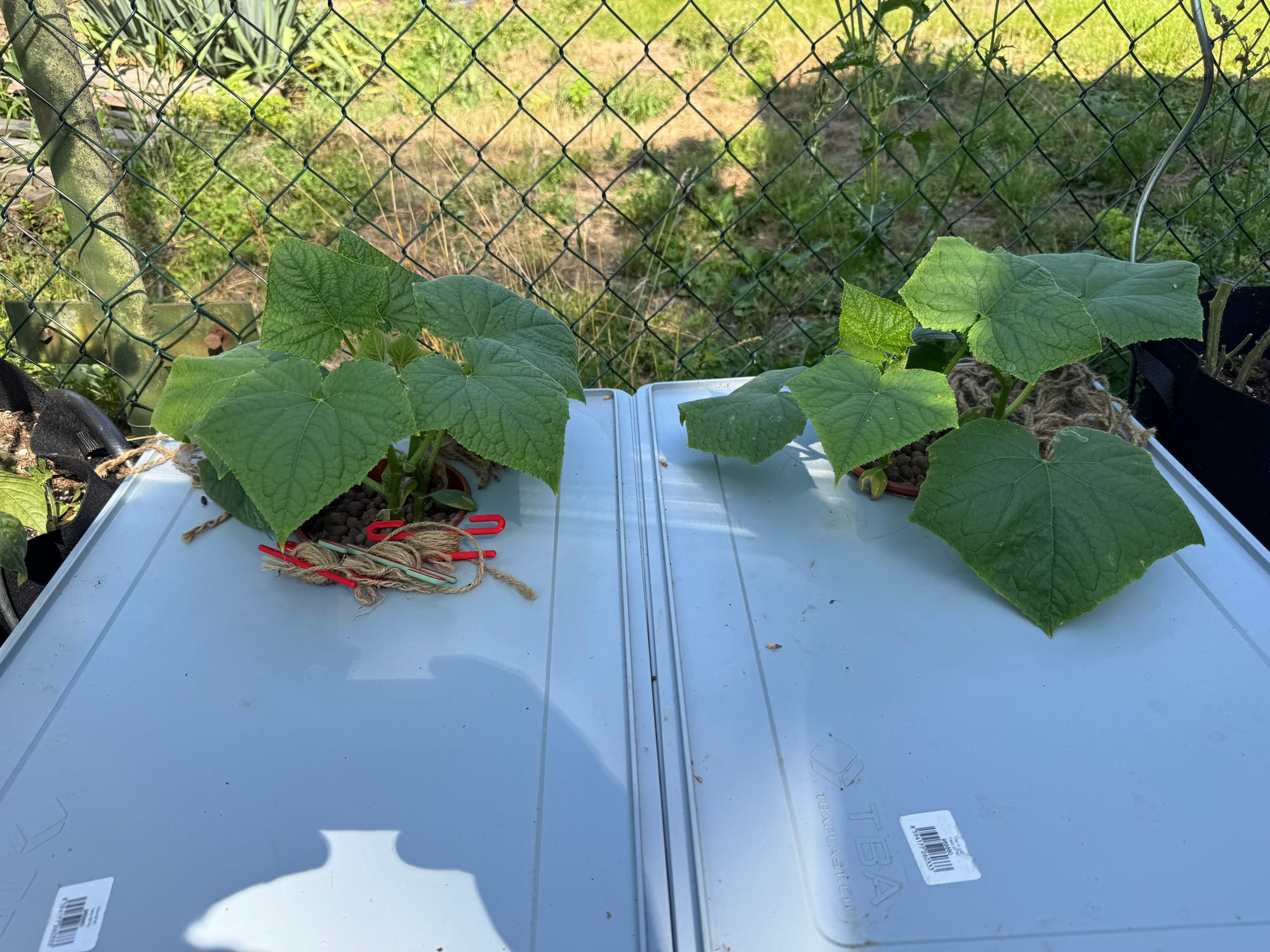
It was actually the first time I used Kratky at that scale, and I kind of liked the simplicity. Still, I knew there was a performance ceiling, so I fitted some of my boxes with a solar-powered bubbler, turning the Kratky into Oxy-Kratky, an oxygen-assisted Kratky method. This year? No half measures. I got battery-powered air pumps with pass-through charging, making an off-grid DWC (deep water culture).
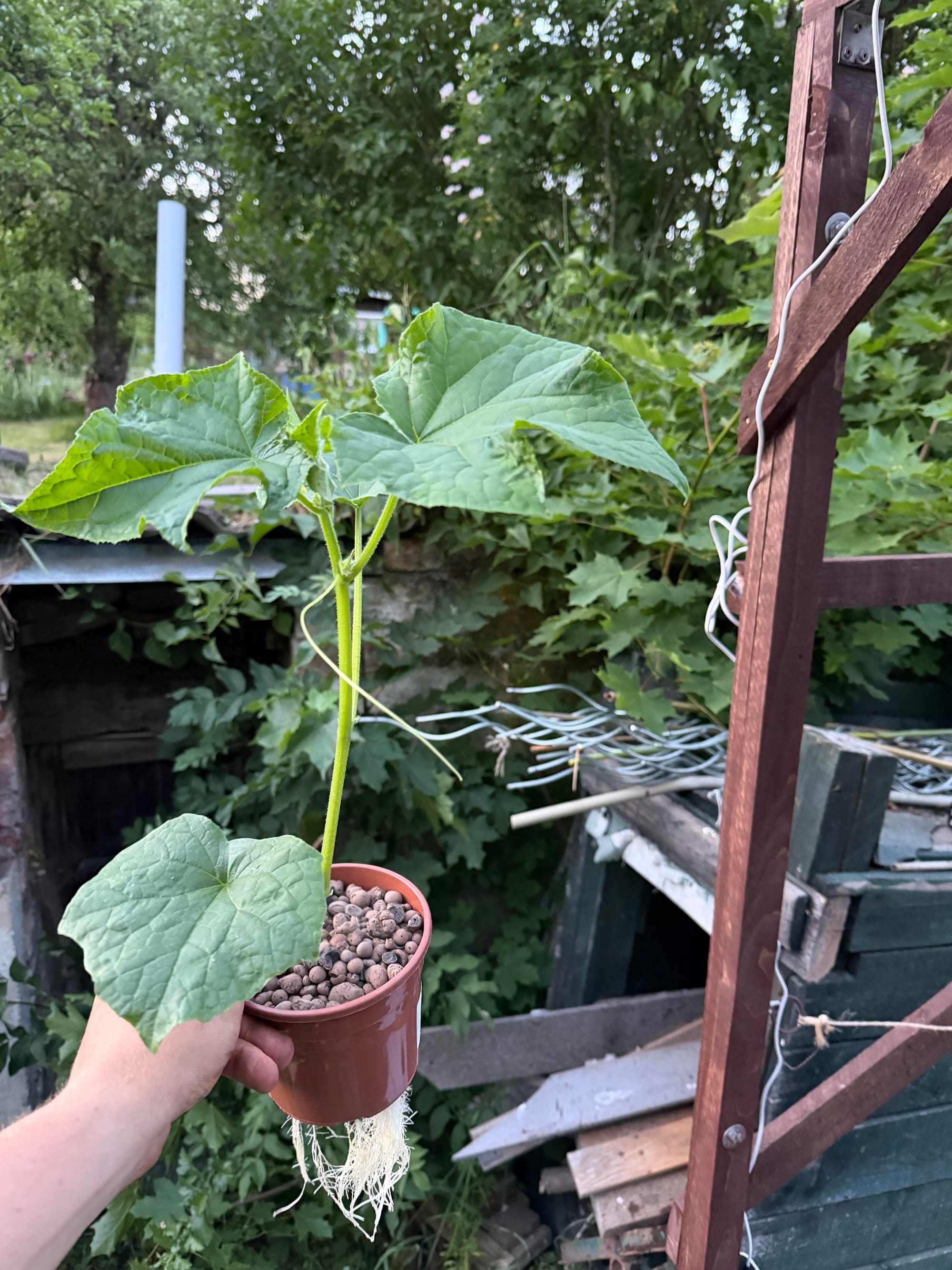
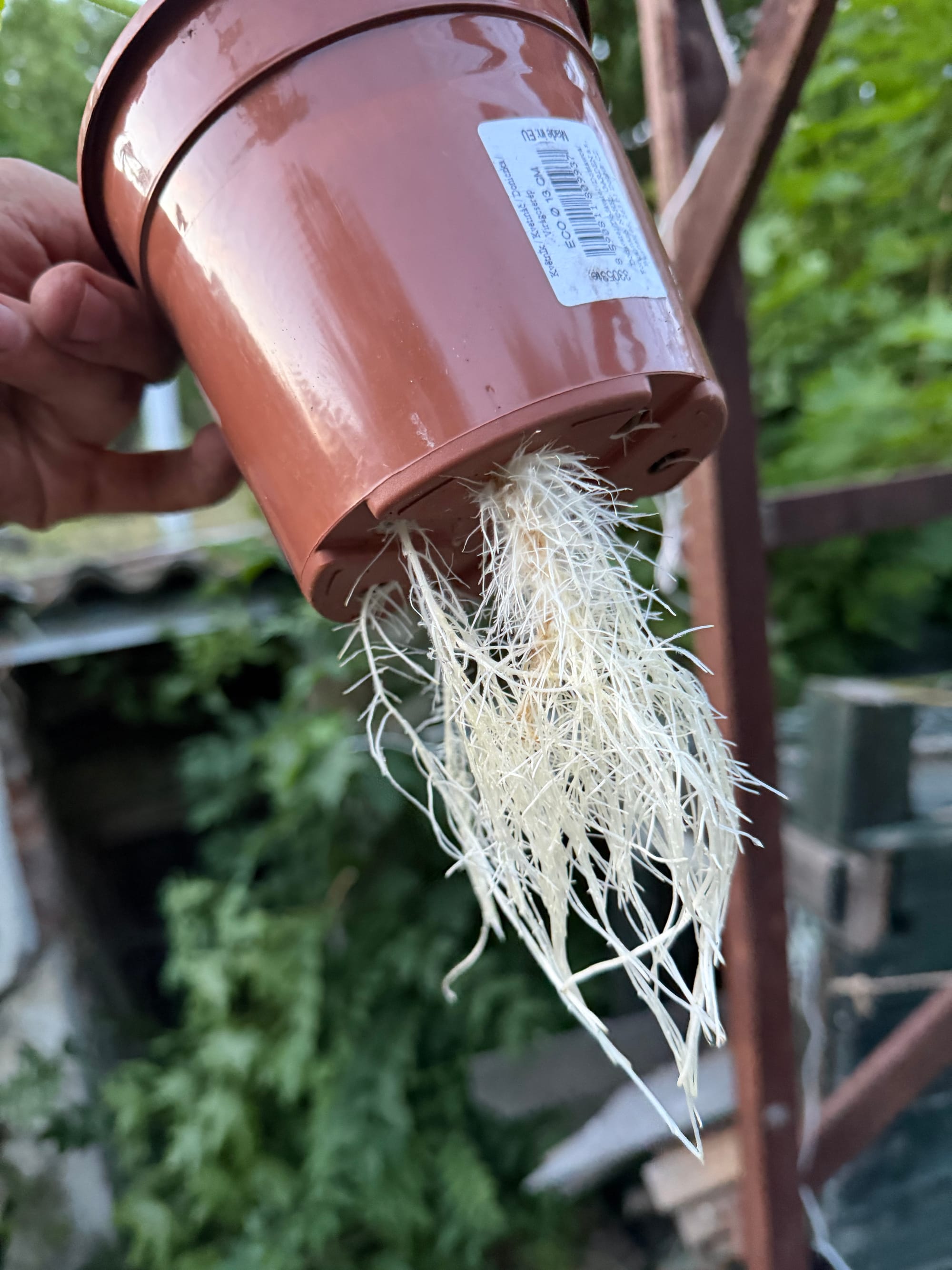
And I keep sowing new slicing cucumbers every three weeks or so.
But wait! There is more. This year, I am growing the fancy heirloom tomato, Costoluto Fiorentino. And because it's an heirloom and very susceptible to disease, I decided to grow them in the very same DWC as the cucumbers. But with a twist! Instead of EURO boxes, I used buckets. I figured the tomato plants would prefer the deeper root zone.
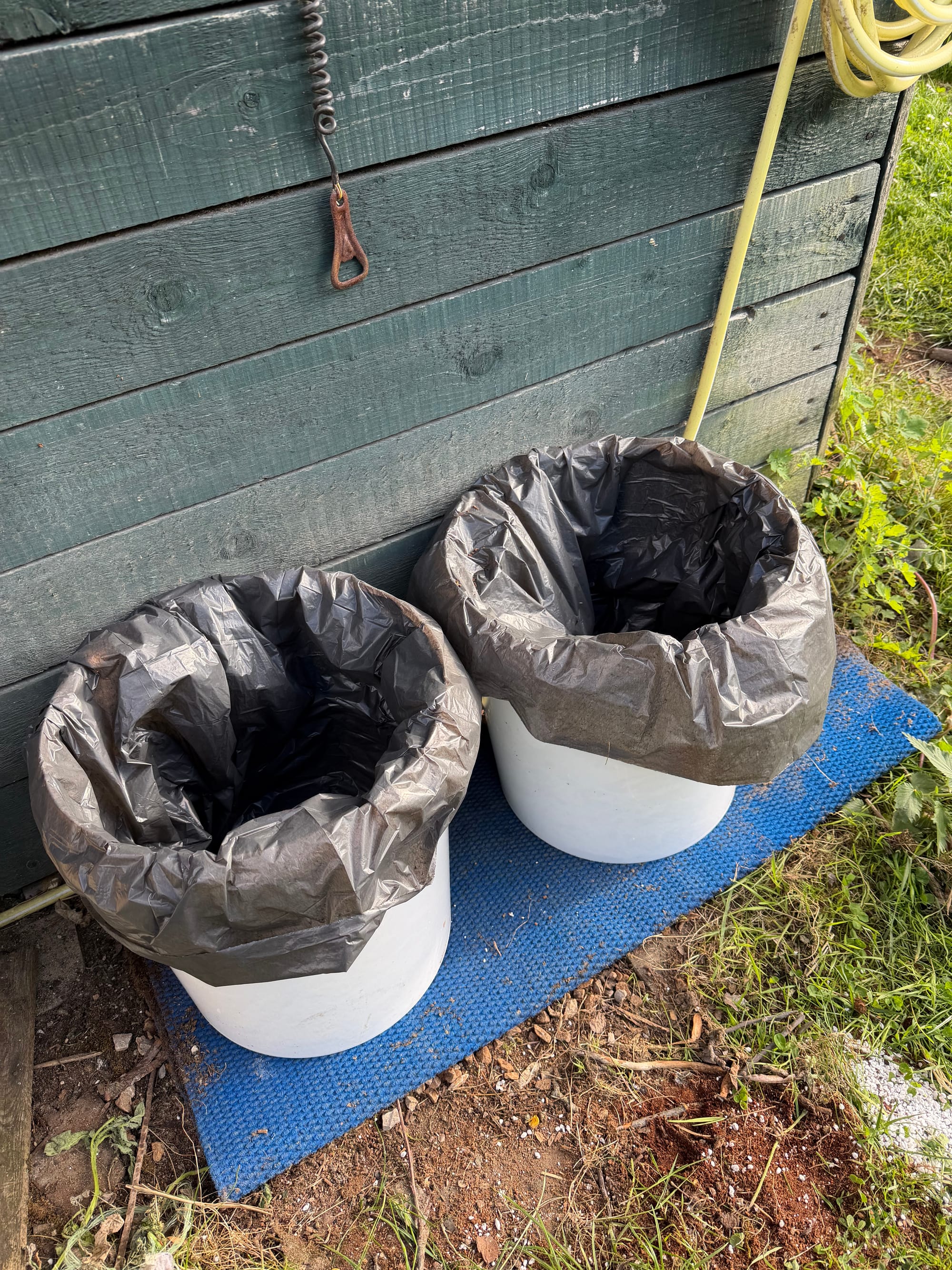
I glued some aluminum foil around the perimeter to block light and algae growth. And just for good measure, I put a plastic bag inside. The air pump got its own solar panel, which is not strong enough for continuous operation but is strong enough for pulse operation, which is fine, I guess.
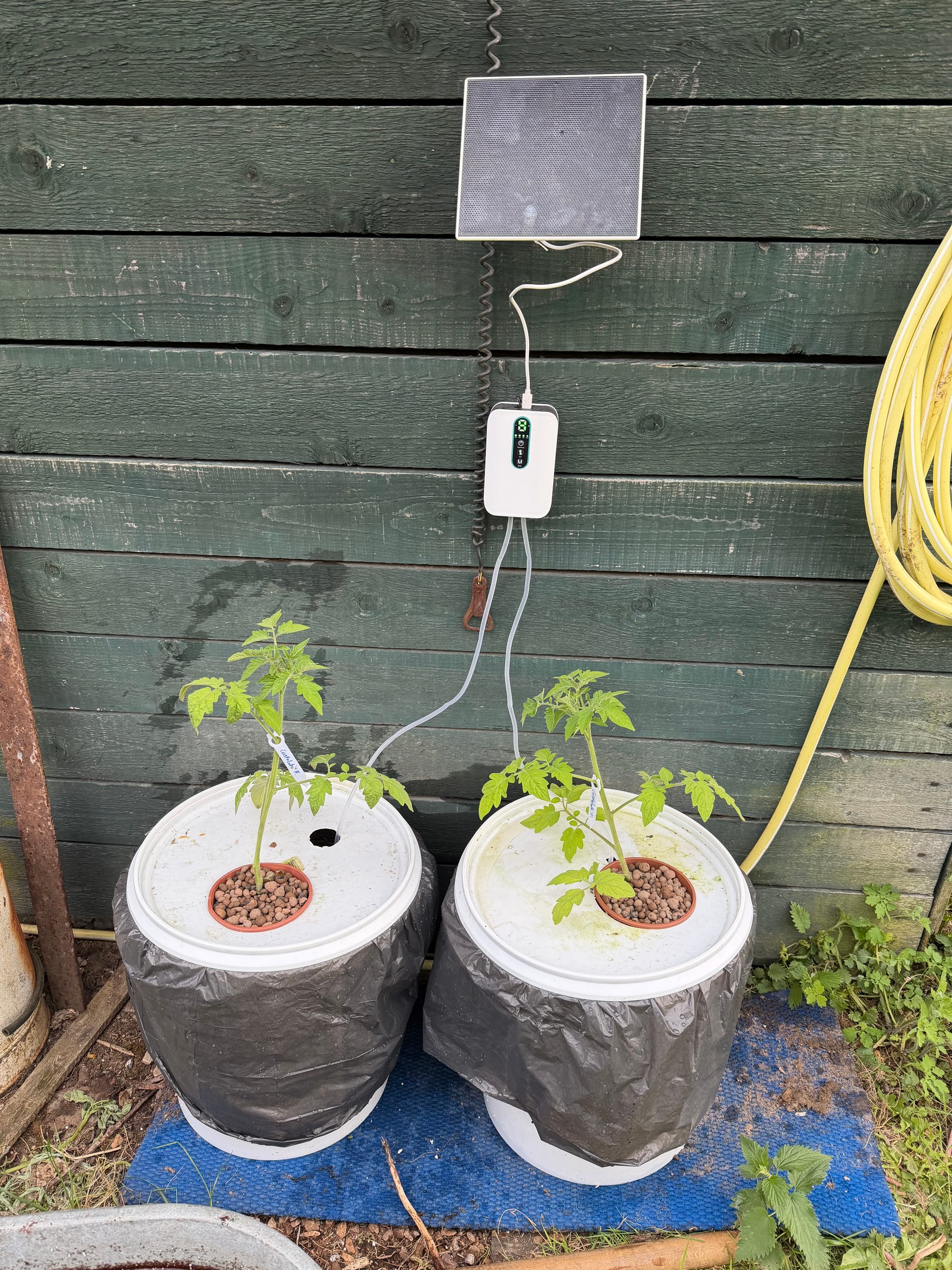
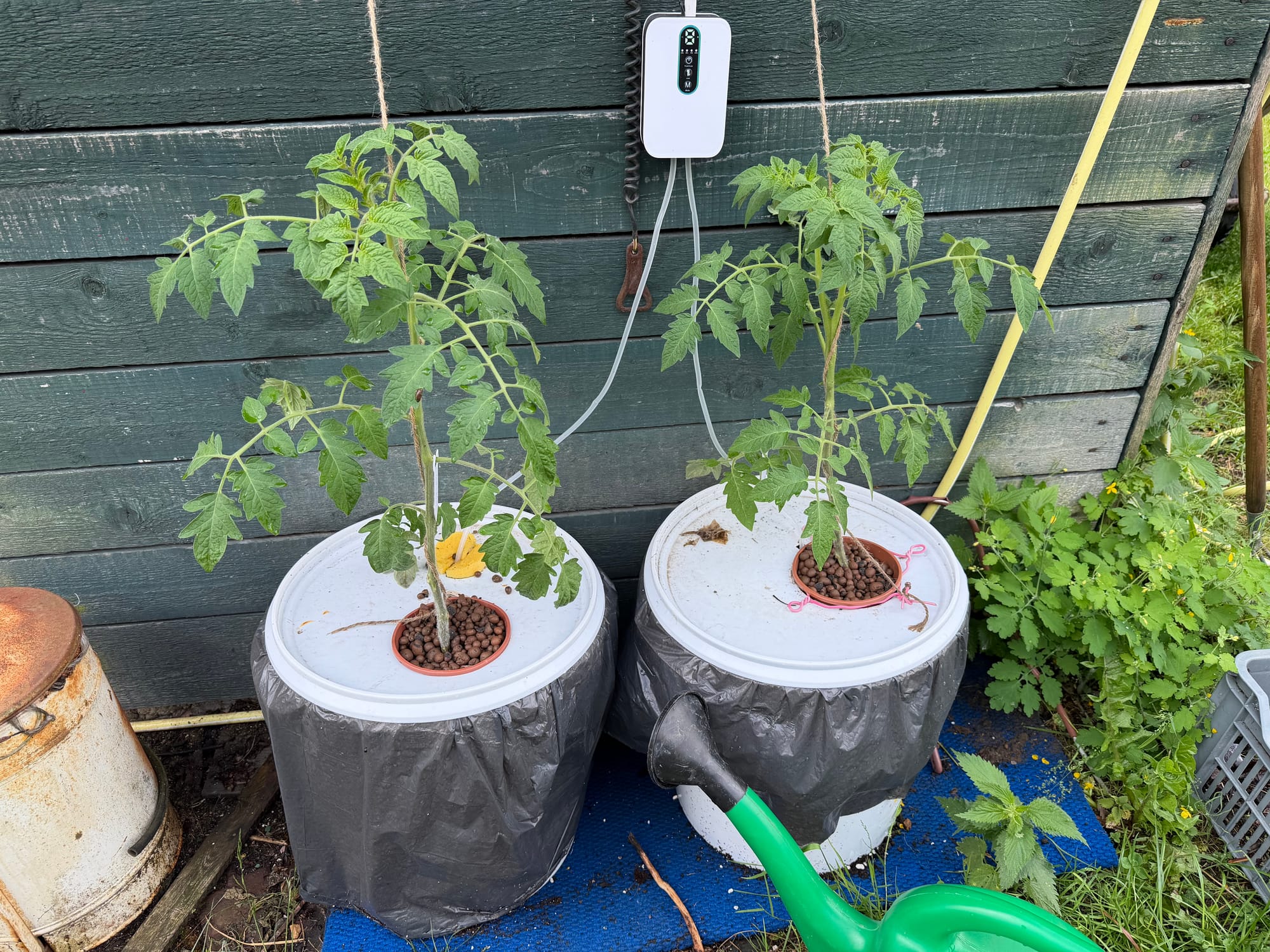
I was quite surprised by how good the system is. These two plants are the fastest-growing tomatoes in my garden right now. They overtook all my tomatoes in the soil and even in the coco. I gave them premium head space, and I would like to grow them tall. The stem of the right one is split in the middle, and I kept both leaders; the other one has only one leader, so I have a direct comparison, which is a nice bonus.
the coco fruit
Now that we have knocked out the experimental stuff, we only have the trustworthy system with coco peat to cover. But there is another twist! I did something new here as well.
I have a lot of peppers, and I thought this might be a good year to try growing them in hydroponics, too. I had a spot where I grew cucumbers last year, quite unsuccessfully. It's not a great spot for sun-loving plants, as the nearby trees shade most of the afternoon sun, just as in the greenhouse, but peppers don't care. They tolerate shade as long as there is enough heat and moisture, unlike tomatoes, which would get leggy.
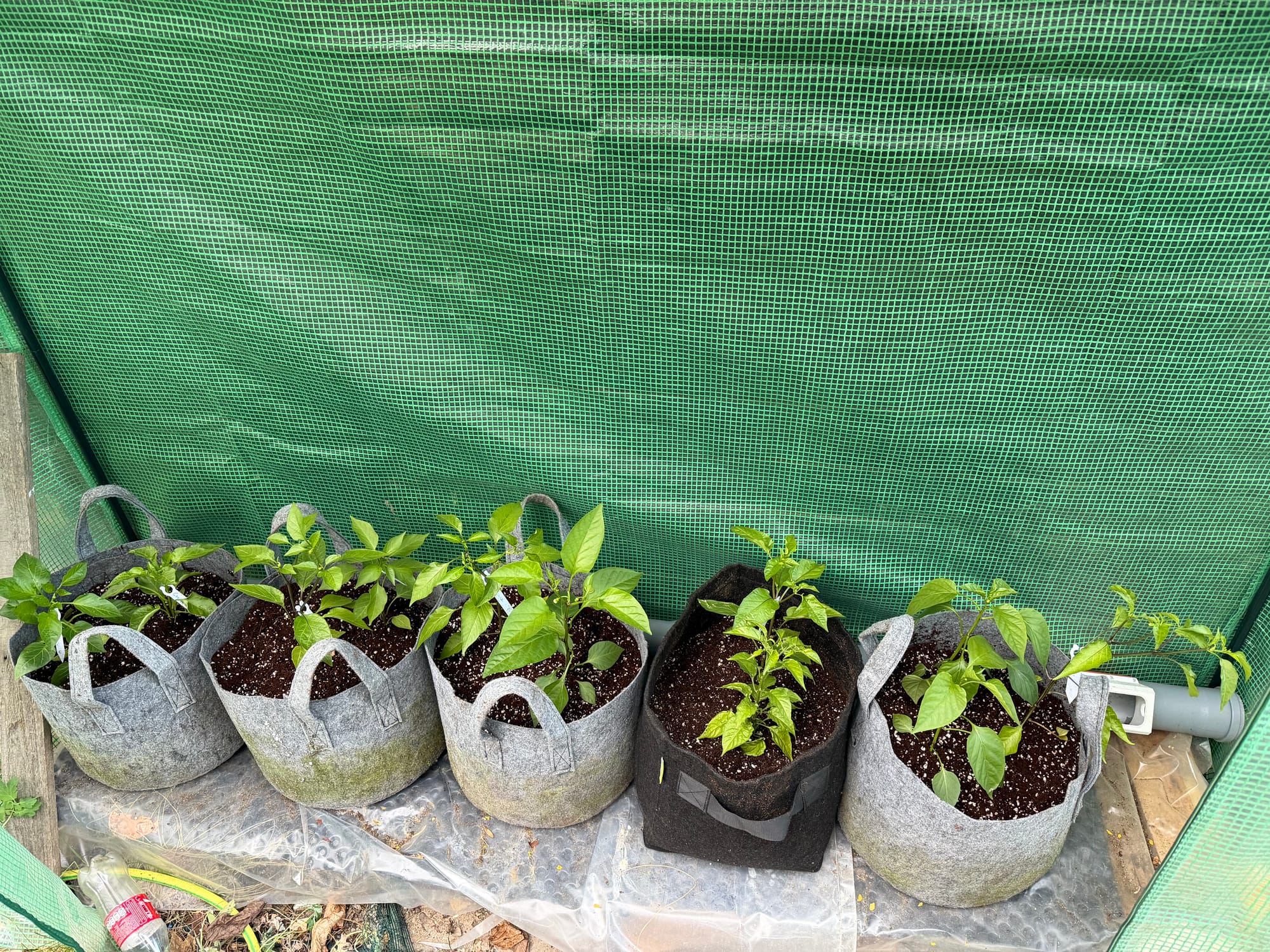
But here comes the twist! I was thinking about the irrigation system. For my tomatoes, I use float valves and crates so the bottom part of the plant always sits in nutrient solution. With my peppers, I wanted to try something different. There is a system called the RGS, or rain gutter grow system, in which plants sit on top of a rain gutter and are connected to the nutrient solution below via a wicking material.
The wicking material can be anything from cotton to a net pot filled with coco peat. Still, since I have an abundance of proper wicking fabric, I used that. You might remember my wicking irrigation system from last year, and the year before, when I tried using it in some beds. I thought this could be a great way to repurpose it.
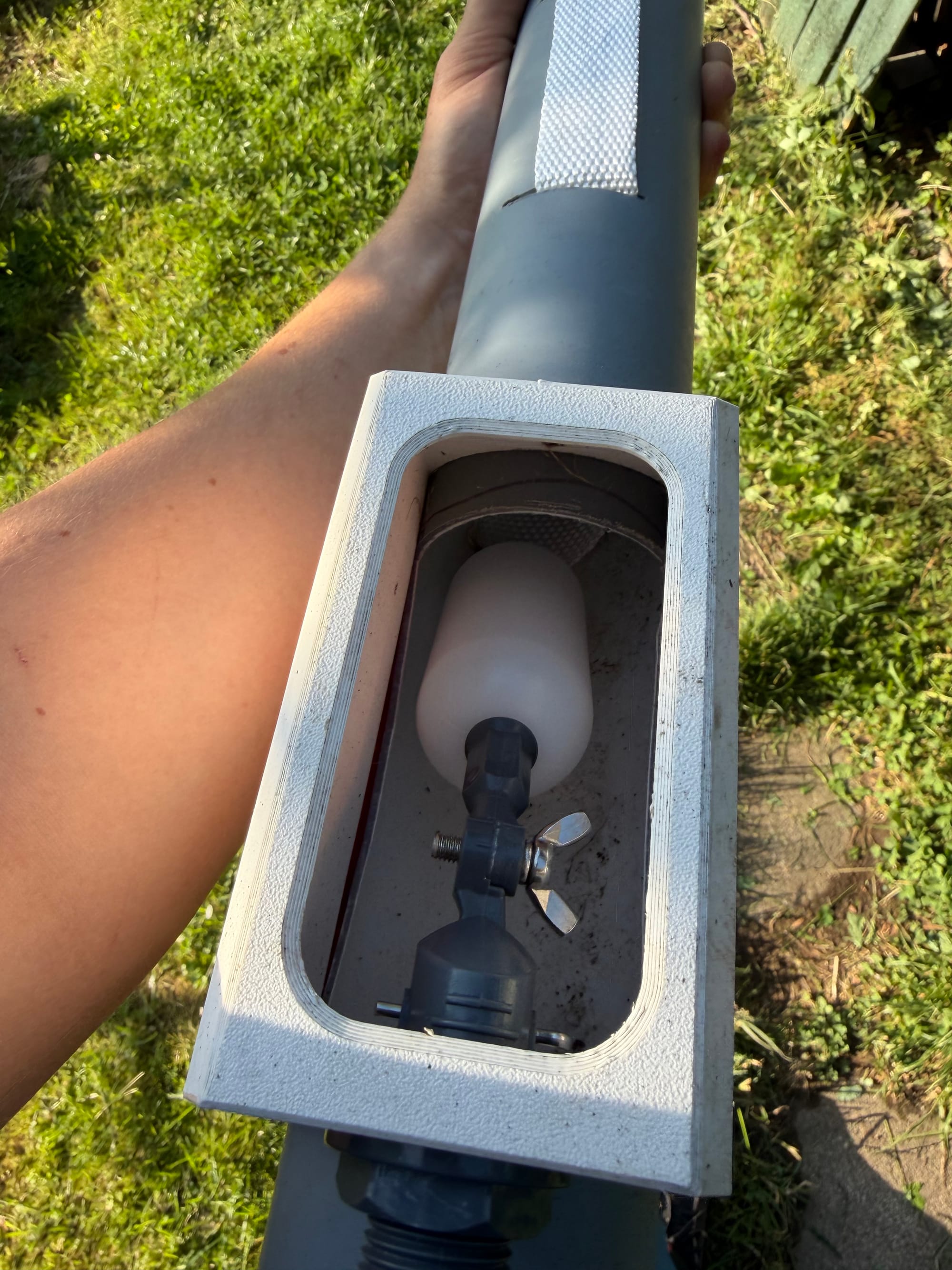
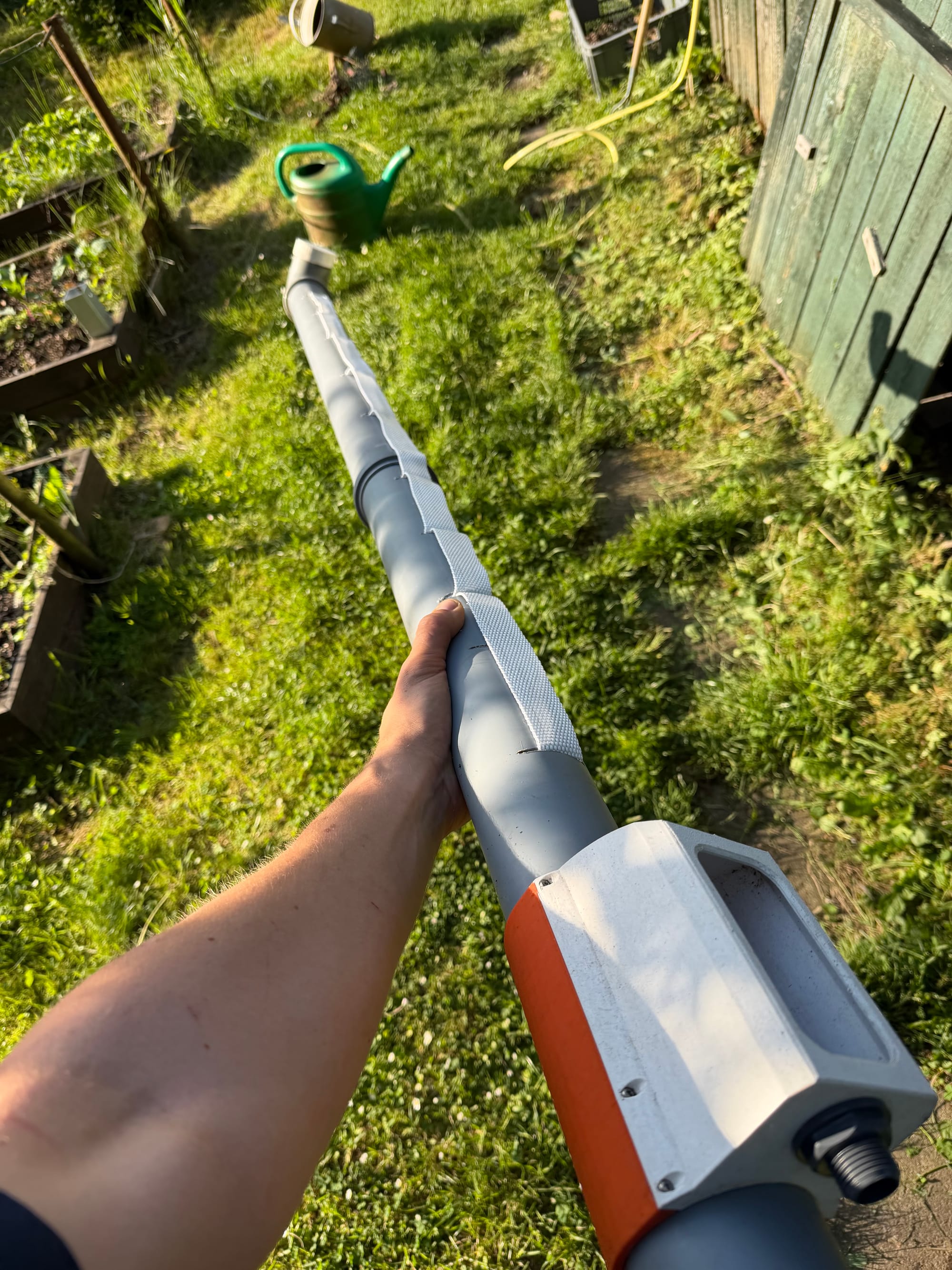
I removed the old wicks and threaded in new ones. This will suck the water up on top of the pipe, creating an interface for the fabric bag to wick from. To keep it stable, I used wood from the old cucumber place. I secured everything with the strongest material known to humans: a zip tie.
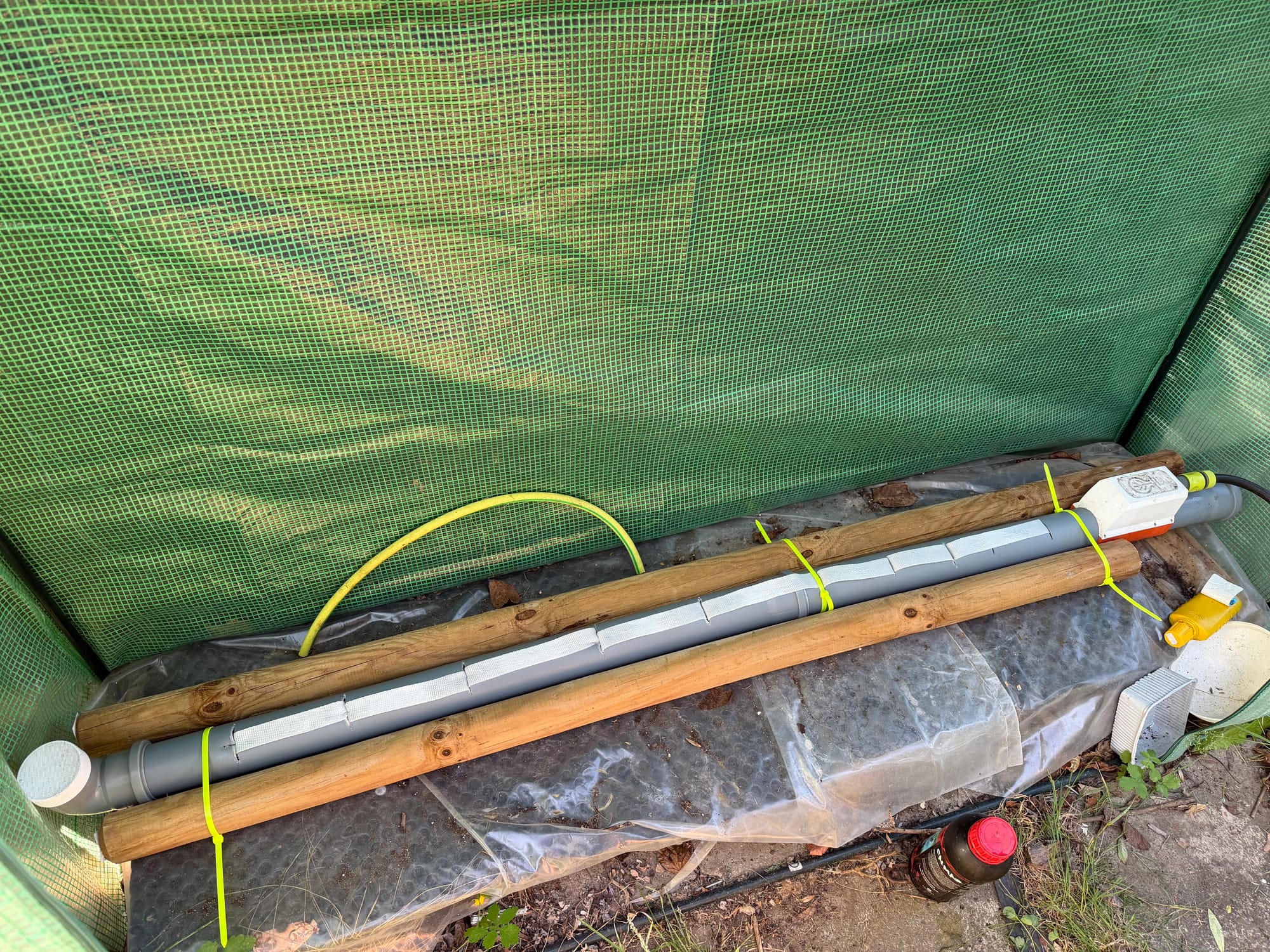
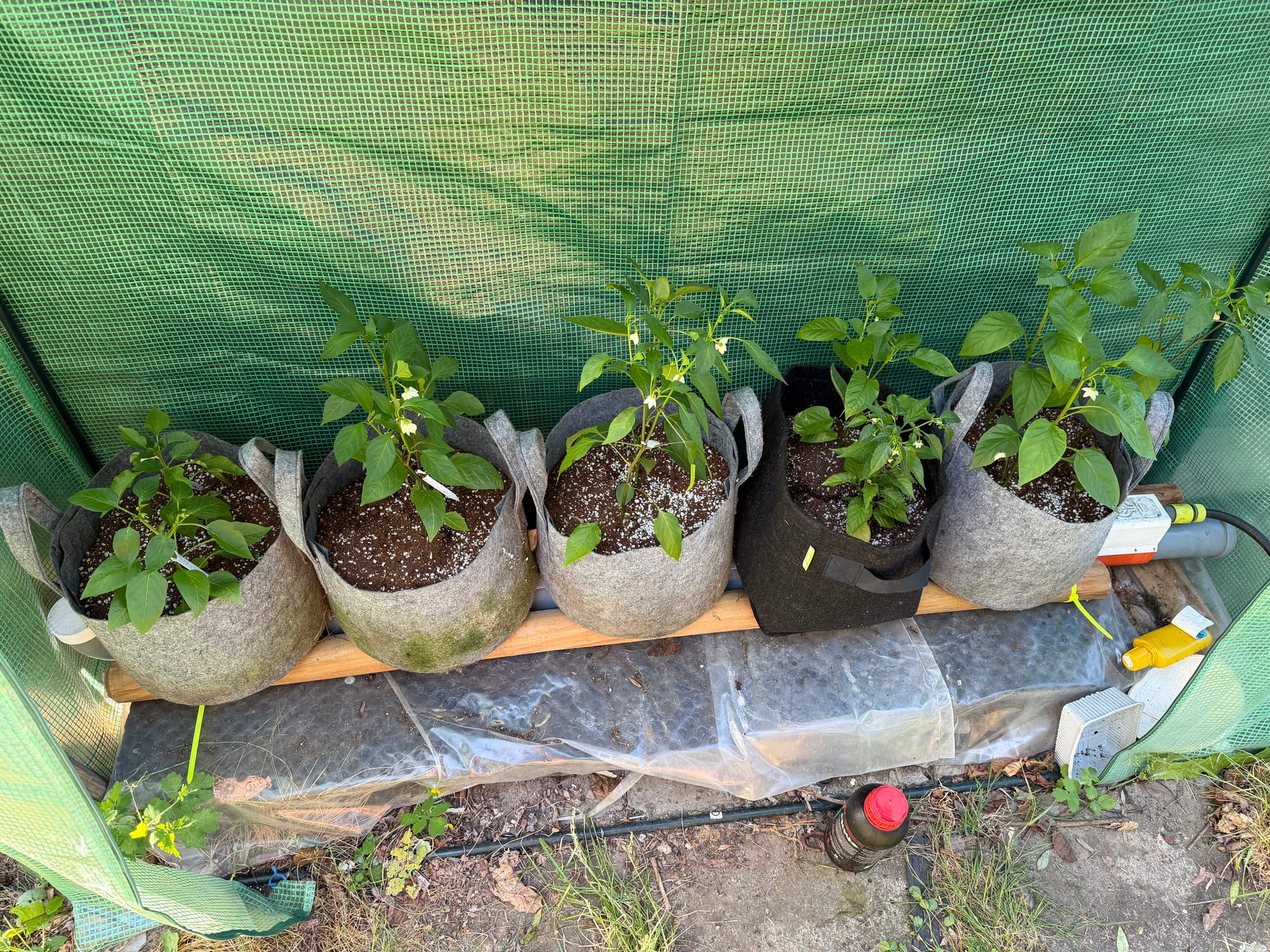
The pipe is connected to a small 100 L reservoir containing Shogun Coco solution at EC 2.0. Right after installation, I observed a few key advantages to this approach. It's very material-efficient. With a single float valve, you can support a near-infinite number of pots; there is no limit. The tomato system I use requires each pot to have a box, a float valve, and some tubing. With the numbers I am growing it's not that big of a hassle, but I'm pretty sure it would get tedious past some point.
But of course, the plants always have access to water, and tomatoes in a hot summer transpire a shiton of water; it's possible the wicking action wouldn't keep up. But that brings me to the second benefit I spotted. During rainy periods, the rainwater goes through the bag and fills the box. It's not dangerous or anything, coco holds a lot of nutrients on its own, but it's sub-optimal. With no box under the bag, there is no space for rain to accumulate. Since this spot is sheltered, though, I can't say that's always the case.
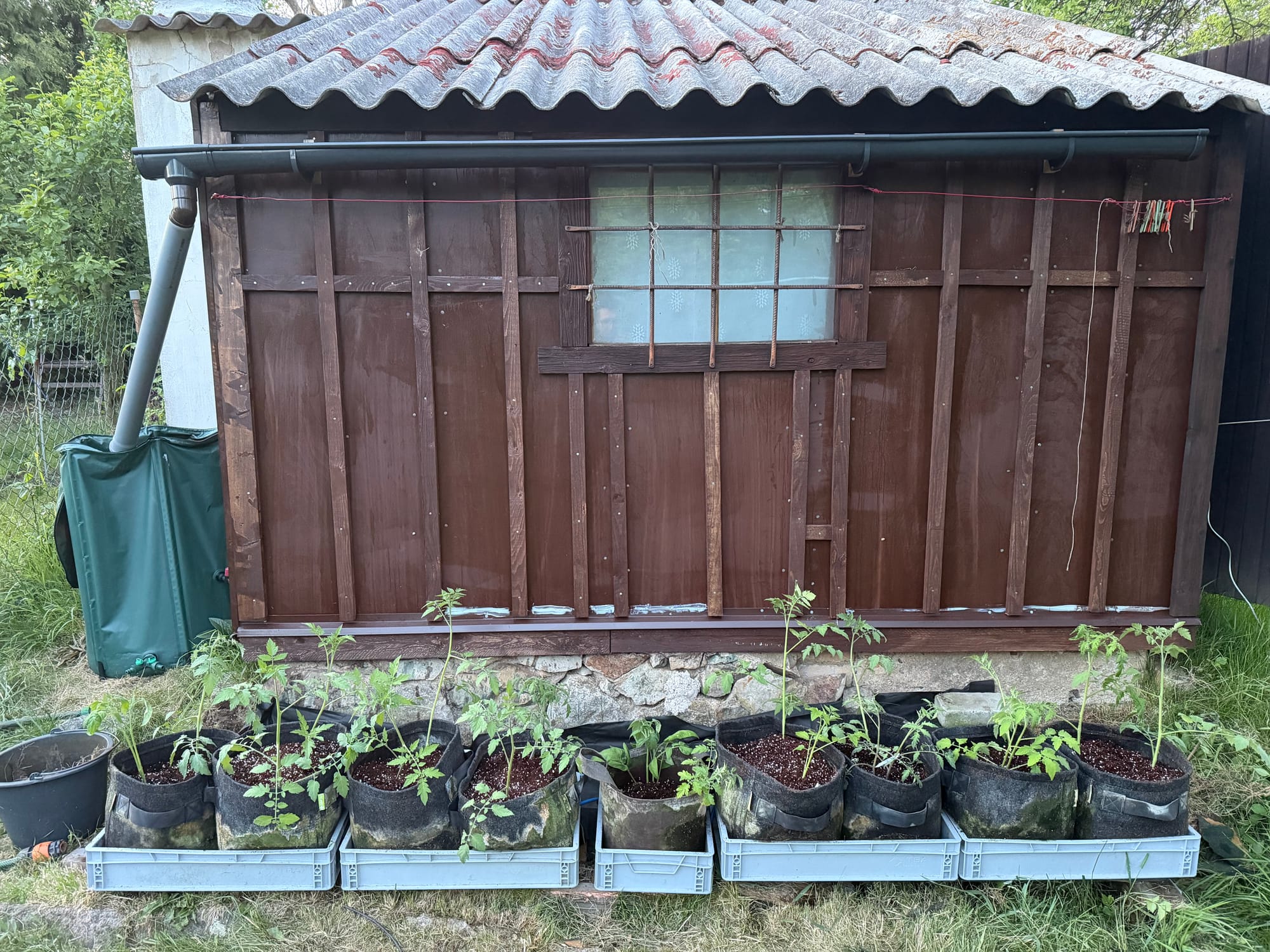
And lastly, the coco tomatoes. I managed to find space for 18 plants, or 9 bags. I selected the strongest seedlings. Into each bag, I put a plant I know and one I want to know. For example, the Atomic Grape tomato lives with a Resibella, so when the experimental tomato dies, the bag still holds a productive plant. Especially the Atomic Grape, because the plant just looks mutilated even though it's healthy. Unlike the Sunviva, which is growing from seeds I kept last year, and which looks absolutely amazing.
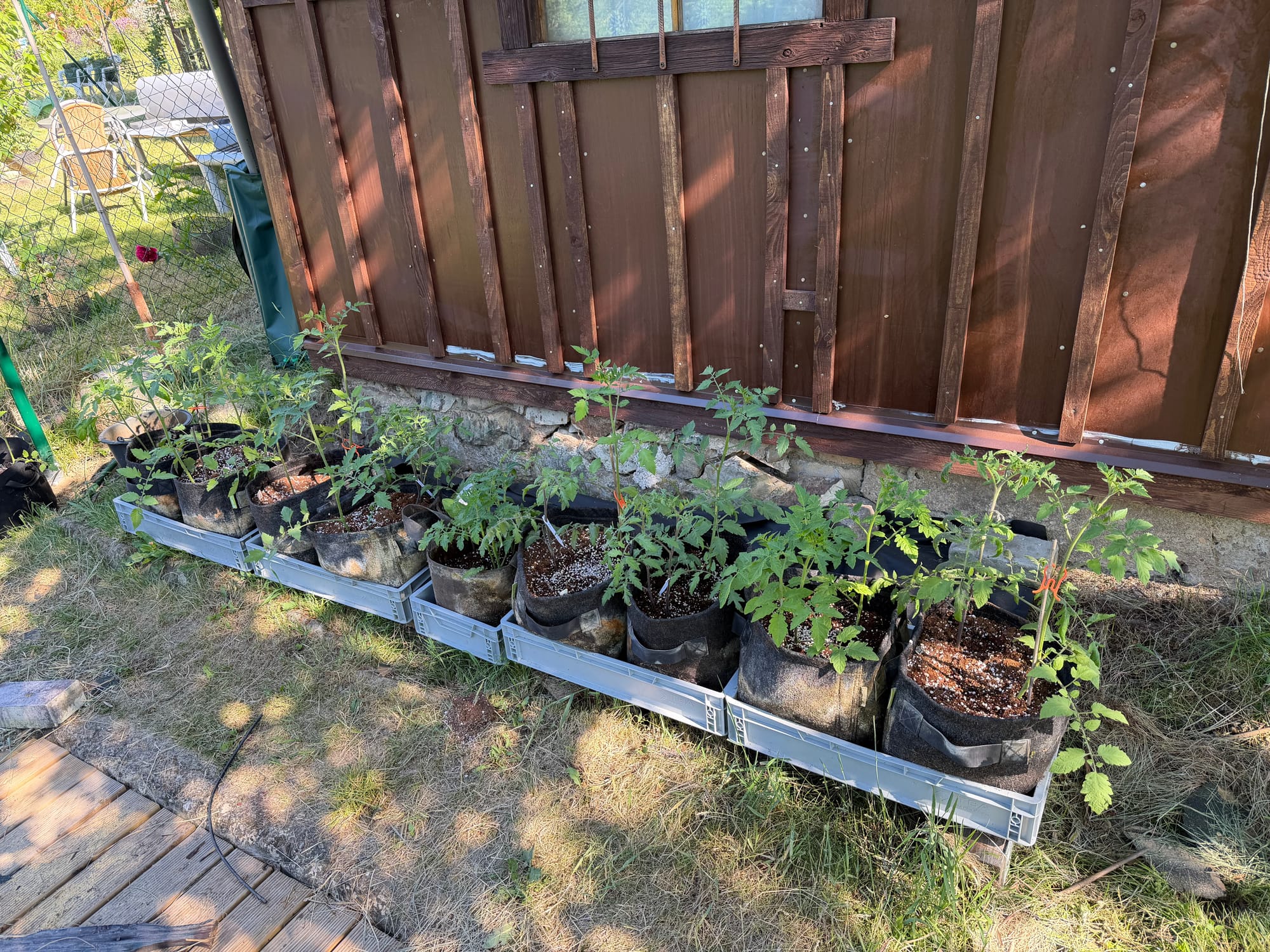
As you can see, I finished the facade on my shed, more about that in the third part of May, and also raised a new construction for trellising. Last year, those plants got so heavy that the original bamboo trellis failed, and I had to build a better one. But it was shit for the same reason the old shelter was shit: wrong choice of materials. But that's a different story.
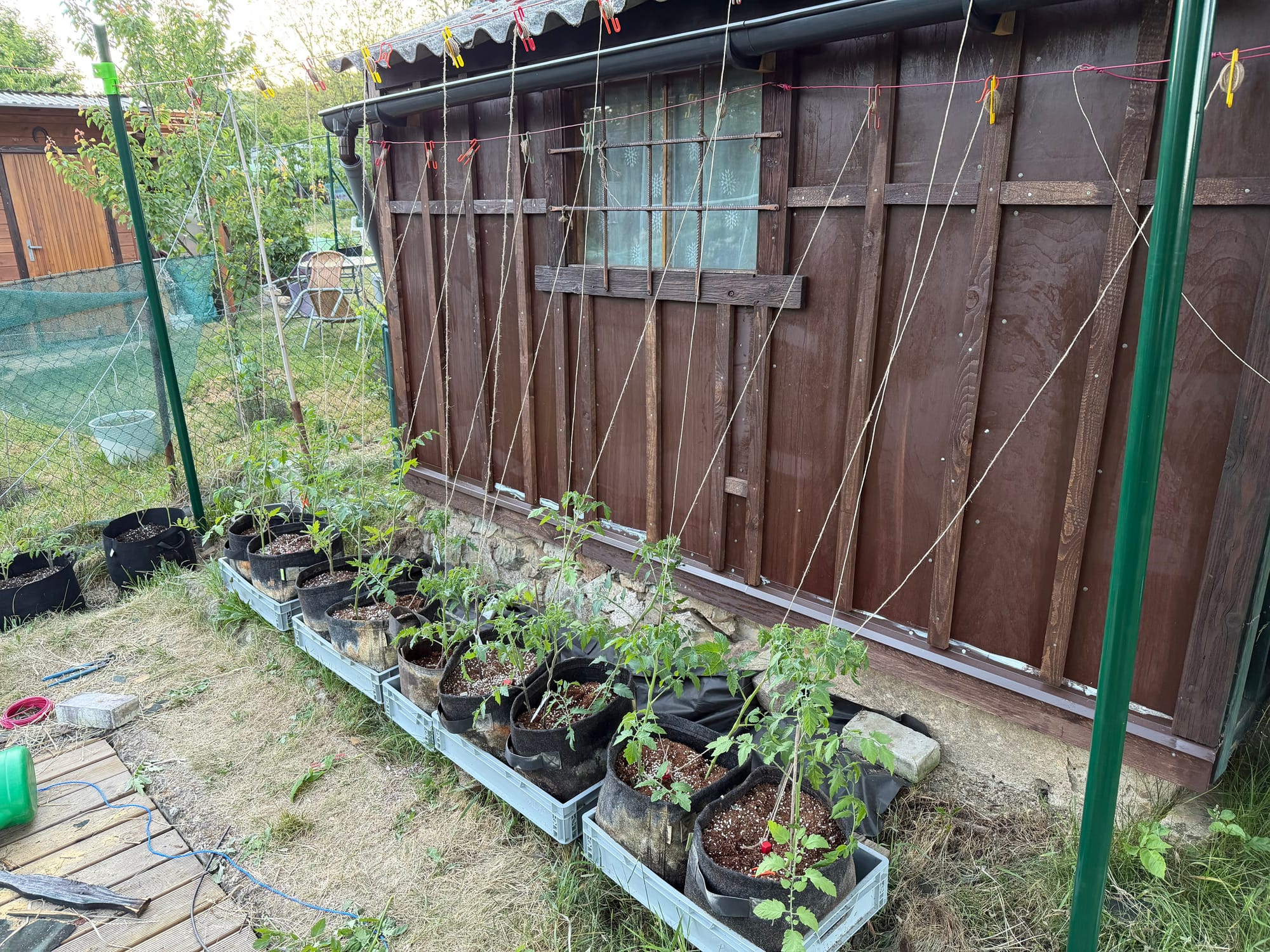
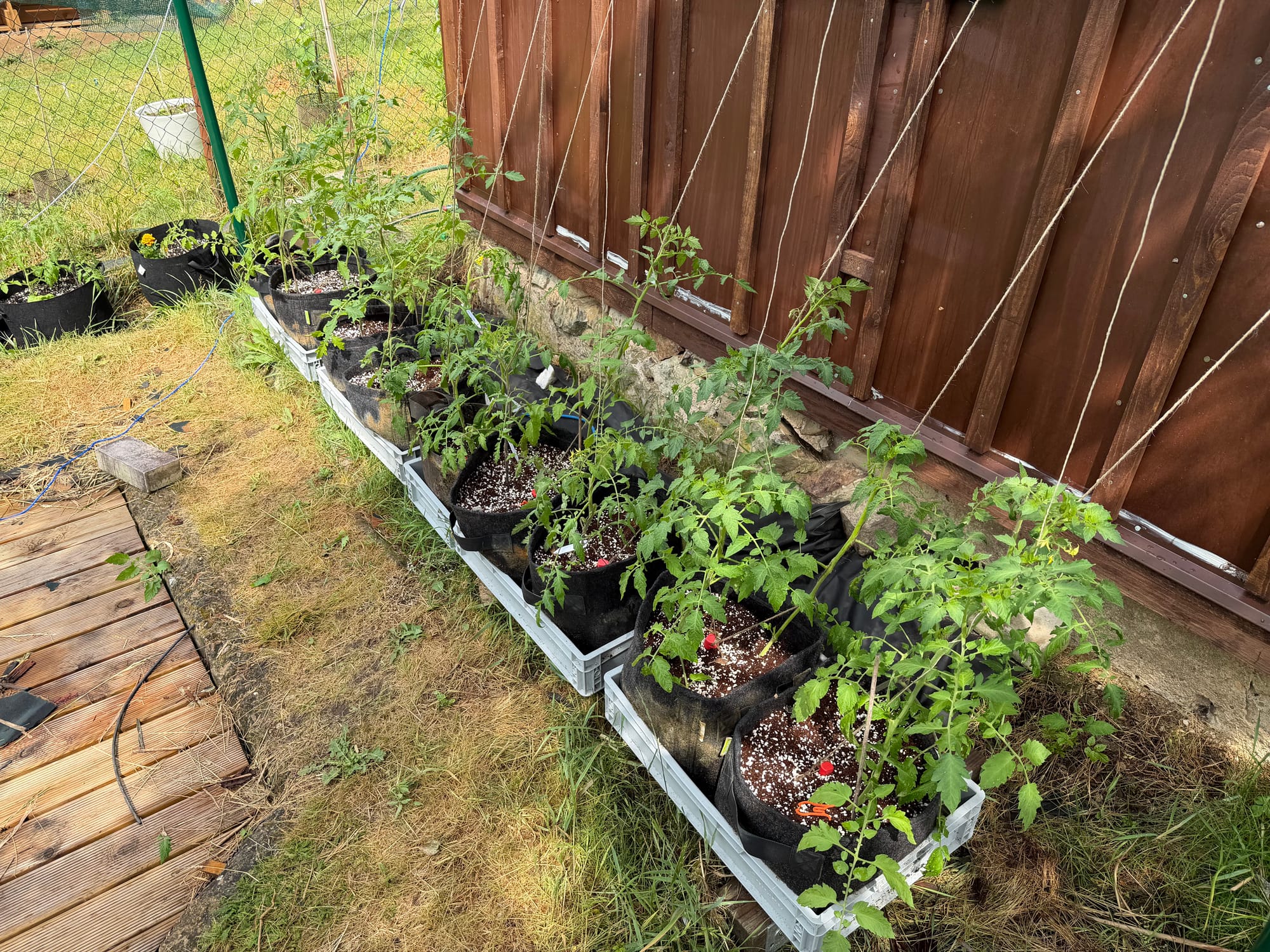
These plants are not connected to a reservoir, at least not in these pictures yet. The second half of May was still exceptionally dry, and I had to source the water for my tomatoes.
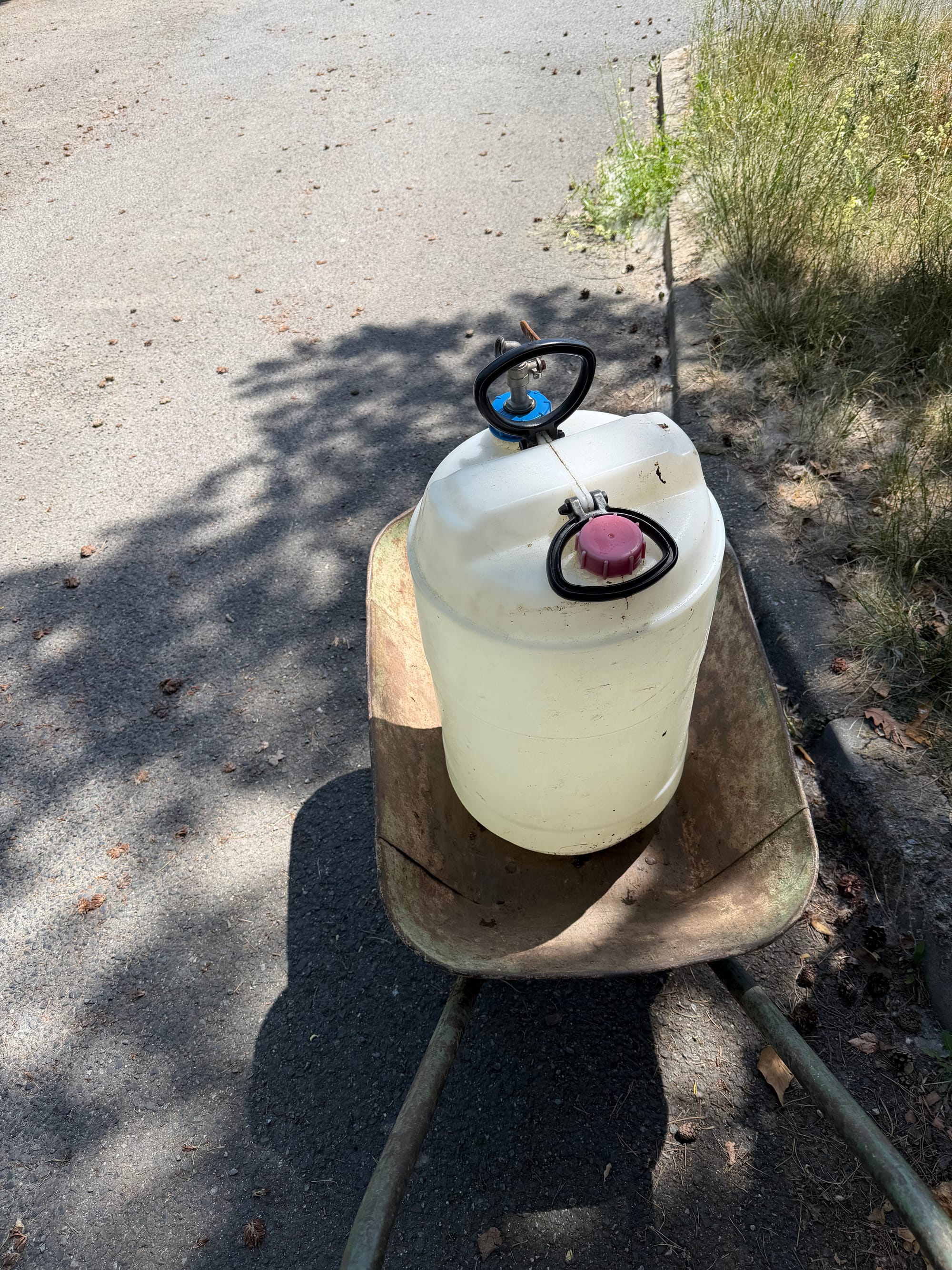
My new flat comes with some shared water privileges. I am now a co-owner of another well. It's not as deep as the one in my garden, but that one is full of iron and not very productive anymore. The new well is not full of iron, but the EC is still high because it contains calcium in various forms. Still, it's better than nothing; the only limitations are pH drift and the EC cap. The base EC is 0.5, so for a target EC of 2.0, I only have 1.5 units of headroom. With rainwater, the EC is close to zero. But there is a lot of rain on the horizon right at the end of May, and I am prepared to collect everything.
As you can see, I put a lot of trust in hydroponics this year. And from this post, you might understand why I love it so much. It brings control and parametrization to the process; it's like functional programming, where the output of a function only depends on its inputs. Transparent and predictable. It's uncompromising and honest. And because I like to play with water, it's incredibly fun. And I still have something in my head for the water ventures in June. 🍈
Member discussion